
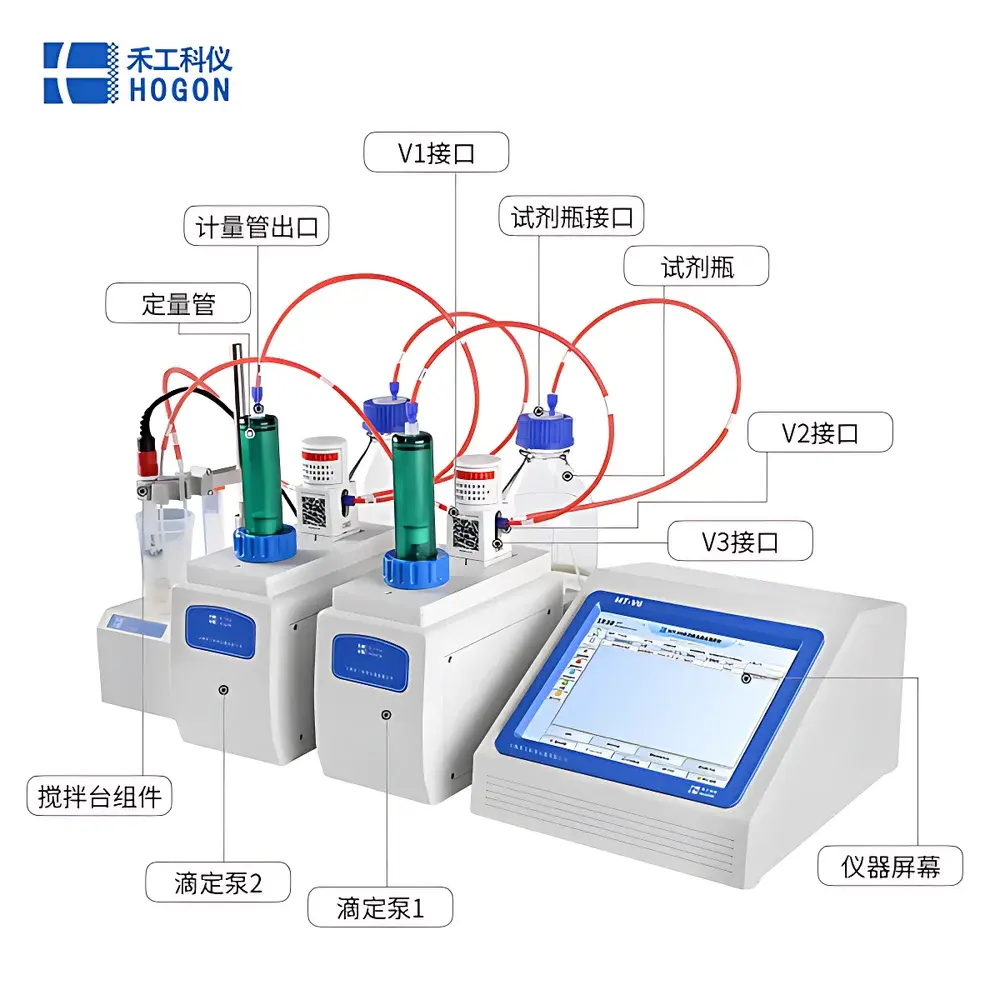
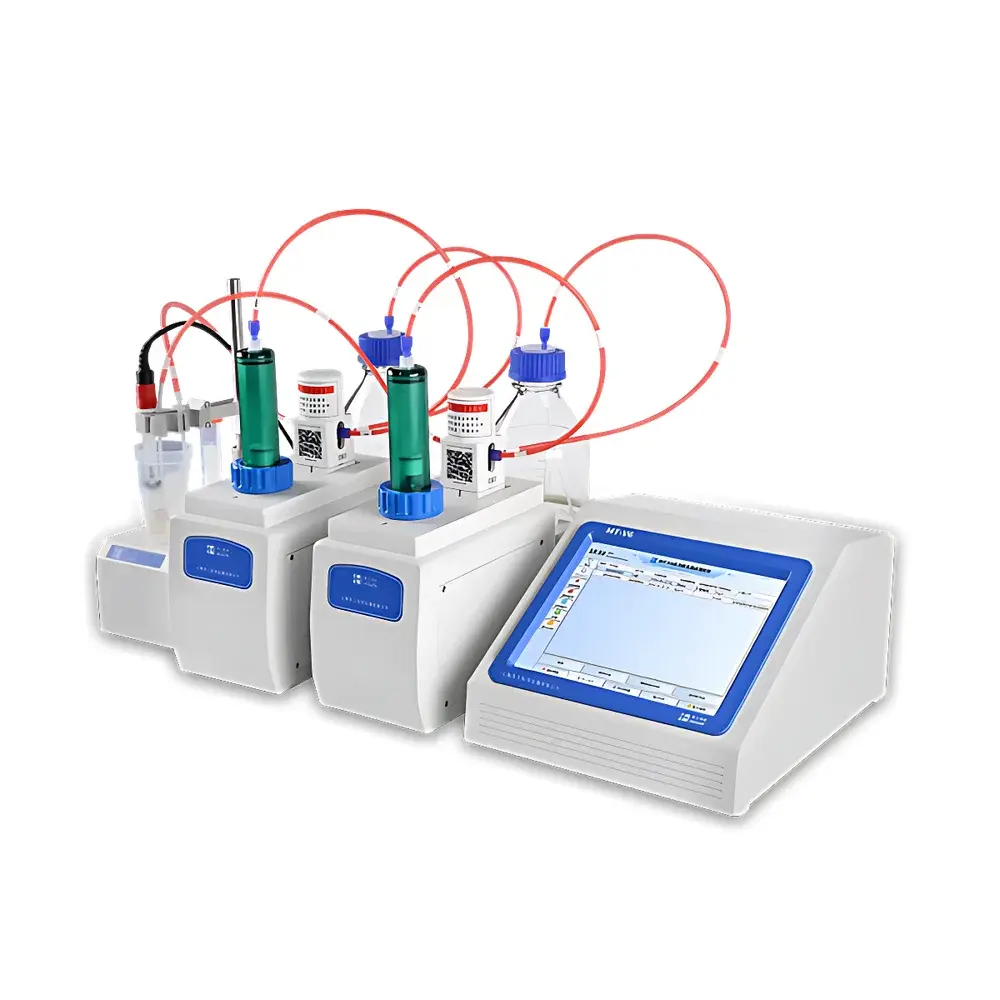
HOGON MT-V6 Fully Automatic Non-Aqueous Potentiometric Titrator
| Brand | HOGON |
|---|---|
| Origin | Shanghai, China |
| Manufacturer Type | Direct Manufacturer |
| Regional Classification | Domestic (China) |
| Model | MT-V6 Non-Aqueous Titrator |
| Instrument Category | General-Purpose Potentiometric Titrator |
| Application Scope | Universal |
| pH Measurement Range | 0.000–14.000, Resolution: 0.001 pH |
| Meter Accuracy | ±0.1 mV |
| Meter Resolution | 0.1 mV |
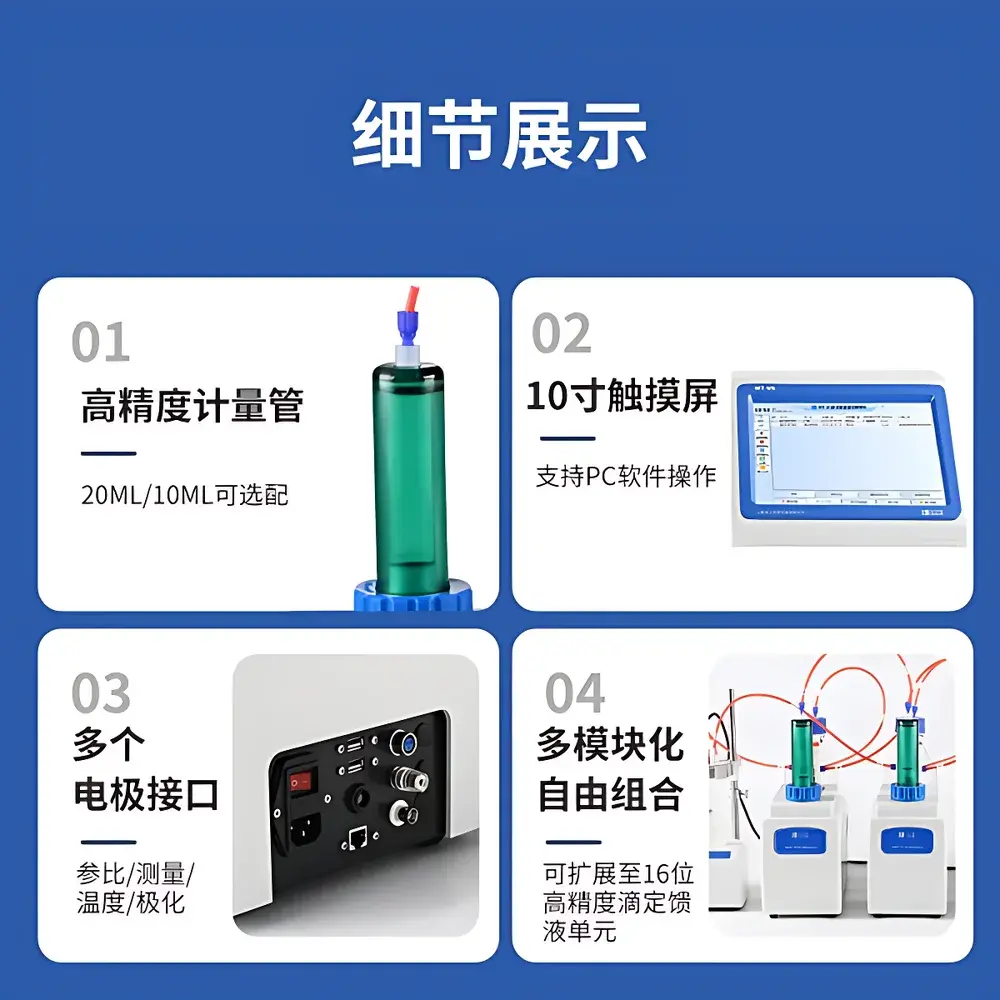
| Burette Precision | 20 mL standard burette / 1 µL, 10 mL optional burette / 0.5 µL |
| Potential Range | ±2000 mV, Resolution: 0.1 mV |
Overview
The HOGON MT-V6 Fully Automatic Non-Aqueous Potentiometric Titrator is an engineered solution for precise potentiometric titration in non-aqueous and low-dielectric media—such as anhydrous ethanol, acetonitrile, chloroform, dimethylformamide (DMF), and other organic solvents commonly used in pharmaceutical synthesis, battery electrolyte research, and fine chemical analysis. Unlike conventional aqueous titrators, the MT-V6 employs a corrosion-resistant fluidic architecture, chemically inert electrode interfaces (including specialized non-aqueous reference and indicator electrodes), and adaptive potential stabilization algorithms to maintain electrochemical stability under low-conductivity conditions. Its core measurement principle relies on real-time monitoring of electromotive force (EMF) changes across a high-impedance ion-selective or redox-sensitive electrode pair, with endpoint detection governed by first-derivative (ΔE/ΔV) and inflection-point interpolation methods compliant with ISO 8359 and ASTM E2087 standards for potentiometric titration validation.
Key Features
- Non-aqueous–optimized electrode system: Integrated double-junction reference electrode with non-aqueous electrolyte filling solution and solvent-compatible Ag/AgCl or glass membrane sensing elements.
- Microprocessor-controlled precision dispensing: Dual-burette configuration supports both 20 mL (1 µL resolution) and optional 10 mL (0.5 µL resolution) burettes, enabling trace-level reagent delivery required for low-solubility analytes.
- Real-time EMF monitoring: High-input-impedance (>1013 Ω) potentiometer with ±0.1 mV accuracy and 0.1 mV resolution over ±2000 mV range ensures stable signal acquisition in low-conductivity matrices.
- Programmable temperature regulation: Peltier-based thermostatic control of titration vessel (±0.2 °C stability) accommodates thermally sensitive reactions such as Karl Fischer coulometric titrations or proton-transfer equilibria in aprotic media.
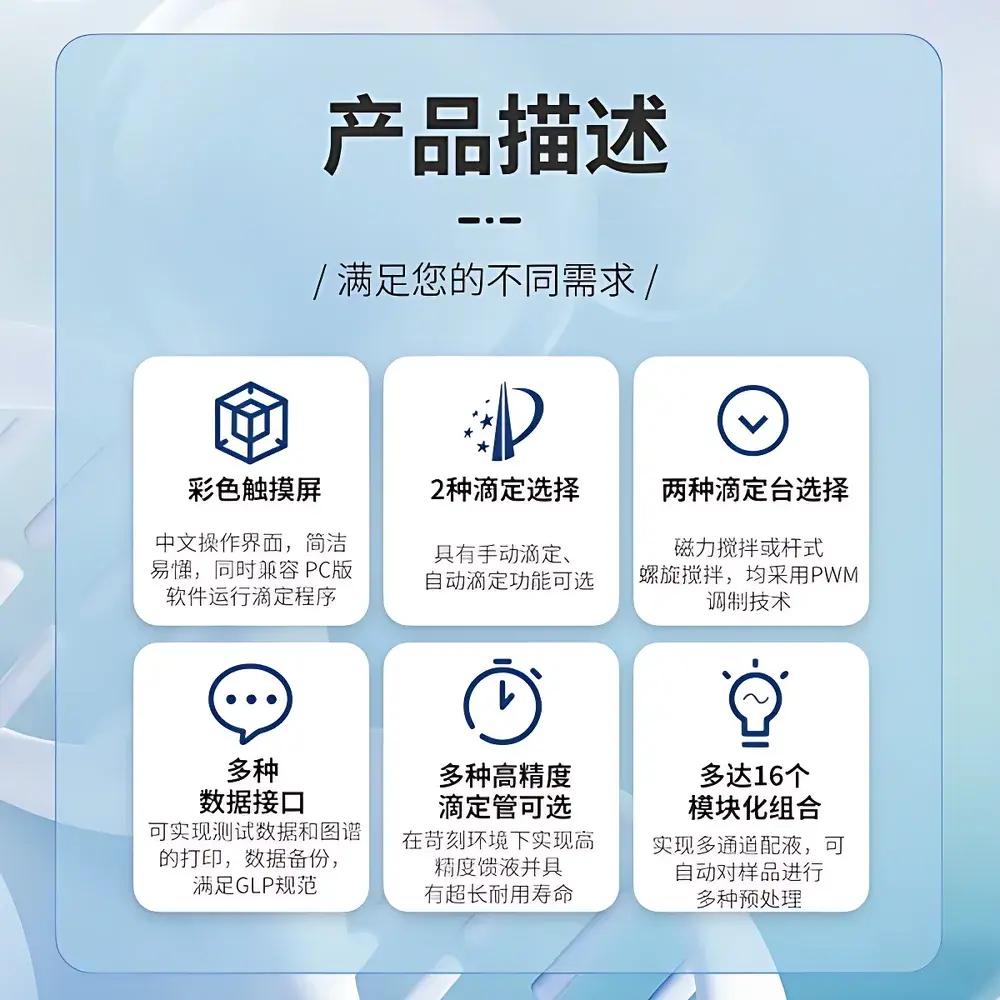
- Touch-enabled graphical interface: 7-inch capacitive touchscreen with intuitive workflow navigation, real-time titration curve overlay (E vs. V, dE/dV vs. V), and method-driven parameter presets.
- Modular expandability: Designed for seamless integration with HOGON AS-1200 automated sample changer (120-position), multi-channel titration modules, and auxiliary pH/ion modules for hybrid analysis workflows.
Sample Compatibility & Compliance
The MT-V6 is validated for use with samples dissolved in common non-aqueous solvents—including but not limited to methanol, isopropanol, tetrahydrofuran (THF), ethyl acetate, and propylene carbonate—without electrode fouling or junction clogging. Its fluid path materials (PTFE, ETFE, sapphire-tipped pistons, and ceramic valves) resist swelling and degradation in aggressive organic media. The instrument meets GLP/GMP documentation requirements through built-in audit trail logging (user actions, method versions, calibration events), electronic signature support, and 21 CFR Part 11–compliant data integrity features when operated with HOGON TitraSoft Pro software. It conforms to ISO/IEC 17025 method validation guidelines for titrimetric determinations and supports traceability per ISO 17511 for metrological calibration of burette volume delivery.
Software & Data Management
TitraSoft Pro v4.2 (included) provides full method development, sequence programming, and post-run evaluation tools. Each titration record stores raw EMF/time/volume datasets, derivative curves, equivalence point calculations, and uncertainty estimates based on burette calibration certificates and electrode response drift correction. Data export is supported in CSV, PDF, and XML formats compatible with LIMS and ELN systems. Internal storage retains ≥5000 complete titration reports; USB 2.0 port enables encrypted backup and firmware updates. All user-defined methods are digitally signed and version-controlled, ensuring reproducibility across shifts and laboratories.
Applications
- Pharmaceutical QC: Quantification of active pharmaceutical ingredients (APIs) in organic solvents per USP and EP 2.2.20; assay of residual amines in peptide synthesis intermediates.
- Battery R&D: Determination of LiPF6 concentration in carbonate-based electrolytes; acid number measurement in aged lithium-ion cell electrolytes.
- Petrochemical analysis: Total base number (TBN) and total acid number (TAN) in lubricants per ASTM D974 and D664, using non-aqueous titration protocols.
- Organometallic chemistry: Stoichiometric analysis of Grignard reagents, alkyl lithium compounds, and metal hydrides via controlled protonation or halogen transfer.
- Academic physical chemistry: Investigation of acid dissociation constants (pKa) in aprotic solvents, reaction kinetics of nucleophilic substitutions, and redox potentials of organometallic complexes.
FAQ
Does the MT-V6 support automatic calibration of non-aqueous reference electrodes?
Yes—via integrated electrode diagnostics and solvent-specific calibration routines that adjust liquid junction potential compensation based on dielectric constant input.
Can the system perform back-titration in acetonitrile without electrode drift?
Yes—the dual-junction reference electrode with non-aqueous electrolyte bridge minimizes junction potential instability, and the software applies dynamic baseline correction during prolonged titrations.
Is the instrument compatible with third-party electrodes from Metrohm or Radiometer?
It accepts standard BNC and DIN connectors; however, optimal performance in non-aqueous media requires HOGON’s proprietary electrode kits due to tailored junction design and filling solution formulation.
How is data integrity ensured during regulatory audits?
All analytical runs generate immutable digital records with timestamps, operator ID, instrument ID, method hash, and checksum-verified raw data—fully compliant with ALCOA+ principles and FDA inspection expectations.
What maintenance intervals are recommended for long-term non-aqueous operation?
Burette piston seals and electrode junctions require cleaning every 200–300 titrations in aggressive solvents; full fluidic path validation is advised quarterly per ISO/IEC 17025 internal quality procedures.





