
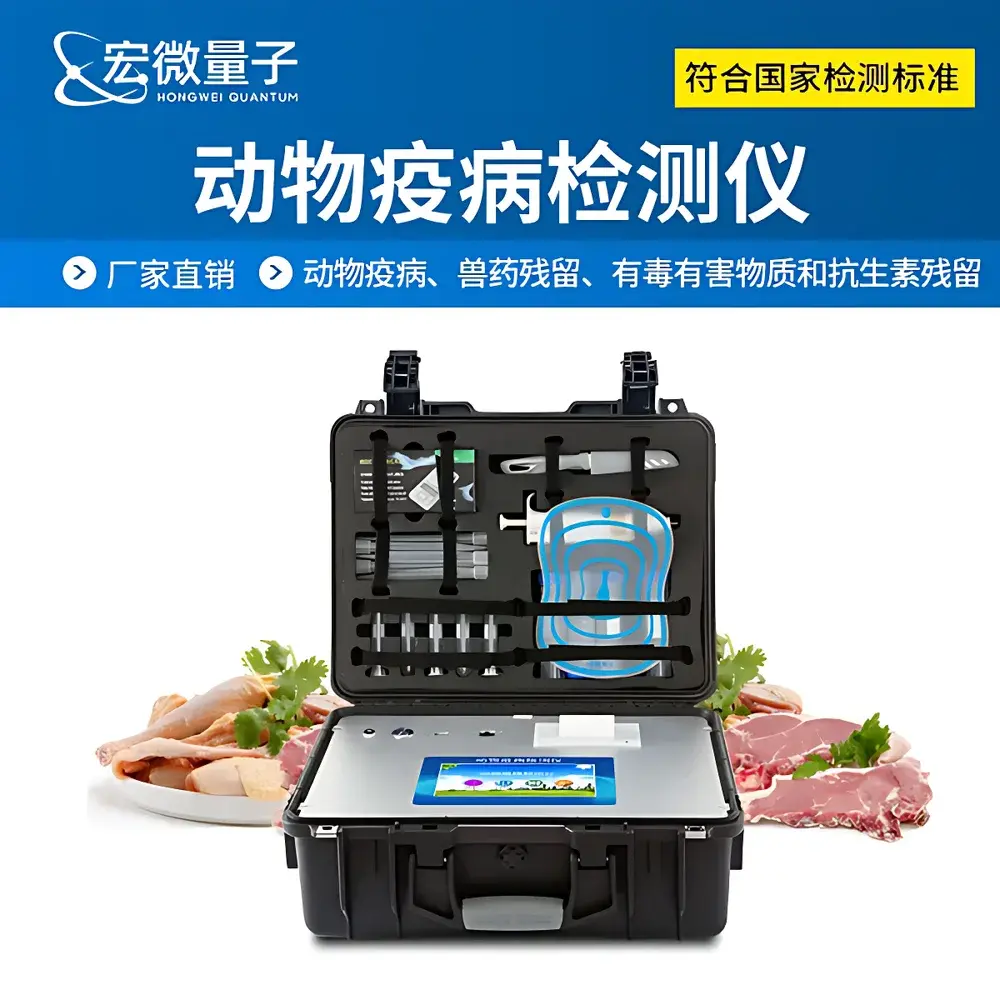
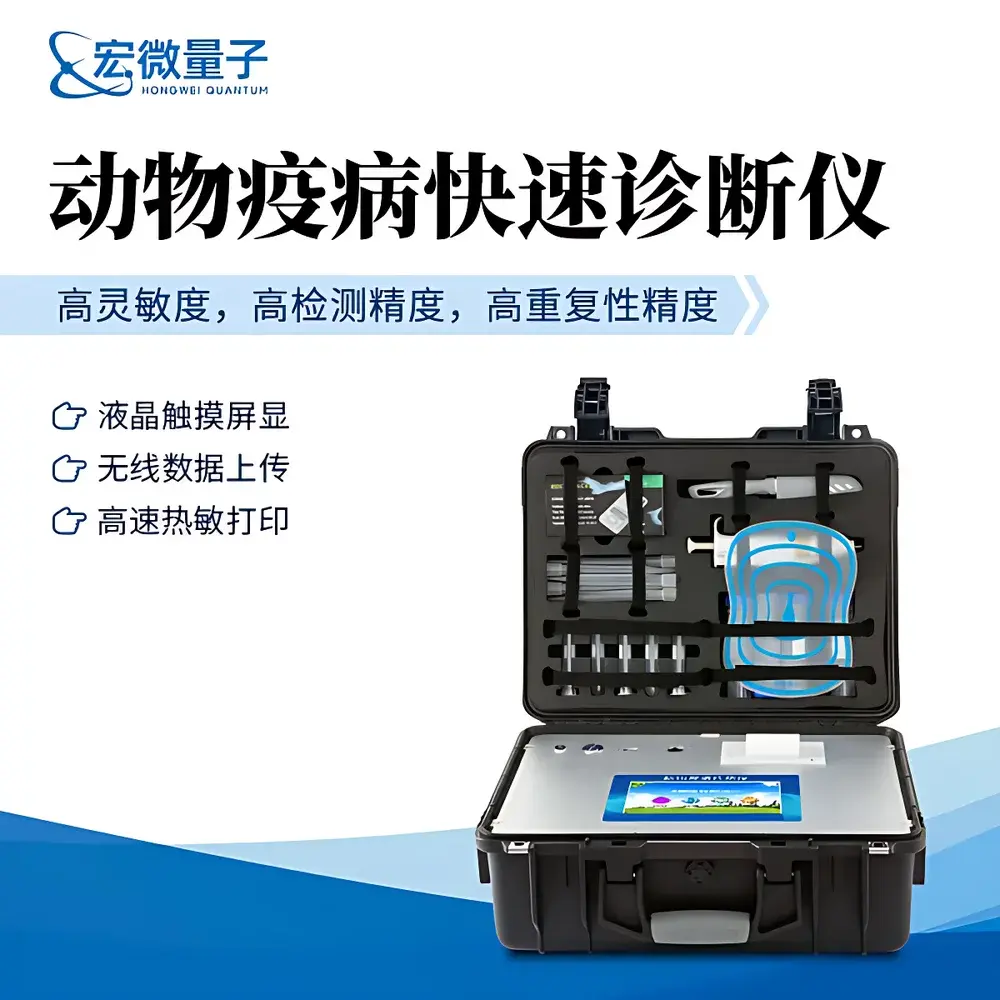
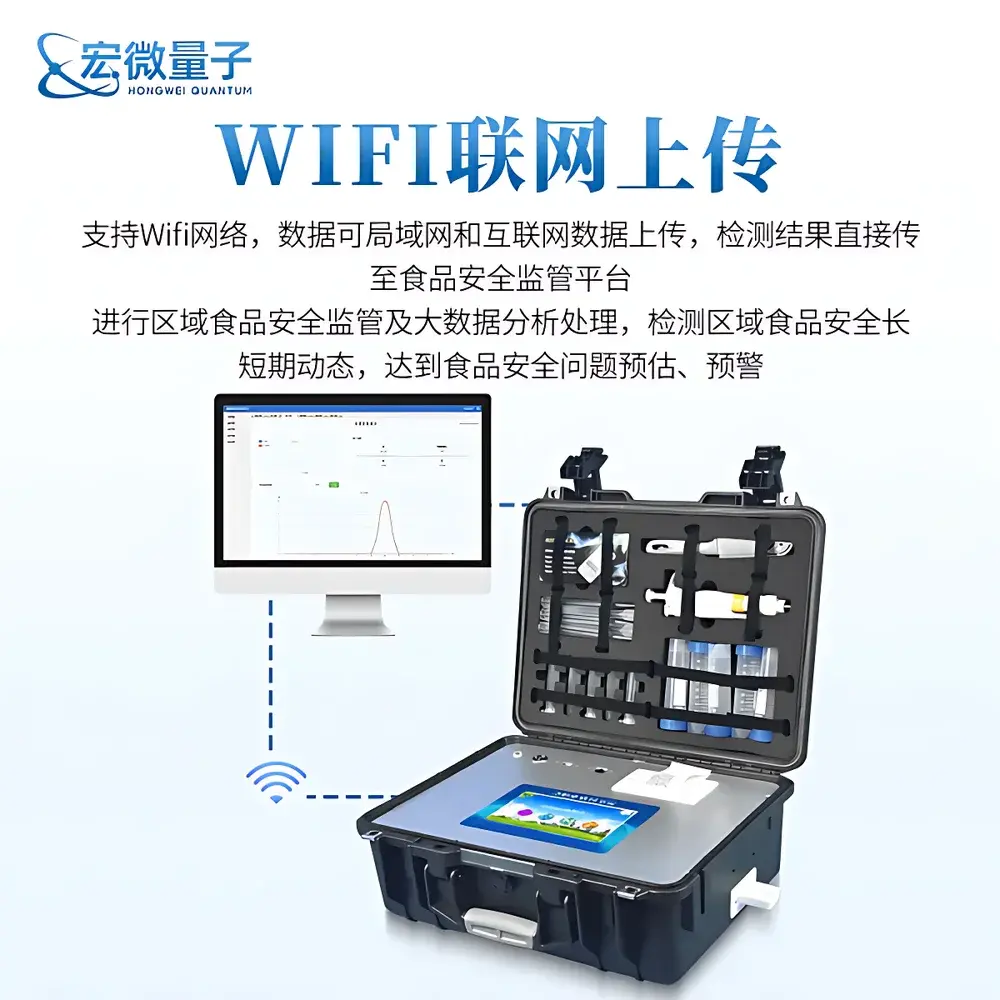
Hongweiliangzi HW-DWYB Portable Colloidal Gold Immunochromatographic Analyzer for Veterinary Pathogen and Residue Detection
| Brand | Hongweiliangzi |
|---|---|
| Model | HW-DWYB |
| Origin | Shandong, China |
| Power Supply | 12 V DC |
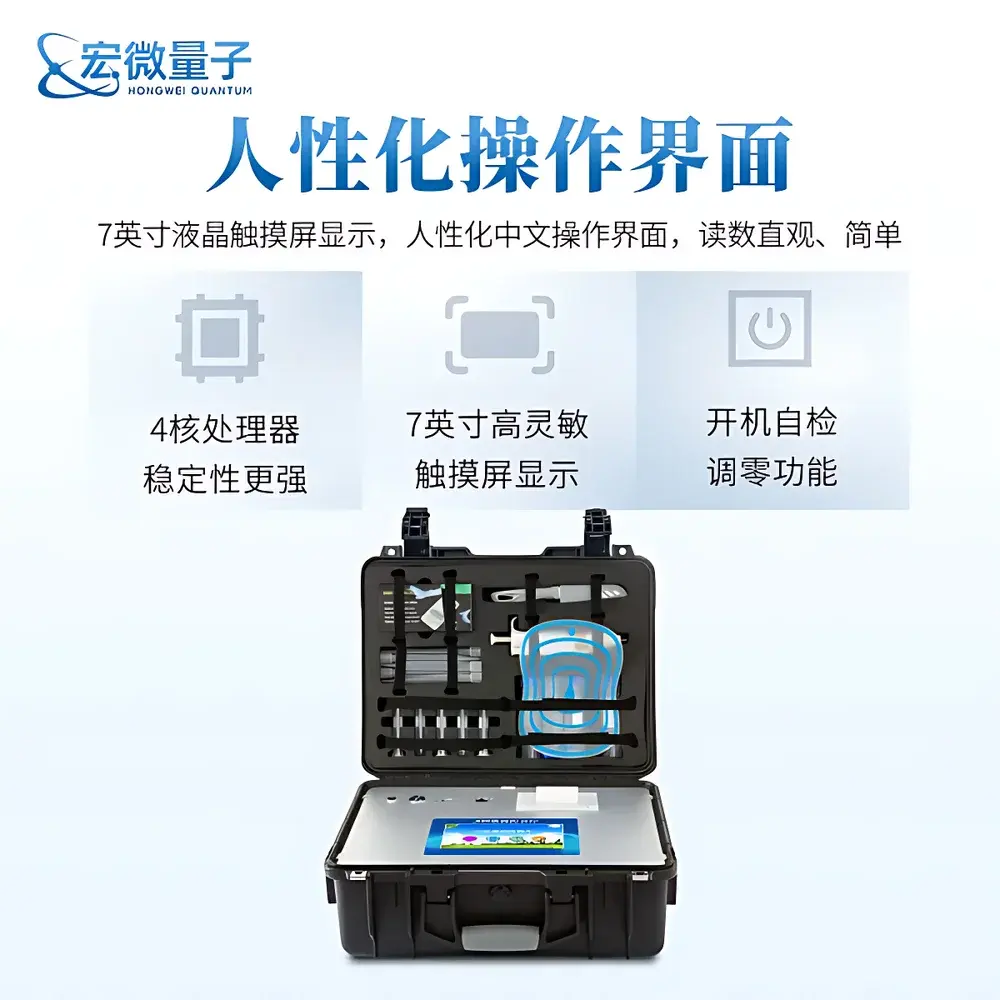
| Display | 7-inch capacitive touchscreen |
| Data Storage | 200,000 test records |
| Connectivity | Wi-Fi, USB 2.0 |
| Printer | Integrated thermal printer |
| Dimensions (L×W×H) | 550 × 245 × 375 mm |
| Weight | 6.8 kg |
| Regulatory Compliance | Meets GB/T 27404–2008 (Laboratory Quality Control for Food Microbiology), compatible with national veterinary residue limit standards (e.g., NY 468–2001, GB 29690–2013) |
Overview
The Hongweiliangzi HW-DWYB is a portable, microprocessor-controlled colloidal gold immunochromatographic analyzer engineered for rapid, on-site qualitative detection of veterinary pathogens and chemical contaminants in animal-derived samples. It operates on the principle of lateral flow immunoassay (LFIA) quantification via high-resolution optical scanning—specifically measuring the intensity ratio of test (T) and control (C) lines on commercially available colloidal gold test strips. Unlike ELISA or PCR-based platforms, the HW-DWYB delivers results within 5–10 minutes without requiring reagent preparation, centrifugation, or trained molecular biology personnel. Its architecture is optimized for field deployment in resource-constrained environments—including farms, slaughterhouses, mobile inspection units, and regional food safety laboratories—while maintaining analytical consistency across diverse sample matrices (serum, milk, tissue homogenates, urine, and feed extracts).
Key Features
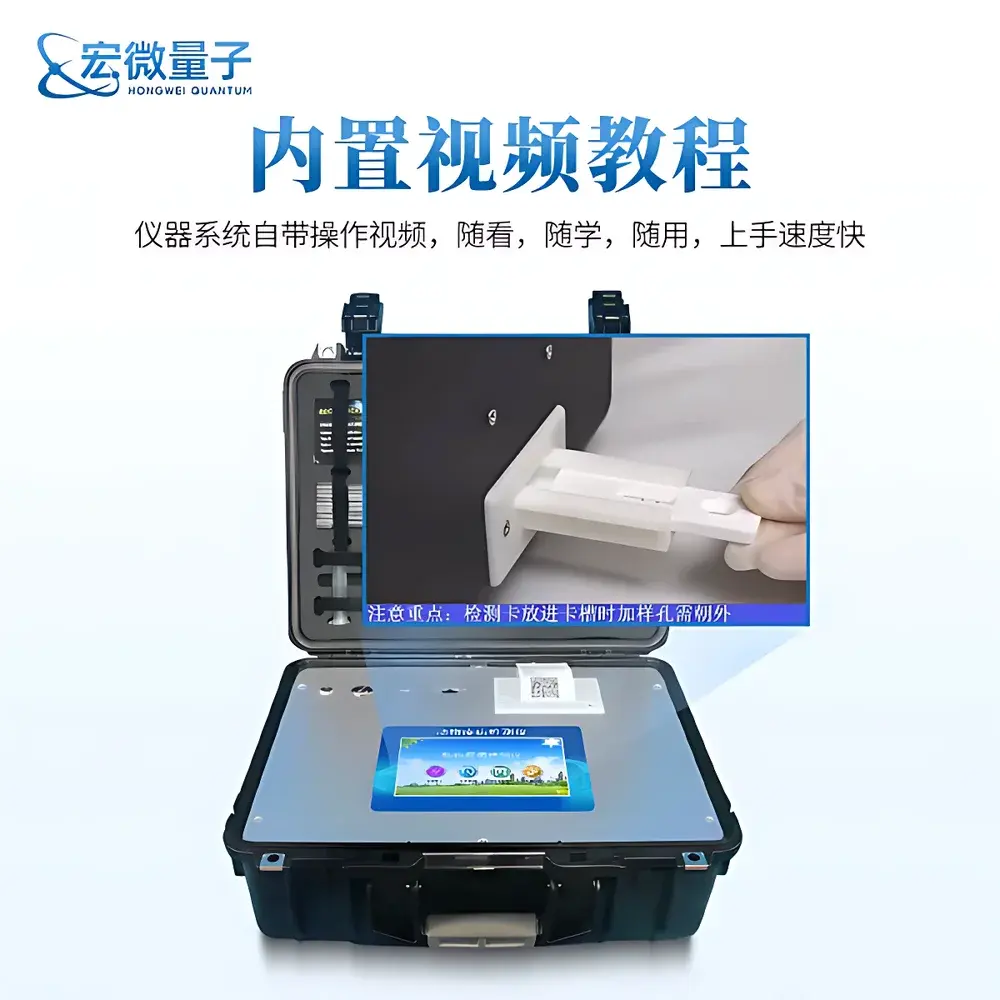
- Automated strip handling: Orbital conveyor system enables hands-free loading, precise optical scanning, and automatic ejection post-readout.
- Intelligent line recognition: Embedded image-processing algorithm auto-identifies C/T line positions and calculates T/C ratios without manual threshold adjustment.
- Field-ready power architecture: Operates on 12 V DC input—compatible with vehicle power systems—and features pulsed constant-current LED excitation to minimize photometric drift and thermal degradation over extended use.
- Regulatory-aligned database: Preloaded with Chinese national maximum residue limits (MRLs) for >40 analytes per GB 31650–2019, NY/T 1897–2020, and related veterinary directives; firmware supports periodic updates via USB or Wi-Fi.
- Secure data governance: Role-based access control with password-protected login; audit-trail-capable operation logs compliant with GLP documentation requirements.
- Scalable assay support: Hardware-agnostic design accepts all standard 5-mm-width colloidal gold cassettes from third-party manufacturers—no proprietary consumables lock-in.
Sample Compatibility & Compliance
The HW-DWYB validates performance across liquid and semi-solid matrices including porcine serum, bovine milk, avian cloacal swabs, ovine tissue homogenates, and poultry feed extracts. Sample preparation follows AOAC Official Method 2012.01 (for mycotoxins) and CNAS-CL01:2018–aligned extraction protocols. Instrument calibration and verification are traceable to NIM (National Institute of Metrology, China) reference materials. While not CE-marked or FDA 510(k)-cleared, the device meets functional equivalency benchmarks defined in ISO 13843:2017 (Performance criteria for qualitative in vitro diagnostic assays) and supports documentation required for domestic food safety audits under China’s Food Safety Law (Article 112) and the Ministry of Agriculture and Rural Affairs’ Notice on Strengthening Monitoring of Veterinary Drug Residues (No. 227 [2021]).
Software & Data Management
The embedded Linux-based OS provides an intuitive Chinese/English bilingual GUI with touch-optimized workflow navigation. All test metadata—including sample ID (auto-incremented), analyte name, operator ID, timestamp, and geotag (via optional GPS module)—are stored locally in encrypted SQLite format. Export options include batch-printed thermal reports (per GB/T 18404–2001 formatting), CSV/Excel files via USB mass storage, and secure HTTPS POST uploads to centralized platforms such as the National Food Safety Risk Assessment Center’s cloud dashboard. Wi-Fi connectivity supports TLS 1.2 encryption and configurable proxy authentication for integration into enterprise IT infrastructures subject to ISO/IEC 27001 controls.
Applications
The HW-DWYB serves as a frontline screening tool in integrated surveillance systems targeting:
- Viral antigens: Classical swine fever virus (CSFV) p80, African swine fever virus (ASFV) p72, porcine reproductive and respiratory syndrome virus (PRRSV) N protein, foot-and-mouth disease virus (FMDV) non-structural 3ABC antibodies.
- Mycotoxins: Aflatoxin B1, B2, G1, G2, and M1 at sub-ppb sensitivity levels per GB 5009.22–2016.
- Veterinary drug residues: β-agonists (clenbuterol, ractopamine), fluoroquinolones (enrofloxacin, ciprofloxacin), sulfonamides, tetracyclines, chloramphenicol, and nitrofurans—validated against GB/T 20763–2006 and GB/T 21312–2007.
- Illicit additives: Melamine, malachite green, diethylstilbestrol—aligned with GB/T 22286–2008 and GB/T 22973–2008.
It is routinely deployed by provincial animal husbandry bureaus for routine farm gate monitoring, by customs inspection agencies for border quarantine triage, and by university veterinary schools for teaching diagnostic assay principles.
FAQ
Does the HW-DWYB require external calibration standards for each test?
No. The instrument performs self-calibration using the internal control line (C-line) signal as the reference baseline; no user-introduced calibrators are needed for qualitative interpretation.
Can test strip lot numbers and expiration dates be recorded during analysis?
Yes. The software allows manual entry or barcode scanning of strip lot information prior to assay initiation, and stores this metadata alongside result records.
Is remote firmware update supported over cellular networks?
Firmware updates are delivered via Wi-Fi only; cellular tethering is not natively supported but may be enabled through external hotspot devices.
What is the optical resolution of the scanning sensor?
The linear CCD array provides 1200 dpi spatial resolution along the test line axis, with photometric repeatability ≤3% CV across 20 repeated scans of identical strips.
How does the system handle ambiguous or faint T-line signals?
The algorithm applies adaptive contrast enhancement and Gaussian smoothing prior to peak detection; results flagged as “indeterminate” require visual confirmation per GB/T 27404–2008 Section 7.3.2 guidelines.



