
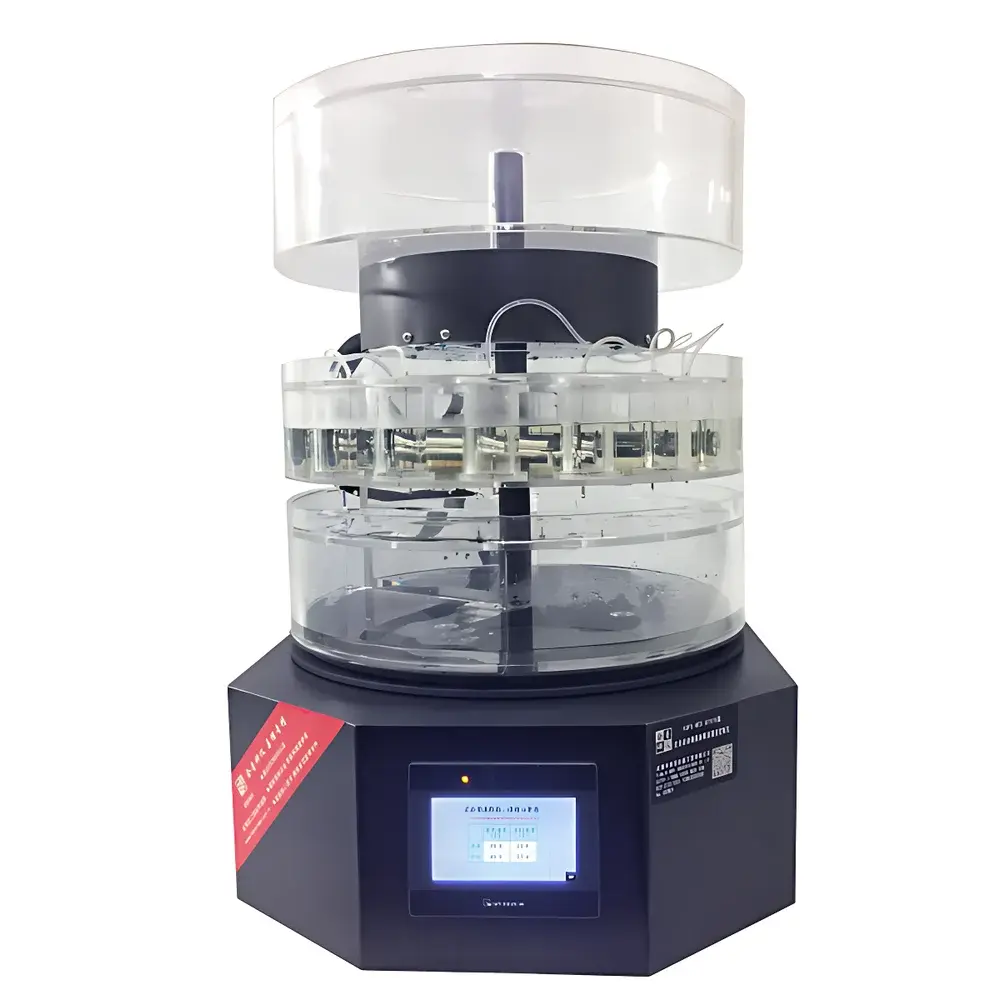
HOPE-MED 8191A Automated Ex Vivo Ocular Perfusion System
| Brand | HOPE-MED |
|---|---|
| Model | 8191A |
| Origin | Tianjin, China |
| Power | 100 W |
| Chamber Volume | 20 L |
| Temperature Control Range | 37 °C |
| Temperature Uniformity | ±0.1% |
| Temperature Accuracy | ±0.1% |
| Manufacturer Type | Authorized Distributor |
| Country of Manufacture | China |
| Price Range | USD 7,000 – 14,000 |
Overview
The HOPE-MED 8191A Automated Ex Vivo Ocular Perfusion System is a precision-engineered platform designed to maintain isolated mammalian eyes under physiologically relevant conditions for electrophysiological, pharmacological, and ophthalmic research. Unlike static incubation or manual perfusion setups, this system implements continuous, gravity- and pump-assisted perfusion of oxygenated, temperature-controlled artificial aqueous humor or balanced salt solution across the corneal surface and anterior chamber. The device operates on a closed-loop thermal regulation architecture, ensuring stable 37 °C maintenance—mimicking core body temperature—to preserve corneal epithelial integrity, stromal hydration, endothelial pump function, and retinal responsiveness over extended experimental durations (up to 6–8 hours). Its modular design integrates fluid delivery, thermal equilibration, and environmental stabilization without requiring external water baths or third-party controllers.
Key Features
- Integrated dual-mode perfusion: Combines gravity-fed drip delivery with programmable peristaltic flow control to sustain consistent tear-film dynamics and intraocular pressure simulation.
- Precision thermal management: PID-controlled heating system with platinum resistance thermometer (PT100) feedback ensures ±0.1 °C accuracy and <0.1% spatial uniformity across the 20 L chamber volume.
- Modular ocular mounting stage: Accommodates whole enucleated eyes from rodents, rabbits, and porcine models with adjustable scleral fixation and corneal exposure geometry.
- Chemical-resistant fluid path: All wetted components—including tubing, reservoirs, and drip nozzles—are constructed from medical-grade silicone and borosilicate glass to prevent leaching and ensure compatibility with pharmacological agents (e.g., pilocarpine, atropine, glutamate analogs).
- Real-time environmental monitoring: Onboard sensors log temperature, flow rate (via calibrated rotor meter), and solution pH (optional add-on probe) with timestamped CSV export capability.
- CE-compliant electrical safety architecture and IP20-rated enclosure for laboratory use under GLP-aligned workflows.
Sample Compatibility & Compliance
The 8191A supports ex vivo preparation of intact eyes from C57BL/6 mice, Sprague-Dawley rats, New Zealand White rabbits, and domestic swine—enabling translational studies in glaucoma, dry eye disease, corneal wound healing, and neuro-ophthalmic signal transduction. All fluid-handling materials comply with ISO 10993-5 (cytotoxicity) and USP Class VI standards. The system’s operational parameters align with ASTM F2459-22 (Standard Guide for In Vitro Ocular Toxicity Testing) and support validation under FDA-recommended GLP practices for preclinical ocular safety assessment. While not certified for clinical use, its thermal and fluidic stability meets internal SOP requirements for IACUC-approved ex vivo protocols.
Software & Data Management
The HOPE-MED 8191A operates via embedded firmware with local touchscreen interface (no PC dependency required). Configuration presets include “Corneal Hydration Mode”, “Electrophysiology Stabilization”, and “Pharmacokinetic Washout”. All sensor data are time-synchronized and stored internally (8 GB flash memory) with optional USB export. Raw logs conform to IEEE 11073-10201 nomenclature for physiological parameter encoding, facilitating integration into LabArchives ELN or MATLAB-based analysis pipelines. Audit trails record user login, parameter changes, and system alerts—supporting 21 CFR Part 11 compliance when paired with institutional identity management infrastructure.
Applications
- Ex vivo electroretinography (ERG) and multifocal ERG acquisition under controlled thermal and hydration states.
- Evaluation of topical drug permeation kinetics across the cornea and sclera using LC-MS/MS quantification of tissue homogenates.
- Assessment of endothelial cell pump activity via real-time corneal thickness measurement (integrated optical coherence tomography port available as OEM option).
- Functional screening of ion channel modulators in isolated iris sphincter or ciliary body preparations.
- Validation of ocular toxicity endpoints per OECD TG 492 (Reconstructed Human Cornea-like Epithelium assay) reference methodologies.
FAQ
What species’ eyes are compatible with the 8191A chamber design?
Rodent (mouse/rat), lagomorph (rabbit), and porcine eyes are routinely accommodated; custom adapters are available for non-standard orbital geometries.
Is the system suitable for long-term (>4 h) viability studies?
Yes—validated for sustained corneal transparency and retinal ganglion cell responsiveness up to 8 h when using oxygenated bicarbonate-buffered Ringer’s solution.
Can the perfusate temperature be adjusted outside 37 °C?
The firmware supports 25–42 °C range; however, 37 °C is factory-optimized for mammalian ocular physiology and thermal stability.
Does the device meet ISO/IEC 17025 calibration traceability requirements?
Temperature sensors are factory-calibrated against NIST-traceable references; full calibration certificates are provided upon request.
Is remote monitoring supported via Ethernet or Wi-Fi?
No native network interface is included; however, RS-232 and USB-C serial output enable integration with building-wide SCADA or LabVIEW DAQ systems.




