
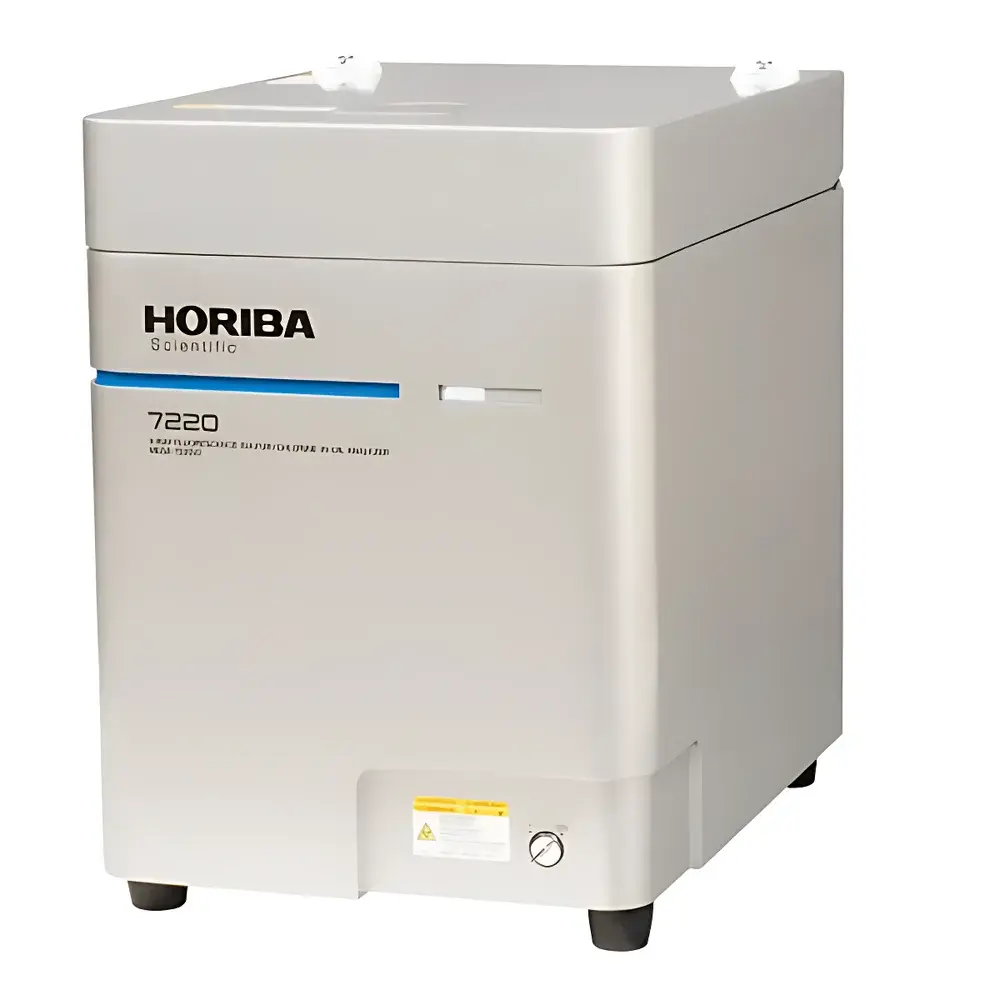
HORIBA MESA-7220V2 Benchtop Energy Dispersive X-Ray Fluorescence Spectrometer for Sulfur and Chlorine Analysis in Petroleum Products
| Brand | HORIBA |
|---|---|
| Origin | Japan |
| Manufacturer Type | Original Equipment Manufacturer (OEM) |
| Product Category | Imported Instrument |
| Model | MESA-7220V2 |
| Configuration | Benchtop / Floor-Standing |
| Instrument Type | Conventional ED-XRF |
| Application-Specific Design | Petroleum & Lubricant Compliance Testing |
| Elemental Range | S, Cl |
| Quantification Range | S: 0.7 ppm – 10.0 wt% |
| Cl | 0.6 ppm – 10.0 wt% |
| Mn-Kα Energy Resolution | ≤175 eV |
| Detector | Silicon Drift Detector (SDD) |
Overview
The HORIBA MESA-7220V2 is a benchtop energy dispersive X-ray fluorescence (ED-XRF) spectrometer engineered specifically for quantitative determination of sulfur (S) and chlorine (Cl) in petroleum-based samples—including fuels, lubricants, crude oils, and refinery intermediates. It employs monochromatic excitation—a proprietary configuration utilizing a graphite crystal monochromator to select and focus Ag Kα radiation onto the sample—thereby minimizing background scatter and enhancing peak-to-background ratio. This architecture delivers exceptional signal fidelity for low-Z elements, particularly critical for trace-level S and Cl quantification where spectral overlap and matrix absorption effects dominate analytical uncertainty. The instrument operates under ambient atmospheric conditions (no vacuum or helium purge required), enabled by its high-transmission beryllium window and optimized SDD geometry. Its design complies with core regulatory frameworks governing fuel quality control, including ASTM D7220 (standard test method for sulfur in petroleum products by monochromatic wavelength dispersive XRF), ASTM D4294 (S by conventional ED-XRF), ASTM D4929 (Cl in aromatic hydrocarbons), ISO 8754 (petroleum products—sulfur determination), ISO 13032 (XRF performance verification), and ISO 20847 (sulfur in gasoline and diesel).
Key Features
- Monochromatic excitation system with adjustable graphite crystal angle—enabling fine-tuned optimization of S Kα excitation efficiency and reducing interferences from adjacent elements.
- Large-area silicon drift detector (SDD) with Mn-Kα resolution ≤175 eV—ensuring sharp peak separation and high count-rate capability for robust low-concentration measurement.
- Extended dynamic quantification range: 0.7 ppm–10.0 wt% for sulfur and 0.6 ppm–10.0 wt% for chlorine—covering ultra-low-sulfur diesel (ULSD), marine fuels (IMO 2020 compliant), and high-sulfur residuals without dilution or method switching.
- Integrated safety interlock system and replaceable X-ray tube beryllium window—ensuring operator protection per IEC 61010-1 and enabling field maintenance without service downtime.
- Micro-positioning crystal stage with sub-micron angular repeatability—supporting long-term calibration stability and method transfer across instruments.
- Oxygen correction algorithm embedded in quantification engine—compensating for matrix-induced attenuation effects on S fluorescence yield, especially in oxygen-rich bio-blended fuels.
Sample Compatibility & Compliance
The MESA-7220V2 accommodates standard 7–10 mL petroleum sample cups (quartz or polyethylene), with validated performance across liquid hydrocarbons, distillates, heavy fuel oils, and lubricant base stocks. While optimized for petroleum matrices, it supports solid, powder, paste, and thin-film samples—subject to homogeneity assessment and appropriate calibration. No gas purging is required; analysis occurs in air at ambient pressure. The optical chamber maintains internal pressure ≤4 kPa via integrated diaphragm pump, eliminating need for external vacuum systems. All hardware and firmware comply with electromagnetic compatibility (EMC) directives (IEC 61326-1), radiation safety standards (IEC 61010-1, JIS Z 4901), and are designed for GLP/GMP environments—supporting full audit trails, electronic signatures, and 21 CFR Part 11–compliant data integrity when used with optional secure software modules.
Software & Data Management
The instrument runs HORIBA’s dedicated MESA-7220V2 Control & Analysis Suite, a Windows-based application supporting standalone operation without network dependency. It features automated calibration expansion—allowing up to 60 independent calibration curves, each configurable with up to 300 reference points. Curves support post-acquisition editing, interpolation/extrapolation validation, and batch reprocessing. Measurement parameters—including acquisition time (30–999 s), repeat scans (1–99), and pulse processing settings—are fully programmable. User access is managed via role-based accounts (up to 20 configurable profiles), with granular permissions for method editing, result approval, and system configuration. All raw spectra, processed results, instrument logs, and calibration metadata are stored in encrypted SQLite databases with immutable timestamps—facilitating traceability, version control, and regulatory reporting.
Applications
- Refinery QC labs performing routine S/Cl screening of feedstocks, intermediates, and finished fuels per ASTM D7220/D4294.
- Marine fuel testing laboratories verifying compliance with IMO MARPOL Annex VI sulfur cap (0.50 wt% globally, 0.10 wt% in ECAs).
- Lubricant formulation R&D—tracking Cl-based additive depletion or S-containing anti-wear compound stability during oxidation studies.
- Independent testing labs conducting third-party certification for EN 590 (diesel), ASTM D975 (diesel fuel oils), and ASTM D3606 (benzene content—where Cl interference must be ruled out).
- Research institutions investigating halogen speciation in alternative fuels, including bio-diesel blends and synthetic hydrocarbons.
FAQ
Does the MESA-7220V2 require vacuum or helium purge for sulfur analysis?
No. It operates under ambient atmospheric conditions using a high-transmission Be window and monochromatic excitation to achieve low detection limits without gas purging.
Can the instrument quantify sulfur and chlorine simultaneously in a single measurement?
Yes. Dual-element quantification is performed in one acquisition cycle, with independent peak integration and matrix correction applied to each element.
Is ASTM D7220 compliance verified and documented?
Yes. Factory-installed method templates include pre-validated D7220 workflows, and performance verification reports (including LOD/LOQ, precision, linearity) are supplied with each unit.
What sample preparation is required for petroleum liquids?
Minimal preparation: homogenization and transfer into standardized sample cups. No digestion, dilution, or derivatization is needed.
How is data integrity ensured for regulated environments?
The software supports ALCOA+ principles (Attributable, Legible, Contemporaneous, Original, Accurate) and integrates with optional 21 CFR Part 11 modules for electronic signatures, audit trails, and user access controls.
Related Products




