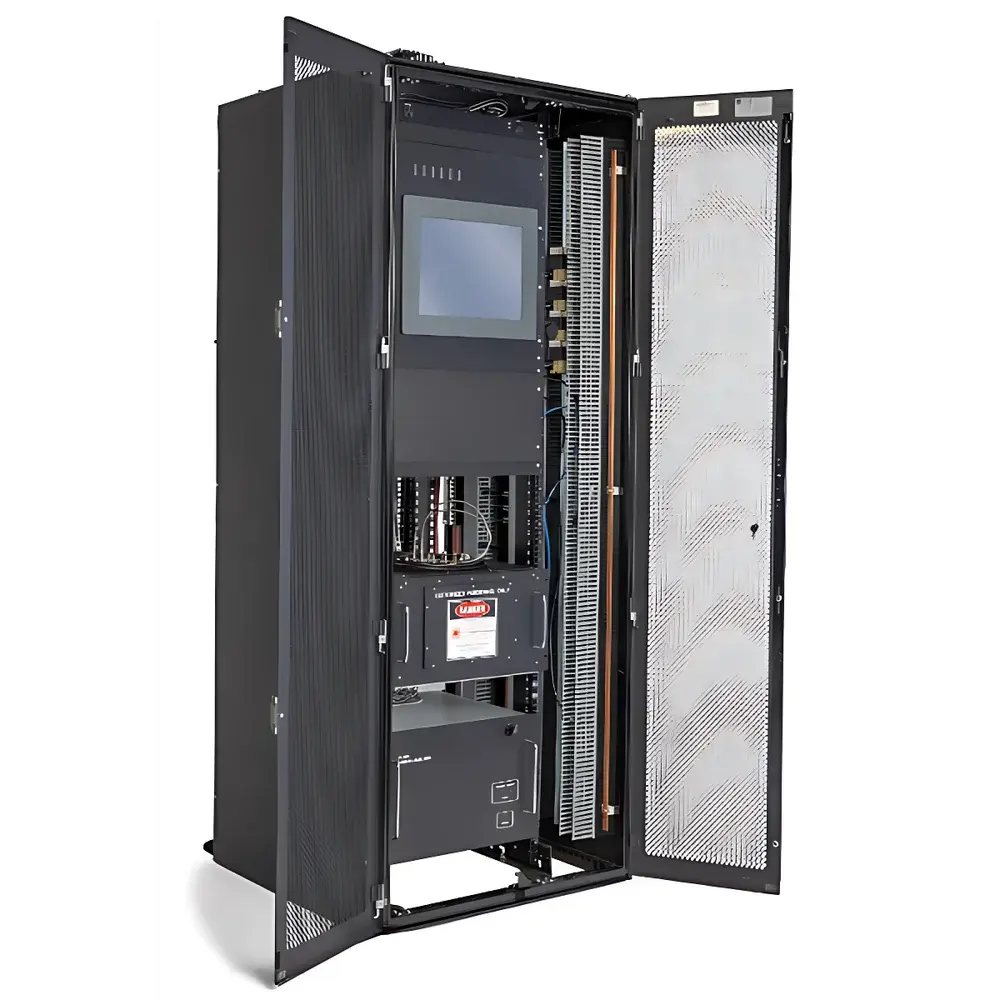
HORIBA PI-200-I Multi-Channel In-Line Raman Analyzer
| Brand | HORIBA |
|---|---|
| Origin | USA |
| Manufacturer Type | Original Equipment Manufacturer (OEM) |
| Origin Category | Imported |
| Model | PI-200-I |
| Pricing | Upon Request |
Overview
The HORIBA PI-200-I Multi-Channel In-Line Raman Analyzer is an engineered solution for real-time, non-invasive molecular characterization in demanding industrial process environments. Based on confocal near-infrared (NIR) Raman spectroscopy at 785 nm excitation, the system enables quantitative and qualitative analysis of chemical composition without sample extraction, reagent consumption, or physical contact with the process stream. Its core optical architecture integrates a thermoelectrically cooled, back-illuminated CCD detector, a high-throughput f/2.0 spectrometer with precision temperature stabilization (~33 °C), and advanced Rayleigh rejection filtering (<10⁻⁸ OD) to maximize signal-to-noise ratio for weak Raman scattering. Designed for continuous operation under fluctuating thermal, mechanical, and optical conditions—common in refineries, petrochemical plants, and gas processing facilities—the PI-200-I delivers stable spectral acquisition over extended periods, supporting robust chemometric modeling and long-term calibration integrity.
Key Features
- Multi-channel scalability: Supports up to 17 independent optical channels via integrated fiber-optic multiplexer, enabling simultaneous monitoring of multiple process points or unit operations from a single analyzer chassis.
- High spectral fidelity: Spectral resolution of ~4 cm⁻¹ at 785 nm, tunable spectral range from ~250–2650 cm⁻¹, and deep-cooled (−82 °C) back-illuminated CCD ensure high quantum efficiency in the NIR region and reproducible peak identification.
- Process-hardened probe design: Sapphire-windowed flow cells coupled with dual-core low-OH multimode fiber (200/400 μm core/cladding) and LSZH-jacketed, aramid-reinforced cabling (up to 350 m length) provide mechanical durability, chemical resistance, and immunity to moisture, particulates, and bubble interference.
- Zero-maintenance optical path: No moving parts, no consumables (e.g., GC columns, carrier gases), no external cooling systems, and no pre-conditioning units (e.g., dehydrators or thermostats) required—reducing total cost of ownership and operational downtime.
- Redundant laser architecture: Dual-laser configuration with automatic switchover ensures uninterrupted data continuity; standard 785 nm diode laser (≤1000 mW output) offers optimal balance between fluorescence suppression and Raman cross-section sensitivity for hydrocarbon and organic species.
Sample Compatibility & Compliance
The PI-200-I is validated for direct in-line analysis of liquid, vapor, and multiphase streams across upstream, midstream, and downstream hydrocarbon processing. It complies with EN 60825-1 (laser safety), CE marking, CDRH regulations, and carries ETL certification per UL 61010-1 for electrical safety in industrial laboratory and plant-floor environments. Its optical design inherently accommodates variable refractive index, turbidity, and thermal drift—enabling reliable quantification in applications including naphtha isomerization, FCC effluent monitoring, reformate octane prediction, PX purity control, and hydrogenation reaction tracking—without requiring sample conditioning or dilution. All hardware and firmware architectures are compatible with GLP/GMP-aligned validation protocols and support audit-trail generation for FDA 21 CFR Part 11 compliance when integrated with validated LIMS or DCS platforms.
Software & Data Management
The system operates with HORIBA’s proprietary RamanAnalyzer™ software suite, which provides real-time spectral acquisition, multivariate calibration management (PLS, PCR, PCA), and dynamic limit alarm triggering. Calibration models are traceable to NIST-traceable reference standards and support automated model update workflows based on laboratory reference data synchronization. Data export supports industry-standard formats (CSV, HDF5, ASTM E1382-compliant spectral metadata) and native integration with Modbus RTU/TCP, 4–20 mA analog outputs, and Ethernet/IP for seamless DCS/SCADA connectivity. Full audit logging—including user actions, calibration history, spectral acquisition timestamps, and instrument health diagnostics—is retained locally and exportable for regulatory review.
Applications
- Natural gas composition monitoring (CH₄, C₂H₆, H₂S, CO₂)
- Catalytic reforming and naphtha isomerization endpoint control
- Liquefied petroleum gas (LPG) blending verification (propane/butane ratio)
- FCC gasoline fraction analysis (olefin/saturation, benzene content)
- Alkylation reactor feed and product stream profiling
- Jet fuel (Jet A/A-1) aromatic saturation and freezing point estimation
- Diesel hydrotreating conversion monitoring (S-content, CN number)
- Heavy distillate cut-point verification in atmospheric/vacuum distillation
- Sulfate ion detection in produced water (oilfield applications)
FAQ
What is the minimum detectable concentration for key hydrocarbons using the PI-200-I?
Detection limits are compound-specific and method-dependent; typical quantitation limits range from <10 ppm to <100 ppm for targeted analytes under optimized calibration and favorable matrix conditions.
Can the system operate continuously in hazardous area environments?
Yes—the optical probes and fiber cabling are rated for Class I, Div 2 / Zone 2 environments; explosion-proof enclosures and intrinsically safe interface modules are available upon request.
Is remote calibration verification supported?
Yes—remote spectral validation using built-in reference standards (e.g., cyclohexane, silicon) and automated drift correction algorithms enable periodic performance checks without on-site intervention.
How is chemometric model transfer handled across instruments?
HORIBA provides standardized preprocessing pipelines and instrument-response normalization tools to facilitate model portability between PI-200-I units, minimizing revalidation effort during fleet deployment.
What is the expected lifetime of the laser source and spectrometer?
Laser diodes are rated for >4 years of continuous operation; the spectrometer and multiplexer assemblies are designed for >20 years of service life under specified environmental conditions.
Related Products