
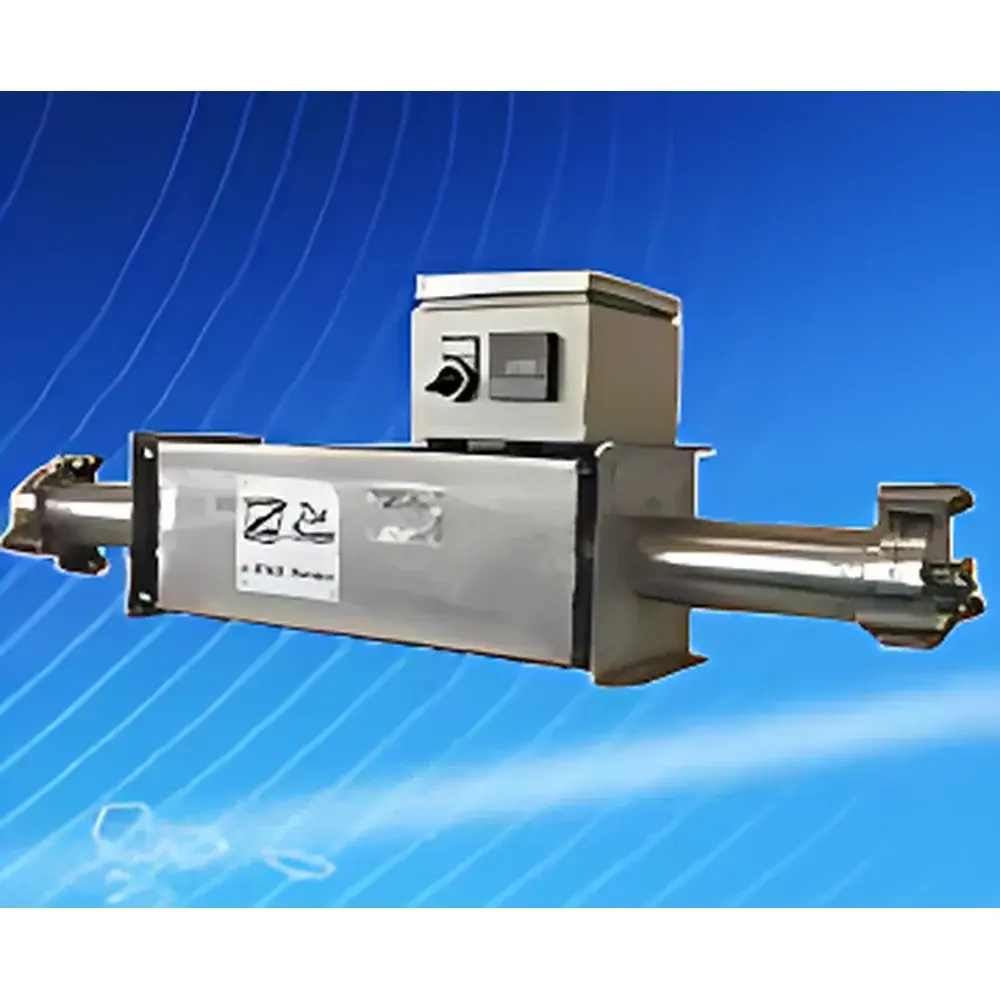
HR63 Vacuum Tube Furnace
| Origin | Germany |
|---|---|
| Manufacturer Type | Distributor |
| Origin Category | Imported |
| Model | HR63 |
| Pricing | Upon Request |
| Dimensions (L×W×H) | 1000 × 250 × 250 mm |
| Net Weight | 17 kg |
| Chamber Material | AISI 304 stainless steel (1.4301) |
| Working Chamber | Ø59 × 400 mm (~1 L volume) |
| Max Operating Temperature | 200 °C (programmable temperature controller) |
| Sample Capacity | ~400 g (powder) |
| Power Rating | 533 W @ 240 V |
| Vacuum Interface | 2 × DN63 (main), DN16 & DN25 (auxiliary) |
| Ultimate Vacuum | 1 × 10⁻⁴ mbar |
| Heating Source | Electric heating plate |
| Includes | Thermal insulation adapter, cooling tube, flange set (DN63 ×2, DN16, DN25), vacuum/gas line adapters, pressure/vacuum gauges, control unit with PID programming, temperature sensor, mounting hardware, and operation manual |
Overview
The HR63 Vacuum Tube Furnace is a compact, benchtop-grade thermal processing system engineered for controlled atmosphere sample conditioning in research and quality control laboratories. Designed around a horizontal cylindrical chamber sealed within a robust AISI 304 stainless steel (1.4301) housing, the furnace operates on the principle of resistive electric heating coupled with active vacuum evacuation and optional inert or reactive gas purging. Its core function is to enable precise thermal treatment—such as drying, degassing, solvent extraction, thermal stabilization, or low-temperature chemical reaction—under reproducible pressure and temperature conditions. Unlike high-temperature tube furnaces (>800 °C), the HR63 is optimized for sub-200 °C applications where thermal homogeneity, vacuum integrity, and interface flexibility are critical. The Ø59 × 400 mm quartz-compatible chamber provides ~1 L effective volume, supporting batch processing of up to 400 g of powdered or granular samples while maintaining uniform axial temperature distribution across the heated zone.
Key Features
- Programmable PID temperature controller with integrated thermocouple input (Type K), enabling ramp-hold profiles with ±1 °C accuracy over the 20–200 °C range.
- Dual DN63 ISO-KF flanges for primary vacuum/gas inlet and outlet; additional DN16 and DN25 ports support auxiliary instrumentation such as residual gas analyzers or mass flow controllers.
- Ultimate vacuum capability of 1 × 10⁻⁴ mbar, verified using calibrated capacitance manometers—compatible with turbomolecular or dry scroll vacuum pumps.
- Electric heating plate with thermal insulation adapter ensures minimal external surface temperature rise (<50 °C at ambient), enhancing lab safety and energy efficiency.
- Integrated cooling tube facilitates rapid post-process quenching or controlled cooldown rates without breaking vacuum or introducing ambient moisture.
- All structural components—including flanges, clamps, and sealing gaskets—conform to DIN 28403 and ISO-KF standards for interchangeability and leak-tight performance.
Sample Compatibility & Compliance
The HR63 accommodates a broad spectrum of solid-phase samples including metal oxides, polymer composites, battery electrode slurries, catalyst precursors, and pharmaceutical excipients. Its low-temperature operational envelope makes it especially suitable for thermally labile materials that decompose above 200 °C. Chamber geometry supports both static and gently agitated configurations (when used with compatible rotary feedthroughs). All wetted surfaces are electropolished 1.4301 stainless steel, compliant with ISO 15190:2020 for laboratory equipment hygiene and corrosion resistance. Vacuum system interfaces meet EU Pressure Equipment Directive (PED 2014/68/EU) requirements for Category I equipment. The control unit includes audit-trail-capable logging (time-stamped temperature/pressure data), supporting GLP-compliant documentation per ISO/IEC 17025:2017 Annex A.3.
Software & Data Management
The embedded control unit features a 4.3-inch capacitive touchscreen HMI with intuitive menu navigation and multi-step program storage (up to 16 profiles, each with 10 segments). Real-time temperature and pressure values are displayed simultaneously, with configurable alarm thresholds (e.g., over-temperature, vacuum loss). Data export is supported via USB 2.0 to CSV format for traceable post-processing in Excel or statistical analysis platforms. Optional RS485 Modbus RTU output enables integration into centralized SCADA or LIMS environments. Firmware adheres to IEC 62443-3-3 security baseline for industrial control systems, ensuring secure configuration updates and user-access tiering (operator/engineer/administrator).
Applications
- Pre-drying and outgassing of ceramic green bodies prior to sintering.
- Removal of residual solvents from conductive pastes used in printed electronics fabrication.
- Thermal conditioning of Li-ion battery cathode powders under argon to suppress surface oxidation.
- Controlled pyrolysis of polymer-based additives for residue analysis (e.g., ASTM D5630).
- Inert-atmosphere annealing of thin-film substrates for optical coating R&D.
- Low-temperature activation of heterogeneous catalysts under defined partial pressures of H₂ or NH₃.
FAQ
What vacuum pump is recommended for achieving 1 × 10⁻⁴ mbar?
A dry scroll pump (base pressure ≤1 × 10⁻² mbar) backed by a turbomolecular pump (pumping speed ≥60 L/s for N₂) is required; we supply compatible ISO-KF adapters for common OEM models (e.g., Pfeiffer HiCube, Edwards nXR).
Can the HR63 be operated under positive pressure?
Yes—gas inlets support regulated overpressure up to 2 bar(g) when fitted with appropriate pressure-relief and burst-disk protection per PED guidelines.
Is the chamber compatible with quartz or alumina tubes?
The internal Ø59 mm bore accepts standard Ø50 mm OD quartz or high-purity alumina tubes with custom-length machining; thermal expansion mismatch is mitigated by the flexible flange sealing design.
Does the system include validation documentation?
Factory calibration certificates for temperature (NIST-traceable thermocouple) and pressure (capacitance manometer) sensors are provided; IQ/OQ protocols available upon request.
What maintenance intervals are specified for long-term reliability?
Vacuum seal inspection every 200 operating hours; heating element resistance check annually; firmware updates recommended biannually to maintain cybersecurity compliance.
Related Products



