
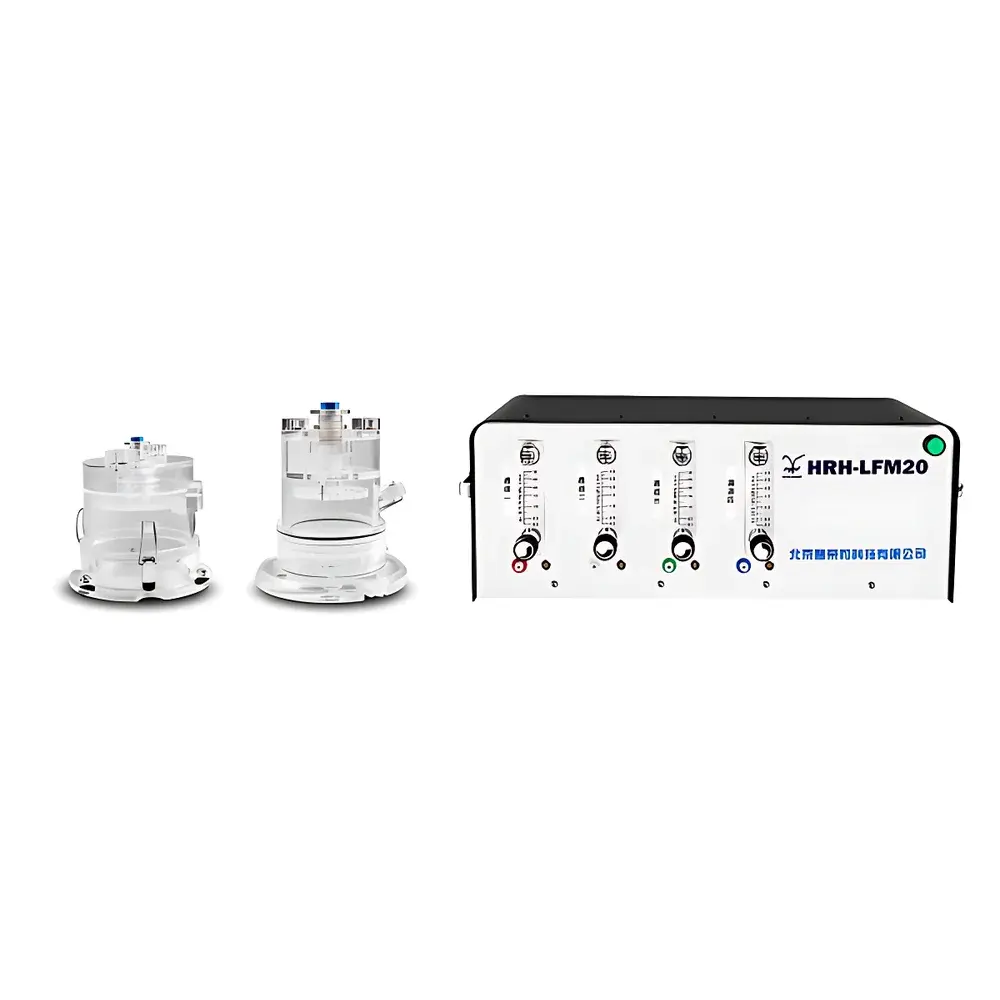
HRH-LFM20 Whole-Body Unrestrained Plethysmography System for Small Rodents
| Brand | HRH |
|---|---|
| Origin | Beijing, China |
| Manufacturer Type | Authorized Distributor |
| Country of Origin | PRC |
| Model | HRH-LFM20 |
| Instrument Type | Whole-Body Plethysmograph |
| Animal Compatibility | Mice, Rats, Guinea Pigs |
| Calibration Option | Optional Flow & Volume Calibration Platform |
| Chamber Material | Medical-Grade Transparent Polycarbonate (Autoclavable, Chemical-Resistant) |
| Operating Mode | Conscious, Unrestrained, Non-Invasive |
| Concurrent Testing Capacity | Up to 4 Chambers (Configurable) |
| Data Acquisition | Real-time Respiratory Waveform + Derived Parameters (f, TV, MV, Penh, EF50, etc.) |
Overview
The HRH-LFM20 Whole-Body Unrestrained Plethysmography System is an engineered platform for non-invasive, longitudinal assessment of respiratory physiology in conscious, freely moving small rodents—including mice, rats, and guinea pigs. It operates on the principle of whole-body barometric plethysmography (WBP), where minute pressure fluctuations within a sealed, temperature- and humidity-controlled chamber are transduced into high-fidelity respiratory waveforms. Unlike head-out or invasive methods requiring tracheostomy or anesthesia, the HRH-LFM20 eliminates surgical intervention and pharmacological confounders, preserving natural breathing patterns and autonomic regulation. This enables reliable quantification of baseline respiratory parameters—such as respiratory frequency (f), tidal volume (TV), minute ventilation (MV), and enhanced pause (Penh)—as well as dynamic responses to bronchoconstrictive challenges (e.g., methacholine or histamine aerosol provocation). The system is designed for integration into preclinical pulmonary pharmacology, toxicology screening, and mechanistic studies of airway hyperresponsiveness (AHR), asthma models, COPD, and fibrotic lung disease.
Key Features
- Conscious, unrestrained measurement: Animals remain fully awake and mobile inside transparent polycarbonate chambers, eliminating anesthesia-induced suppression of respiratory drive and stress-related tachypnea.
- Multi-animal parallel acquisition: Modular chamber configuration supports up to four simultaneous recordings, significantly increasing throughput for dose-response studies or cohort-based phenotyping.
- Long-duration monitoring capability: Integrated water bottle port and optimized airflow management allow continuous recording sessions exceeding 24 hours—ideal for circadian rhythm analysis or chronic exposure protocols.
- Robust chamber construction: Medical-grade transparent PC housing withstands autoclaving (121°C, 20 min), ethylene oxide sterilization, and repeated exposure to 70% ethanol, sodium hypochlorite, and hydrogen peroxide—ensuring compliance with GLP-compliant animal facility hygiene standards.
- Optical accessibility: Full chamber transparency permits real-time behavioral observation and synchronized video recording, facilitating correlation between respiratory events and locomotor activity or distress indicators.
- Calibration-ready architecture: Optional traceable calibration platform enables periodic verification of flow sensitivity and volume displacement accuracy against NIST-traceable reference standards—critical for longitudinal data consistency across labs and regulatory submissions.
Sample Compatibility & Compliance
The HRH-LFM20 is validated for use with C57BL/6, BALB/c, CD-1, and Sprague-Dawley strains, accommodating body weights from 12 g (juvenile mice) to 500 g (adult guinea pigs). Chamber internal dimensions (L × W × H: 220 × 120 × 140 mm) ensure adequate headroom and movement space without compromising signal-to-noise ratio. All hardware and firmware comply with IEC 61000-6-3 (EMC emission) and IEC 61000-6-2 (immunity) standards. While not FDA-cleared for human diagnostics, the system adheres to OECD Test Guidelines 412 (Subacute Inhalation Toxicity) and ASTM E1908-22 (Standard Practice for Measuring Respiratory Function in Rodents), supporting data acceptance in regulatory dossiers submitted to EPA, EMA, and PMDA.
Software & Data Management
Acquisition and analysis are performed via HRH-Pletho v3.2 software (Windows 10/11, 64-bit), featuring time-synchronized dual-channel analog input (pressure + flow), configurable sampling rates (100–1000 Hz), and automated event detection algorithms compliant with ISO 13485 design controls. Raw waveform data are stored in HDF5 format with embedded metadata (animal ID, protocol timestamp, chamber ID, environmental conditions). Export options include CSV, MATLAB (.mat), and EDL (European Data Format) for interoperability with MATLAB, Python (via h5py), and commercial PK/PD modeling tools. Audit trail functionality logs all parameter modifications, user logins, and data exports—meeting ALCOA+ principles and enabling 21 CFR Part 11 compliance when deployed with validated electronic signatures and role-based access control.
Applications
- Preclinical evaluation of bronchodilators, anti-inflammatory biologics, and anticholinergic agents in murine asthma models (e.g., OVA- or HDM-sensitized mice).
- Repeat-dose inhalation toxicity assessment per OECD TG 412 and inhalation carcinogenicity pilot studies.
- Phenotypic screening of genetically modified rodent lines for spontaneous or induced airway dysfunction.
- Assessment of ventilatory response to hypoxia/hypercapnia in neurorespiratory integration studies.
- Supporting GLP-compliant safety pharmacology studies (ICH S7A) focused on respiratory system liability.
FAQ
Is anesthesia required during testing?
No. The HRH-LFM20 is specifically designed for conscious, unrestrained animals; anesthesia is neither necessary nor recommended.
Can the system distinguish between central apnea and obstructive apnea?
While WBP cannot directly measure intrapleural pressure or upper airway resistance, characteristic waveform morphology (e.g., flattened inspiratory slope, paradoxical chest-abdomen motion inferred from video) combined with Penh and EF50 trends supports functional classification in validated models.
What environmental controls are integrated?
Chamber temperature is maintained via ambient air exchange with inline heating/cooling modules (±0.5°C stability); relative humidity is monitored and logged but not actively regulated.
Is technical support available outside China?
Yes. HRH provides remote application support, firmware updates, and validation documentation through its authorized international distribution partners in the EU, North America, and APAC regions.
Does the system meet requirements for regulatory submission?
Data generated using validated protocols, calibrated hardware, and auditable software workflows are accepted in nonclinical study reports submitted to regulatory agencies—including EMA’s CHMP and FDA’s CDER—provided full method validation documentation is included.
Related Products



