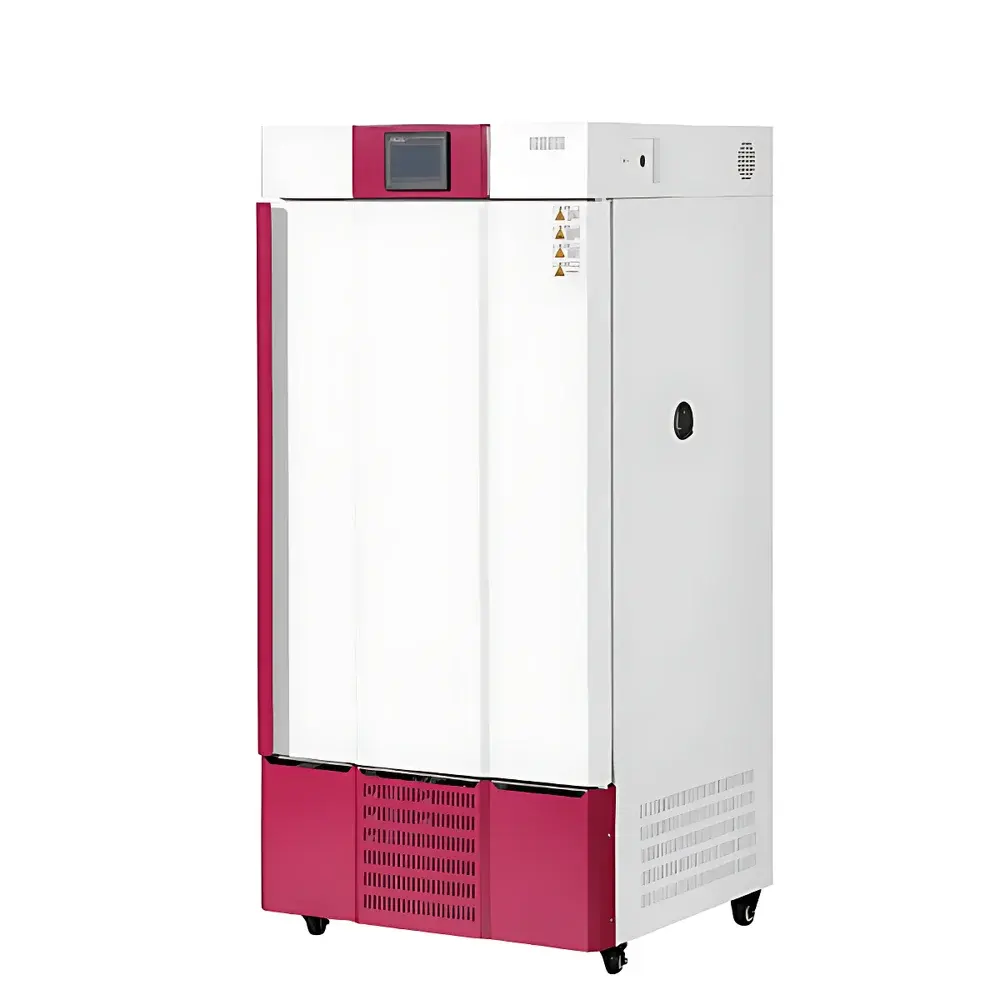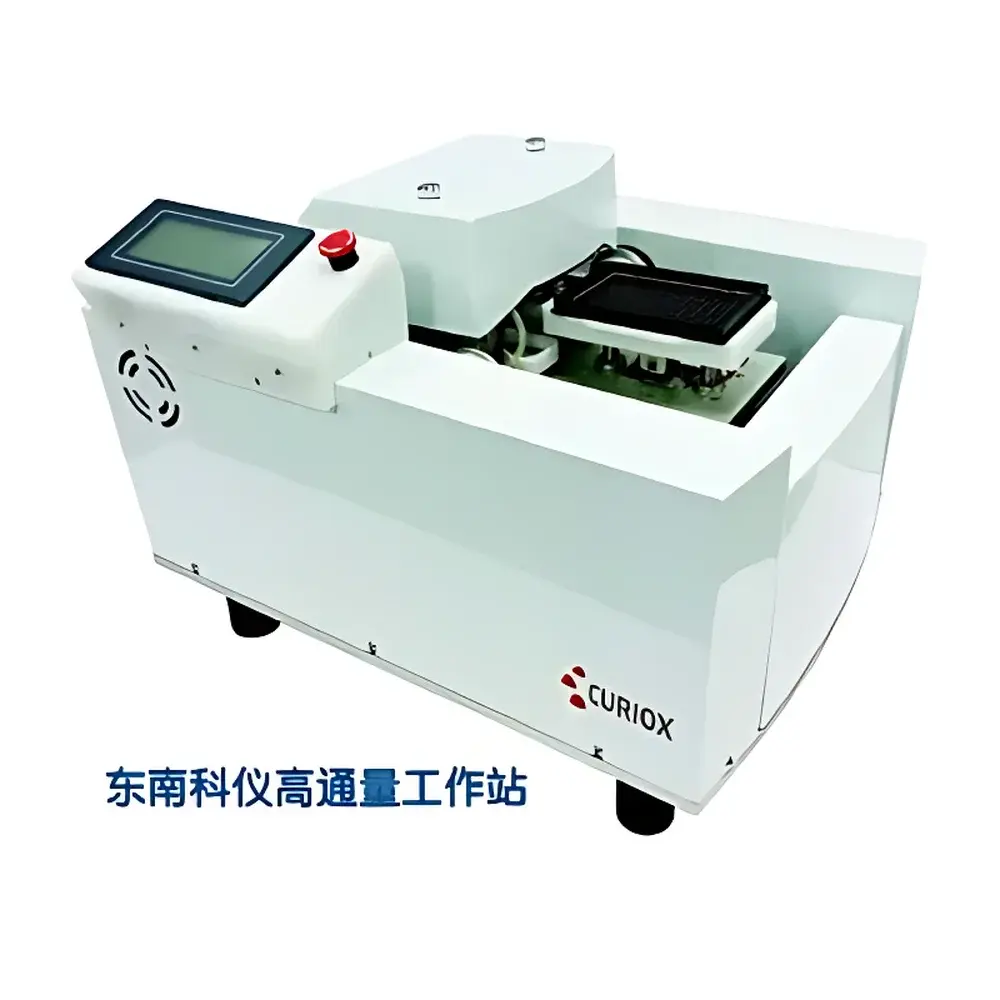
HT200 High-Throughput DropArray Microplate Washer
| Origin | USA |
|---|---|
| Manufacturer Type | Authorized Distributor |
| Origin Category | Imported Instrument |
| Model | HT200 |
| Pricing | Available Upon Request |
Overview
The HT200 High-Throughput DropArray Microplate Washer is an engineered liquid handling platform designed specifically for automated, low-volume wash steps in DropArray-based microfluidic cell assays. Operating on a non-contact, surface-tension-mediated droplet exchange principle—distinct from conventional vacuum or centrifugal washing—the HT200 enables precise, gentle, and highly reproducible buffer exchange across 96- and 384-well DropArray Cell Plates. Its architecture eliminates mechanical aspiration, minimizing shear stress on sensitive primary cells, immune cells, and semi-adherent or suspension cultures. The system supports assay miniaturization by reducing reagent consumption by 10–20× and cellular input by 3–10× compared to standard plate washers—critical for scarce clinical samples (e.g., patient-derived PBMCs, tumor-infiltrating lymphocytes) and high-value biologics screening.
Key Features
- DropArray-optimized fluidics: Dedicated wash protocol engine calibrated for DropArray’s hydrophilic/hydrophobic patterned surfaces, ensuring uniform droplet formation and complete residual volume removal (< 0.2–0.5 µL per well)
- Programmable gradient peristaltic pump: Continuous stroke adjustment with flow rates up to 420 mL/min and volumetric accuracy better than ±5% (as validated per ISO 8655-6 for peristaltic dispensing systems)
- Integrated error mitigation suite: Real-time regression detection for stage misalignment; optical overflow sensors with immediate hardware-level shutdown; self-diagnostic firmware that logs fault conditions with timestamps
- Modular, service-friendly design: All external covers are recyclable polymer components secured with tool-free latches; front-accessible fluid paths and quick-release tubing manifolds simplify routine maintenance
- Automated maintenance cycle: One-touch “Deep Clean” mode circulates cleaning solution through all fluidic lines and nozzles, preventing salt crystallization or protein fouling during extended idle periods
- R2D (Robot-to-Device) interface: Standardized RS-232/USB-C communication port compliant with SLAS ANSI/SLAS 2–2015 physical layer specifications, enabling seamless integration into robotic workcells with high-content imagers (e.g., ImageXpress Micro Confocal), liquid handlers, or incubator-integrated screening platforms
Sample Compatibility & Compliance
The HT200 accommodates standard footprint 96-well and 384-well DropArray Cell Plates (DA-96, DA-384), including plates pre-coated with extracellular matrix proteins or antibody capture surfaces. It maintains viability of fragile primary human cells—including CD4+ T cells, iPSC-derived neurons, and circulating tumor cells—under continuous operation at ambient temperatures ranging from 15 °C to 40 °C. The instrument meets IEC 61010-1:2010 safety requirements for laboratory equipment and complies with electromagnetic compatibility standards EN 61326-1:2013. For regulated environments, audit trail functionality (via optional software license) supports 21 CFR Part 11 compliance when paired with validated LIMS or ELN systems.
Software & Data Management
Controlled via the DropArray Control Suite v4.x (Windows 10/11 compatible), the HT200 provides intuitive method creation with parameter locking for SOP enforcement. Each wash protocol stores metadata including operator ID, timestamp, environmental log (temperature/humidity if external sensor enabled), and real-time pressure/flow diagnostics. Export formats include CSV (for QC review) and XML (for integration with enterprise data systems). Firmware updates are delivered via signed packages with SHA-256 verification; version history and rollback capability are retained in non-volatile memory.
Applications
- High-content phenotypic screening of small-molecule libraries against patient-derived organoid models
- Antibody-dependent cellular cytotoxicity (ADCC) and complement-dependent cytotoxicity (CDC) assays using primary NK or macrophage effectors
- Functional profiling of CAR-T cells post-transduction under cytokine stimulation
- Multi-parameter cytokine secretion analysis (e.g., IFN-γ, IL-2, TNF-α) from rare antigen-specific T-cell clones
- Label-free impedance-based cell adhesion kinetics on DropArray ECIS plates requiring repeated buffer exchange without detachment
FAQ
Is the HT200 compatible with non-DropArray microplates?
No—the fluidics, stage geometry, and wash algorithms are exclusively validated for DropArray 96- and 384-well cell plates. Use with standard flat-bottom or U/V-bottom plates is not supported.
What maintenance intervals are recommended for daily operation?
A full system flush with deionized water is advised after each 8-hour shift; monthly calibration of pump stroke accuracy using gravimetric verification per ASTM E2758 is recommended for GLP-compliant labs.
Can wash parameters be exported for regulatory submission?
Yes—protocol definitions, execution logs, and instrument configuration reports are exportable as PDF or XML with digital signature support when used with DropArray Control Suite’s Audit Trail Module.
Does the HT200 require external compressed air or vacuum sources?
No—all fluid handling is driven by the integrated peristaltic pump and gravity-assisted drainage; no ancillary utilities are needed beyond standard 100–240 VAC power.
How is carryover between wells validated?
Carryover is assessed per CLSI EP10-A3 guidelines using fluorescent dye dilution series; typical measured cross-contamination is < 0.008% (n = 12 plates, 384 wells each) under optimized wash stringency settings.