
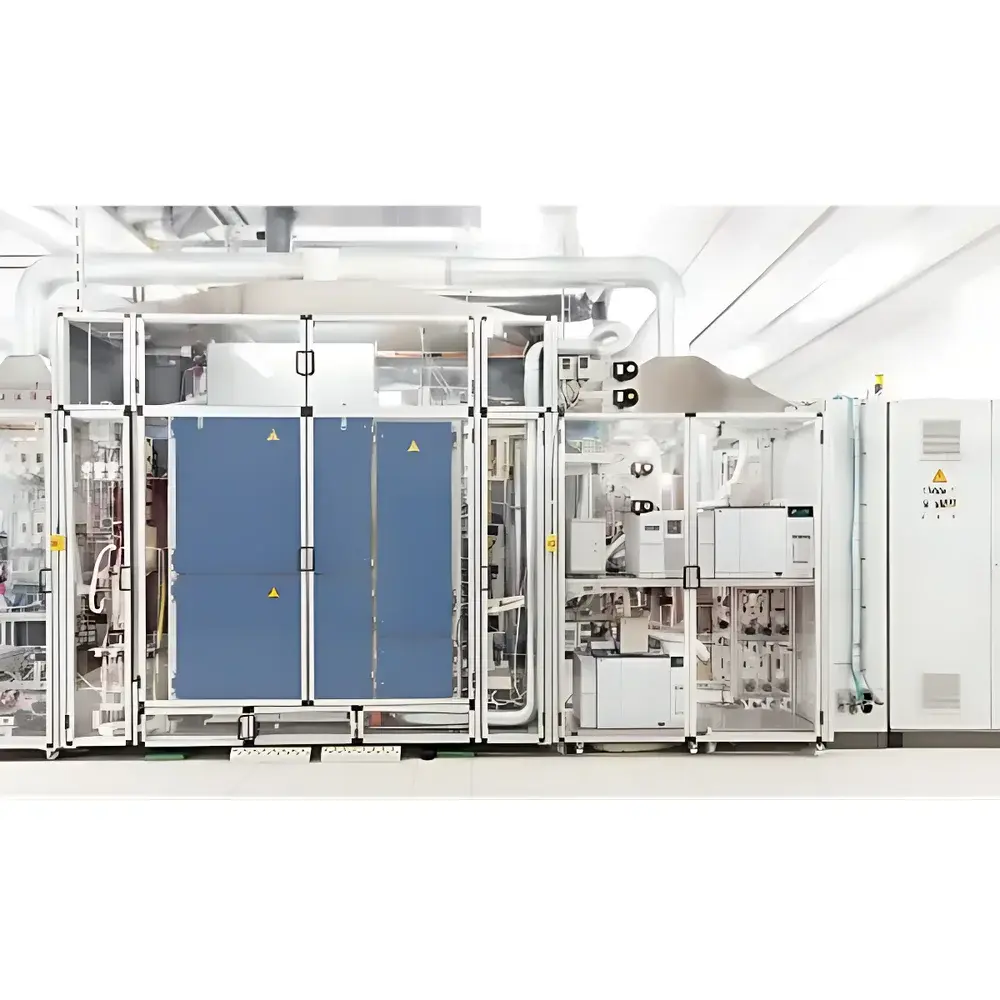
hte X3000 Series High-Throughput Gas-Liquid Catalyst Evaluation System
| Brand | hte |
|---|---|
| Origin | Germany |
| Product Type | Imported Laboratory Catalyst Evaluation System |
| Model | X3000 Series Gas-Liquid Reaction System |
| Price Range | USD 1,500 – 150,000 (FOB Hamburg) |
Overview
The hte X3000 Series High-Throughput Gas-Liquid Catalyst Evaluation System is an engineered platform for parallel, quantitative assessment of heterogeneous catalysts under industrially relevant gas–liquid reaction conditions. Designed specifically for syngas conversion processes—including Fischer–Tropsch synthesis, methanol upgrading, selective hydrogenation, oligomerization, and power-to-gas/liquids—this system integrates fixed-bed reactor operation with real-time process analytics and rigorous thermal–pressure control. Its core architecture follows Couette-type flow principles in multi-zone heated reactors, enabling precise isothermal operation across 16 independent channels. Each reactor operates under controlled mass transport regimes, where gas-phase diffusion, liquid-phase residence time, and interfacial contact area are systematically decoupled to isolate intrinsic kinetic behavior. The system supports both transient and steady-state evaluation protocols, making it suitable for rapid deactivation studies, catalyst lifetime mapping, and structure–activity relationship (SAR) analysis in early-stage process development.
Key Features
- 16 independently controlled fixed-bed reactors with individual cartridge heaters, ensuring temperature uniformity ≤ ±0.5 °C across isothermal zones (up to 600 °C max)
- Full pressure range up to 200 bar, with active back-pressure regulation maintaining setpoint stability even during volume-contractive reactions (e.g., CO/H₂ conversion)
- Multi-phase feed delivery: Coriolis-based liquid dosing (including high-boiling feeds such as naphtha and low-boiling LPG), mass-flow-controlled gaseous feeds (syngas, H₂, CO₂, CH₄), and optional supercritical CO₂ injection
- Integrated gas–liquid phase separation at operating pressure, with automated sampling of both vapor and condensate streams—including wax-rich fractions—via pneumatically actuated valves
- Onboard GC (with FID/TCD detectors) and optional IR/FTIR/MS interfaces for real-time speciation of hydrocarbons, permanent gases, oxygenates, and sulfur compounds
- hteControl™ automation suite compliant with IEC 61508 SIL2 and supporting audit-trail logging per FDA 21 CFR Part 11 requirements
- Modular reactor cartridges accommodating catalyst bed volumes from 0.5 mL to 15 mL, compatible with powders, extrudates, pellets, and monoliths
Sample Compatibility & Compliance
The X3000 accommodates a broad spectrum of catalytic materials—from noble-metal impregnated oxides to transition-metal carbides—and handles reactive feedstocks including corrosive syngas mixtures, chlorinated intermediates, and sulfur-containing streams. All wetted components conform to NACE MR0175/ISO 15156 for sour service applications. Pressure vessels are certified to PED 2014/68/EU and ASME Section VIII Div. 1. Electrical enclosures meet UL 61010-1 and ATEX Zone 2/IECEx standards. The system has undergone full FAT/SAT validation at hte’s Karlsruhe facility and client sites, with documented compliance to ISO/IEC 17025 for measurement traceability and GLP-aligned data integrity practices.
Software & Data Management
hteControl™ provides closed-loop experiment orchestration—from reactor conditioning and ramp/soak sequences to dynamic parameter sweeps and emergency shutdown logic. All sensor data (temperature, pressure, flow, composition) are timestamped and stored in an ACID-compliant PostgreSQL database with role-based access control. Raw chromatograms, calibration curves, and mass balance reports export directly to CSV, HDF5, or ASTM E2973-compliant XML formats. Optional integration with MATLAB, Python (via REST API), and commercial LIMS platforms enables automated model training and kinetic parameter estimation using differential reactor analysis methods.
Applications
- Fischer–Tropsch catalyst screening across Fe-, Co-, and Ru-based formulations under varying H₂/CO ratios and water partial pressures
- Methanol-to-hydrocarbons (MTH) and methanol-to-olefins (MTO) kinetics under co-fed steam and alkane diluents
- Selective hydrogenation of unsaturated aldehydes (e.g., crotonaldehyde → butyraldehyde) with quantified selectivity–conversion trade-offs
- Electrocatalytically derived syngas upgrading, including CO₂ hydrogenation to C₂₊ oxygenates
- Deactivation profiling via sulfur poisoning, coking, or sintering under accelerated aging protocols
FAQ
What reactor configurations are supported?
Standard configurations include 1/4″ and 3/8″ OD stainless-steel tubular reactors with Swagelok end fittings; custom geometries (e.g., microchannel, annular flow) are available upon engineering review.
Is the system compatible with third-party analytical instruments?
Yes—RS-232, Modbus TCP, and OPC UA interfaces support integration with external GCs, MS systems, and FTIR spectrometers.
How is catalyst loading performed?
Reactor cartridges are pre-loaded offline using hte’s standardized packing protocol; insertion into the heated zone is tool-free and takes <90 seconds per channel.
What infrastructure is required for installation?
Minimum lab specifications: 500 kg/m² floor loading capacity, 230/400 VAC 3-phase supply (10 kVA), 1,000 m³/h fume hood exhaust, and compressed air at 6.5 bar.
Does hte provide method validation support?
Yes—hte offers application-specific SOP development, kinetic modeling workshops, and joint FAT/SAT execution with client QA/QC teams.



