
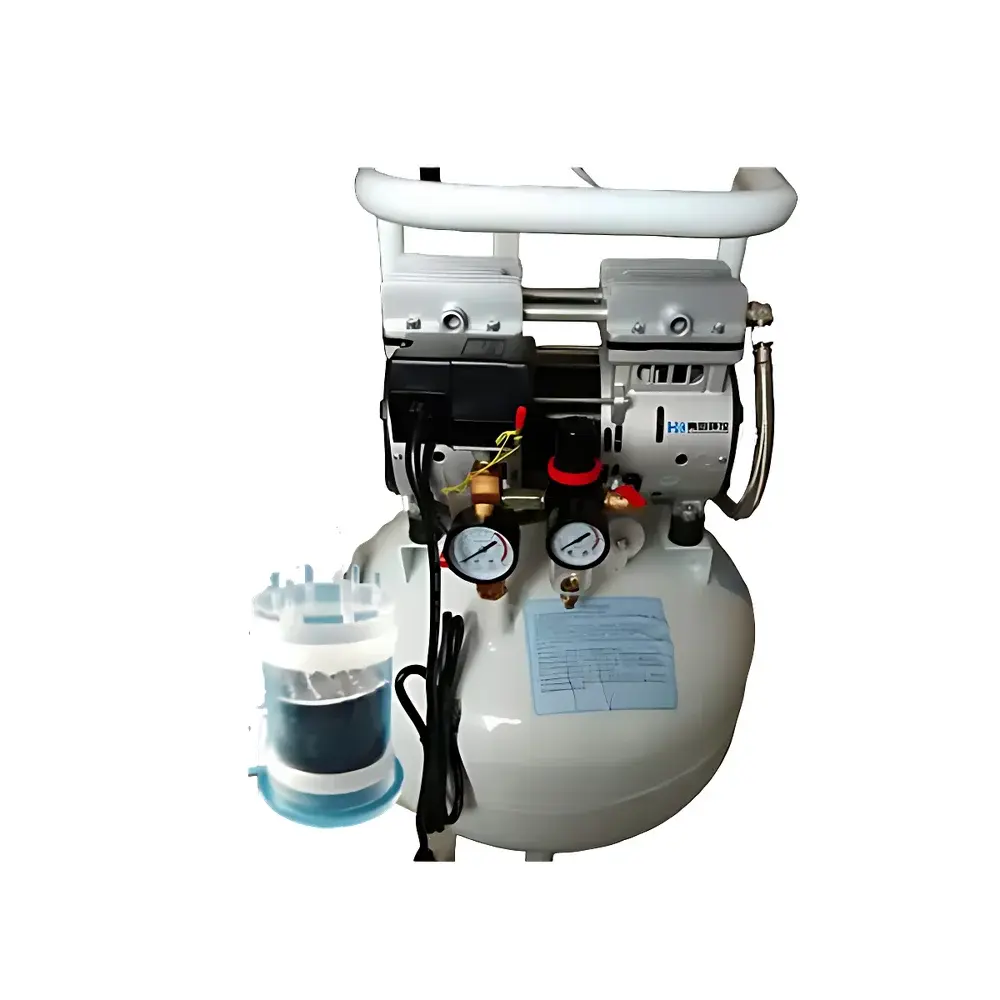
HUANKONG GHK-1600 Odor-Free Gas Generation System
| Brand | HUANKONG |
|---|---|
| Origin | Shandong, China |
| Manufacturer Type | Direct Manufacturer |
| Product Origin | Domestic (China) |
| Model | GHK-1600 |
| Instrument Type | Laboratory-Grade |
| Detection Principle | Not Applicable (Gas Purification & Delivery System) |
| Core Function | Zero-Odor Carrier Gas Preparation for Olfactometry |
Overview
The HUANKONG GHK-1600 Odor-Free Gas Generation System is a dedicated laboratory-grade gas purification and delivery platform engineered to produce consistent, chemically inert, and organoleptically neutral carrier gas for standardized olfactometric analysis—specifically compliant with the Three-Point Comparative Odor Bag Method (ISO 13736:2022, GB/T 14675–2023). Unlike gas detectors or analyzers, this system functions as a critical upstream support instrument: it does not measure odor but eliminates background interference by removing volatile organic compounds (VOCs), sulfur-containing species (e.g., H₂S, mercaptans), nitrogen oxides, ozone, hydrocarbons, and particulate contaminants from ambient or compressed air. Its core architecture integrates an oil-free diaphragm compressor, multi-stage adsorption modules (activated carbon, molecular sieve, and high-efficiency particulate filters), precision mass flow-controlled blending, and stainless-steel/PTFE fluidic pathways—all designed to maintain trace-level odor neutrality (<0.1 OU/m³ residual odor units, verified via dynamic dilution olfactometry). The system delivers stable, low-humidity (<5% RH), particle-free (<0.1 µm filtered), and hydrocarbon-free gas streams essential for calibration, blank verification, and sample dilution in accredited odor laboratories.
Key Features
- Oil-free diaphragm compressor with integrated thermal overload protection and silent operation (<52 dB(A)), ensuring zero lubricant carryover into the gas stream
- Triple-stage adsorption train: granular activated carbon (for VOC and sulfur compound removal), 13X molecular sieve (for moisture and CO₂ adsorption), and HEPA/ULPA-grade particulate filter (0.1 µm absolute retention)
- Stainless-steel 316 and PTFE-wetted components throughout the gas path to prevent outgassing, corrosion, or surface adsorption of odorants
- Mass flow controller (MFC)-based gas blending capability (0–10 L/min range, ±1% FS accuracy) for precise dilution of odor samples with odor-free air
- Integrated dew point monitor and pressure-regulated output (0–0.6 MPa adjustable) with real-time digital display of outlet pressure and flow rate
- Modular design enabling field-replacement of adsorbent cartridges; each cartridge includes batch-certified performance validation data per ISO 14644-1 Class 5 cleanroom handling protocols
Sample Compatibility & Compliance
The GHK-1600 is validated for use with all odor sample matrices requiring certified zero-odor background gas—including municipal wastewater headspace, landfill leachate emissions, composting facility exhaust, and industrial process off-gases. It meets the instrumental prerequisites defined in ISO 13736:2022 Annex B (Requirements for odor-free air supply systems) and supports full compliance with CNAS-CL01:2018 (equivalent to ISO/IEC 17025) for odor testing laboratories. All wetted materials comply with USP Class VI biocompatibility standards and are documented for extractables/leachables per ICH Q5C. The system’s gas output is routinely verified using GC-MS (EPA TO-15) and proton-transfer-reaction mass spectrometry (PTR-MS) to confirm absence of detectable odorants at sub-ppt levels.
Software & Data Management
While the GHK-1600 operates as a standalone hardware system without embedded firmware or cloud connectivity, its operational parameters—including cumulative runtime, adsorbent service life tracking (based on inlet flow/time algorithms), and pressure/flow logs—are recorded manually in laboratory notebooks per GLP requirements. Optional analog output (4–20 mA) enables integration with centralized building management systems (BMS) or LIMS for audit-trail logging. All calibration certificates, adsorbent lot traceability reports, and factory performance test records are supplied in English and align with FDA 21 CFR Part 11 principles for record integrity—supporting inspection readiness during regulatory audits.
Applications
- Primary carrier gas source for three-point comparative odor bag method (TCOM) per ISO 13736 and national standard GB/T 14675
- Blank gas supply for dynamic olfactometer calibration and method detection limit (MDL) determination
- Diluent gas for preparing certified odor reference standards (e.g., n-butanol series) in accordance with EN 13725
- Zero-air source for portable olfactometers, electronic nose baselines, and sensor array preconditioning
- Cleanroom-compatible gas supply for odor sensory panel rooms where HVAC-integrated odor control is insufficient
FAQ
Is the GHK-1600 suitable for field deployment outside the laboratory?
No—it is engineered exclusively for controlled indoor laboratory environments with stable temperature (15–30°C) and humidity (<70% RH non-condensing); no IP-rated enclosure or battery operation is provided.
What is the recommended service interval for adsorbent cartridges?
Under typical lab usage (8 h/day, 5 L/min continuous flow), activated carbon and molecular sieve cartridges require replacement every 6 months; particulate filters every 3 months—validated via periodic odor threshold testing.
Does the system include certification for traceable odor-free gas production?
Yes—each unit ships with a Factory Performance Certificate verifying residual odor concentration <0.1 OU/m³, measured using a certified human panel per ISO 8586, alongside material compliance documentation.
Can the GHK-1600 be integrated with automated olfactometers?
Yes—via standard 6 mm OD PTFE tubing and NPT/BSPP fittings; optional MFC communication interface (RS-485 Modbus RTU) is available for OEM integration upon request.
Is technical support available in English for international users?
Yes—HUANKONG provides English-language operation manuals, troubleshooting guides, and remote engineering support via email and video conference for all export units.







