
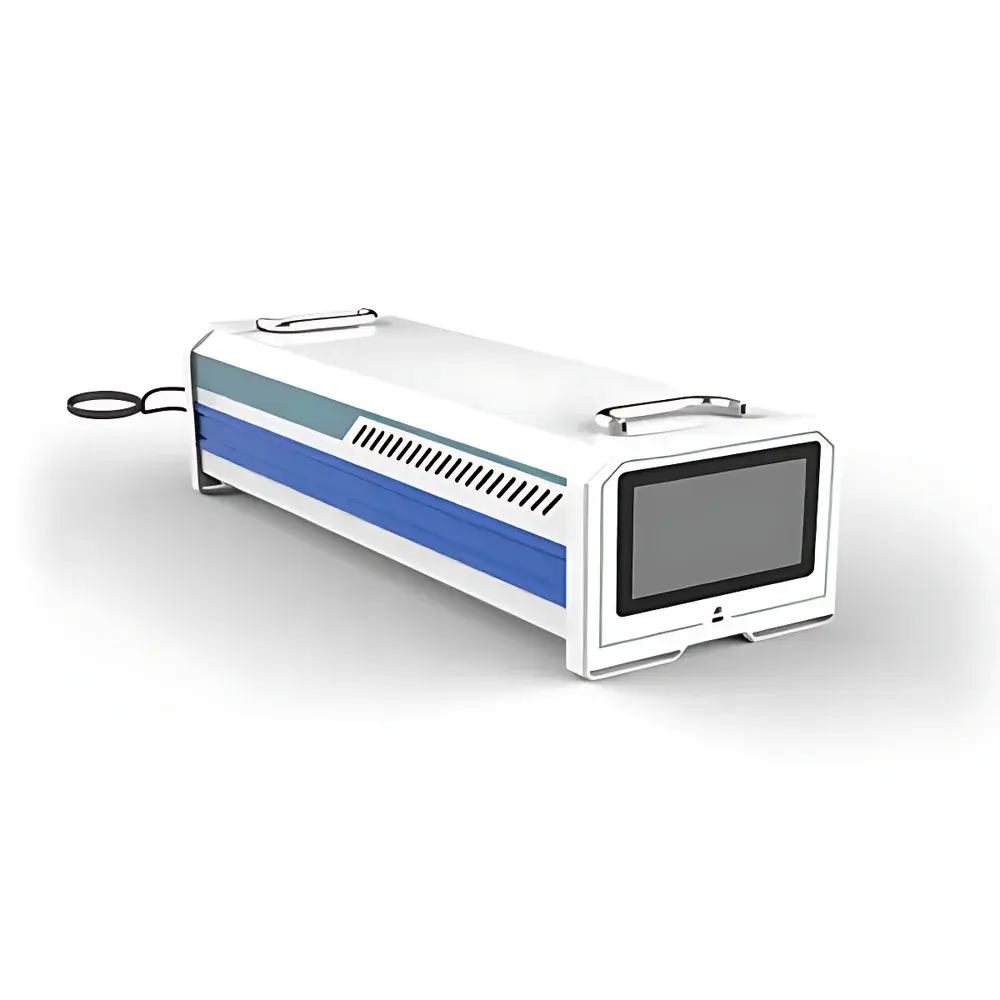
HUANKONG GHK-580 High-Precision Online Ambient Air Greenhouse Gas Analyzer
| Brand | HUANKONG |
|---|---|
| Model | GHK-580 |
| Detection Gases | CO₂, CH₄, CO, N₂O, H₂O |
| Technology | Cavity Ring-Down Spectroscopy (CRDS) |
| Effective Optical Path Length | Up to 60 km |
| Measurement Mode | Continuous, Real-Time, Unattended Operation |
| Compliance | Designed for ISO 14064-1 support and EPA Method TO-15 / ASTM D6348 context |
| Operating Environment | Ambient air monitoring, laboratory-grade stability |
| Temperature & Pressure Control | Active stabilization with ±0.01 °C and ±0.01 kPa precision |
Overview
The HUANKONG GHK-580 High-Precision Online Ambient Air Greenhouse Gas Analyzer is an engineered solution for continuous, multi-species atmospheric trace gas quantification. Built upon Cavity Ring-Down Spectroscopy (CRDS), the instrument leverages ultra-stable high-finesse optical cavities to achieve parts-per-trillion (ppt) level detection sensitivity for CO₂, CH₄, CO, N₂O, and H₂O in ambient air matrices. CRDS operates by measuring the decay time of laser light trapped within a highly reflective optical cavity—where absorption-induced losses directly correlate with analyte concentration. This physics-based, calibration-independent methodology eliminates reliance on reference standards during routine operation, ensuring long-term measurement integrity. The GHK-580 integrates miniaturized cavity architecture with active thermal and barometric regulation (±0.01 °C, ±0.01 kPa), enabling sub-hour warm-up and minimal baseline drift (<0.1 ppb CH₄ per month). Its design supports unattended 24/7 deployment in fixed-site observatories, mobile platforms, and boundary-layer research stations.
Key Features
- Simultaneous, real-time quantification of five critical greenhouse and interferent gases: CO₂, CH₄, CO, N₂O, and H₂O vapor
- Effective optical path length exceeding 60 km—achieving high sensitivity without chemical amplification or preconcentration
- Modular architecture: Interchangeable laser modules, detector assemblies, and temperature-controlled cavity units facilitate field serviceability and future spectral expansion
- Low power consumption and compact footprint (≤450 mm × 400 mm × 220 mm), suitable for remote solar-powered installations
- Integrated pressure- and temperature-compensated flow control with mass flow meters (0–1 L/min range) and particulate filtration (0.1 µm)
- Robust mechanical housing rated IP54 for outdoor enclosure integration; operating temperature range: −20 °C to +45 °C
Sample Compatibility & Compliance
The GHK-580 is optimized for ambient air sampling at near-atmospheric pressure (80–106 kPa) and relative humidity up to 95% non-condensing. Sample introduction uses chemically inert PFA or electropolished stainless-steel tubing with zero catalytic surface activity. All wetted materials comply with USP Class VI and ASTM F2023 specifications. Data outputs conform to CFM (Climate Feedback Monitoring) metadata conventions and are structured for direct ingestion into ICOS (Integrated Carbon Observation System) and NOAA GML data pipelines. Instrument firmware supports audit-ready logging aligned with GLP principles—including full traceability of calibration events, environmental logs, and system health metrics. While not certified under FDA 21 CFR Part 11, its secure user access controls and immutable raw data storage meet baseline requirements for regulatory-grade environmental reporting under ISO 14064-1 and EU MRV frameworks.
Software & Data Management
The GHK-580 operates with embedded Linux-based firmware and a web-accessible configuration interface (HTTPS/TLS 1.2). Raw ring-down decay waveforms are stored locally on industrial-grade SSDs (≥32 GB) with automatic rollover and remote SFTP export capability. Included analysis software applies validated spectral fitting algorithms (Levenberg–Marquardt optimization) to extract concentration values using line lists from HITRAN2020. Time-synchronized outputs include second-level timestamps, cavity mirror reflectivity diagnostics, and water vapor correction coefficients. Optional API integration enables bidirectional communication with SCADA systems, cloud platforms (AWS IoT Core, Azure IoT Hub), and third-party QA/QC dashboards compliant with WMO GAW data quality objectives.
Applications
- Long-term atmospheric monitoring at Global Atmosphere Watch (GAW) stations and urban background sites
- Source attribution studies via eddy covariance coupling and inverse modeling (e.g., methane leak detection from landfills or oil/gas infrastructure)
- Validation of satellite-derived greenhouse gas products (e.g., OCO-2, Sentinel-5P TROPOMI)
- Controlled-environment research in climate simulation chambers and phytotron facilities
- Supporting emissions verification under national inventory reporting (UNFCCC Annex I) and corporate Scope 1 accounting
- Method development for medical breath analysis where CO and N₂O serve as biomarkers (research-use-only configuration)
FAQ
What calibration protocols are recommended for long-term stability?
Primary calibration uses gravimetrically prepared NIST-traceable standard gases at three concentration levels. Field recalibration intervals are typically every 30–90 days depending on site contamination risk; automated zero-air checks occur hourly.
Can the GHK-580 be integrated with existing meteorological sensor networks?
Yes—RS-485 Modbus RTU and Ethernet TCP/IP interfaces support synchronized acquisition of wind speed/direction, temperature, and humidity data for flux computation.
Is spectral interference between CH₄ and H₂O corrected in real time?
Yes—the instrument employs multi-line fitting across overlapping rovibrational bands and applies dynamic H₂O cross-sensitivity compensation using concurrent water vapor measurements.
What maintenance is required for optical cavity performance?
Cavity mirrors require cleaning only if particle loading exceeds manufacturer thresholds (monitored via reflectivity decay rate); typical interval is 12–24 months in filtered urban air.
Does the system support remote firmware updates and diagnostic telemetry?
Yes—over-the-air (OTA) updates are digitally signed and verified; system health telemetry includes laser current stability, cavity alignment status, and detector dark-current drift.







