
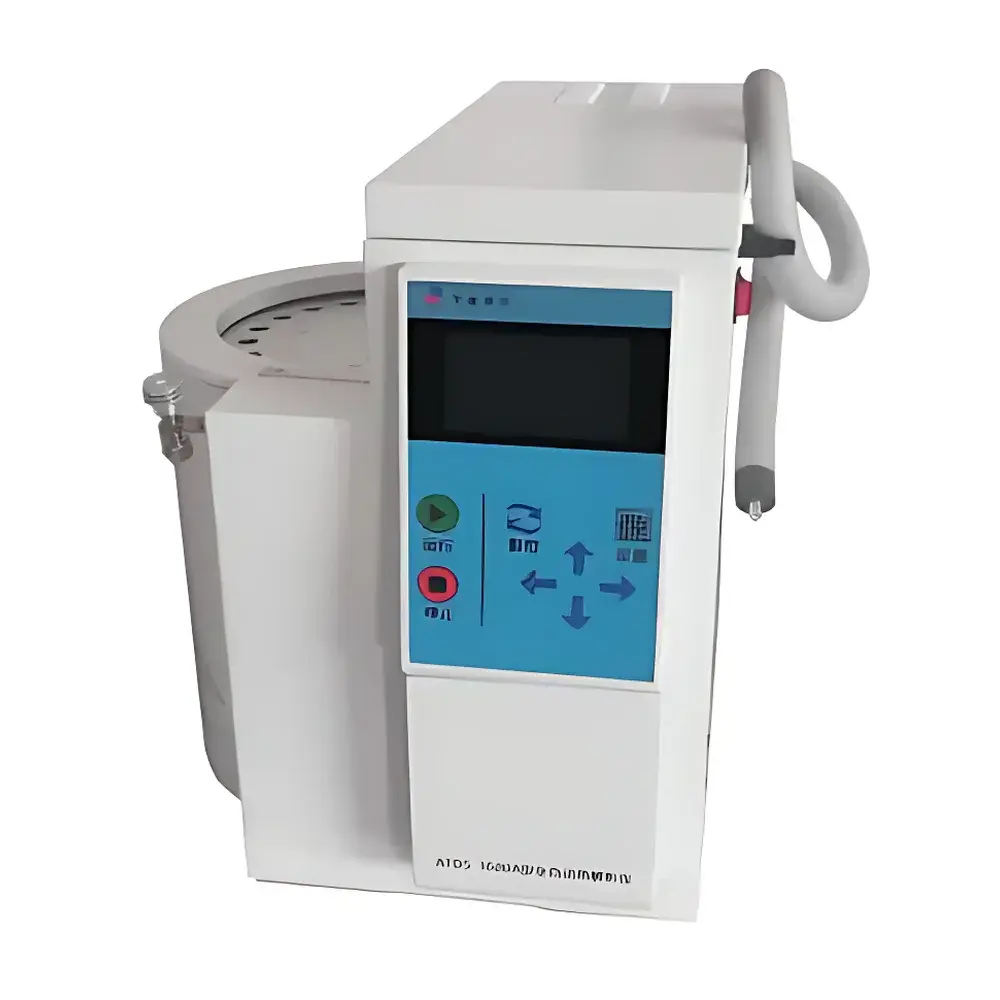
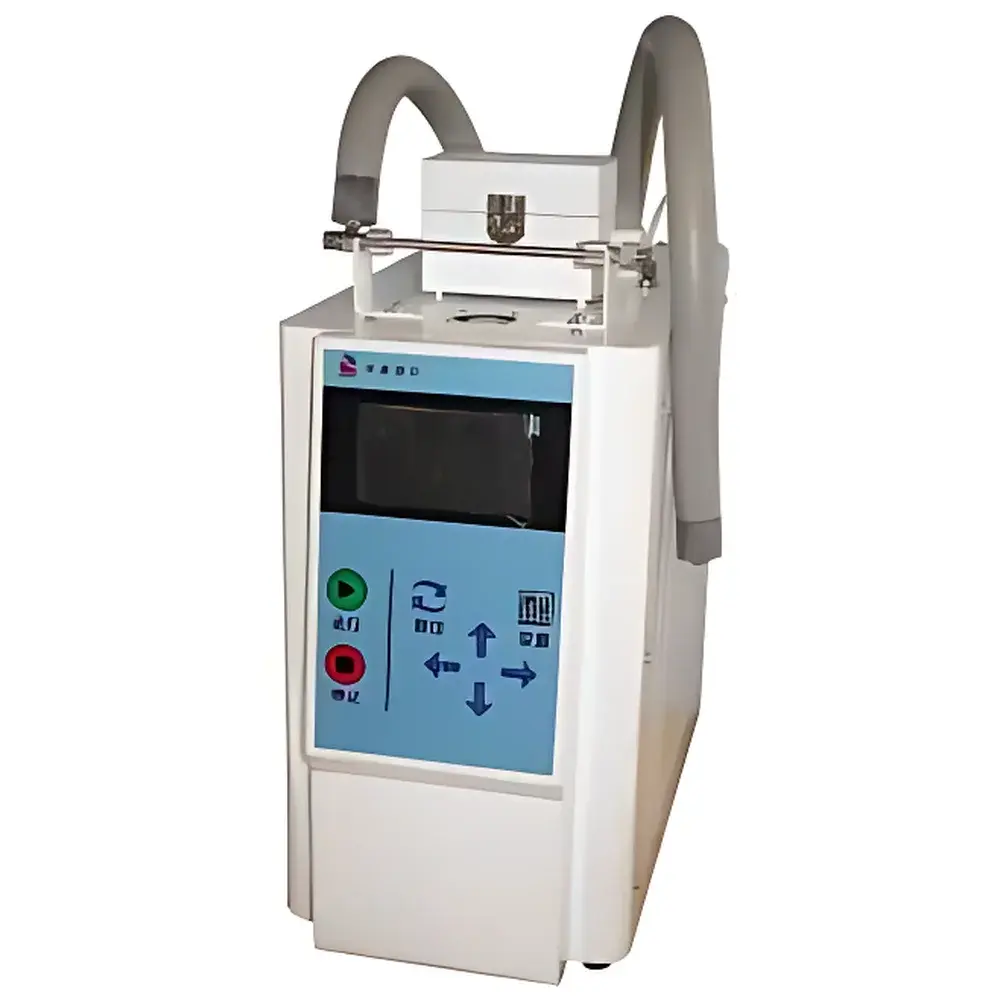
HuaSheng PuXin ATDS-3600A 20-Position Single-Stage Thermal Desorber
| Brand | HuaSheng PuXin (HSPX) |
|---|---|
| Origin | Beijing, China |
| Manufacturer Type | Direct Manufacturer |
| Instrument Type | Single-Stage Thermal Desorber |
| Desorption Temperature Range | –30 °C to 400 °C |
| Cold Trap Temperature Range | –30 °C |
| Desorption Recovery Rate | >95% |
| Sample Positions | 20 |
Overview
The HuaSheng PuXin ATDS-3600A is a fully automated, single-stage thermal desorption system engineered for high-throughput, trace-level volatile organic compound (VOC) and semi-volatile organic compound (SVOC) analysis in environmental, occupational health, and building material testing laboratories. It operates on the principle of thermally driven desorption—where analytes pre-concentrated on sorbent tubes are rapidly heated under controlled inert gas flow, releasing target compounds into a carrier stream for direct transfer to a gas chromatograph (GC). Designed to comply with Chinese national standard GB 50325–2020 (“Control Standard for Indoor Environmental Pollution of Civil Building Engineering”), the ATDS-3600A delivers reproducible, quantitative desorption performance with minimal carryover and robust method transferability across GC platforms.
Key Features
- Unattended 20-sample batch processing with auto-positioning carousel and real-time status monitoring via embedded microprocessor control.
- Triple-zone independent temperature regulation: sample bed (up to 400 °C), valve manifold (up to 220 °C), and transfer line (up to 220 °C), each adjustable in 1 °C increments with stability better than ±0.1 °C.
- Integrated cold trap capability with –30 °C low-temperature control for enhanced focusing of light VOCs prior to GC injection.
- Programmable time-sequence operation: automated desorption, GC trigger synchronization, back-flush cleaning (0–400 mL/min, continuously adjustable), and post-run cooldown.
- Dedicated back-flush functionality for both the sampling valve and transfer line to eliminate cross-contamination between sequential analyses.
- Modular expandability: configurable interface for future integration of ambient-temperature or cryogenic secondary desorption, purge-and-trap modules, or additional cold trap stages.
- Universal GC interfacing: standardized hardware adapters compatible with major imported GC systems (Agilent, Thermo Fisher, Shimadzu, PerkinElmer); supports native carrier gas routing without instrument modification.
- Optional fused quartz transfer tubing for improved inertness during analysis of reactive or polar analytes (e.g., aldehydes, organic acids).
Sample Compatibility & Compliance
The ATDS-3600A accommodates standard 6 mm OD × 89 mm sorbent tubes (e.g., Tenax TA, Carbopack B/C, Carboxen 1000) and supports tube formats compliant with ISO 16000–6, ASTM D6196, and EPA TO-17 methodologies. Its validated recovery rate (>95% for common target VOCs including benzene, toluene, ethylbenzene, xylenes, and formaldehyde analogues) meets QA/QC requirements for regulatory reporting. The system architecture supports GLP-compliant workflow execution—including audit-trail-capable method storage, user-access logging, and timestamped run records—facilitating alignment with ISO/IEC 17025 laboratory accreditation and internal quality management systems.
Software & Data Management
Control is executed via an embedded industrial-grade microcontroller with intuitive Windows-based configuration software. Users define multi-step thermal profiles (pre-desorption hold, ramp rate, desorption duration, trap focus, transfer delay), set GC trigger conditions (TTL or contact closure), and configure back-flush parameters—all saved as reusable, version-controlled methods. The software generates comprehensive run logs (temperature traces, valve actuation timestamps, gas flow verification) exportable in CSV format for LIMS integration. While not FDA 21 CFR Part 11–certified out-of-the-box, the system supports electronic signature-ready workflows when deployed within validated IT environments meeting ALCOA+ data integrity principles.
Applications
- Indoor air quality (IAQ) assessment per GB 50325–2020 and ISO 16000 series standards.
- Testing of building materials, adhesives, coatings, and furniture emissions (VOC screening, emission chamber effluent analysis).
- Workplace air monitoring for OSHA- and NIOSH-regulated contaminants.
- Soil and water headspace analysis following EPA Method TO-17 and ASTM D7353.
- Quality control of activated carbon filters, air purifiers, and sorbent media regeneration efficiency.
FAQ
Does the ATDS-3600A support dual-stage (secondary) thermal desorption?
The base configuration is single-stage; however, the platform includes mechanical and electrical interfaces for field-upgradable secondary desorption modules—either ambient-temperature or cryogenically cooled—subject to factory installation and calibration.
Can it be integrated with third-party chromatography data systems (CDS)?
Yes—via hardware-triggered start/stop signals (TTL or dry contact) and optional RS-232 or Ethernet communication protocols for bidirectional command exchange and status feedback.
What maintenance is required for long-term reliability?
Routine tasks include quarterly verification of temperature calibration (NIST-traceable reference), annual replacement of O-rings and septa in the valve manifold, and periodic inspection of sorbent tube seating integrity and transfer line inertness.
Is the system suitable for analyzing polar or thermally labile compounds?
With optional fused quartz transfer lines and optimized low-temperature desorption protocols (e.g., stepped heating, reduced residence time), the system demonstrates acceptable recovery for compounds such as acetaldehyde, vinyl chloride, and certain halogenated organics—validated case-by-case per application.
How is method validation performed on this instrument?
Standard validation follows ICH Q2(R2) guidelines: specificity, linearity (5–1000 ng/tube), accuracy (spike recovery 85–115%), precision (RSD <5% intra-day, <8% inter-day), and robustness testing across flow rate, temperature, and timing parameter variations.




