
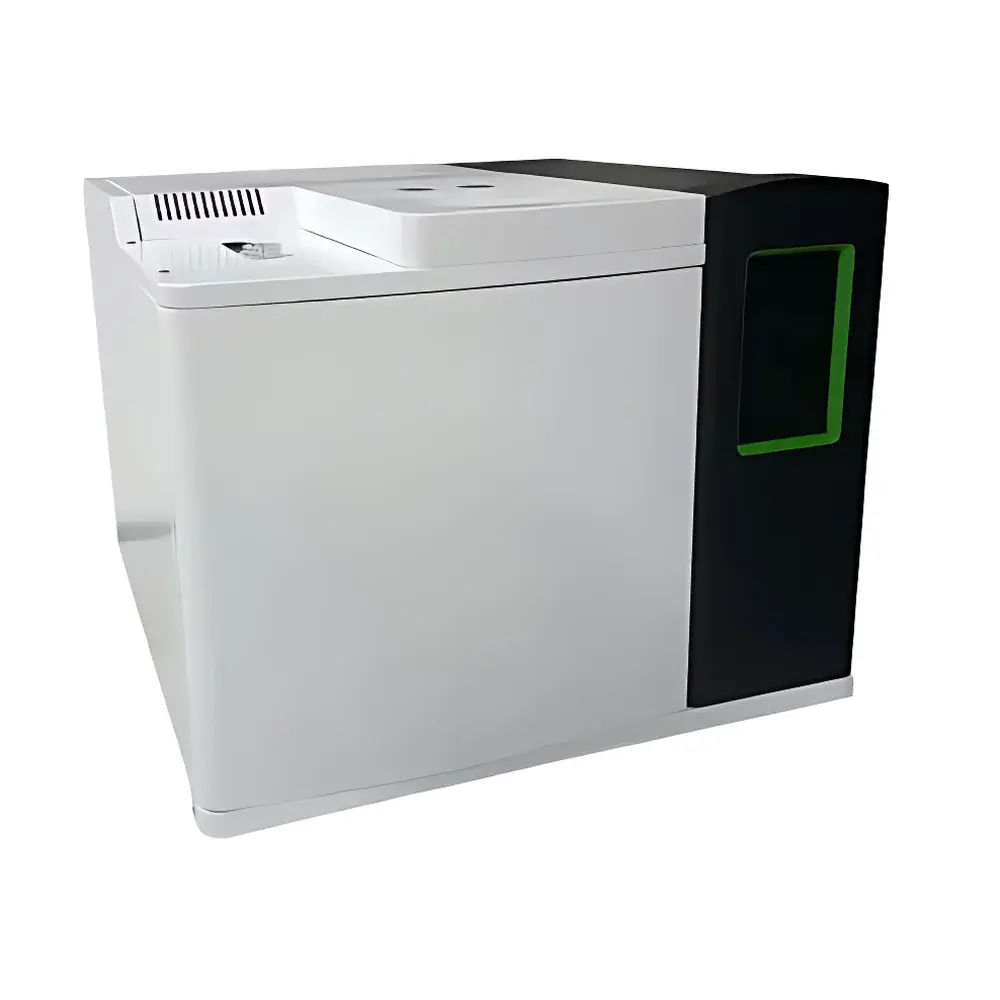
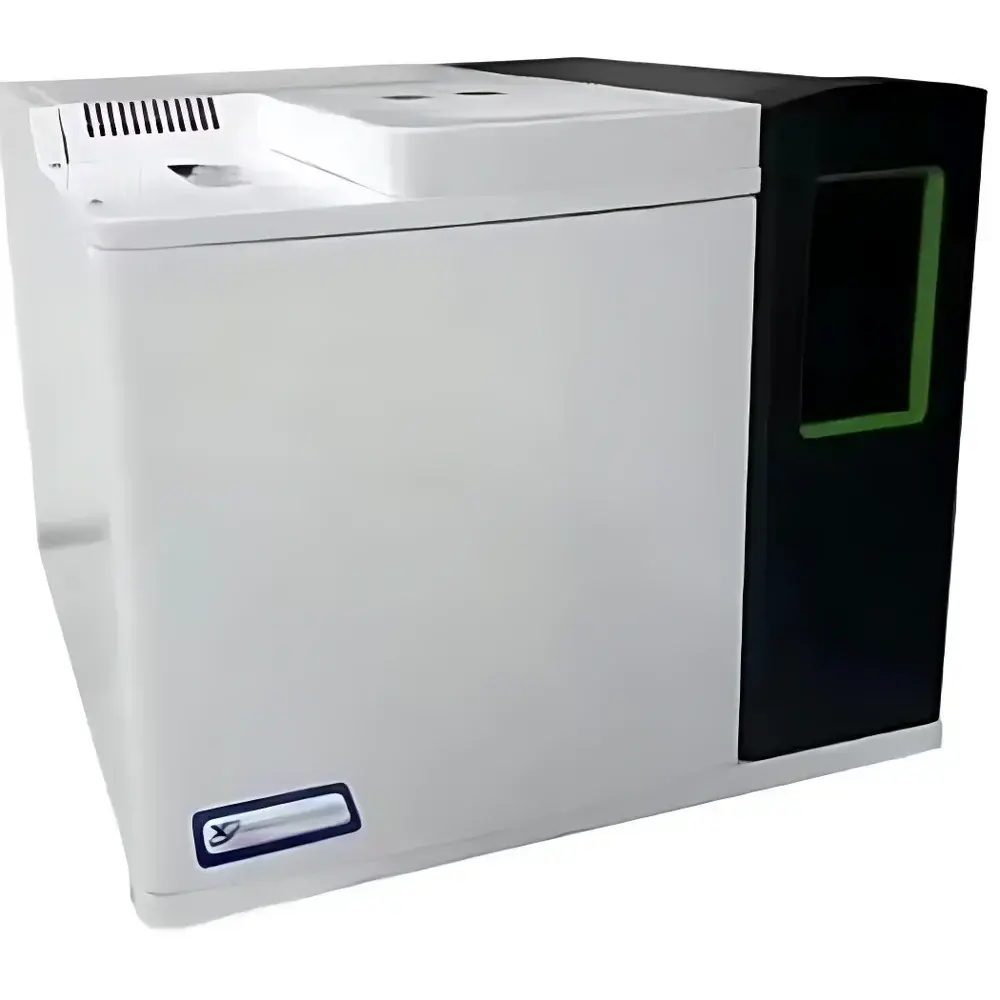
HuaShengPuXin GC-6210T Formaldehyde Dimethyl Acetal (Dimethoxymethane) Dedicated Gas Chromatograph
| Brand | HuaShengPuXin (HSPX) |
|---|---|
| Origin | Beijing, China |
| Manufacturer Type | Direct Manufacturer |
| Instrument Type | Laboratory Gas Chromatograph |
| Model | GC-6210T Dedicated for Formaldehyde Dimethyl Acetal |
| Temperature Control Range | Ambient to 400 °C |
| Oven Ramp Rate | 0.1–40 °C/min |
| Cool-down Time | ~6 min (400 °C → 50 °C) |
| Carrier Gas Flow Range & Control | 0–1200 mL/min |
| Carrier Gas Pressure Range & Control | 0–0.6 MPa |
| Injector Maximum Operating Temperature | 400 °C |
| Injector Pressure Setting Range | 0–0.6 MPa |
| Injector Total Flow Setting Range | 0–1200 mL/min |
Overview
The HuaShengPuXin GC-6210T is a dedicated laboratory gas chromatograph engineered for the precise, routine quantification of formaldehyde dimethyl acetal (FDM, also known as dimethoxymethane or methylal) and its key impurities—namely water and methanol—in industrial-grade FDM feedstocks and finished products. Built upon a robust, single-channel dual-packed-column architecture, the instrument leverages flame ionization detection (FID) or thermal conductivity detection (TCD), depending on configuration, to deliver high reproducibility in volatile organic compound (VOC) separation under isothermal or programmable temperature ramp conditions. Its design adheres to fundamental gas chromatographic principles: analytes are vaporized in a heated injection port, partitioned across a stationary phase within packed columns (typically Porapak Q or GDX-103 for polar VOCs), and eluted differentially based on volatility and polarity. Retention time alignment and peak area integration enable accurate %w/w determination per ASTM D3792 or ISO 10385 guidelines for oxygenated solvent purity assessment.
Key Features
- Dual independent packed column ports—enabling rapid method switching between water/methanol/FDM analysis and residual solvent profiling without hardware reconfiguration
- Intelligent oven with rear-mounted forced-air cooling system, achieving 400 °C → 50 °C thermal quench in approximately 6 minutes for high-throughput batch testing
- Full digital carrier gas (H₂, N₂, or He) pressure and flow control via electronic pneumatic control (EPC) modules, supporting both constant-pressure and constant-flow modes
- Injector temperature stability up to 400 °C with real-time pressure feedback and leak diagnostics; supports split/splitless injection with customizable septum purge
- Integrated microprocessor-based controller with backlit LCD interface, onboard timer/stopwatch function, and non-volatile method storage for ≥20 user-defined methods
- Automatic “loss-of-carrier-gas” shutdown protection and self-diagnostic error logging compliant with basic GLP operational safeguards
Sample Compatibility & Compliance
The GC-6210T is validated for direct liquid injection of neat FDM samples or diluted solutions in inert solvents (e.g., dichloromethane). It accommodates standard 1–10 μL syringe injections with minimal carryover when paired with deactivated liners and routine liner replacement protocols. The system meets essential performance criteria outlined in USP , EP 2.2.46, and ISO/IEC 17025 for chromatographic method verification—including retention time repeatability (RSD ≤ 0.2%), peak area precision (RSD ≤ 1.5% for n = 6), and linear dynamic range (1–100 mg/mL for methanol and water). While not pre-certified for FDA 21 CFR Part 11, its firmware supports audit-trail-enabled data export (CSV/TXT) suitable for manual traceability in regulated QC environments operating under GMP-aligned quality systems.
Software & Data Management
Data acquisition and processing are performed using the optional HS-Chrom 2.0 software suite (Windows 10/11 compatible), which provides baseline correction, tangent skim integration, multi-point calibration curve generation (linear, quadratic, or polynomial), and automated report generation per LIMS-ready templates. Raw chromatograms and processed results are stored with embedded metadata: operator ID, injection time, method name, column identity, and environmental ambient log (if external sensor integrated). All data files are timestamped and write-protected post-acquisition to prevent unintentional modification—supporting ALCOA+ principles (Attributable, Legible, Contemporaneous, Original, Accurate, Complete, Consistent, Enduring, Available) during internal audits.
Applications
- Quality control release testing of FDM manufactured for use in pharmaceutical excipients, cosmetic solubilizers, and agrochemical formulations
- Monitoring methanol carryover from upstream synthesis reactors (e.g., acid-catalyzed acetalization of formaldehyde with methanol)
- Quantifying trace water content (< 0.1%) affecting FDM stability and shelf life per ICH Q5C recommendations
- Supporting process validation studies for ISO 9001-certified chemical production lines
- Method transfer support for laboratories upgrading from legacy GC systems to modern packed-column platforms
FAQ
What detector configurations are supported on the GC-6210T for FDM analysis?
The base model is configured with a TCD for universal detection of water, methanol, and FDM; optional FID upgrade enables enhanced sensitivity for hydrocarbon impurities.
Can the instrument be used for other oxygenated solvents beyond formaldehyde dimethyl acetal?
Yes—when reconfigured with appropriate packed columns (e.g., Carbopack B for ethers, HayeSep D for alcohols), it supports analysis of ethyl acetate, acetone, THF, and glycol ethers per ASTM D1353.
Is method development assistance included with purchase?
HuaShengPuXin provides application notes and validated SOPs for FDM purity testing; custom method development services are available under separate technical support agreement.
Does the system comply with European CE marking requirements?
The GC-6210T conforms to IEC 61010-1:2010 for electrical safety and EMC Directive 2014/30/EU; CE documentation is supplied upon request for import clearance.
What maintenance intervals are recommended for optimal long-term performance?
Column conditioning every 200 injections; injector liner replacement every 500 injections; detector cleaning and baseline verification monthly or after 100 runs—per manufacturer’s Maintenance Logbook (Rev. 3.1).




