
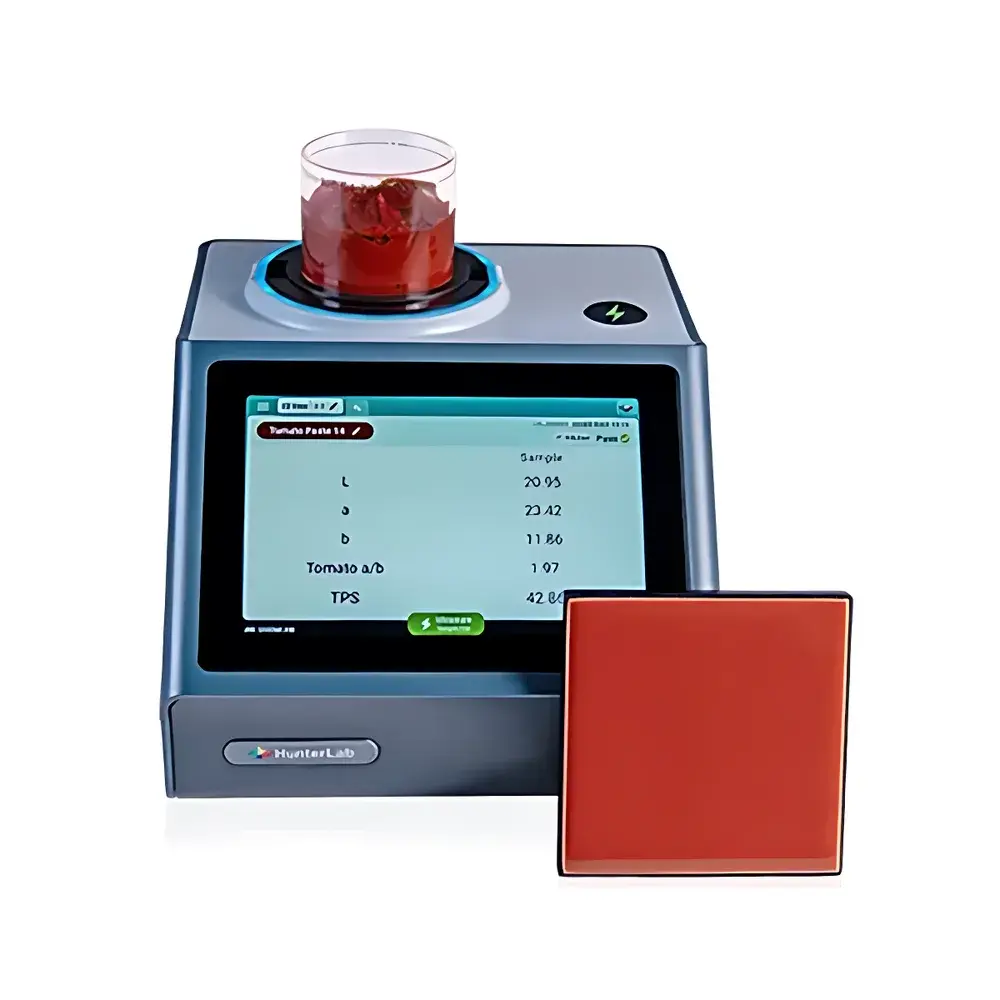
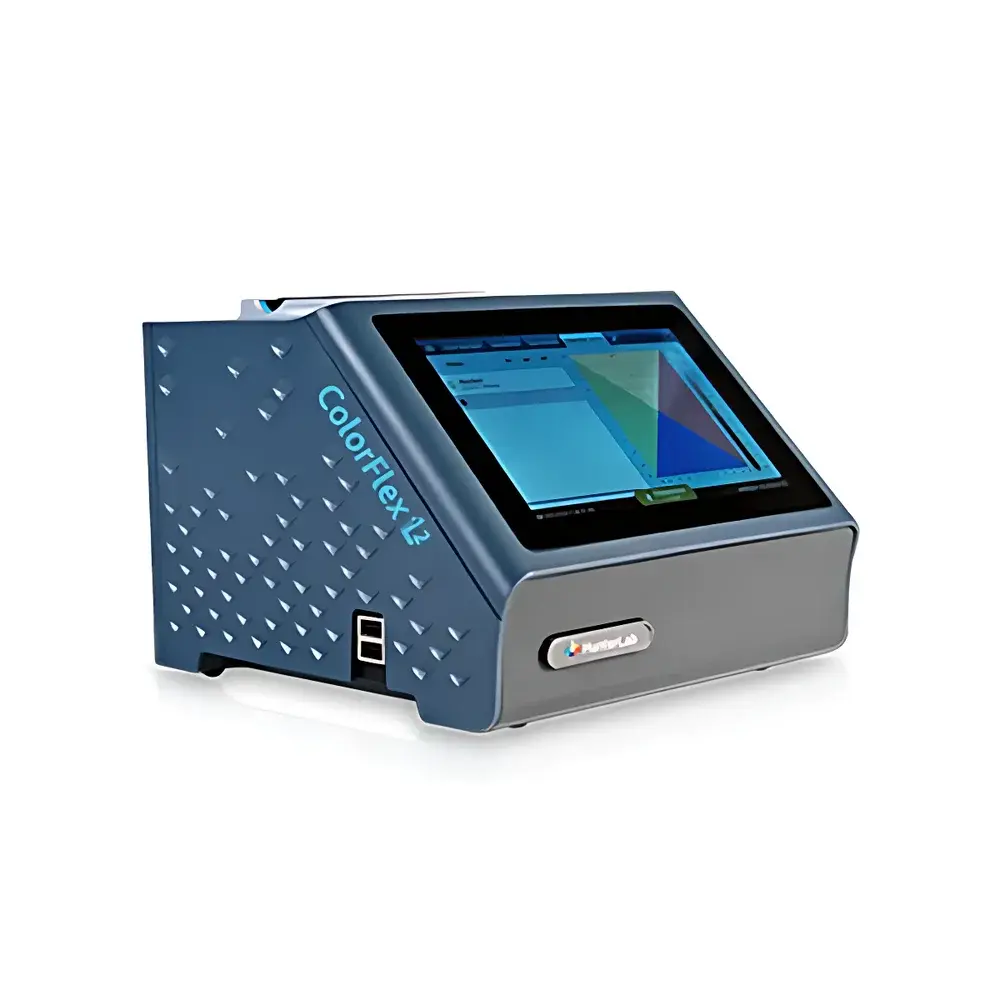
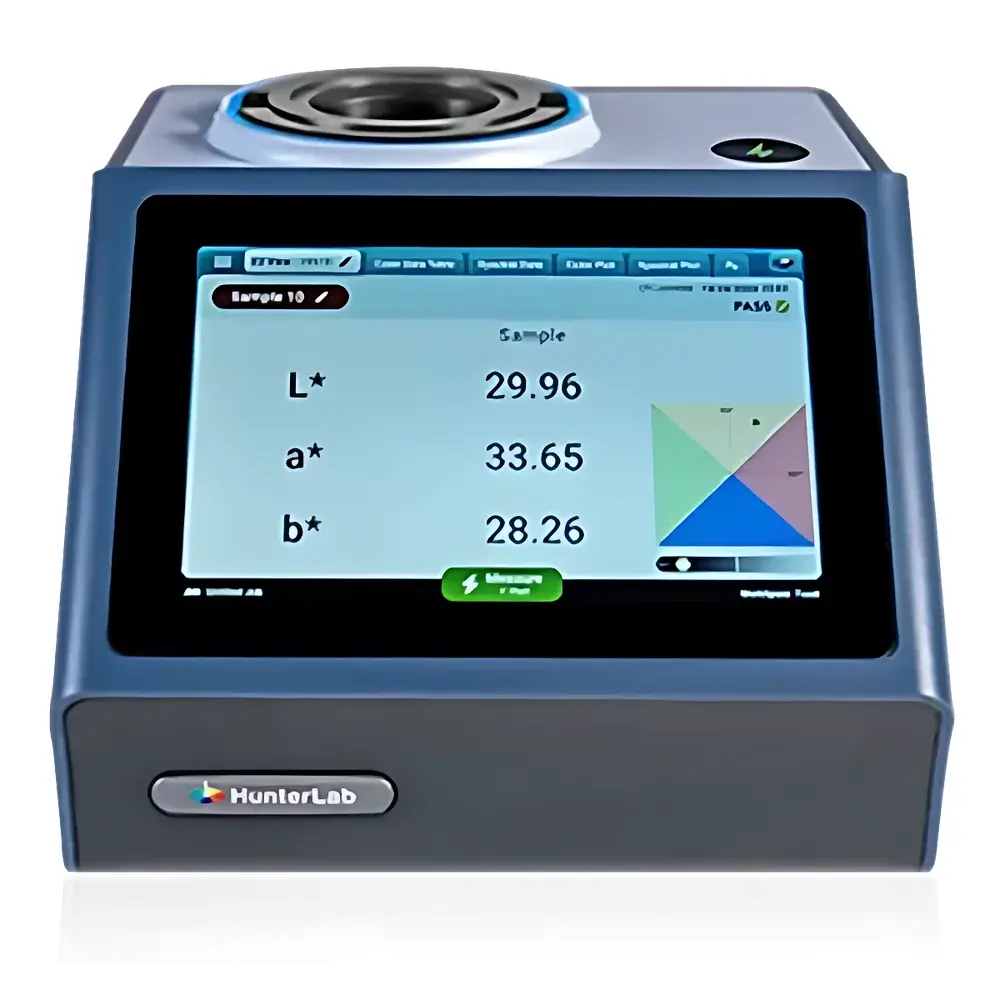
HunterLab ColorFlex L2 Tomato Colorimeter
| Brand | HunterLab |
|---|---|
| Origin | USA |
| Model | ColorFlex L2 Tomato |
| Spectral Range | 400–700 nm |
| Spectral Resolution | < 3 nm |
| Effective Bandwidth | 10 nm (triangular equivalent) |
| Illumination Geometry | 45°/0° directional, specular component excluded |
| Measurement Aperture | 31.8 mm illumination / 25.4 mm measurement |
| Photometric Range | 0–150% |
| Light Source | Full-spectrum xenon lamp (10-year typical lifetime) |
| Measurement Time | 1 second |
| Instrument Repeatability | ΔE*2000 < 0.03 (D65/10°, white tile, 20 readings) |
| Inter-instrument Agreement | ΔE*2000 < 0.15 (D65/10°, BCRA CCSII tiles) |
| Compliance | CIE 15:2004, ISO 7724-1, ASTM E1164, DIN 5033-7, JIS Z 8722 Condition C |
| Traceability | NIST-traceable calibration per CIE Pub. 44 and ASTM E259 |
| Display | 7″ capacitive touchscreen (1280×800) |
| Dimensions | 16 × 21 × 24 cm |
| Weight | 2.75 kg |
| Power | 90–240 VAC, 47–63 Hz → 24 VDC/3.75 A |
| Operating Environment | 10–30 °C, 10–90% RH (non-condensing) |
Overview
The HunterLab ColorFlex L2 Tomato Colorimeter is a purpose-engineered spectrophotometric instrument designed specifically for quantitative color assessment of tomato-based materials across the entire supply chain—from fresh fruit and paste to juice, sauce, and powder. Built upon the proven 45°/0° directional optical geometry with specular component exclusion (SCE), it delivers high-fidelity spectral reflectance data in the visible range (400–700 nm) with <3 nm spectral resolution and 10 nm effective bandwidth. This configuration ensures robustness against surface texture variation and minimizes angular dependency—critical for heterogeneous, particulate, or semi-opaque tomato matrices. Unlike general-purpose colorimeters, the L2 Tomato variant integrates proprietary tomato-specific algorithms calibrated against legacy BCR and USDA reference standards, enabling traceable quantification of industry-critical indices including lycopene content (Lyc), tomato paste score (TPS), tomato concentrate score (TCS), tomato juice score (TJS), and fresh tomato color index (FTCI). Its dual-observer capability (2° and 10°) and multi-illuminant support (D65, D55, F11, etc.) ensure compliance with global quality specifications across processing facilities, regulatory labs, and R&D environments.
Key Features
- Tomato-specific calibration suite validated against discontinued BCR and USDA reference standards, with full NIST-traceable documentation for audit readiness
- Dedicated calculation engine for seven standardized tomato metrics: a/b ratio, Lyc index, TPS, TSS, TCS, TJS, and FTCI—each derived from first-principles spectral modeling, not empirical lookup tables
- Compact 45°/0° spectrophotometer architecture with xenon flash source (10-year rated lifetime), eliminating thermal drift and enabling stable inter-day repeatability (ΔE*2000 < 0.03 on white tile)
- 7-inch high-resolution touchscreen interface with guided workflows, context-sensitive help, and embedded onboarding sequences—reducing operator training time by up to 65% versus legacy platforms
- Full GLP/GMP-ready data management: auto-timestamping, pass/fail flagging, image capture (via integrated high-res camera), audit trail logging, and USB/Ethernet export compliant with FDA 21 CFR Part 11 requirements
- Backward compatibility with ColorFlex EZ method files, standard sets, and calibration records—enabling seamless migration without revalidation overhead
Sample Compatibility & Compliance
The ColorFlex L2 Tomato accommodates diverse physical states encountered in tomato processing: opaque solids (whole or diced fruit), semi-transparent liquids (juice, puree), viscous suspensions (paste, ketchup), granular powders (dried tomato flakes), and even irregular particulates (seeds, skin fragments). Its 25.4 mm measurement aperture and optimized light path mitigate edge effects and scattering artifacts common in heterogeneous samples. All measurements conform to ISO 7724-1 for reflectance instrumentation, ASTM E1164 for spectrophotometric performance validation, and CIE 15:2004 for colorimetric computation. Instrument-level traceability is maintained through NIST-certified ceramic standards supplied with each unit, with calibration verification supported by black glass, white diagnostic tile, and green verification tile—all documented per ISO/IEC 17025 calibration procedures.
Software & Data Management
Embedded firmware supports real-time spectral plotting, tristimulus vector visualization, and multi-parameter trend analysis. Data export options include CSV, Excel-compatible XML, and structured JSON for integration into LIMS or MES platforms. The system enforces role-based access control (administrator/operator), automatic backup to USB drives, and encrypted local storage with timestamped revision history. Audit logs record every user action—including calibration events, parameter changes, and result modifications—with immutable metadata (user ID, timestamp, IP address where applicable). Software updates are delivered via secure HTTPS channel and validated using SHA-256 checksums. Optional cloud synchronization enables centralized fleet monitoring while maintaining data sovereignty per regional GDPR or CCPA requirements.
Applications
- Raw material grading: Objective discrimination of tomato cultivars based on ripeness-associated chromatic shifts (e.g., L*a*b* trajectory from green to red)
- Process optimization: Monitoring lycopene degradation during thermal concentration or drying via Lyc index trends
- Quality release testing: Pass/fail evaluation of tomato paste against contractual TPS thresholds under D65/10° conditions
- Regulatory reporting: Generating ASTM-compliant color reports for USDA, EFSA, or CFIA submissions
- R&D formulation: Quantifying color stability of fortified tomato products under accelerated shelf-life protocols
- Supplier qualification: Inter-laboratory comparison studies using shared NIST-traceable standards and harmonized SOPs
FAQ
Is the ColorFlex L2 Tomato compliant with FDA 21 CFR Part 11 for electronic records?
Yes—audit trail logging, electronic signatures, and data integrity controls meet Part 11 requirements for regulated environments.
Can I import existing ColorFlex EZ methods and standards?
Absolutely. The L2 maintains full backward compatibility with EZ method definitions, calibration sets, and sample libraries.
What reference standards are included for tomato-specific validation?
Each unit ships with NIST-traceable white tile, black glass, and green verification tile—plus documentation linking to original BCR/USDA tomato reference values.
Does the instrument support automated pass/fail decision logic for production lines?
Yes—customizable tolerance limits per parameter (e.g., Δa* ±0.8, Lyc ≥ 12.5) trigger visual/audio alerts and export actionable QC flags.
How is long-term spectral stability ensured over the 10-year lamp lifetime?
Xenon flash technology eliminates filament aging; built-in diagnostics monitor spectral output daily and alert users prior to deviation thresholds.





