
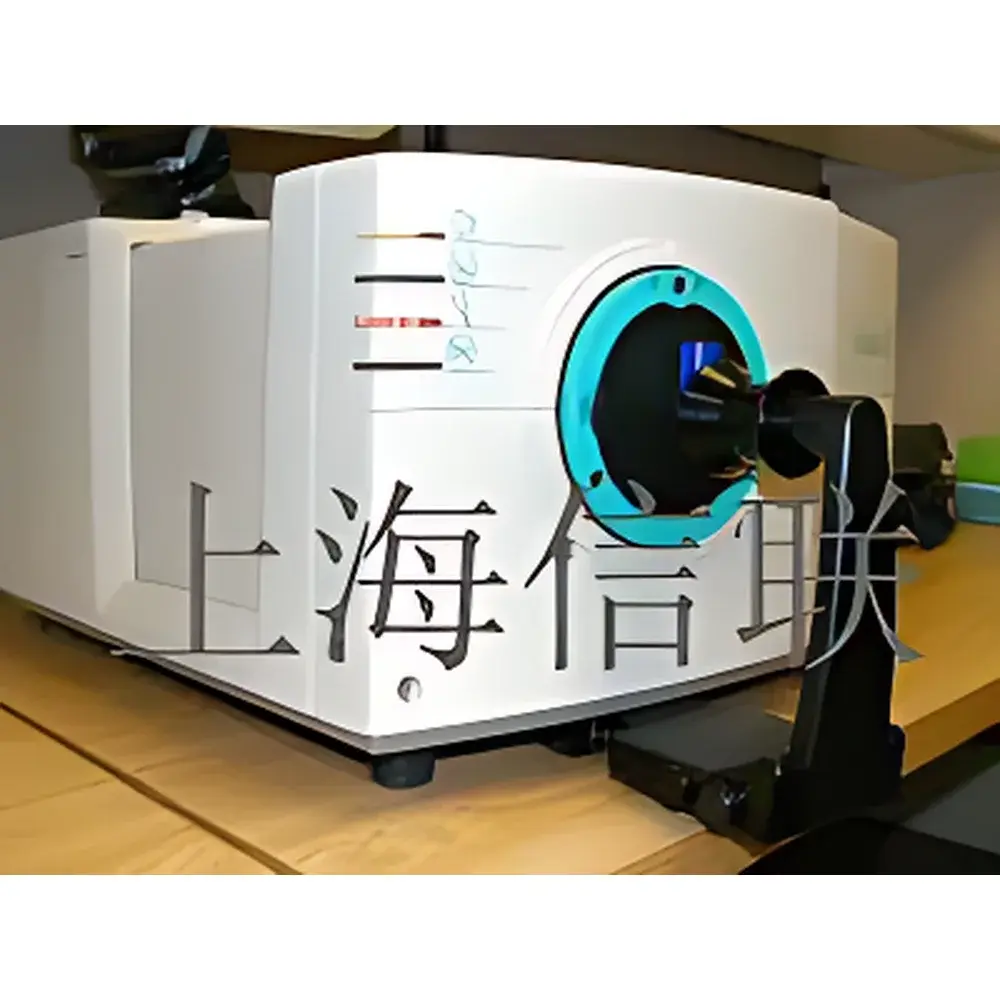
HunterLab ColorQuest XE Spectrophotometer for Yellowness Index Measurement
| Brand | HunterLab |
|---|---|
| Origin | USA |
| Model | ColorQuest XE |
| Product Type | Benchtop Spectrophotometer |
| Optical Geometry | d/8° Integrating Sphere |
| Light Source | Pulsed Xenon Lamp |
| Spectral Range | 400–700 nm |
| Repeatability | ΔYI < 0.05 |
| Spectral Resolution | < 3 nm |
| Wavelength Accuracy | ±0.1 nm |
| Photometric Range | 0–200% |
| Measurement Time | < 1 s |
| Lamp Lifetime | > 1,000,000 flashes |
Overview
The HunterLab ColorQuest XE is a benchtop spectrophotometer engineered for high-precision color and whiteness/yellowness index quantification in quality control and R&D environments. It operates on the principle of dual-beam spectral photometry, utilizing a 256-element diode array detector coupled with a high-resolution concave holographic grating to deliver stable, traceable spectral data across the visible spectrum (400–700 nm). Its d/8° integrating sphere geometry—compliant with ASTM E308, ISO 7724, and CIE No. 15—ensures consistent illumination and collection of diffuse reflectance and transmittance, critical for accurate yellowness index (YI) determination per ASTM E313 and ASTM D1925. Designed for industrial robustness, the instrument features Spectraflect®-coated 15.2 cm (6″) integrating sphere, automatic LAV/SAV aperture switching, and programmable specular component inclusion/exclusion—enabling reliable YI assessment across thermoplastic films, hot-melt adhesives, optical polymers, and liquid resins without operator-induced geometric variability.
Key Features
- Benchtop architecture with industrial-grade mechanical stability for production-floor deployment and laboratory-grade repeatability (ΔYI < 0.05)
- Pulsed xenon lamp calibrated to simulate CIE Illuminant D65, eliminating thermal drift and enabling rapid (<1 s), non-destructive measurements
- Automatic aperture selection between Large Area View (LAV: 25.4 mm illumination / 19.0 mm measurement) and Small Area View (SAV: 9.5 mm / 6.3 mm), with optional micro-aperture (4 mm) for localized film evaluation
- Integrated dual-mode transmittance capability: direct (directional) and total (diffuse + direct), essential for characterizing semi-crystalline thermoplastic films and molten polymer layers
- Self-diagnostic optical path monitoring, real-time lamp energy tracking, and auto-zero referencing ensure long-term calibration integrity
- Compliance-ready firmware supporting audit trails, user access levels, and electronic signature protocols aligned with FDA 21 CFR Part 11 requirements
Sample Compatibility & Compliance
The ColorQuest XE accommodates opaque, translucent, and transparent solids—including heat-activated hot-melt films, PET laminates, polyolefin coatings, and viscous resin melts—as well as clear to hazy liquids (e.g., monomers, solvents, UV-curable formulations). Its open three-sided transmission chamber enables flexible sample positioning for both sheet-based and cuvette-based analysis. All yellowness index calculations adhere strictly to ASTM E313 (for general materials) and ASTM D1925 (specifically for plastics), with optional reporting against Ganz chromaticity or CIE L*a*b* coordinates. Instrument validation meets ISO/IEC 17025 metrological traceability standards when paired with NIST-traceable calibration tiles and liquid standards. Routine operation supports GLP/GMP documentation workflows through configurable report templates and secure data export (CSV, XML, PDF).
Software & Data Management
Equipped with Universal Software v8.x, the ColorQuest XE provides comprehensive spectral data handling, method-driven workflows, and multi-instrument fleet management. Users define custom YI calculation methods—including ASTM E313 (CEI), ASTM D1925, or proprietary indices—and assign them to specific product lines or material grades. The software enforces version-controlled SOPs, logs all measurement parameters (aperture, SCI/SCE mode, integration time), and generates time-stamped, tamper-evident reports compliant with internal QA protocols and external regulatory audits. Raw spectral data (10 nm intervals) is stored with full metadata, enabling retrospective reprocessing using updated algorithms or reference standards. Data synchronization with LIMS and ERP systems is supported via OPC UA and RESTful API interfaces.
Applications
This instrument serves critical roles in photovoltaic encapsulant qualification (EVA, POE film yellowness tracking under thermal aging), polymer additive migration studies, pharmaceutical film coating uniformity verification, and chemical intermediate purity assessment. In hot-melt adhesive manufacturing, it quantifies thermal degradation-induced yellowing during extrusion and lamination processes—correlating YI shifts with carbonyl index trends observed in FTIR. For R&D labs developing low-YI engineering resins, the system supports accelerated aging correlation studies, batch-to-batch consistency monitoring, and raw material supplier qualification against tight YI tolerances (e.g., ΔYI ≤ 0.3 over 6-month shelf life).
FAQ
Does the ColorQuest XE support ASTM D1925 yellowness index calculation for thermoplastic films?
Yes—the instrument’s firmware includes embedded ASTM D1925 computation with automatic CIE tristimulus integration and default 2° observer weighting.
Can it measure yellowness index on molten hot-melt samples?
Indirectly: while not designed for in-situ melt measurement, it accepts cooled, solidified film specimens prepared under controlled quenching conditions that preserve thermal history representative of processing states.
Is spectral data export available for third-party chemometric modeling?
Yes—full 400–700 nm spectra at 10 nm resolution are exportable in CSV format, retaining wavelength, absorbance, and reflectance values with instrument metadata.
How often does the instrument require recalibration?
Annual factory recalibration is recommended; however, daily verification using supplied white tile and air-zero checks satisfies ISO 9001 and IATF 16949 process control requirements.
Does it comply with FDA 21 CFR Part 11 for electronic records?
Yes—when configured with password-protected user roles, electronic signatures, and enabled audit trail logging, it meets baseline Part 11 compliance for regulated pharmaceutical and medical device applications.





