
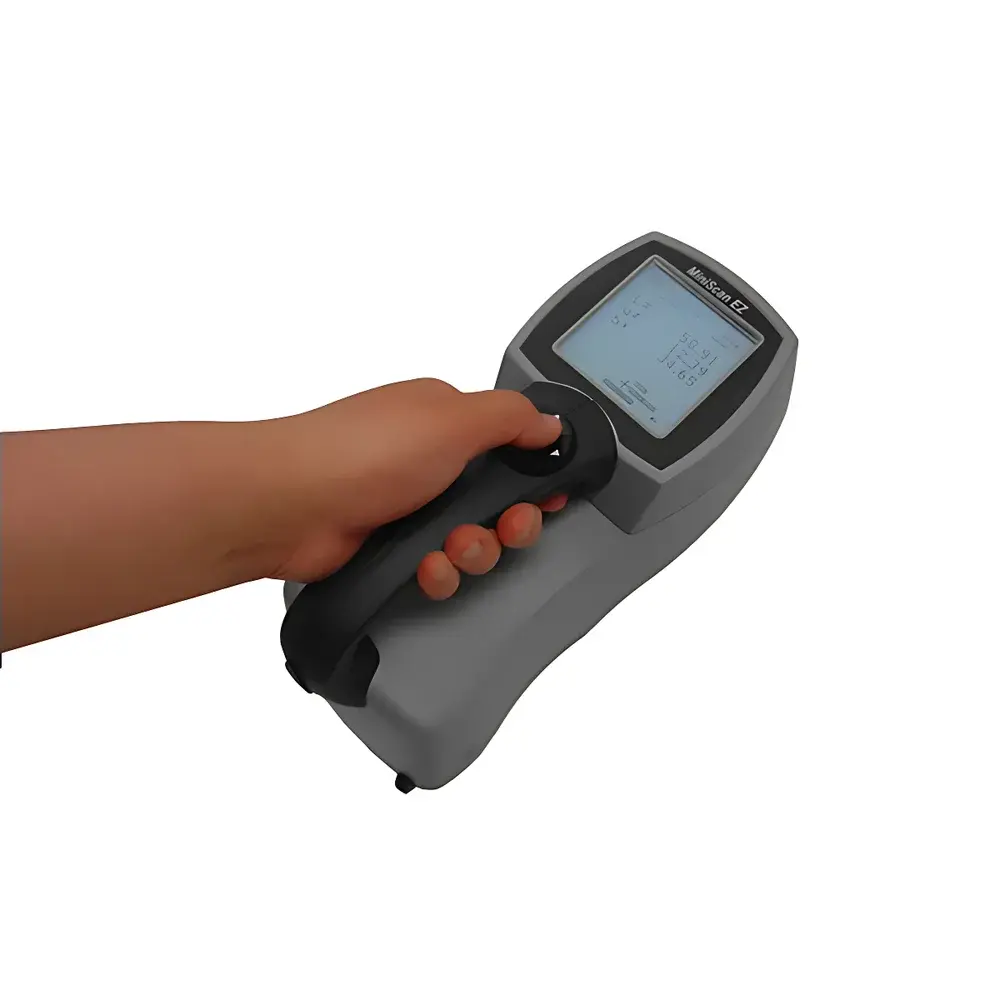
HunterLab MiniScan EZ Portable Colorimeter
| Brand | HunterLab |
|---|---|
| Origin | USA |
| Model | MiniScan EZ |
| Type | Portable Color Difference Meter |
| Optical Geometry | 0°/45° Integrating Sphere |
| Light Source | Pulsed Xenon Lamp |
| Spectral Range | 400–700 nm |
| Wavelength Resolution | <3 nm |
| Effective Bandpass | <12 nm (Triangular) |
| Reporting Interval | 10 nm |
| Photometric Range | 0–150% |
| Repeatability | ΔE*ab ≤ 0.05 (average, CIE Lab) |
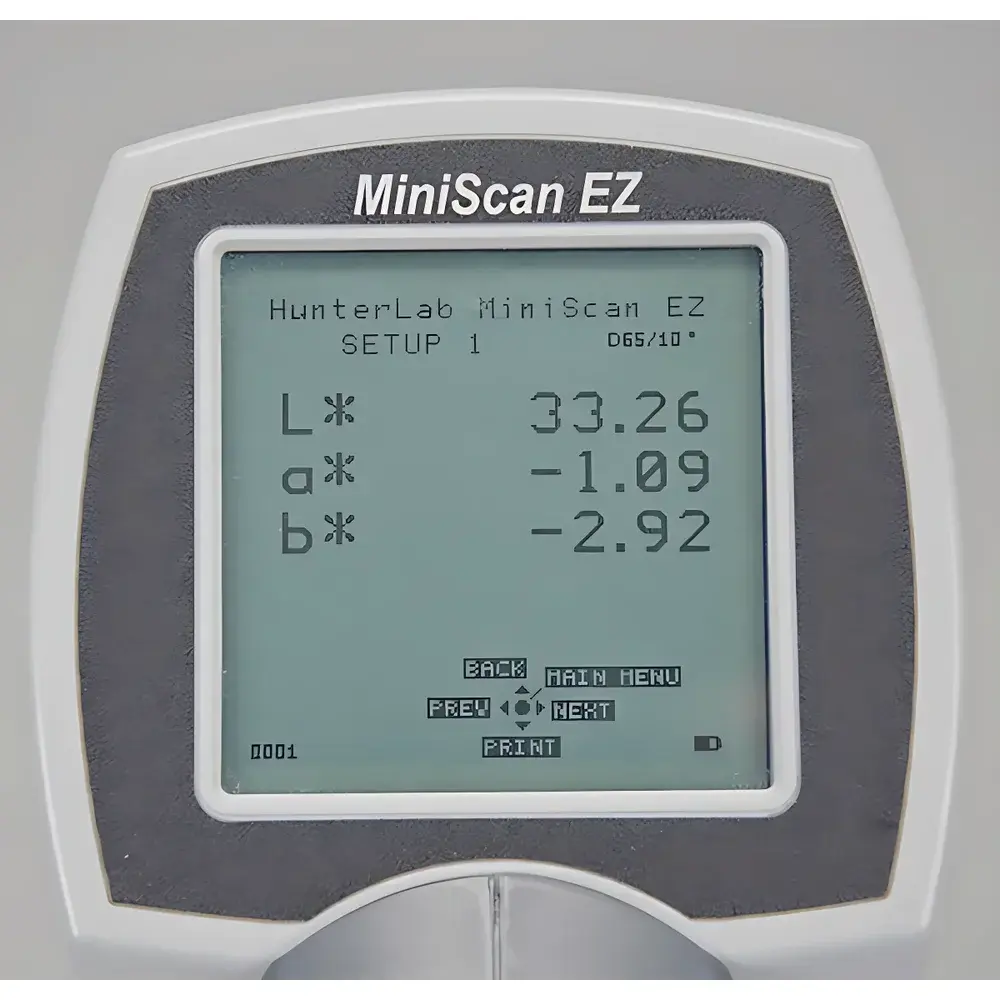
| Display | 6.4 cm × 6.4 cm LCD (rotatable 0°/90°/180°/270°) |
| Power | NiCd rechargeable battery pack or 120/220 VAC adapter |
| Dimensions (W×H×L) | 10.2 × 12.7 × 25.4 cm |
| Weight | 1.3 kg |
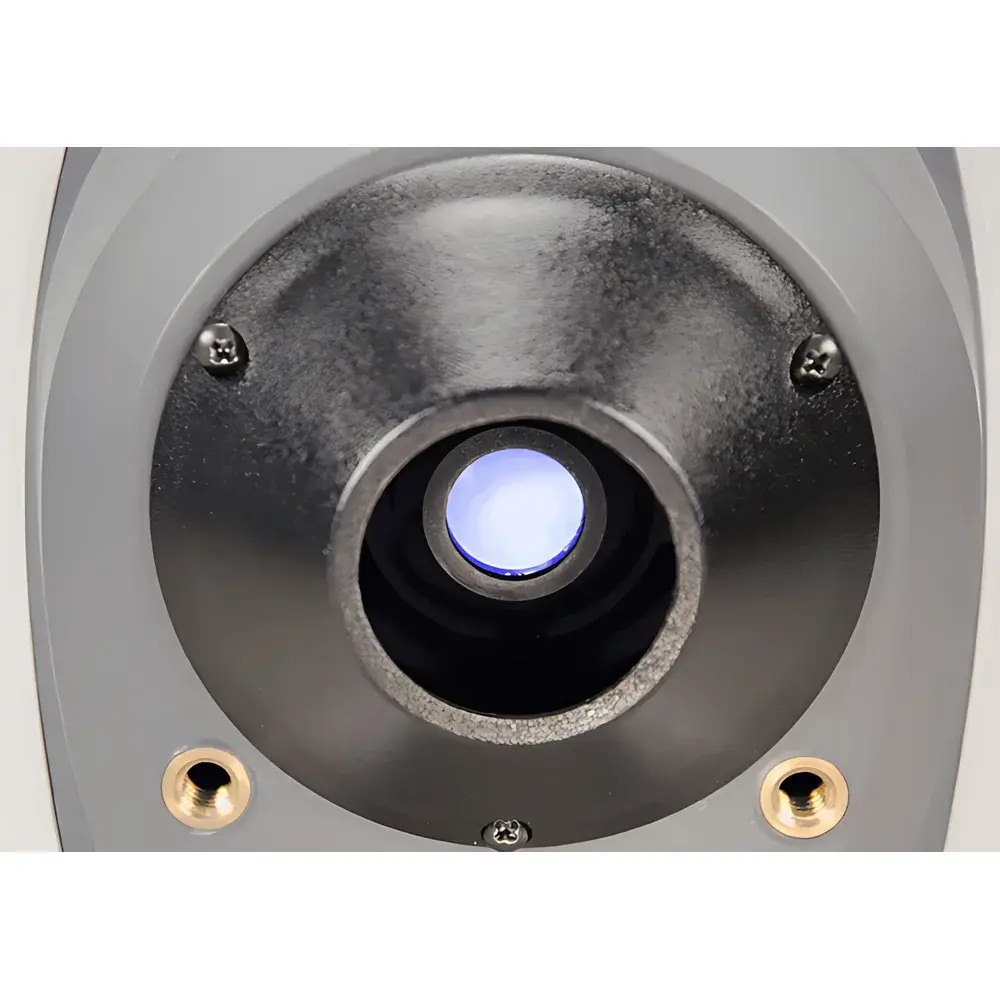
| Aperture Options | LAV (31.8 mm), SAV (6.0 mm), D/8° LAV (25.0 mm), D/8° SAV (14.3 mm), D/8° VSAV (6.0 mm) |
Overview
The HunterLab MiniScan EZ is a high-precision portable colorimeter engineered for rigorous color measurement across industrial and laboratory environments. Based on the proven 0°/45° optical geometry with an integrating sphere, it delivers spectrophotometric color data compliant with CIE 1931 and CIE 1976 (L*a*b*) standards. Unlike conventional handheld devices relying solely on white tile calibration, the MiniScan EZ incorporates dual-reference calibration—using both certified white and green ceramic tiles—to correct for spectral drift and photometric nonlinearity across the visible spectrum (400–700 nm). This proprietary calibration methodology significantly enhances long-term stability and inter-instrument agreement, making it suitable for cross-site color matching in global supply chains. The instrument employs a pulsed xenon lamp with >500,000 flash cycles lifetime, ensuring consistent spectral output without warm-up delay or intensity decay—critical for repeatable measurements in production-line QC.
Key Features
- Dual-reference calibration (white + green ceramic tiles) for improved spectral fidelity and reduced drift over time
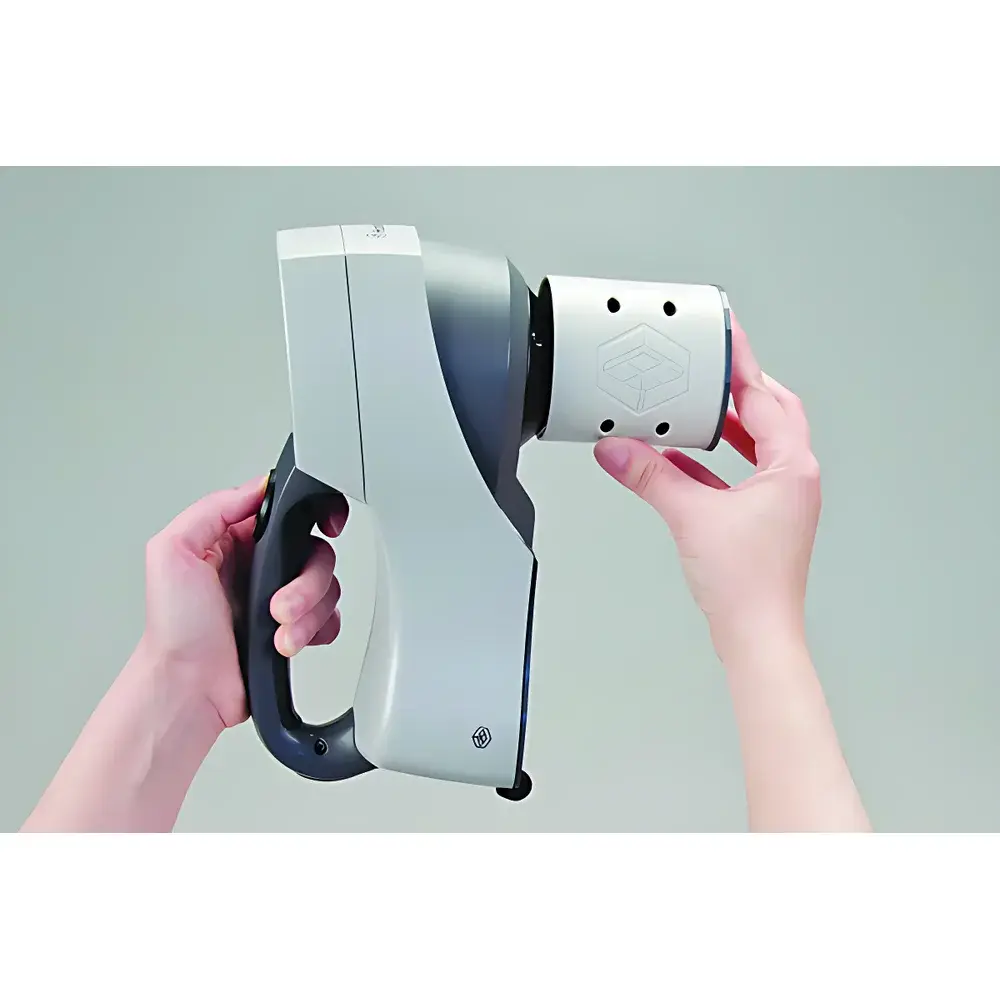
- Configurable optical geometries: selectable 0°/45° and D/8° modes via interchangeable apertures
- Five aperture options—including VSAV (6.0 mm) for micro-area analysis of textured or patterned surfaces
- Rotatable high-contrast LCD display (6.4 cm × 6.4 cm) with four viewing orientations for ergonomic operation in confined spaces
- Field-serviceable NiCd rechargeable battery system compatible with standard AA-sized chargers—eliminating proprietary battery dependency and reducing TCO
- Robust mechanical architecture rated for industrial use: IP54-rated enclosure, shock-absorbing housing, and sealed optical path
- Compliance-ready design supporting audit trails, user access levels, and measurement metadata logging
Sample Compatibility & Compliance
The MiniScan EZ accommodates opaque solids, powders, pastes, granules, and clear-to-turbid liquids without sample preparation—enabled by its large dynamic photometric range (0–150%) and low-noise detector array. Its 0°/45° geometry minimizes texture-induced specular artifacts, while D/8° mode supports compliance with ASTM D2244, ISO 11664-4, and CIE Publication 15 for diffuse reflectance applications. The instrument meets IEC 61000-4 electromagnetic compatibility requirements and conforms to RoHS and REACH material restrictions. For regulated industries, firmware supports configurable audit trail generation (per FDA 21 CFR Part 11 Annex 11 principles), electronic signature capability, and GLP/GMP-aligned data integrity protocols when paired with optional HunterLab EasyMatch QC software.
Software & Data Management
Data acquisition, analysis, and reporting are managed through HunterLab’s EasyMatch QC platform (Windows-based), which supports real-time pass/fail evaluation against user-defined tolerances (ΔE*, ΔL*, Δa*, Δb*, ΔC*, Δh*). The software enables statistical process control (SPC) charting, batch trending, and export to CSV, XML, or PDF formats compatible with LIMS and ERP systems. Instrument configuration, calibration history, and measurement logs are stored locally with timestamped, user-attributed entries. Optional cloud synchronization allows centralized fleet management across multi-location facilities. All firmware updates are digitally signed and verified to maintain cryptographic integrity per NIST SP 800-193 guidelines.
Applications
The MiniScan EZ serves as a primary color verification tool in quality assurance workflows across plastics compounding, automotive interior trim, pharmaceutical tablet coating, food packaging film, architectural coatings, textile dye lots, and solar panel anti-reflective coating validation. Its portability enables in-line measurements at extrusion lines, paint booths, or warehouse receiving docks—reducing reliance on lab-based benchtop instruments. In R&D settings, its VSAV aperture facilitates localized color mapping of heterogeneous materials such as marble slabs, printed circuit boards, or composite laminates. Regulatory submissions in FDA-regulated sectors leverage its documented calibration traceability to NIST-traceable standards and full measurement uncertainty reporting.
FAQ
Does the MiniScan EZ support D/8° geometry out of the box?
Yes—D/8° mode is enabled via optional D/8° aperture kits; the base unit ships with 0°/45° optics.
Is green tile calibration mandatory for daily operation?
No—it is recommended before critical measurement sessions or after extended idle periods (>24 h); white tile calibration remains sufficient for routine use.
Can the instrument be validated per IQ/OQ/PQ protocols?
Yes—HunterLab provides IQ/OQ documentation templates and certified reference materials (CRMs) traceable to NIST SRM 2021 and 2031.
What is the maximum number of stored measurements on-device?
Up to 2,000 readings with full spectral data (31-point reflectance), plus metadata (operator ID, timestamp, sample ID, tolerance set).
Is USB or Bluetooth connectivity supported?
USB 2.0 host interface only; Bluetooth is not implemented to preserve electromagnetic compatibility in manufacturing environments.




