
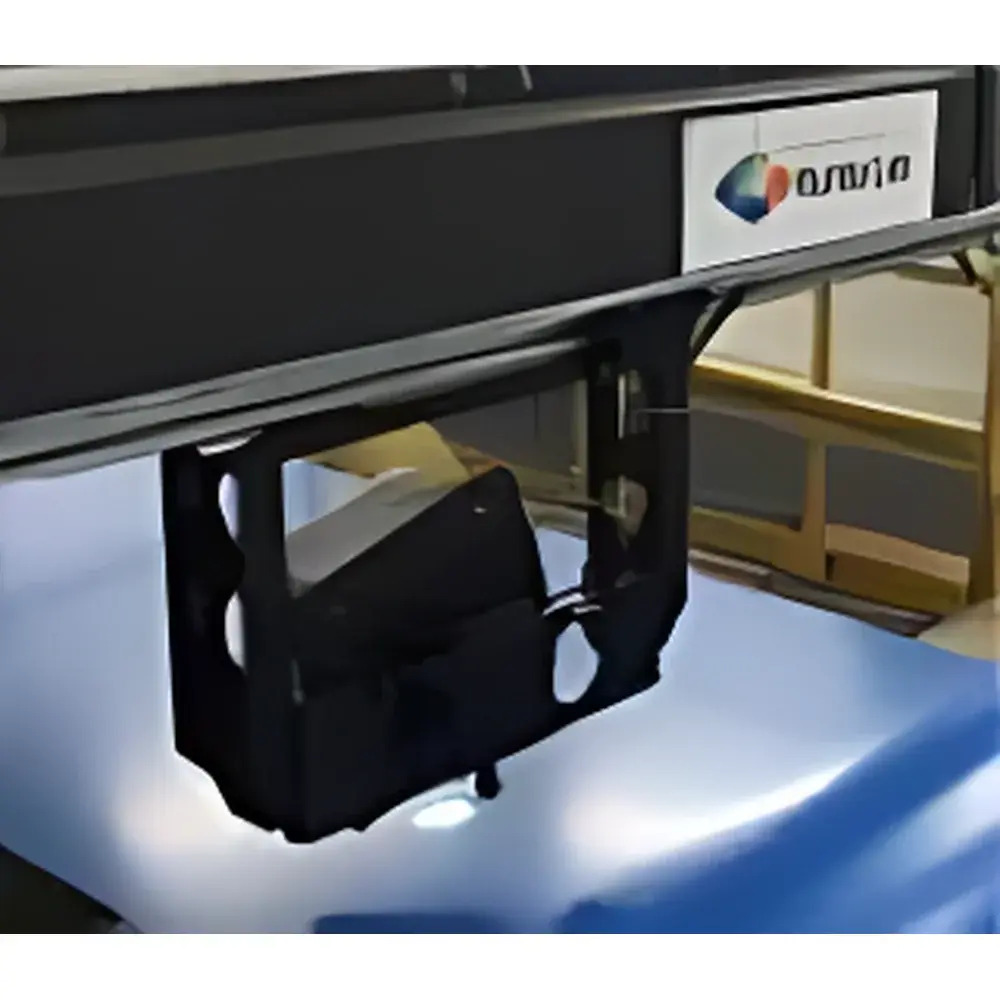
HunterLab SpectraTrend HT In-Line Color Measurement System for Plastic Pellets
| Brand | HunterLab |
|---|---|
| Origin | USA |
| Model | SpectraTrend HT |
| Product Type | Spectrophotometric Colorimeter |
| Instrument Type | In-Line |
| Optical Geometry | 0/45° Integrating Sphere |
| Light Source | Full-Spectrum Balanced Solid-State LED System |
| Spectral Range | 400–700 nm |
| Spectral Bandwidth | 10 nm |
| Repeatability (ΔE*ab) | ≤ 0.03 |
| Measurement Distance | Up to 100 mm (4 in) |
| IP Rating | IP56 / NEMA 4 |
| Interface | Standard Ethernet (No RS-232 Required) |
| Height Detection | Integrated non-contact ultrasonic or optical height sensor |
| Software Platform | HunterLab EasyMatch QC v5.x (FDA 21 CFR Part 11 compliant audit trail optional) |
Overview
The HunterLab SpectraTrend HT is an industrial-grade, in-line spectrophotometric color measurement system engineered for continuous, non-contact monitoring of plastic pellets during extrusion, conveying, and blending processes. Based on 0/45° optical geometry with a precision integrating sphere, it captures reflectance spectra across the visible range (400–700 nm) using a thermally stabilized, full-spectrum solid-state LED light source. Unlike traditional benchtop colorimeters, the SpectraTrend HT integrates real-time height sensing—enabling automatic compensation for sample position variation, conveyor belt speed fluctuations, and pellet bed depth inconsistencies. This dual-parameter capability (color + height) ensures metrological traceability under dynamic production conditions, supporting process analytical technology (PAT) frameworks as defined by FDA Guidance for Industry and ICH Q8(R2). Its design conforms to Good Manufacturing Practice (GMP) requirements for continuous quality verification and supports statistical process control (SPC) initiatives including Six Sigma and DMAIC methodologies.
Key Features
- Non-contact, high-speed measurement at up to 5 Hz—enabling real-time detection of color drift before off-spec material accumulates.
- Integrated height sensor compensates for vertical displacement (±100 mm range), eliminating geometry-induced spectral error without mechanical recalibration.
- 10 nm spectral bandwidth and <0.03 ΔE*ab repeatability meet ISO 13655:2017 and ASTM E308-22 requirements for industrial color measurement reproducibility.
- NEMA 4/IP56-rated enclosure ensures operational integrity in humid, dusty, or washdown environments typical of polymer processing lines.
- Ethernet-native architecture eliminates legacy serial dependencies; supports multi-sensor network deployment, PLC integration (via Modbus TCP), and centralized data aggregation.
- Self-diagnostic firmware with built-in reference validation checks ensures long-term photometric stability and reduces need for manual calibration verification.
Sample Compatibility & Compliance
The SpectraTrend HT is validated for heterogeneous particulate streams including virgin and regrind plastic pellets (PP, PE, ABS, PC, PET), granular food products (cereal, snacks, frozen dough), and coated substrates (vinyl sheeting, decorative laminates). Its 0/45° geometry minimizes directional bias from surface texture and gloss—critical for matte or semi-crystalline polymer surfaces. The system complies with ISO/IEC 17025:2017 foundational principles for testing laboratories and supports GLP/GMP documentation workflows through configurable audit trails in EasyMatch QC software. Optional 21 CFR Part 11 compliance packages include electronic signatures, role-based access control, and immutable measurement logs—enabling use in regulated pharmaceutical excipient or medical-grade polymer manufacturing.
Software & Data Management
HunterLab EasyMatch QC v5.x serves as the embedded and remote interface for configuration, visualization, and reporting. It delivers synchronized display of CIE L*a*b*, ΔE*ab, spectral reflectance curves, and real-time height values per measurement cycle. Trend charts support SPC charting (X-bar/R, CUSUM), while customizable pass/fail logic triggers alarms based on user-defined tolerances aligned with AATCC, ISO 11664, or internal color standards. Data export options include CSV, XML, and native Microsoft Excel (.xlsx) formats—with timestamped metadata (operator ID, batch ID, instrument serial number) embedded automatically. Networked installations allow concurrent access from QA workstations, MES systems, or cloud-based analytics platforms via standard RESTful API endpoints.
Applications
The SpectraTrend HT is deployed in continuous manufacturing environments where color consistency directly impacts regulatory compliance, brand integrity, and material yield. Typical use cases include: real-time monitoring of masterbatch dispersion in polyolefin extrusion; closed-loop feedback control of pigment dosing systems; verification of color homogeneity in recycled flake blends; and release testing of medical device housings prior to packaging. It is also applied in food processing for baked goods (biscuits, bread crusts), snack foods (potato chips, meat analogs), and confectionery—where surface moisture, oil migration, or thermal browning necessitates height-compensated spectral capture. Cross-industry validation includes ASTM D2244 (color difference), ISO 11664-4 (CIELAB), and TAPPI T485 (paper brightness).
FAQ
Does the SpectraTrend HT require annual factory recalibration?
No—its solid-state LED source and stable optical path eliminate lamp aging drift; however, quarterly verification against NIST-traceable ceramic tiles is recommended per ISO 9001 internal audit protocols.
Can it distinguish between color variation caused by pigment dispersion versus thermal degradation?
Yes—spectral shape analysis (e.g., peak shifts in 450–520 nm region) combined with L*a*b* trajectory mapping enables root-cause differentiation when correlated with process temperature and residence time data.
Is height measurement affected by conveyor belt material or color?
No—the integrated height sensor operates independently of optical measurement (ultrasonic or triangulation-based) and ignores background reflectance; only the pellet surface triggers valid color acquisition.
How is data security maintained in networked deployments?
EasyMatch QC supports TLS 1.2 encryption for web-based access, Windows Active Directory integration, and encrypted local database storage compliant with ISO/IEC 27001 information security controls.
What maintenance is required beyond routine lens cleaning?
None—there are no moving parts, consumables, or replaceable lamps; the system is designed for >10 years of unattended operation in industrial settings.



