
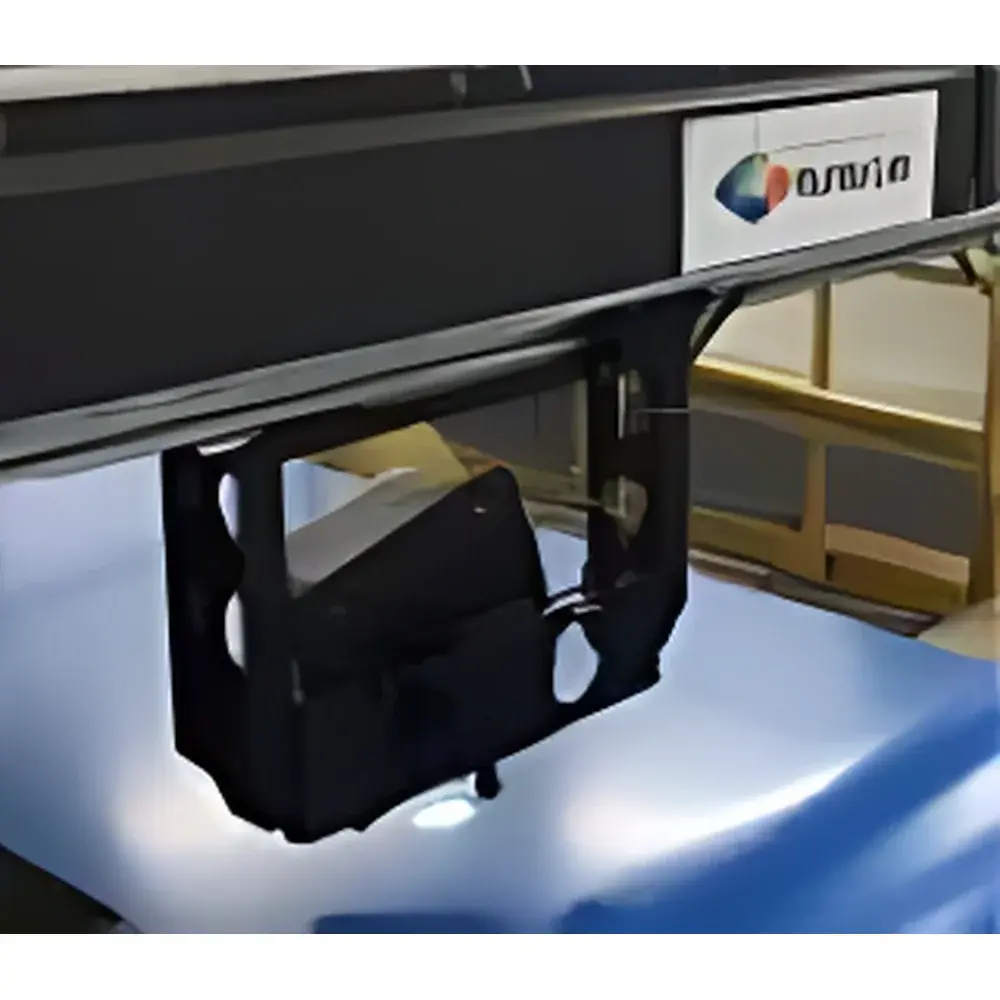
HunterLab SpectraTrend-HT In-Line Color Measurement System for Plastics
| Brand | HunterLab |
|---|---|
| Origin | USA |
| Model | SpectraTrend-HT |
| Product Type | Spectrophotometric Colorimeter |
| Instrument Type | In-Line |
| Optical Geometry | 0/45° Integrating Sphere |
| Light Source | Full-Spectrum Balanced Solid-State LED System |
| Spectral Range | 400–700 nm |
| Repeatability | ΔE*ab ≤ 0.03 |
| IP Rating | NEMA 4 / IP56 |
| Measurement Speed | Up to 5 Hz |
| Measurement Distance | Up to 100 mm (4 in) |
| Spectral Bandwidth | 10 nm |
| Connectivity | Standard Ethernet (No RS-232 Required) |
| Software Platform | HunterLab EasyMatch QC v5.x or later |
| Compliance | Supports FDA 21 CFR Part 11 (Audit Trail, Electronic Signatures), ASTM E308, ISO 11664, CIE No. 15, USP <1061>, GMP/GLP-aligned workflows |
Overview
The HunterLab SpectraTrend-HT is a purpose-engineered in-line spectrophotometric color measurement system designed exclusively for continuous, non-contact color and height monitoring of molten, extruded, or conveyed plastic materials in real time. Operating on the principle of 0/45° geometry with an integrating sphere detector, it captures reflectance spectra across the visible spectrum (400–700 nm) using a thermally stable, full-spectrum solid-state LED light source. Unlike benchtop colorimeters, the SpectraTrend-HT integrates directly into production lines—mounted above extrusion dies, chill rolls, or conveyor belts—to deliver high-fidelity spectral data at up to 5 measurements per second. Its optical architecture compensates dynamically for sample height variation (±25 mm), surface irregularities, and conveyance speed fluctuations—ensuring metrological consistency regardless of process drift. The system meets foundational requirements for Process Analytical Technology (PAT) implementation, supporting Quality by Design (QbD) frameworks aligned with ICH guidelines and enabling closed-loop feedback integration with PLCs and DCS systems.
Key Features
- Simultaneous non-contact measurement of color (CIE L*a*b*, ΔE*ab, Yellowness Index, Whiteness Index, etc.) and physical height (mm) — critical for correcting geometric variance in extruded profiles and pellets.
- Automated, user-configurable self-calibration intervals (e.g., every 15 min, hourly, or per shift), eliminating manual intervention and reducing operator exposure risk in high-temperature or confined-line environments.
- NEMA 4 / IP56-rated rugged enclosure engineered for industrial environments — resistant to dust ingress, water spray, and thermal cycling typical near extruders or ovens.
- Full-width automatic transverse probe movement with collision avoidance logic and audible/visual alarm activation upon obstruction detection.
- Height-compensated spectral correction algorithm that normalizes color values based on real-time distance feedback — ensuring traceable accuracy even when material thickness or belt sag varies.
- Factory-matched spectral response across multiple units; inter-instrument agreement meets ΔE*ab ≤ 0.08 (per ASTM E2539) for cross-site color data harmonization.
Sample Compatibility & Compliance
The SpectraTrend-HT accommodates diverse plastic forms including pellets, granules, sheets, films, extruded profiles, and molded components — whether opaque, translucent, or semi-crystalline. It supports standardized color evaluation under CIE Illuminant D65 and 10° observer conditions, with full compliance to ASTM D2244, ISO 11664-4, and CIE Publication 15:2018. Data integrity mechanisms satisfy FDA 21 CFR Part 11 requirements: electronic audit trails, role-based access control (RBAC), digital signature capability, and immutable raw spectral storage. The system’s architecture aligns with Lean Six Sigma (DMAIC), Statistical Process Control (SPC), and Laboratory Quality Management (LQM) protocols — facilitating automated out-of-spec alerts, SPC charting, and root-cause correlation with process parameters.
Software & Data Management
HunterLab EasyMatch QC software serves as the centralized interface for configuration, visualization, and reporting. It displays synchronized color + height trends, spectral overlays, pass/fail status per user-defined tolerances, and real-time deviation heatmaps. Data export supports native Excel (.xlsx), CSV, and XML formats — with customizable report templates for QA documentation, batch release records, or regulatory submissions. Networked deployment enables concurrent access from lab PCs, HMI terminals, or MES platforms via standard TCP/IP. No COM port drivers or serial extenders are required; Ethernet connectivity simplifies multi-sensor daisy-chaining and centralized firmware updates. Optional API integration allows bidirectional communication with SCADA, SAP QM, or custom LIMS environments.
Applications
The SpectraTrend-HT is deployed across polymer manufacturing segments where color consistency directly impacts brand integrity and regulatory acceptability: polyolefin pellet lines (PP, PE), PVC compound extrusion, PET sheet thermoforming, ABS/PC injection molding feed streams, and masterbatch blending validation. It is equally effective for food-grade plastics (e.g., packaging films, dairy containers), medical tubing, automotive interior trims, and construction-grade vinyl siding. Use cases include real-time correction of pigment dosing systems, early detection of thermal degradation-induced yellowing, verification of colorant dispersion homogeneity, and statistical validation of lot-to-lot color stability per ISO 9001 clause 8.5.2.
FAQ
What is the minimum measurable sample size for reliable color-height correlation?
For optimal height compensation, samples should present a minimum contiguous surface area of 15 mm × 15 mm within the 40 mm field of view. Smaller features may be measured, but height-based correction accuracy degrades below this threshold.
Can the SpectraTrend-HT operate in ambient temperatures exceeding 50°C?
Yes — the instrument housing is rated for continuous operation at 50°C ambient, with internal thermal management maintaining LED spectral stability and detector linearity. Optional air-purge kits are available for environments with condensation or particulate contamination.
Does it support measurement of transparent or highly glossy plastic films?
Yes — the 0/45° geometry minimizes specular reflection artifacts. For ultra-glossy surfaces, optional matte reference tiles and polarization filters can be integrated to suppress glare-induced spectral distortion.
How is spectral calibration traceability maintained over time?
Each unit ships with NIST-traceable ceramic tile standards. Field recalibration uses onboard white and black references; spectral drift is monitored continuously and logged in the audit trail with auto-alert thresholds configurable in EasyMatch QC.
Is OPC UA or MQTT protocol support available for Industry 4.0 integration?
Native OPC UA support is available via the HunterLab Connect Gateway (optional add-on module); MQTT publishing is supported through third-party edge gateways compliant with ISO/IEC 14908 or IEEE 1888 standards.




