
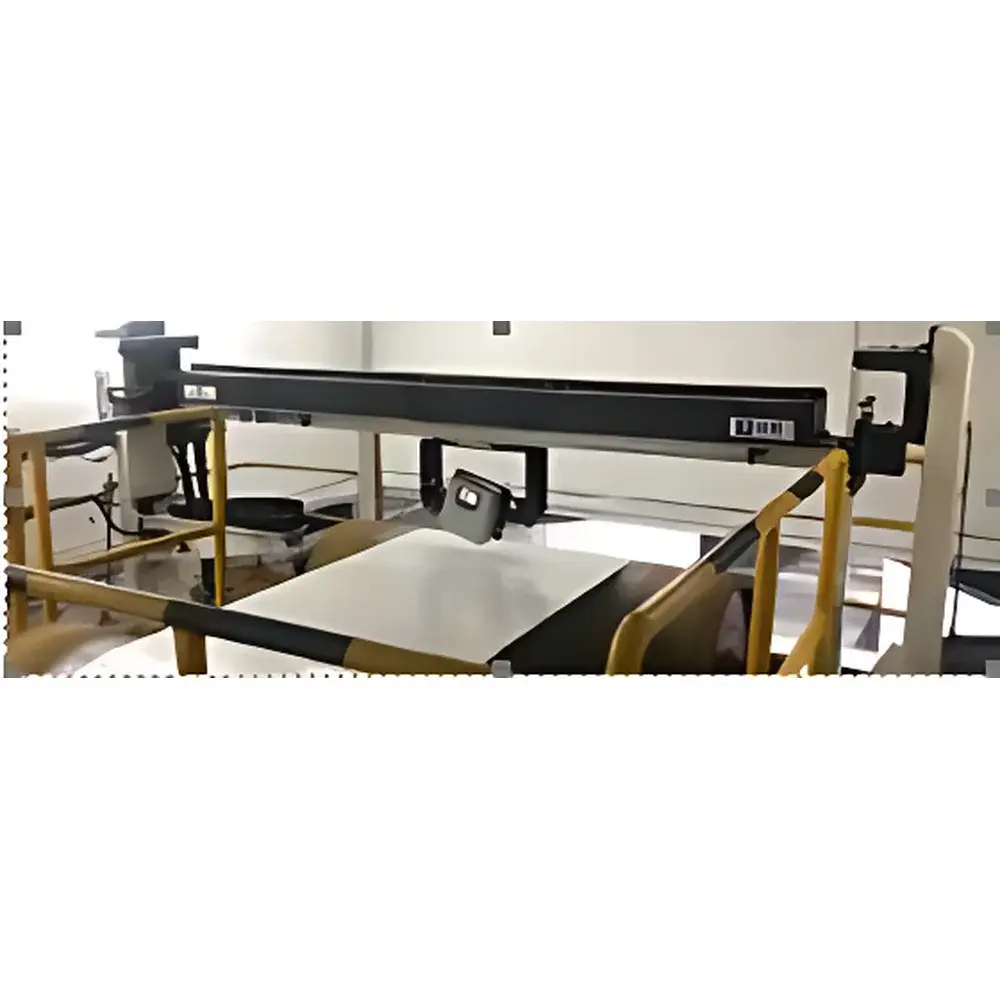
HunterLab SpectraTrend HT Online Color Measurement System for Plastics
| Brand | HunterLab |
|---|---|
| Origin | USA |
| Manufacturer Type | Authorized Distributor |
| Origin Category | Imported |
| Model | SpectraTrend HT for Plastics |
| Product Type | Spectrophotometric Colorimeter |
| Instrument Type | In-line |
| Optical Geometry | d/8° integrating sphere |
| Light Source | Full-spectrum balanced solid-state LED system |
| Spectral Range | 400–700 nm |
| Repeatability | ΔE*ab ≤ 0.03 |
Overview
The HunterLab SpectraTrend HT Online Color Measurement System for Plastics is an industrial-grade, non-contact spectrophotometer engineered for continuous, real-time color and height monitoring directly on extrusion, pelletizing, film casting, and injection molding production lines. Operating on the principle of diffuse illumination and collection via an 8° geometry integrating sphere, it delivers laboratory-grade spectral data (10 nm FWHM bandwidth) under dynamic process conditions. Unlike offline benchtop instruments, the SpectraTrend HT acquires measurements at up to 5 Hz—enabling detection of transient color shifts caused by resin batch variation, pigment dispersion inconsistencies, thermal degradation, or masterbatch feed fluctuations. Its dual-sensor architecture simultaneously captures CIE L*a*b*, ΔE*ab, spectral reflectance (31-point, 10 nm intervals), and physical sample height—critical for compensating optical path length variations in uneven or vibrating material streams. Designed explicitly for integration into regulated manufacturing environments, it supports continuous process verification per ICH Q5, Q8, and Q9 frameworks, and aligns with FDA Process Analytical Technology (PAT) initiatives for real-time quality assurance.
Key Features
- Real-time in-line measurement at 5 Hz sampling rate, enabling immediate detection of color drift during extrusion or compounding
- Integrated height-sensing capability (0–100 mm range) with automatic optical path compensation for variable sample elevation or conveyor belt sag
- NEMA 4 / IP56-rated enclosure for operation in humid, dusty, or washdown-prone plastic processing environments
- Full-spectrum solid-state LED illumination (400–700 nm) with >50,000-hour lifetime and stable spectral output—eliminating lamp replacement and warm-up delays
- Self-calibrating optical system with user-definable auto-recalibration intervals (e.g., every 15 min, per shift, or on demand) to maintain traceability without manual intervention
- Full-width transverse probe movement with collision avoidance and audible/visual alarm for safe operation near moving machinery
- Network-ready Ethernet interface (10/100BASE-T) supporting Modbus TCP and OPC UA protocols for direct PLC and SCADA integration
Sample Compatibility & Compliance
The SpectraTrend HT accommodates heterogeneous, textured, and thermally unstable plastic substrates—including pellets, granules, films, extruded profiles, and molded parts—without requiring surface contact or sample conditioning. Its non-contact design eliminates contamination risk and mechanical wear, while its height-compensated algorithm corrects for specular reflection artifacts arising from curvature, gloss variation, or inconsistent standoff distance. The system complies with ASTM D2244 (standard practice for calculation of color tolerances), ISO 11664-4 (CIE colorimetric observers), and ISO 13655 (spectral measurement geometry). Data integrity meets FDA 21 CFR Part 11 requirements when used with validated EasyMatch QC software, including electronic signatures, audit trails, and role-based access control. It supports GMP-aligned workflows through configurable pass/fail limits, automated report generation, and seamless synchronization with LIMS and MES platforms.
Software & Data Management
HunterLab EasyMatch QC software serves as the central hub for configuration, visualization, and compliance reporting. It provides real-time dashboards showing L*a*b*, ΔE*ab, spectral curves, height trends, and statistical process control (SPC) charts (X-bar/R, Cpk, Ppk). Users define custom tolerance zones per color standard (e.g., Munsell, RAL, Pantone, or internal specs), trigger alarms on deviation thresholds, and export timestamped datasets directly to Microsoft Excel or CSV for further analysis. The software supports multi-instrument synchronization—ensuring <0.05 ΔE*ab inter-unit agreement across a production line—and enables historical comparison against lab reference measurements. All data entries include operator ID, instrument ID, calibration timestamp, environmental metadata (ambient temperature/humidity if logged), and full audit trail per GLP/GMP documentation standards.
Applications
The SpectraTrend HT is deployed across polymer manufacturing segments where color consistency directly impacts brand equity, regulatory acceptance, and scrap reduction. Typical use cases include: real-time monitoring of polyolefin colorants in blown film lines; detecting thermal yellowing in PET bottle preform extrusion; verifying pigment uniformity in PVC flooring compounds; controlling hue stability in automotive interior trim extrusion; and ensuring batch-to-batch repeatability in medical-grade tubing production. It is equally effective on food-grade polymers (e.g., packaging films for baked goods, frozen meals, snacks), architectural vinyls, synthetic fibers, and engineered composites. Its height-aware measurement engine makes it uniquely suited for applications involving irregular topography—such as textured sheets, foamed profiles, or granular blends—where conventional colorimeters yield unreliable results due to uncorrected geometry effects.
FAQ
How does the SpectraTrend HT handle varying sample heights during continuous measurement?
It employs a built-in triangulation-based height sensor that dynamically adjusts the spectral integration time and compensates for changes in working distance—ensuring consistent color values regardless of ±25 mm vertical fluctuation.
Can the system be integrated with existing PLCs or MES platforms?
Yes—via native Modbus TCP and OPC UA support over standard Ethernet, enabling bidirectional communication for setpoint updates, alarm triggering, and real-time data streaming without additional gateways.
What calibration standards are supported, and how often is recalibration required?
The system uses NIST-traceable ceramic tiles and includes automated dark/light calibration routines; recommended recalibration frequency is determined by process criticality but typically ranges from 8 to 72 hours depending on ambient stability and operational duty cycle.
Is the SpectraTrend HT suitable for measuring translucent or highly glossy plastic surfaces?
Yes—the d/8° geometry with specular component included (SCI) mode minimizes gloss-related bias, and the height-correction algorithm mitigates errors from surface curvature or air gaps common in thin films and injection-molded parts.
Does the system meet pharmaceutical or food-contact regulatory requirements?
While the hardware itself carries no direct FDA clearance, its design, documentation, and software validation package support compliance with USP , ICH Q5, and EU Annex 11 when deployed within a qualified quality management system.





