
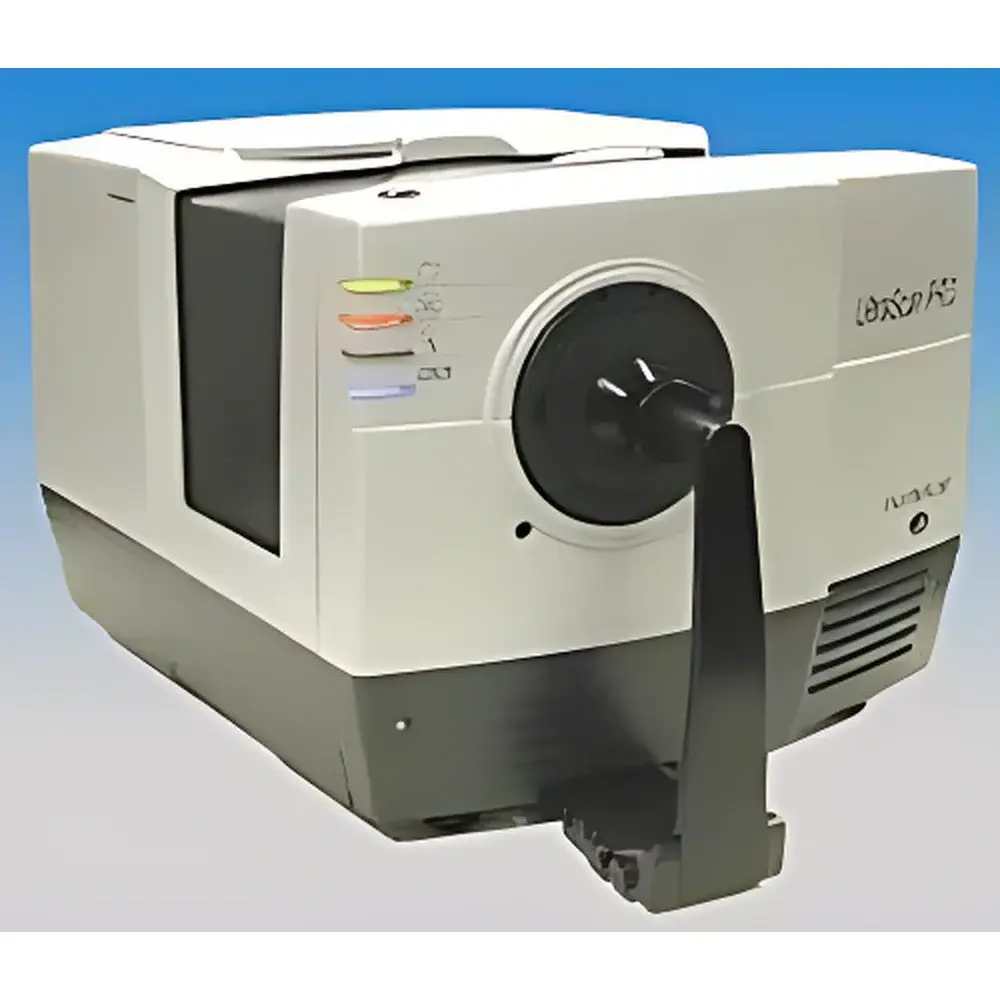
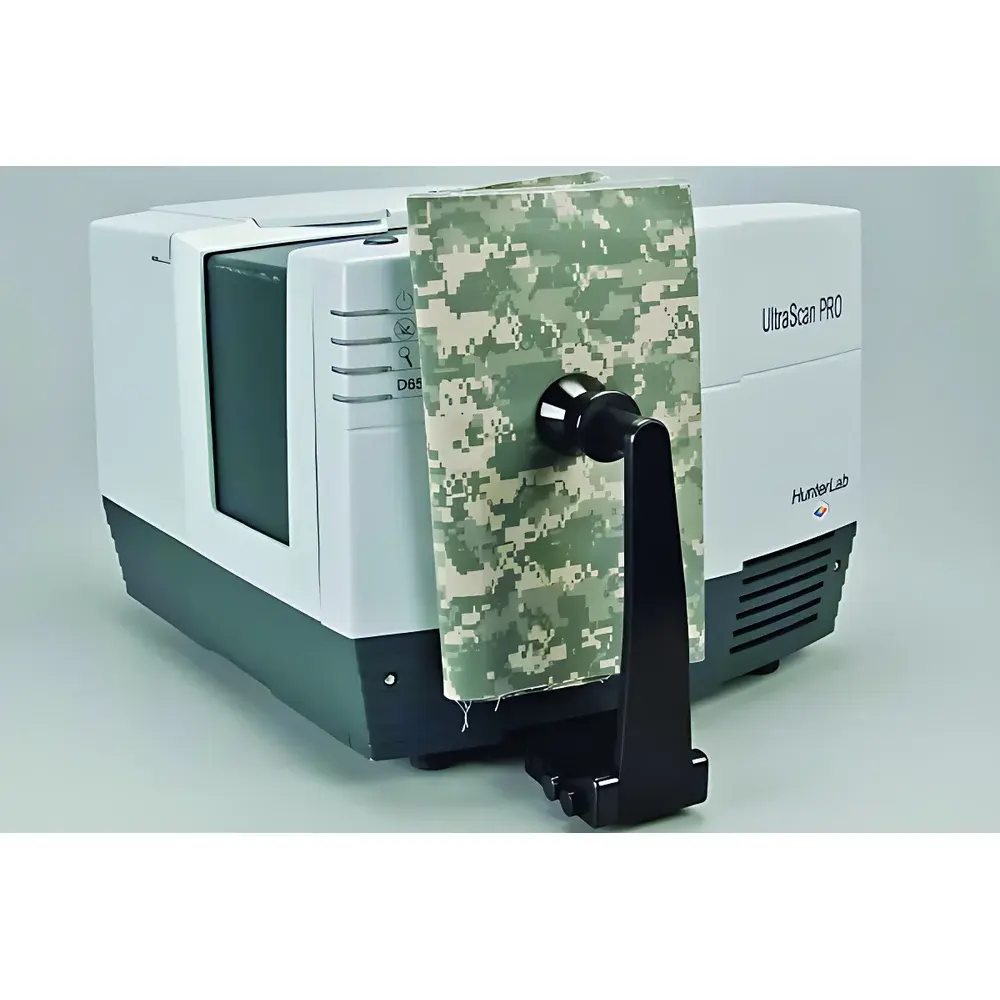
HunterLab UltraScan Pro Food Colorimeter
| Brand | HunterLab |
|---|---|
| Origin | USA |
| Model | UltraScan Pro Food Colorimeter |
| Instrument Type | Benchtop |
| Optical Geometry | d/8° Integrating Sphere |
| Light Source | Pulsed Xenon Lamp |
| Spectral Range | 350–1050 nm |
| Spectral Resolution | <2 nm |
| Wavelength Accuracy | ±0.1 nm |
| Wavelength Interval | 5 nm |
| Reflectance/Transmittance Range | 0–200% |
| Spectral Data Resolution | 0.01% |
| Repeatability (ΔE* CIELab, LAV) | ≤0.03 |
| Lamp Lifetime | >500,000 flashes |
| Measurement Time | <1.5 s |
| Minimum Inter-Measurement Interval | <2.0 s |
| Port Sizes | 19 mm (0.75″), 9 mm (0.35″), 4 mm (0.16″) |
| UV Calibration | Automatic D65 UV-Visible Control for Fluorescent Samples |
| Compliance | NPL-traceable calibration, ASTM E308, ISO 7724, CIE No. 15, USP <1061>, FDA 21 CFR Part 11 (via optional software module) |
Overview
The HunterLab UltraScan Pro Food Colorimeter is a high-precision benchtop spectrophotometer engineered for rigorous color measurement across the full ultraviolet–visible–near-infrared (UV-VIS-NIR) spectrum (350–1050 nm). It employs a dual-monochromator optical architecture with two 512-element diode array spectrometers, enabling simultaneous spectral acquisition in both reference and sample beams—effectively realizing a true double-beam measurement principle without mechanical beam switching. Its d/8° integrating sphere geometry (with automated specular component included/excluded mode) ensures compliance with CIE, ASTM, and ISO geometric requirements for diffuse reflectance and transmittance measurements. Critically, the instrument features active UV calibration under D65 illuminant conditions, allowing accurate quantification of fluorescent samples—including those containing optical brightening agents (OBAs) or exhibiting visible-range fluorescence—by dynamically correcting for UV energy output drift. This capability distinguishes it from conventional colorimeters limited to visible-only operation and makes it uniquely suited for food quality control where fluorescence interference (e.g., from riboflavin, chlorophyll derivatives, or added dyes) must be resolved metrologically.
Key Features
- Extended spectral coverage from 350 nm to 1050 nm, supporting both CIE colorimetric analysis (CIELAB, CIELCH, ΔE*00) and NIR spectral characterization of chromogenic materials such as thermochromic or photochromic food packaging.
- Automated, motorized port selection (19 mm, 9 mm, and 4 mm apertures) with real-time aperture validation via integrated viewing mirror—ensuring complete sample coverage and eliminating stray-light errors.
- Pulsed xenon lamp with >500,000 flash lifetime and stable spectral output; D65 illumination is actively corrected across the full UV-VIS range using onboard photodiode feedback and spectral recalibration algorithms.
- Triple-access transmission compartment (102 × 356 × 165 mm W×L×H) accommodating irregular or bulky specimens including bottles, trays, and layered films without repositioning.
- High-fidelity spectral repeatability: ≤0.01% standard deviation in spectral reflectance (LAV mode, 20 measurements), and colorimetric repeatability of ≤0.03 ΔE* CIELab on certified green tile—validated per ASTM D2244 and ISO 13655.
- Full NPL-traceable calibration hierarchy; factory calibration certificates include uncertainty budgets compliant with ISO/IEC 17025 requirements for accredited color measurement laboratories.
Sample Compatibility & Compliance
The UltraScan Pro accommodates diverse physical states common in food science applications: solids (cheese blocks, baked goods, meat cuts), semi-solids (yogurt, sauces, pastes), liquids (beverages, syrups, oils), powders (spices, milk powder), and thin films (packaging laminates, edible coatings). Optional accessories—including fiber holders, powder cups, flow cells, membrane transmission fixtures, and plastic-specific clamps—extend method flexibility while maintaining geometric fidelity. All measurements adhere to ASTM E308 (computing tristimulus values), ISO 7724-1 (colorimetry fundamentals), CIE Publication 15 (colorimetric observers), and USP (color assessment of pharmaceuticals and food-grade excipients). When paired with HunterLab’s EasyMatch QC software configured for 21 CFR Part 11 compliance, the system supports audit trails, electronic signatures, and role-based access control required under GMP/GLP-regulated environments.
Software & Data Management
The instrument operates natively with HunterLab’s EasyMatch QC v5.x software suite, which provides full spectral data export (ASCII, CSV, XML), batch reporting, statistical process control (SPC) charting, pass/fail tolerance mapping, and multi-instrument fleet synchronization. Spectral libraries can be built and managed for raw material qualification, batch release, and shelf-life monitoring. The software supports ASTM D1209 (APHA/Pt-Co), ASTM D5386 (liquid color), and ASTM D6290 (food product color standards) test methods out-of-the-box. For regulated users, an optional 21 CFR Part 11 validation package includes IQ/OQ documentation, electronic signature workflows, and encrypted audit log storage—fully traceable to NIST/NPL reference standards.
Applications
- Quantitative assessment of browning index in fruits and vegetables (e.g., enzymatic oxidation in apples or potatoes)
- Color stability testing of anthocyanin-rich products (juices, jams) under thermal, light, and pH stress
- Verification of dye uniformity in confectionery coatings and extruded snacks
- NIR-assisted detection of adulteration (e.g., melamine in dairy powders, synthetic dyes in spices)
- Reflectance profiling of opaque food matrices (cereals, pet food kibble) across multiple port sizes to assess particle size–color correlation
- Transmission color evaluation of clarified beverages (wine, apple juice) and edible oils using the 80-mm pathlength cell
FAQ
Does the UltraScan Pro support measurement of fluorescent food samples containing optical brighteners?
Yes. Its D65 illuminant includes active UV output control and real-time spectral correction, enabling accurate CIELAB values for OBA-containing samples such as bleached flour, dairy powders, or paper-based packaging.
Can the instrument validate color consistency across different production batches under GLP conditions?
Yes—when deployed with EasyMatch QC’s 21 CFR Part 11-compliant configuration, it provides full audit trail logging, user authentication, and electronic signature capability required for GLP/GMP color release protocols.
What is the smallest measurable sample area, and how is edge exclusion handled?
The minimum port size is 4 mm (0.16″); the integrated viewing mirror allows visual confirmation of full aperture coverage prior to measurement, preventing partial-sample artifacts.
Is spectral data export compatible with third-party chemometric platforms like Unscrambler or MATLAB?
Yes. Raw spectra are exportable in standardized ASCII format with wavelength headers, enabling direct import into multivariate analysis tools for PCA, PLS regression, or classification modeling.
How often does the instrument require recalibration, and what standards are used?
Annual NPL-traceable recalibration is recommended; daily verification uses supplied ceramic tiles (white, green, black) with documented stability per ISO 13655 Annex B.




