
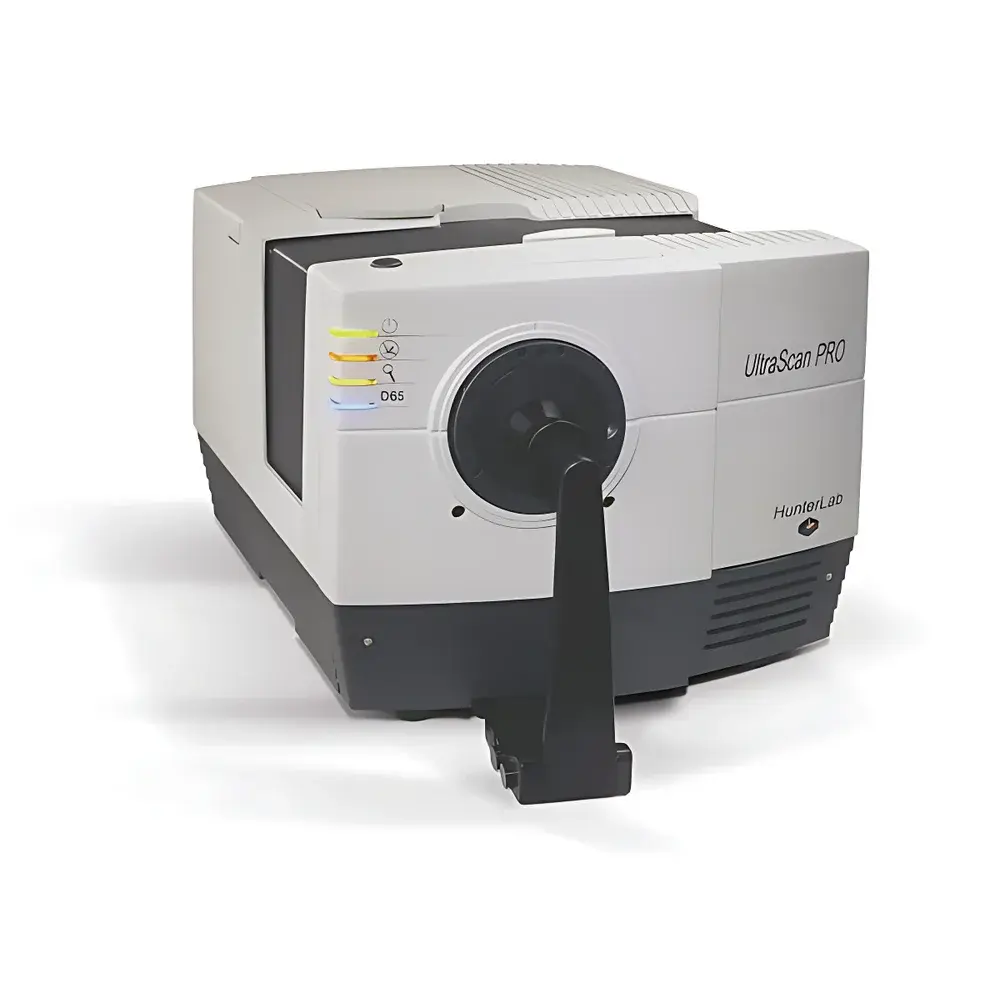
HunterLab UltraScan PRO Spectrophotometer
| Brand | HunterLab |
|---|---|
| Origin | USA |
| Model | UltraScan PRO |
| Product Type | Benchtop Color Spectrophotometer |
| Optical Geometry | d/8° integrating sphere |
| Light Source | Pulsed Xenon Lamp |
| Spectral Range | 350–1050 nm |
| Spectral Interval (Acquisition) | 2 nm |
| Reporting Interval | 5 nm |
| Optical Bandwidth | 5 nm |
| Repeatability | ΔE*ab ≤ 0.03 (average, CIE Lab) |
| Detector | 512-element silicon photodiode array with extended NIR sensitivity |
| Mirror Finish Compensation | Automated Specular Component Included/Excluded (SCI/SCE) |
| Reflectance/Transmittance Measurement Modes | Yes |
| Haze Measurement Capability | Yes |
| Sample Port Coating | Spectrally neutral barium sulfate-based coating |
| Compliance | ASTM E308, ASTM D2244, ASTM D6290, ISO 7724, ISO 11664, USP <631>, CIE No. 15 |
Overview
The HunterLab UltraScan PRO is a high-precision benchtop spectrophotometer engineered for rigorous color measurement, spectral reflectance and transmittance analysis, and haze quantification across solid, liquid, translucent, and transparent materials. Utilizing a dual-beam optical architecture with a d/8° integrating sphere geometry, the instrument ensures consistent illumination and detection conditions compliant with international standards for diffuse reflectance and total transmittance. Its pulsed xenon lamp provides stable, flash-based illumination without thermal drift or warm-up delay—critical for long-term repeatability and low-noise spectral acquisition across the full 350–1050 nm range. The system employs a high-resolution holographic diffraction grating and a 512-element silicon photodiode array optimized for both visible and near-infrared sensitivity, delivering spectral data at 2 nm acquisition intervals and reporting at standard 5 nm intervals per CIE and ASTM conventions.
Key Features
- Dual-beam optical design with real-time reference compensation for enhanced photometric stability
- Pulsed xenon light source: zero thermal load, no warm-up time, high CRI (>95), ideal for fluorescent sample evaluation under UV-excited D65 simulation
- Three selectable aperture sizes: Large Area View (LAV, 25 mm), Small Area View (SAV, 13 mm), and Extra Small Area View (XSAV, 7 mm) for spatially resolved measurements
- Automated SCI (Specular Component Included) and SCE (Specular Component Excluded) modes to isolate or include surface gloss effects in reflectance analysis
- Integrated haze measurement capability per ASTM D1003, supporting both transmission haze and wide-angle scatter evaluation
- Robust mechanical construction: stainless-steel fasteners, vibration-damped optical platform, and spectrally neutral barium sulfate-coated sphere interior for minimal stray light and long-term calibration integrity
- Full-spectrum measurement completed in under 2 seconds—enabling high-throughput QC environments without compromising data fidelity
Sample Compatibility & Compliance
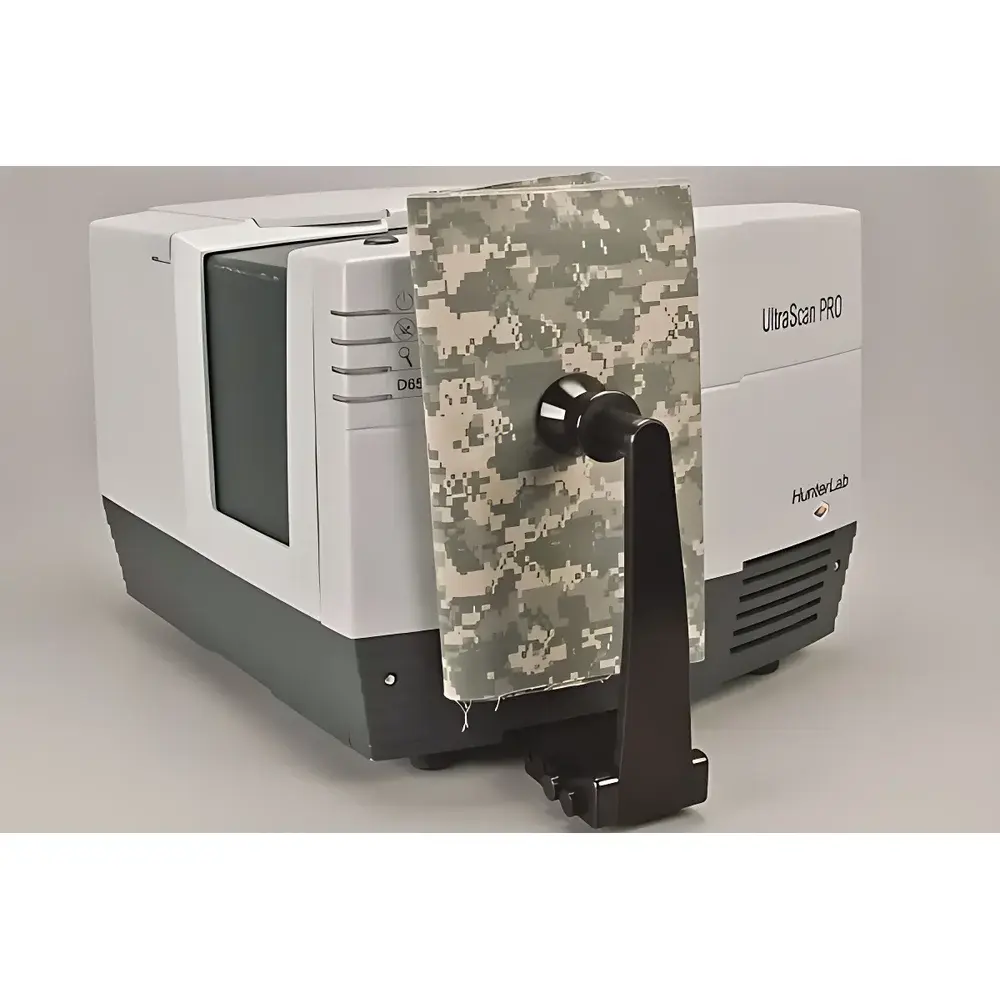
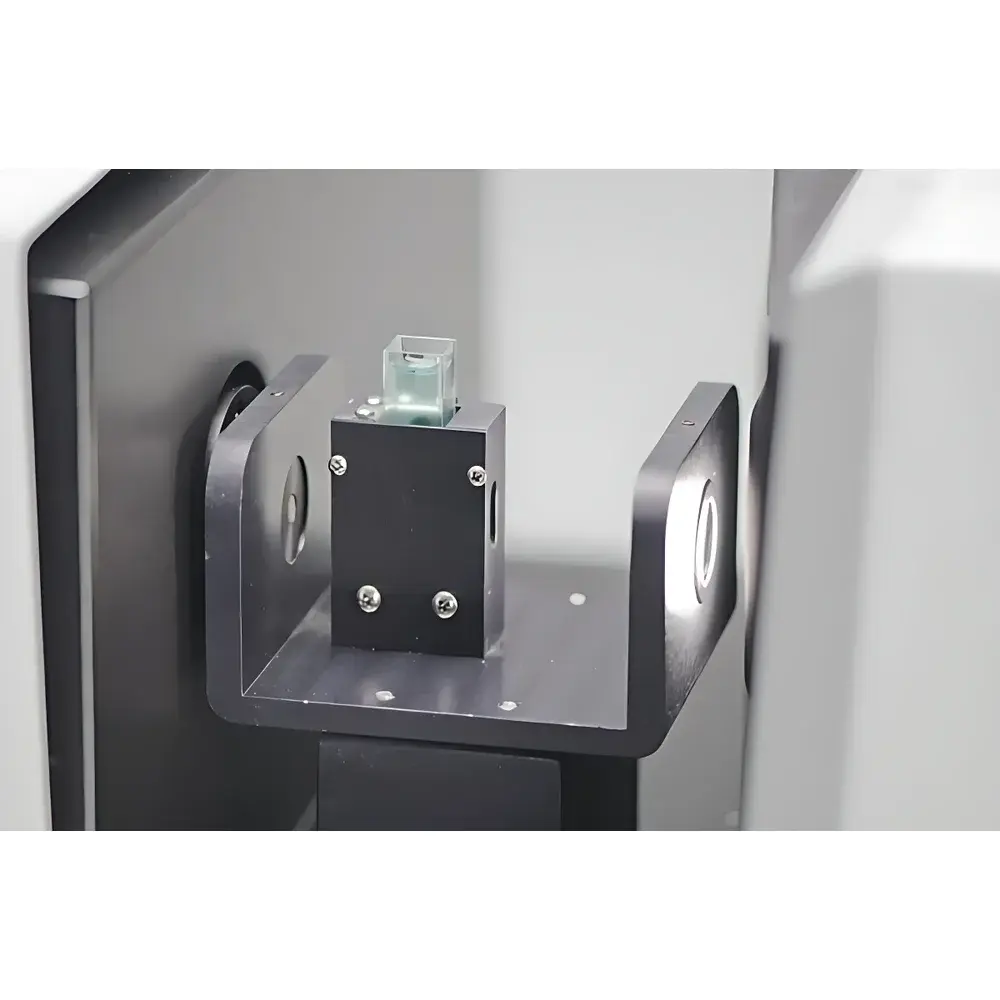
The UltraScan PRO accommodates diverse physical forms—from 0.4 mL liquid samples in cuvettes to large-format panels, coated glass, optical lenses, and irregular solids—via modular sample holders, transmission stands, and custom fixtures. Its spacious transmission port allows oversized specimens (e.g., architectural glazing or solar control films) to be positioned without obstruction. The instrument supports measurement of UV-blocking materials down to 350 nm, making it suitable for evaluating UV-stabilized polymers, ophthalmic lenses, and fluorescent whitening agents (FWAs) per USP . Regulatory compliance includes full alignment with ASTM E308 (computing tristimulus values), ASTM D2244 (color difference), ISO 7724 (colorimetry), and CIE Publication 15 (colorimetric observers and illuminants). Data traceability meets GLP/GMP requirements through audit-trail-enabled software and optional 21 CFR Part 11 compliance modules.
Software & Data Management
Controlled via HunterLab’s EasyMatch QC software, the UltraScan PRO enables method-driven workflows, multi-instrument synchronization, statistical process control (SPC), and automated pass/fail reporting against user-defined tolerances. The software supports L*a*b*, L*C*h*, Yxy, and spectral power distribution (SPD) outputs; generates APL (Advanced Parameter Library) reports for haze, whiteness index (WI), yellowness index (YI), and metamerism indices; and exports fully annotated CSV, XML, and PDF formats. All spectral scans are timestamped and logged with operator ID, instrument serial number, calibration status, and environmental metadata (ambient temperature/humidity if sensor-equipped). Raw spectral data is preserved in vendor-neutral .spc format for third-party analysis or integration into LIMS environments.
Applications
The UltraScan PRO serves as a reference-grade platform across industries requiring metrologically traceable color and spectral data: optical lens manufacturers validating anti-reflective coatings; polymer producers monitoring yellowness index in polyethylene terephthalate (PET) preforms; pharmaceutical firms assessing tablet color consistency per USP ; paint and ink developers quantifying metamerism under multiple illuminants; textile mills evaluating dye lot uniformity on woven and knitted fabrics; and food packaging suppliers verifying clarity and haze of multilayer barrier films. Additional use cases include quality assurance of ceramic tiles, automotive trim, cosmetic lipsticks, adhesive films, and medical device housings—where appearance attributes directly impact regulatory acceptance and brand perception.
FAQ
Does the UltraScan PRO support fluorescence correction for whitened materials?
Yes—the pulsed xenon source provides calibrated UV output (down to 350 nm) and D65 spectral simulation, enabling accurate measurement of fluorescent whitening agents per USP and ISO 11476.
Can it measure both reflectance and transmittance on the same instrument without hardware reconfiguration?
Yes—dual-port optical path design allows rapid switching between reflectance and transmittance modes via software command; no manual mirror or detector relocation is required.
Is spectral data export compatible with third-party chemometric software?
Yes—raw spectra are exported in ASCII .spc format, fully compatible with Unscrambler®, Pirouette®, MATLAB, and Python-based spectral analysis libraries.
What calibration standards are supplied and how often must they be recertified?
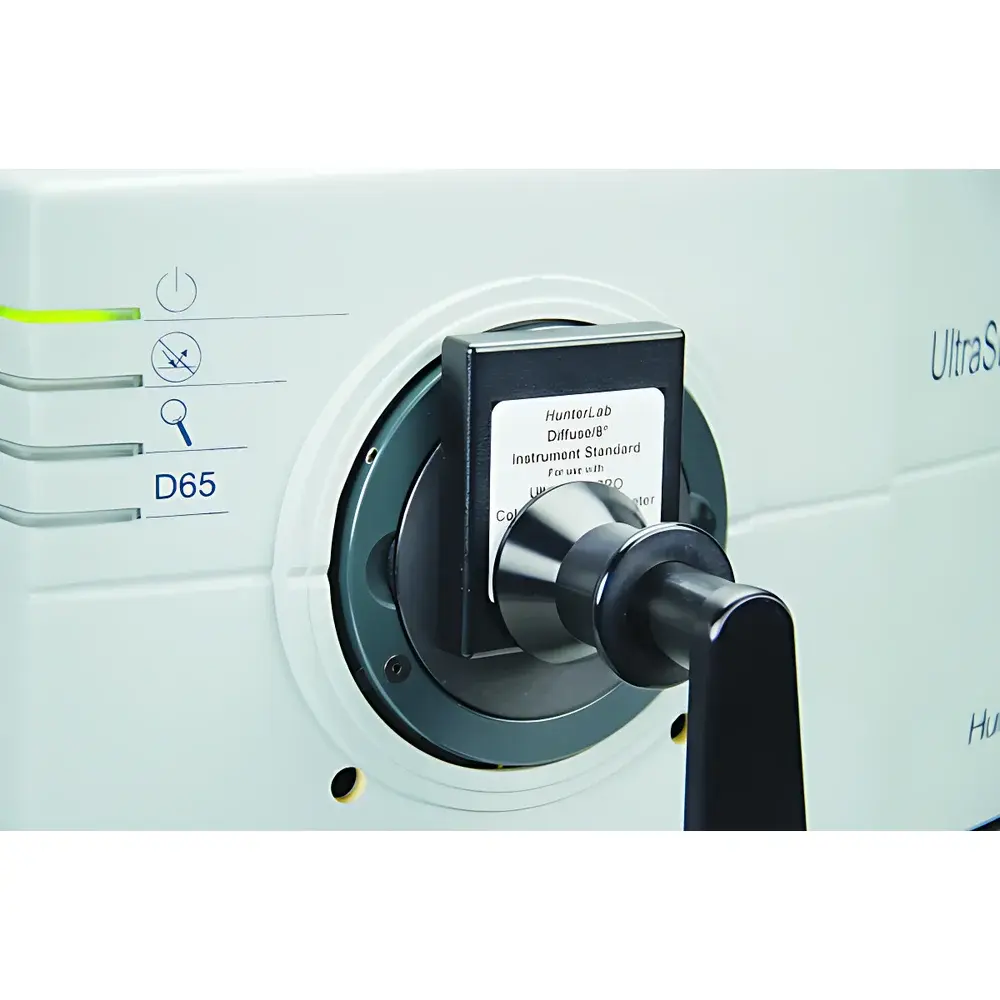
NIST-traceable white tile, black trap, and green ceramic tile standards are included. Annual recalibration by an ISO/IEC 17025-accredited lab is recommended; instrument self-diagnostic routines verify lamp energy, sphere coating integrity, and wavelength accuracy before each measurement session.
Does the system support networked deployment in a manufacturing environment?
Yes—Ethernet and USB connectivity enable centralized configuration management, remote firmware updates, and integration with MES/SCADA systems via OPC UA or RESTful API extensions.




