
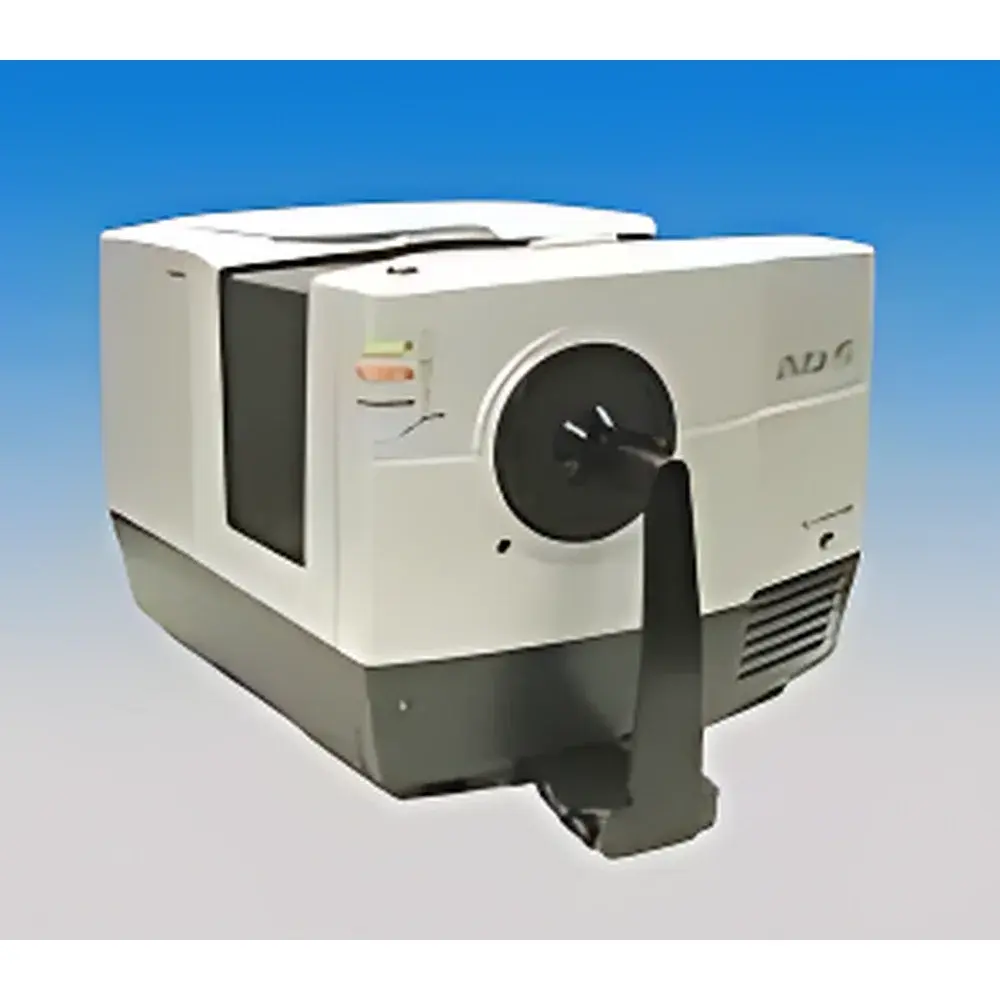
HunterLab UltraScan PRO USPRO Spectrophotometer
| Brand | HunterLab |
|---|---|
| Origin | USA |
| Manufacturer Type | Authorized Distributor |
| Product Category | Imported Instrument |
| Model | USPRO |
| Product Type | Spectrophotometric Colorimeter |
| Instrument Form Factor | Benchtop |
| Optical Geometry | d/8° Integrating Sphere |
| Light Source | Pulsed Xenon Lamp |
| Spectral Range | 350–1050 nm |
| Spectral Resolution (Detection) | 2 nm |
| Spectral Data Reporting Interval | 5 nm |
| Repeatability (ΔE*ab, White Tile) | ≤0.03 |
| CIE Compliance | D65 Illuminant with UV Component |
| Standards Compliance | CIE TC-1.3 (N°51), ASTM E991 |
| CIE Rating Test Classification | AB Grade |
| Detector Architecture | Multi-point Photodiode Array |
| Grating Type | High-density Narrow-band Diffraction Grating |
| UV Control | Integrated 400 nm Cut-off Filter Option |
| Sphere Coating | UV-Stable Barium Sulfate-Based Coating |
Overview
The HunterLab UltraScan PRO USPRO is a high-precision benchtop spectrophotometer engineered for metrologically rigorous color measurement across the full ultraviolet–visible–near-infrared (UV-VIS-NIR) spectrum. Utilizing a d/8° integrating sphere optical geometry and a pulsed xenon lamp light source, it delivers stable, flash-based illumination with controlled spectral power distribution—including calibrated UV emission—to meet the stringent requirements of CIE Standard Illuminant D65 *with UV component*. This capability enables accurate tristimulus value (L*, a*, b*) determination for fluorescent materials, such as optical brightener-containing textiles, fluorescent pigments, and daylight-fluorescent inks, under standardized viewing conditions. Unlike conventional VIS-only instruments, the UltraScan PRO’s extended 350–1050 nm spectral range supports both chromaticity analysis in the visible region and spectral reflectance characterization in the NIR—critical for evaluating camouflage fabrics, low-emissivity (Low-E) architectural glass, IR-responsive smart coatings, and optically variable pigments.
Key Features
- Full-spectrum measurement from 350 nm to 1050 nm with 2 nm detection resolution and 5 nm reporting interval—enabling high-fidelity spectral data capture for advanced color and material analysis.
- CIE-compliant D65 illumination with integrated UV energy control; includes optional 400 nm cut-off filter to suppress excessive fluorescence excitation while preserving UV-sensitive color response.
- AB-grade classification per CIE Rating Test (CIE Publication N°51, TC-1.3), confirming conformance to international performance benchmarks for spectral accuracy, repeatability, and inter-instrument agreement.
- High-stability integrating sphere coated with UV-resistant barium sulfate formulation, minimizing spectral drift due to photodegradation or yellowing over time.
- Multi-point photodiode array detector combined with high-density narrow-band diffraction grating ensures exceptional signal-to-noise ratio and wavelength fidelity—achieving effective spectral analysis resolution of 1.37 nm.
- Benchtop architecture optimized for laboratory integration, featuring automated port shutter, sample clamp mechanism, and temperature-stabilized optical path for long-term measurement consistency.
Sample Compatibility & Compliance
The UltraScan PRO accommodates opaque solids, translucent films, powders, and liquids via standardized 25 mm and 40 mm aperture configurations. Its large-diameter sphere (152 mm) and dual-beam referencing design minimize geometry-related bias in measurements of textured, glossy, or highly absorptive surfaces—including deep blacks, high-chroma samples, and matte camouflage textiles. The instrument meets ASTM E991 (Standard Practice for Calibration and Characterization of Spectrophotometers) and aligns with ISO/CIE guidance on instrumental colorimetry (ISO 11664, CIE 15:2018). For regulated environments, its firmware supports audit-trail-enabled operation compliant with FDA 21 CFR Part 11 requirements when paired with HunterLab’s QualiSpect™ software suite. All calibration standards are traceable to NIST SRM® reference materials.
Software & Data Management
Controlled via HunterLab’s QualiSpect™ v5.x software, the UltraScan PRO supports comprehensive spectral data acquisition, real-time visualization, and multivariate analysis—including PCA, spectral derivative mapping, and NIR band-ratio quantification. The platform provides GLP/GMP-ready features: user-level access controls, electronic signatures, version-controlled method templates, and immutable raw-data archiving. Spectral libraries can be exported in ASTM E308, CIE 15:2018, or CSV formats for integration into LIMS or enterprise quality systems. Optional IQ/OQ/PQ documentation packages facilitate validation in pharmaceutical, aerospace, and automotive supply chain settings.
Applications
- Color quality control of military-grade camouflage textiles and infrared-reflective coatings requiring simultaneous VIS and NIR spectral evaluation.
- Optical lens and Low-E glass manufacturing—quantifying visible transmission, solar heat gain coefficient (SHGC)-related NIR reflectance, and UV-blocking efficacy.
- Fluorescent material R&D: precise characterization of optical brighteners in paper, detergents, and synthetic fibers under D65+UV illumination.
- High-accuracy black standard certification and dark-sample metrology where conventional instruments exhibit poor signal stability and elevated noise floors.
- Academic and industrial research in photonic materials, thermochromics, electrochromics, and upconverting phosphors leveraging full-spectrum reflectance/absorbance modeling.
FAQ
Does the UltraScan PRO support CIE D65 illumination including UV?
Yes—the instrument is uniquely engineered to reproduce the full spectral power distribution of CIE D65, including its defined UV component (300–400 nm), enabling accurate measurement of UV-excitable fluorescent samples.
What standards does the UltraScan PRO comply with?
It conforms to CIE TC-1.3 (N°51), ASTM E991, ISO 11664, and CIE 15:2018. It has been independently rated AB-grade in the CIE Rating Test for spectral performance.
Can it measure near-infrared reflectance for camouflage applications?
Yes—its 350–1050 nm spectral range and high signal stability in the 700–1050 nm region make it suitable for quantifying NIR reflectance of multispectral camouflage materials per MIL-STD-3009 and STANAG 4298.
Is the instrument suitable for measuring black or low-reflectance materials?
Yes—its high dynamic range detector array, low-stray-light optical design, and sphere coating stability ensure reliable ΔE*ab repeatability ≤0.03 even on deep-black surfaces with reflectance below 1%.
How is UV contribution managed during measurement?
The pulsed xenon source delivers calibrated UV irradiance; an optional 400 nm cut-off filter may be engaged to isolate visible-only response when required by application-specific protocols.




