
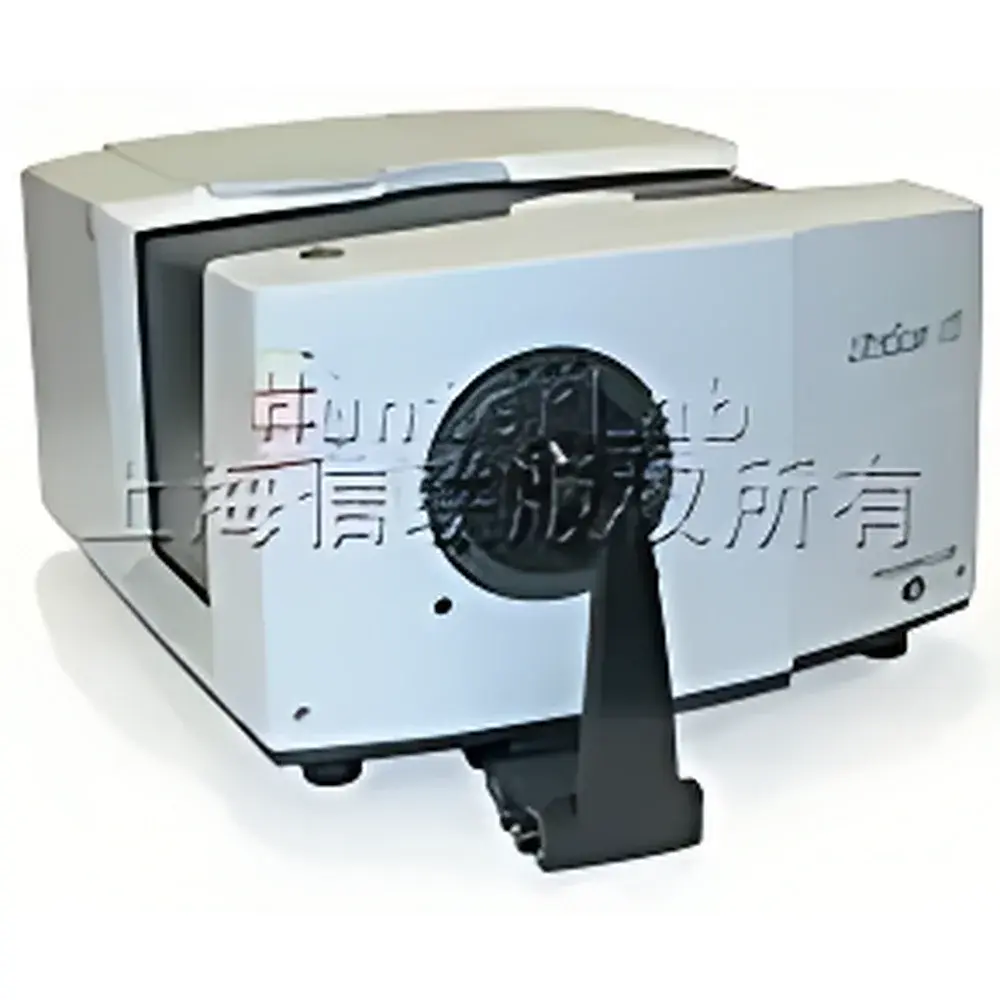
HunterLab UltraScan VIS Glass Colorimeter
| Brand | HunterLab |
|---|---|
| Origin | USA |
| Manufacturer Type | Authorized Distributor |
| Origin Category | Imported |
| Model | UltraScan VIS Glass Colorimeter |
| Product Type | Color Difference Meter |
| Instrument Type | Benchtop |
| Optical Geometry | d/8° Integrating Sphere |
| Light Source | Pulsed Xenon Lamp |
| Spectral Range | 360 nm – 780 nm |
| Repeatability | ΔE* ≤ 0.03 |
Overview
The HunterLab UltraScan VIS Glass Colorimeter is a high-precision benchtop spectrophotometer engineered specifically for color measurement of glass, transparent, translucent, and opaque materials across the full CIE-recommended visible spectrum (360–780 nm). Utilizing dual-beam silicon photodiode array detection and pulsed xenon illumination, it delivers photometrically stable, D65-illuminated spectral data with exceptional signal-to-noise ratio and minimal thermal drift. Its d/8° integrating sphere geometry conforms to ISO 7724-1, ASTM E308, and CIE No. 15 standards, enabling accurate reflectance and transmittance measurements—including those affected by fluorescence induced by UV excitation below 400 nm. Designed for metrological rigor in regulated environments, the instrument features a rigid stainless-steel optical platform, precision-machined mechanical alignment, and thermally stabilized electronics to ensure long-term repeatability (ΔE* ≤ 0.03) and inter-instrument agreement compliant with HunterLab’s global calibration network.
Key Features
- Dual-beam silicon photodiode array with real-time reference beam correction at every wavelength point
- Pulsed xenon lamp with spectral output closely matching CIE Illuminant D65 across 360–780 nm; >1 million flashes lifetime
- Two aperture sizes (25 mm and 9.5 mm) for flexible sample coverage—optimized for flat glass panels, curved architectural glazing, and small-volume liquid cells
- Configurable optical modes: Specular Component Included (SCI) and Specular Component Excluded (SCE), selectable via software or front-panel interface
- Ergonomic sample stage with adjustable tilt and modular fixtures for vertical, horizontal, or angled glass positioning
- UV-transmitting quartz integrating sphere coating and calibrated UV-enhanced standard tiles for fluorescence-corrected measurements
- Integrated status LED indicators for mode selection, measurement readiness, and calibration state
Sample Compatibility & Compliance
The UltraScan VIS Glass Colorimeter accommodates solid, liquid, and semi-crystalline specimens without modification: float glass, laminated safety glass, coated solar control glazing, borosilicate labware, colored resin sheets, and aqueous or organic solutions in cuvettes. Its open three-sided transmission port accommodates oversized samples up to 400 mm × 300 mm × 50 mm. All optical path components—including the sphere interior coating, lens mounts, and detector housing—are constructed from non-outgassing, corrosion-resistant stainless steel and anodized aluminum alloys. The system meets ISO/IEC 17025 traceability requirements when operated with NIST-traceable calibration standards (e.g., HunterLab CR-2000 ceramic tiles, UV-transmitting quartz filters). It supports GLP/GMP workflows through audit-trail-enabled software logging and user-access controls aligned with FDA 21 CFR Part 11 Annex 11 expectations.
Software & Data Management
Controlled exclusively via HunterLab EasyMatch QC v5.x (Windows-based), the instrument supports comprehensive spectral data acquisition, multi-parameter color space reporting (CIELAB, CIELCH, Yellowness Index ASTM E313, Haze per ASTM D1003), and statistical process control (SPC) charting. EasyMatch QC includes built-in method templates for glass industry standards (e.g., EN 572-1, ISO 10121-2, ASTM C1036), automated pass/fail tolerancing against master references, and export to CSV, XML, and PDF formats. Raw spectral data (.spc files) are stored with embedded metadata (operator ID, timestamp, instrument serial number, calibration history), ensuring full data integrity and chain-of-custody compliance. Remote monitoring and firmware updates are supported over Ethernet or USB 2.0.
Applications
- Quality assurance of architectural and automotive glass for color consistency, batch-to-batch variation, and coating uniformity
- Quantification of yellowing or browning in pharmaceutical glass vials under accelerated aging protocols (ICH Q1A)
- Measurement of light transmission, haze, and dominant wavelength in OLED substrate glass and display cover lenses
- Color matching of tinted glass used in façade systems—correlating spectral transmittance with daylight factor modeling
- Validation of anti-reflective and low-emissivity (low-E) coatings via spectral reflectance mapping across visible and near-IR bands
- Research-grade characterization of photochromic and electrochromic glass response kinetics using time-resolved spectral acquisition
FAQ
Does the UltraScan VIS Glass Colorimeter comply with ASTM D1003 for haze measurement?
Yes—the instrument’s d/8° geometry, calibrated sphere coating, and 25 mm aperture meet all geometric and photometric requirements specified in ASTM D1003-22 for transparent plastics and glass.
Can it measure fluorescent glass containing rare-earth dopants?
Yes—its pulsed xenon source emits measurable irradiance down to 360 nm, and the spectrometer’s UV-enhanced sensitivity enables quantification of fluorescence emission peaks between 400–700 nm when excited below 400 nm.
Is instrument-to-instrument agreement validated across global manufacturing sites?
Yes—HunterLab maintains a centralized inter-instrument agreement (IIA) database using CR-2000 standards; typical ΔE* IIA across 20+ units is ≤ 0.15 for white tile and ≤ 0.25 for deep blue reference.
What calibration standards are required for routine operation?
Daily verification uses a sealed, stable white ceramic tile (L* ≈ 95); annual recalibration requires NIST-traceable reflectance and transmittance standards, available directly from HunterLab Metrology Services.
Does EasyMatch QC support automated report generation for ISO 9001 internal audits?
Yes—customizable report templates include operator signature fields, instrument ID, environmental conditions (optional external sensor integration), and full spectral data appendices compliant with ISO 9001:2015 clause 8.2.4.




