
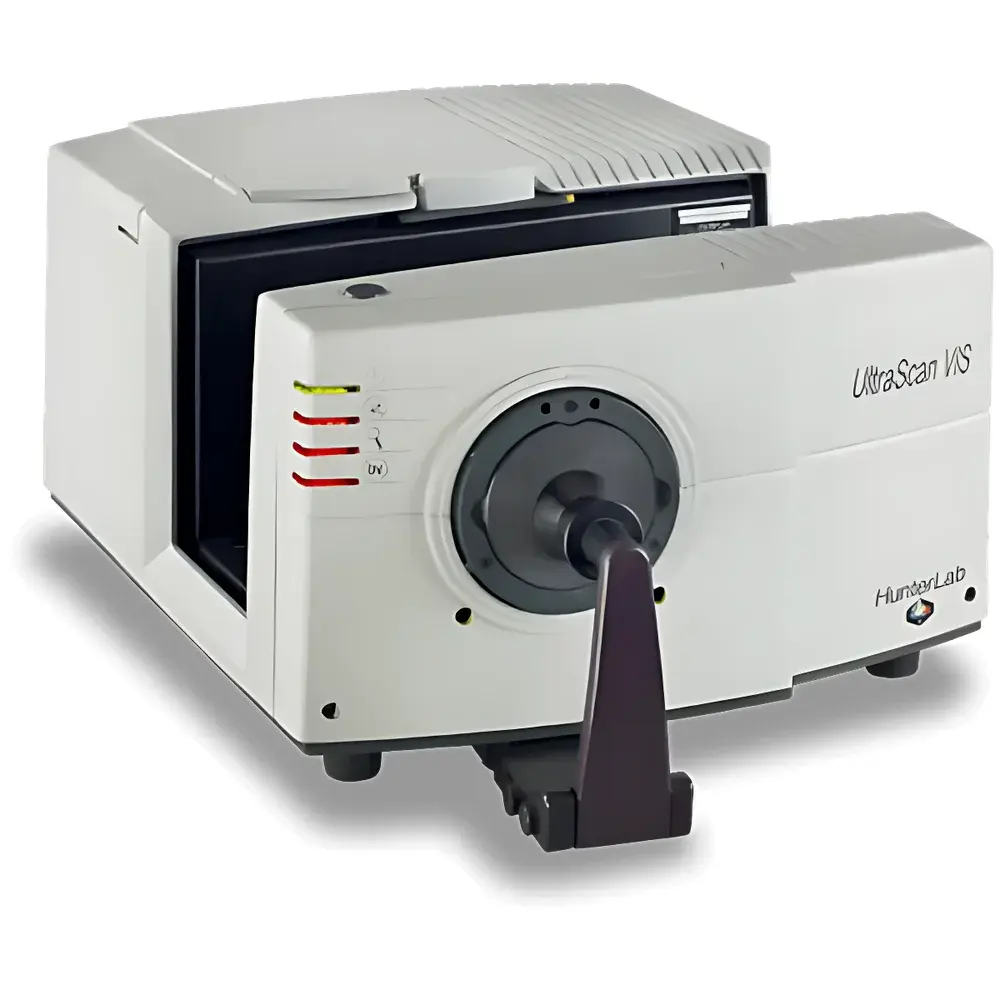
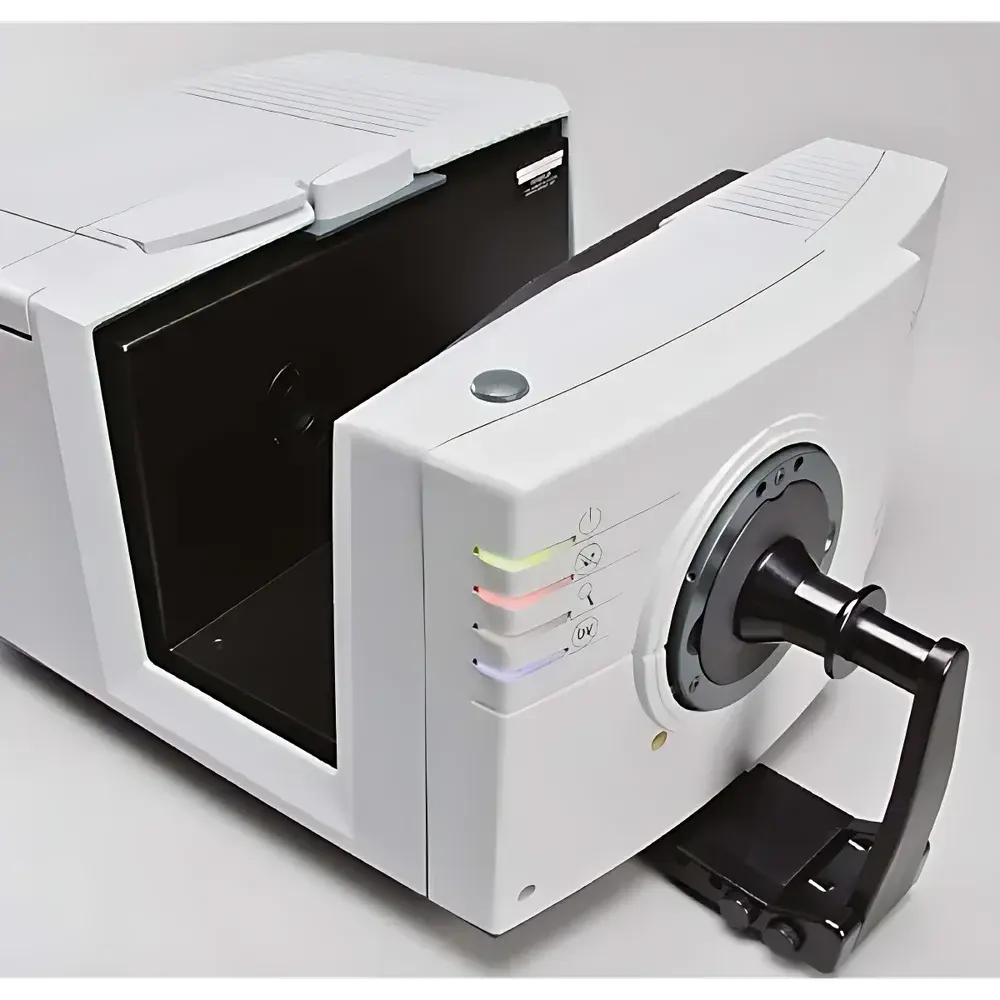
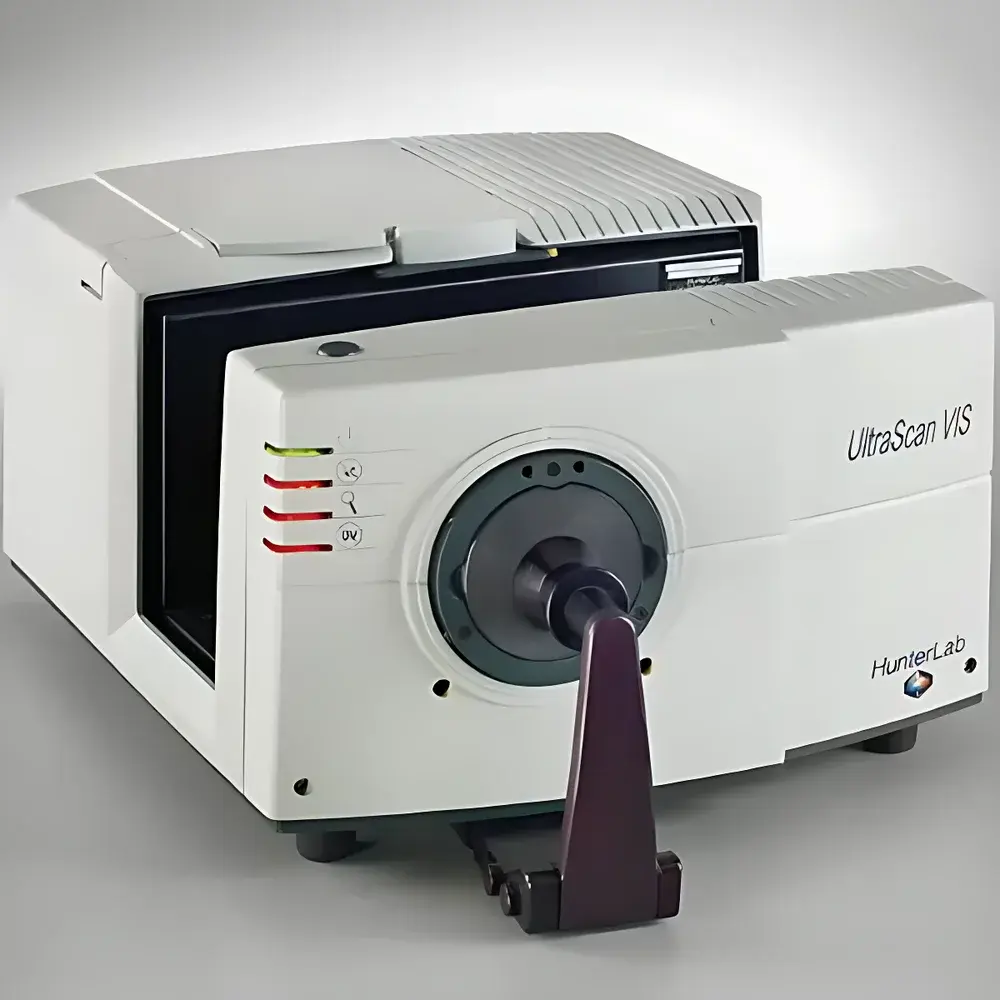
HunterLab UltraScan VIS Spectrophotometric Colorimeter
| Brand | HunterLab |
|---|---|
| Origin | USA |
| Model | UltraScan VIS (USVIS) |
| Type | Benchtop Spectrophotometer |
| Optical Geometry | d/8° Integrating Sphere |
| Light Source | Pulsed Xenon Lamp |
| Spectral Range | 360–780 nm |
| Repeatability | ΔE* ≤ 0.03 |
| Product Category | Spectrophotometric Color Measurement Instrument |
| Compliance | ASTM, ISO, USP, CIE, GB/T, SH/T, NB/SH/T standards |
Overview
The HunterLab UltraScan VIS is a high-precision benchtop spectrophotometer engineered for quantitative color measurement and spectral analysis across reflective, transmissive, and translucent materials. Operating on the principle of diffuse illumination with an 8° viewing angle (d/8° geometry), it conforms to CIE 15:2018, ASTM E308, and ISO/CIE 11664 standards for colorimetric accuracy. Its pulsed xenon light source delivers stable, flash-based illumination across the full visible spectrum (360–780 nm), eliminating thermal drift and enabling consistent measurement of heat-sensitive or volatile samples—including solvents, molten polymers, and reactive intermediates. The instrument integrates a high-resolution diffraction grating monochromator and thermoelectrically stabilized silicon photodiode array detector, ensuring long-term photometric stability and wavelength fidelity traceable to NIST standards. Unlike filter-based colorimeters, the UltraScan VIS captures full spectral reflectance and transmittance data at 10-nm intervals, forming the foundation for rigorous color specification, formulation correction, and regulatory-compliant reporting.
Key Features
- True d/8° integrating sphere optics with automatic specular component included/excluded (SCI/SCE) modes for accurate assessment of surface texture effects on color perception.
- Full-spectrum acquisition (360–780 nm) at 10-nm resolution, supporting CIE XYZ, CIELAB (L*a*b*), CIELCH, and CIE Yxy color spaces—plus derived metrics including whiteness (CIE Whiteness, Ganz, Berger), yellowness (YI E313, YI D1925), and chromaticity indices (APHA/Pt-Co, Hazen, Gardner, Saybolt, ASTM D1500).
- Robust optical architecture optimized for challenging sample types: opaque powders (e.g., PET granules, PTA), translucent films, deep-colored liquids (e.g., phenol, MDI, epoxy resins), and high-absorbance solutions—without requiring dilution or path-length adjustment.
- Integrated TTRAN (Total Transmittance) mode compliant with ASTM D1003 and ISO 13468 for simultaneous measurement of transmittance, haze, and clarity in transparent and semi-transparent materials.
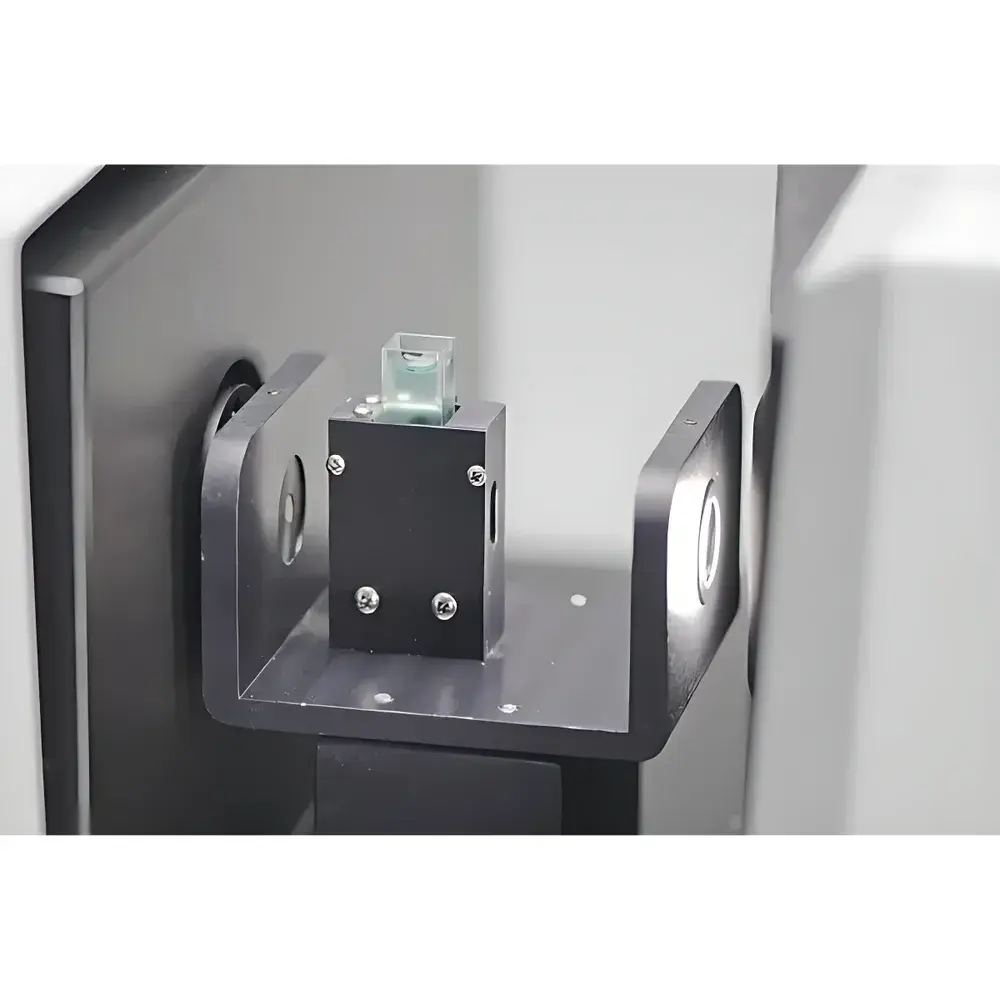
- Thermally stabilized sample compartment compatible with optional heated cuvette holders (24-mm diameter, 50-mL capacity) for controlled-temperature measurements per GB/T 6324.7–2014 (molten polymer color) and ASTM D1209 (liquid APHA).
Sample Compatibility & Compliance
The UltraScan VIS accommodates solids (powders, pellets, molded parts), liquids (clear to highly colored), gels, films, and coated substrates without modification. Its large port aperture (Φ32 mm) and flexible sample stage support irregular geometries and industry-standard containers—including NIST-traceable glass cells, quartz cuvettes, and custom high-temperature vessels. Regulatory compliance extends across multiple frameworks: FDA 21 CFR Part 11 (with audit trail-enabled software), USP , , , EP 2.2.58, JP 2.05, and GLP/GMP-aligned validation protocols. It satisfies over 40 published methods, including ASTM D1500 (petroleum products), ASTM D1209 (APHA), ASTM D1925 (plastics yellowness), ASTM D5386 (spectrophotometric color), GB/T 3143 (hydrocarbon liquids), GB/T 9282 (transparent liquids), and SH/T 0168 (refined petroleum products).
Software & Data Management
Equipped with EasyMatch QC software, the UltraScan VIS supports multi-user role-based access control, electronic signatures, and full audit trail functionality meeting FDA 21 CFR Part 11 requirements. Data export includes CSV, XML, and PDF formats compliant with LIMS integration. Advanced features include batch trending, statistical process control (SPC) charts, pass/fail tolerance mapping against master standards, and spectral difference analysis (ΔR, ΔT). Method templates are preconfigured for common industry workflows—e.g., “Plastics Yellowness (ASTM D1925)”, “Liquid APHA (ASTM D1209)”, or “Pharmaceutical Solution Clarity (USP )”—reducing operator training time and minimizing procedural error.
Applications
The UltraScan VIS serves as a primary color metrology platform in quality assurance laboratories across petrochemical refining (naphtha, diesel, aromatics), polymer manufacturing (PET, PP, epoxy resins), pharmaceutical excipient development (microcrystalline cellulose, lactose), specialty chemicals (maleic anhydride, bisphenol-A), coatings & inks, food-grade solvents (ethanol, methanol), and architectural glass (low-e coatings, laminated panels). It enables precise quantification of yellowing in aging polymers, oxidation-induced discoloration in liquid intermediates, haze development in optical films, and batch-to-batch consistency in pigment dispersions—supporting root-cause analysis, supplier qualification, and release testing under ISO 9001 and IATF 16949.
FAQ
Does the UltraScan VIS support measurement of molten polymers at elevated temperatures?
Yes—when paired with the optional heated cuvette holder and 24-mm high-temperature cell, it complies with GB/T 6324.7–2014 for molten polymer color assessment.
Can it measure turbid or hazy liquids such as crude pharmaceutical suspensions?
Yes—the TTRAN mode provides simultaneous transmittance, haze (ASTM D1003), and clarity data for non-clear media.
Is spectral data export available for third-party chemometric modeling?
Yes—full 360–780 nm spectral reflectance/transmittance data is exportable in ASCII format for PCA, PLS, or ML-based predictive modeling.
How does the instrument handle highly absorptive dark liquids like MDI or epoxy resins?
Its high-dynamic-range detector and optimized signal-to-noise architecture enable reliable measurement down to 0.1% transmittance without saturation or stray-light interference.
Is software validation documentation provided for regulated environments?
Yes—IQ/OQ/PQ protocols, URS, and 21 CFR Part 11 compliance reports are included with the system.




