
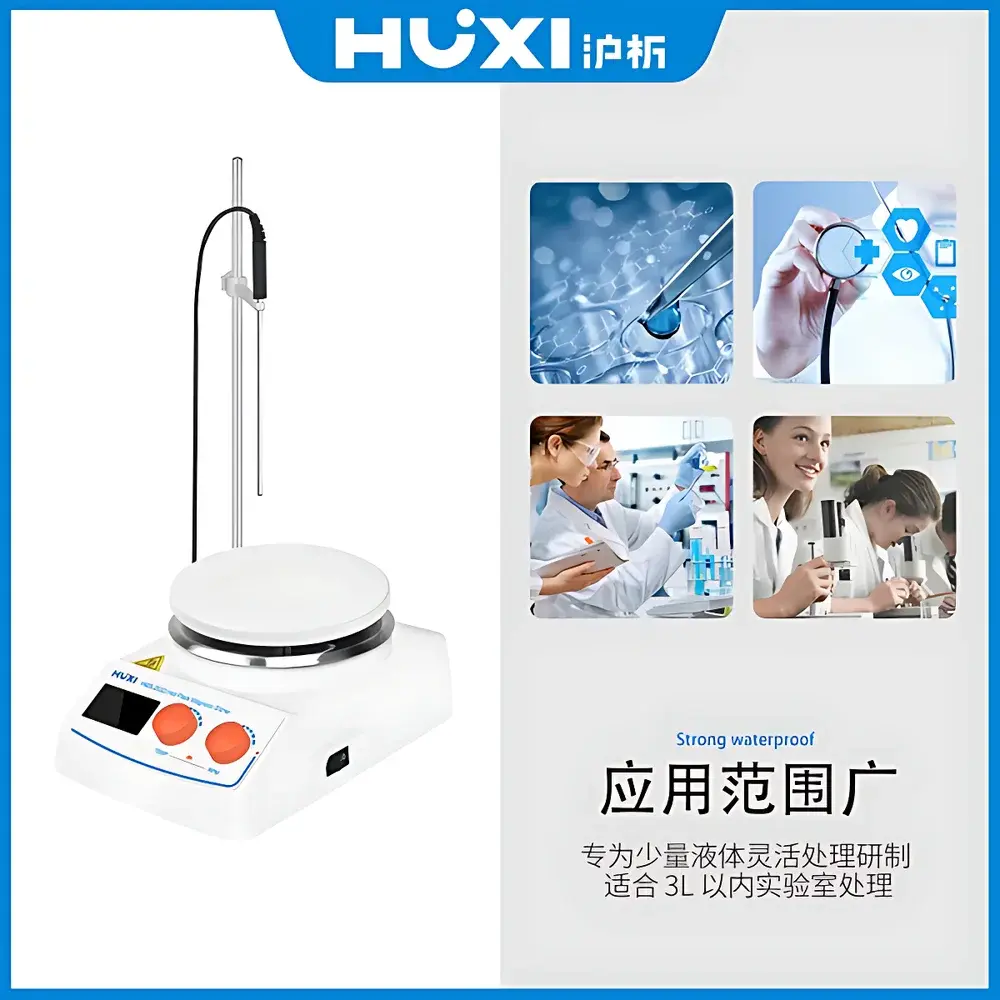
HUXI HMS-203D Digital Heating Magnetic Stirrer
| Brand | HUXI |
|---|---|
| Origin | Shanghai, China |
| Manufacturer Type | Direct Manufacturer |
| Product Category | Domestic (China-made) |
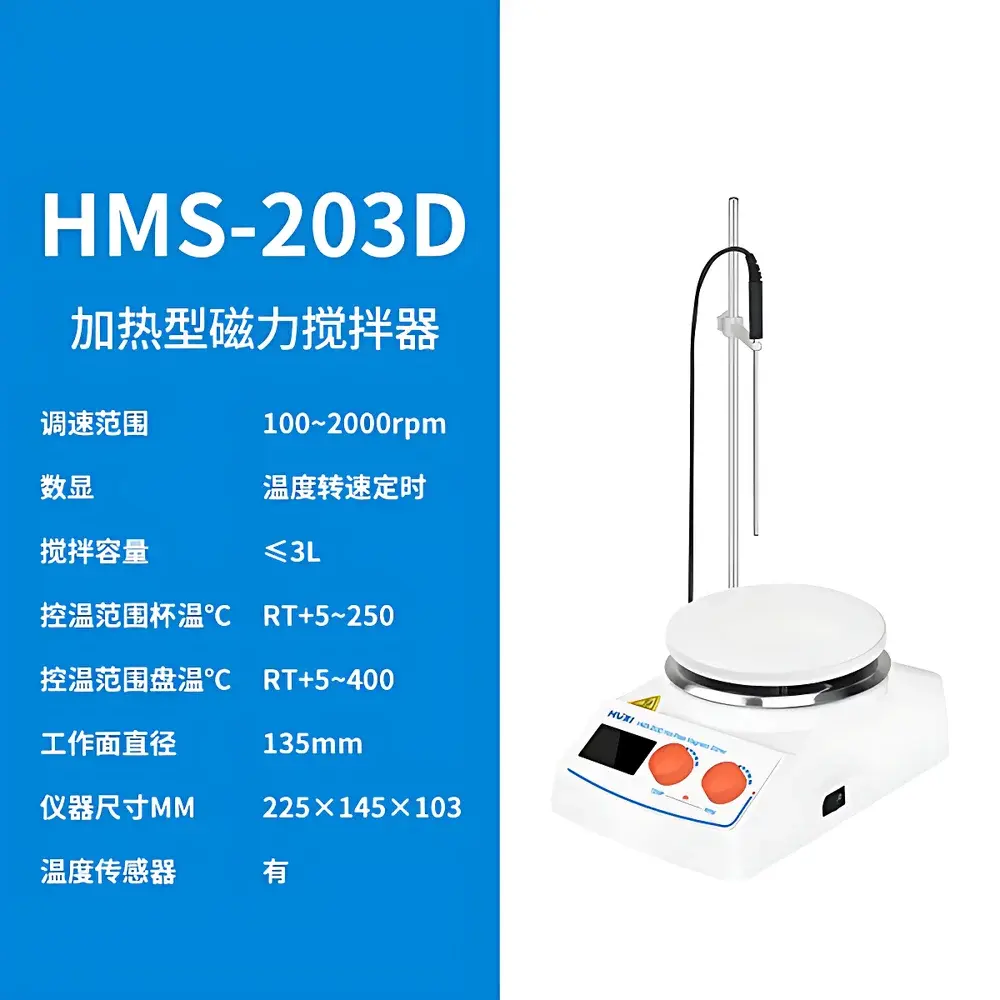
| Model | HMS-203D |
| Instrument Type | Heating Magnetic Stirrer |
| Max. Stirring Volume | 3 L |
| Speed Range | 100–2000 rpm |
| Temperature Control Range | RT+5°C to 250°C (plate surface) |
| Temperature Accuracy | ±1°C |
| Speed Accuracy | ±1 rpm |
| Heating Power | 400 W |
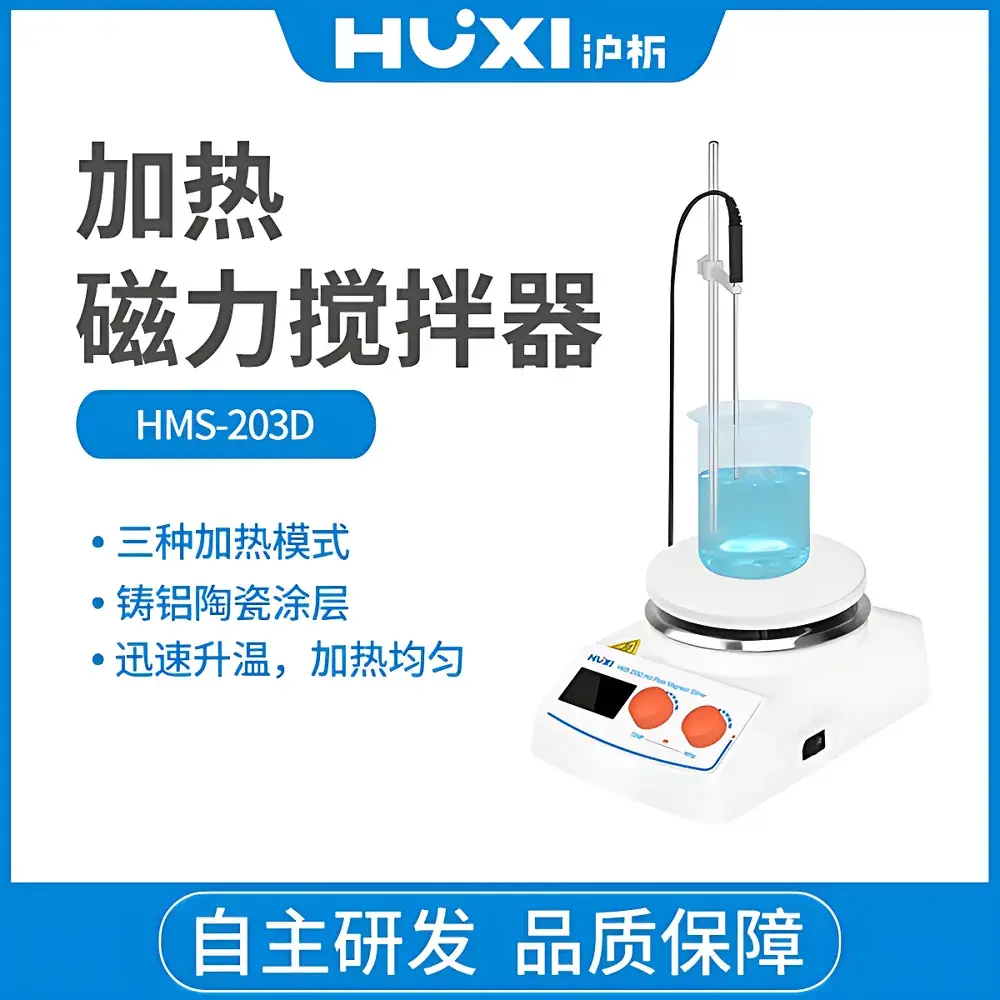
| Plate Material | Cast Aluminum with Ceramic Coating |
| Plate Diameter | φ135 mm |
| Compatible Stir Bar Length | 20–45 mm |
| Timer Range | 0–9999 min |
| Operating Ambient | 5–40°C, ≤80% RH |
| Noise Level | ≤45 dB(A) |
| Power Supply | AC 200–240 V, 50 Hz |
| Net Weight | 3.0 kg |
| Dimensions (W×D×H) | 145 × 225 × 103 mm |
Overview
The HUXI HMS-203D Digital Heating Magnetic Stirrer is an engineered solution for precise, reproducible heating and agitation of laboratory samples under controlled thermal conditions. Based on the principle of magnetic coupling—where a rotating permanent magnet beneath the heated plate induces synchronous rotation of a magnetic stir bar immersed in the sample—the HMS-203D integrates high-efficiency resistive heating with digitally regulated speed control. Its cast aluminum ceramic-coated plate ensures uniform heat distribution and chemical resistance, while the brushless DC motor delivers stable torque across the full 100–2000 rpm range without mechanical wear or electromagnetic interference. Designed for continuous operation in demanding environments, the unit features active thermal management via bottom-mounted ventilation slots, enabling sustained performance during long-duration protocols such as reflux, dissolution testing, or catalyst activation.
Key Features
- Brushless DC motor: Delivers low-noise operation (≤45 dB[A]), minimal maintenance, and consistent rotational stability across the entire speed range.
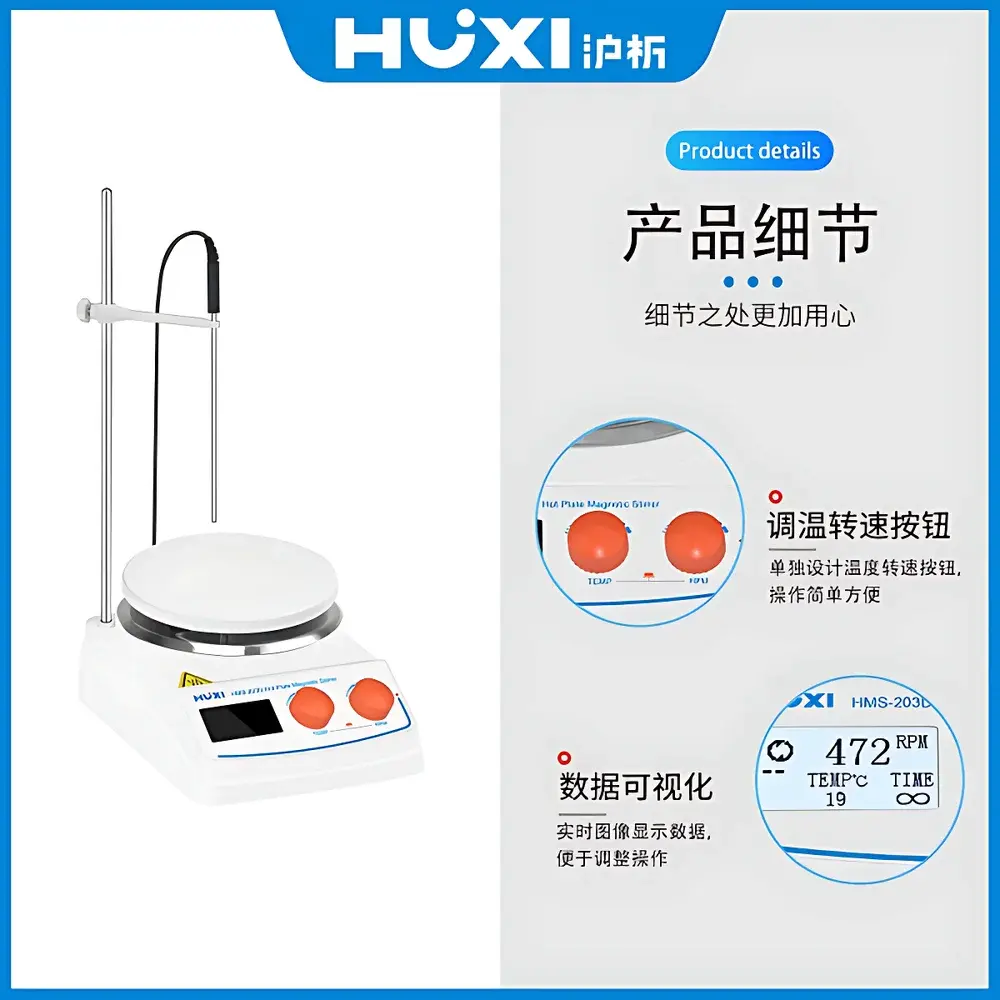
- Dual-knob interface: Independent rotary controls for speed and timer allow intuitive, tactile adjustment without menu navigation—critical for glove-compatible or rapid protocol changes.
- Three programmable heating modes: Mode A (Rapid Ramp), Mode B (Standard Linear Ramp), and Mode C (Precision Hold) support method-specific thermal profiles aligned with ASTM E2912 or ISO 17025-compliant workflows.
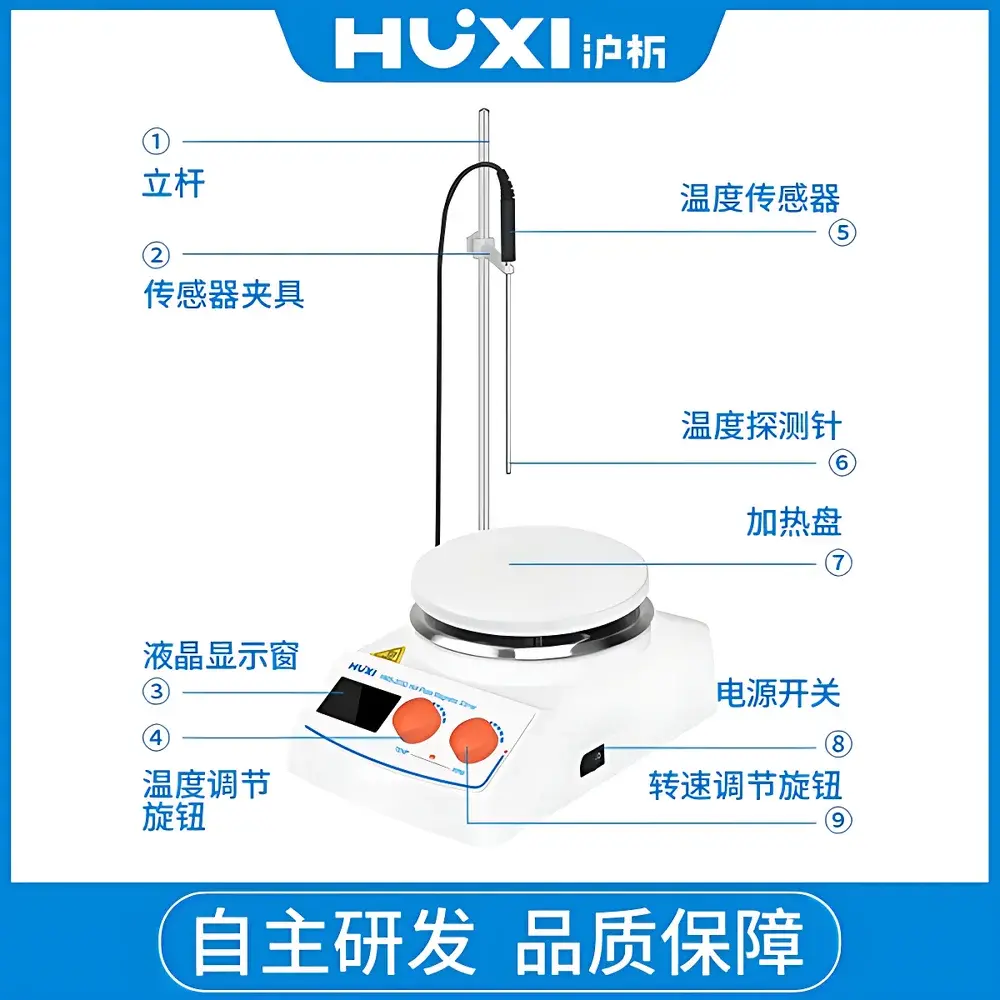
- Extended temperature capability: Standard plate control covers RT+5°C to 250°C; optional PT100 external sensor input enables closed-loop monitoring up to 400°C for applications requiring direct sample temperature feedback.
- Intelligent safety architecture: Over-temperature alarm triggers at +5°C above setpoint; auto-shutdown logic prevents thermal runaway during unattended operation.
- High-resolution LCD display: Simultaneously shows real-time values for speed (rpm), plate temperature (°C), elapsed/remaining time (min), and active mode status.
Sample Compatibility & Compliance
The HMS-203D accommodates vessels up to 3 L capacity—including round-bottom flasks, beakers, and crystallization dishes—when used with appropriately sized stir bars (20–45 mm). Its ceramic-coated aluminum plate resists corrosion from common solvents (e.g., ethanol, acetone, dilute acids/bases) and withstands repeated thermal cycling. The device complies with IEC 61010-1:2010 for electrical safety in laboratory equipment and meets EMC requirements per EN 61326-1. While not certified for Class I Div 1 hazardous locations, it is suitable for general-purpose use in ISO Class 7/8 cleanrooms and GLP-regulated environments when operated within specified ambient conditions (5–40°C, ≤80% RH). Documentation supports traceable calibration of temperature and speed outputs per ISO/IEC 17025 requirements.
Software & Data Management
The HMS-203D operates as a standalone instrument with embedded firmware—no proprietary software or drivers required. All operational parameters (setpoints, timers, modes) are retained in non-volatile memory after power cycling. For integration into automated lab systems, the unit provides analog output signals (0–5 V) for speed and temperature—compatible with third-party data loggers or SCADA platforms. Audit trail functionality is not built-in; however, external timestamped logging via RS-232 or USB-to-serial adapters (with custom scripting) satisfies basic 21 CFR Part 11 record-keeping needs when paired with validated acquisition software.
Applications
- Chemical synthesis: Homogeneous mixing during condensation, esterification, or Grignard reactions under controlled thermal ramping.
- Pharmaceutical QA/QC: Dissolution testing per USP , buffer preparation, and standard solution homogenization.
- Materials science: Dispersion of nanoparticles in polymer matrices or solvent-based precursors prior to spin-coating or casting.
- Environmental analysis: Digestion of soil/water samples per EPA Method 3015A using hotplate-stirrer combination protocols.
- Academic teaching labs: Demonstrating Arrhenius kinetics, equilibrium studies, or viscosity-temperature relationships in undergraduate physical chemistry courses.
FAQ
Does the HMS-203D support external temperature feedback for improved accuracy?
Yes—via optional PT100 probe input, enabling direct sample temperature monitoring and closed-loop regulation independent of plate surface readings.
Can the timer function be used independently of heating or stirring?
Yes—the timer operates in three modes: speed-only, heat-only, or combined heat/stir—allowing flexible protocol sequencing.
What is the maximum recommended vessel diameter for stable stirring at 2000 rpm?
For optimal vortex formation and torque transmission, vessels with ≤100 mm top diameter are recommended at upper-speed settings.
Is calibration documentation provided with the instrument?
Factory calibration certificates for temperature and speed are available upon request and comply with ISO/IEC 17025 traceability standards.
How does the ceramic coating enhance long-term reliability?
The coating prevents oxidation and pitting of the aluminum substrate during repeated exposure to moisture, acids, and thermal shock—extending service life beyond 5 years under routine use.



