
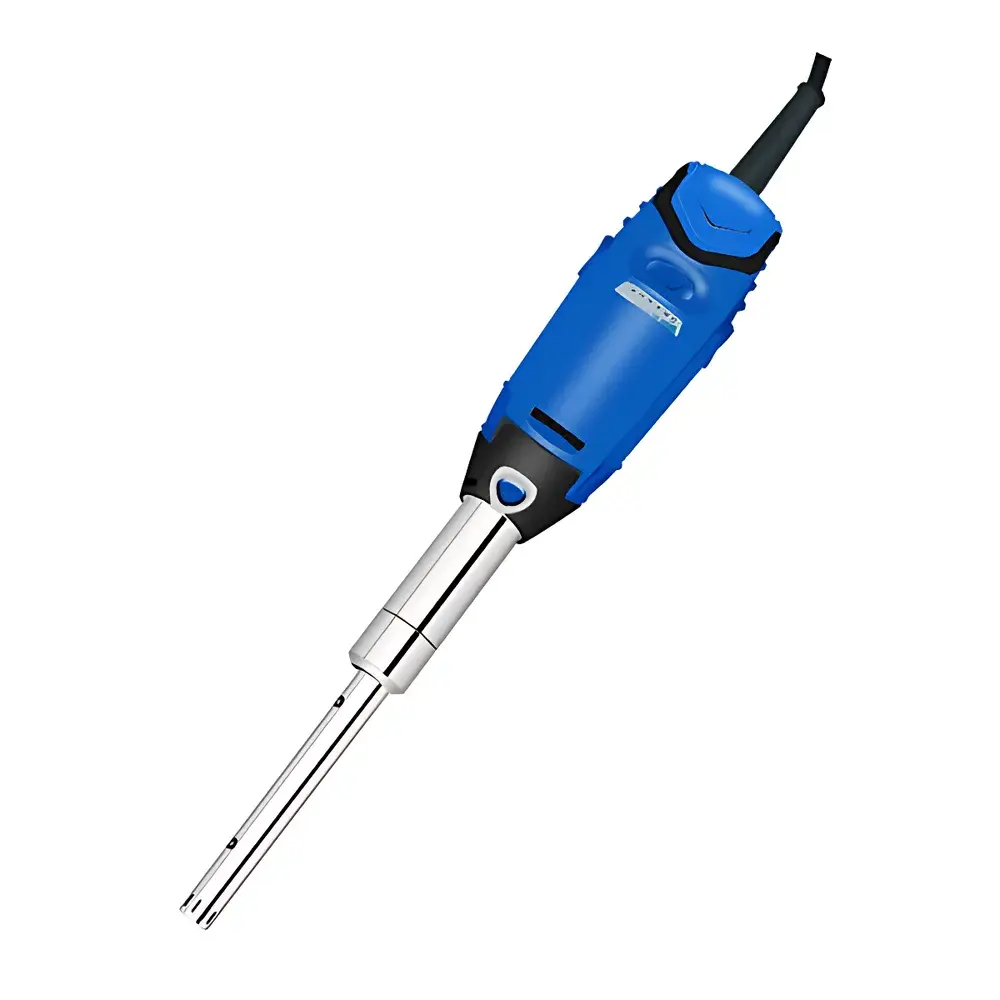
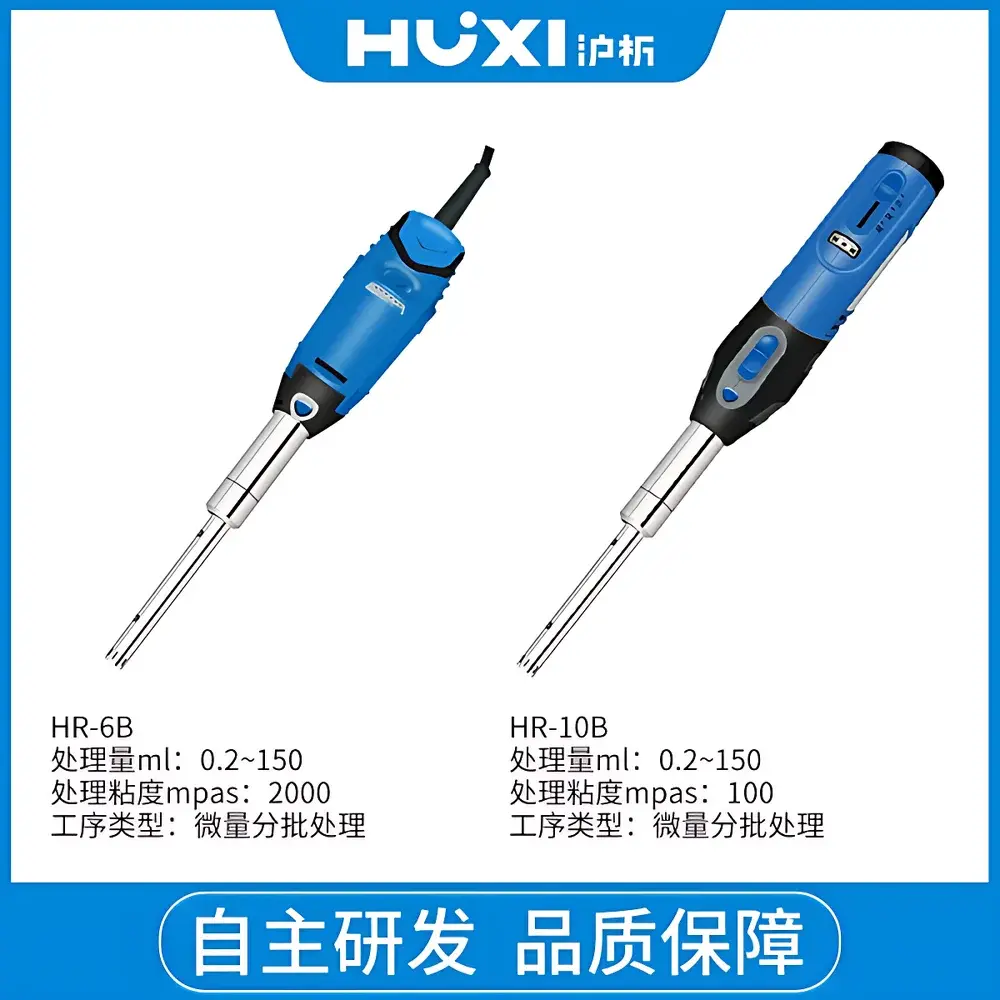
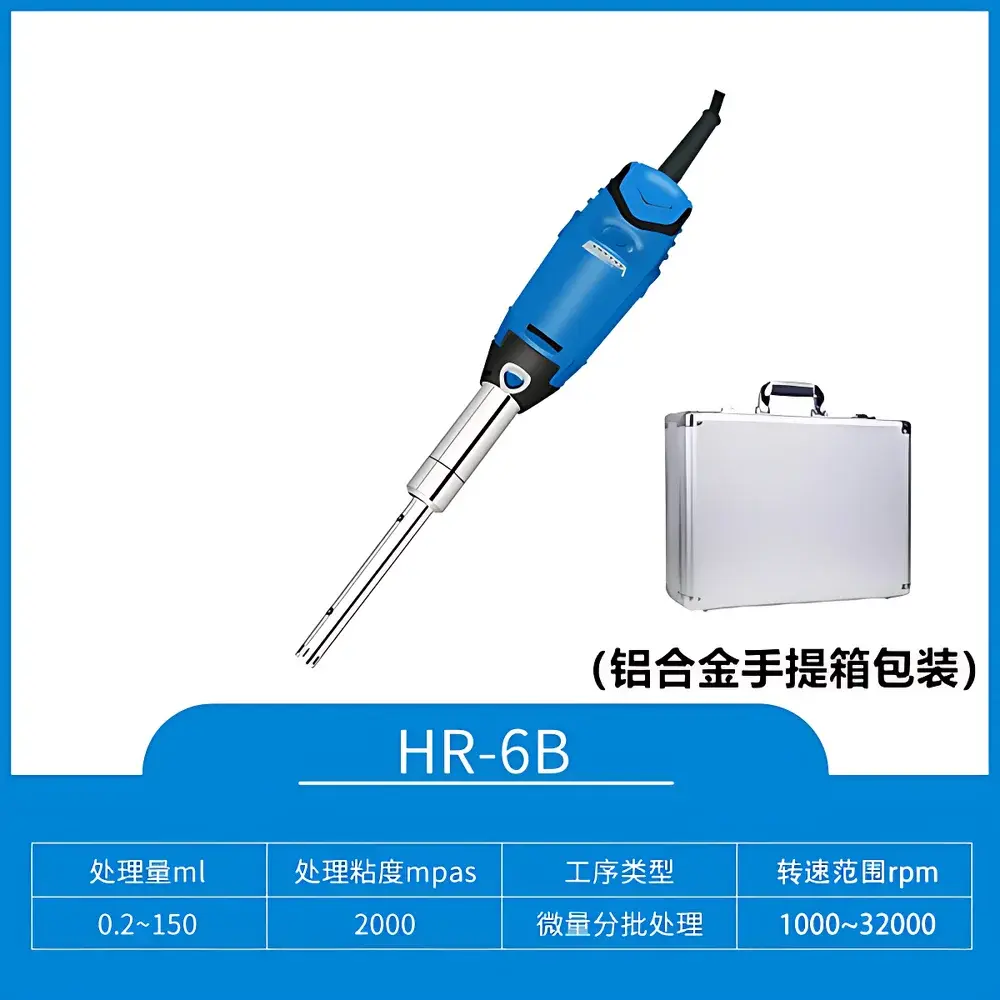
HUXI HR-6B Handheld Homogenizer
| Brand | HUXI |
|---|---|
| Origin | Shanghai, China |
| Manufacturer Type | Direct Manufacturer |
| Country of Origin | China |
| Model | HR-6B |
| Instrument Type | Handheld Homogenizer |
| Instrument Category | Tissue Disruptor Homogenizer |
| Sample Volume Range | 0.2–150 mL (in water) |
| Output Power | 120 W |
| Speed Range | 1,000–32,000 rpm |
| Speed Control | 6-step adjustable mechanical dial |
| Speed Display | Calibrated analog scale |
| Dimensions (L×D) | 185 × 55 mm |
| Weight | 2 kg |
| Power Supply | 220 V, 50 Hz |
| Material in Contact with Sample | ASTM F899-grade 316L stainless steel |
| Shaft Sleeve Material | PTFE |
| Max. Allowable Viscosity | 2,000 mPa·s |
| Operating Humidity Limit | ≤80% RH |
| Process Mode | Micro-batch processing |
| Standard Probe | 10G (Ø10 mm, 120 mm length) |
| Optional Probes | HR-6G, HR-8G, HR-6GST, HR-8GST, HR-10GST |
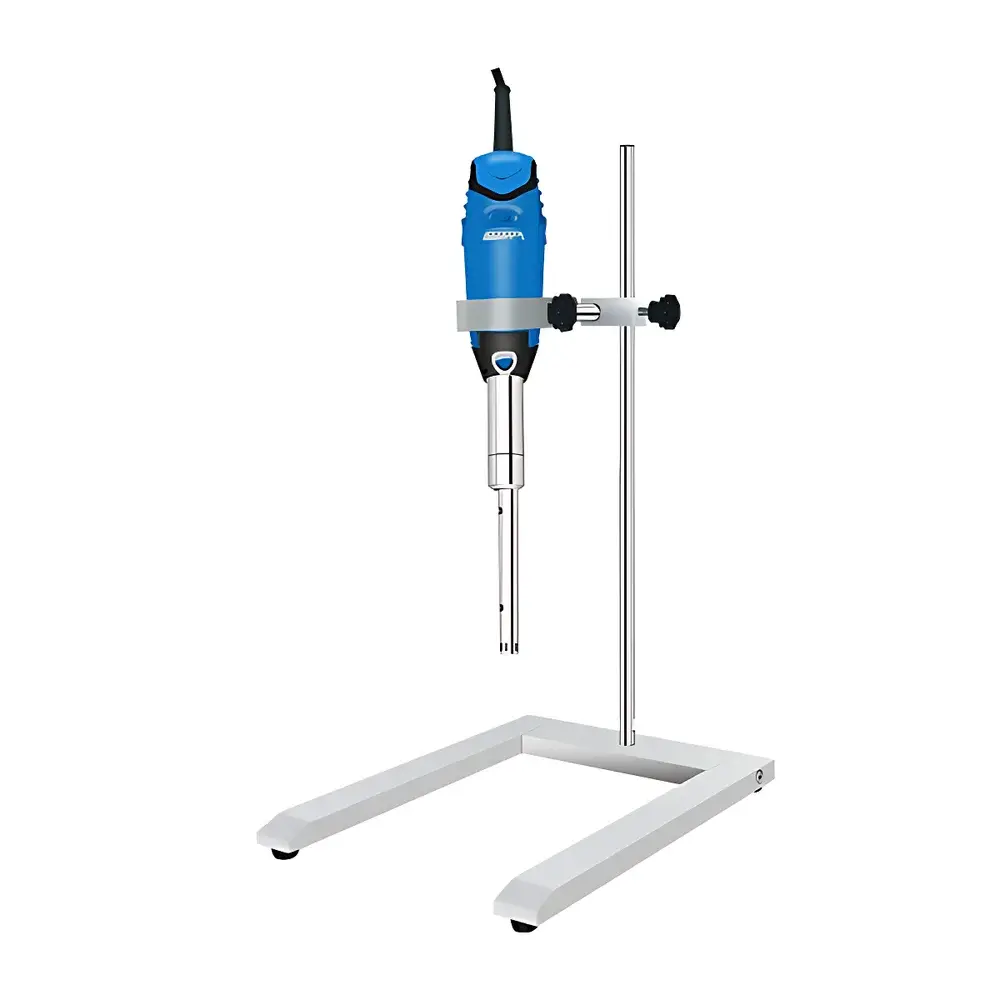
| Optional Accessory | Single-arm universal stand |
| Packaging | Aluminum carry case |
Overview
The HUXI HR-6B Handheld Homogenizer is an engineered solution for high-shear mechanical homogenization in micro-volume laboratory workflows. Based on rotor-stator shear principle, it delivers controlled energy input through rapid rotation of a precision-machined probe within a stationary sleeve—generating intense hydrodynamic cavitation, turbulent flow, and localized shear forces sufficient to disrupt biological tissues, disperse nanoparticles, emulsify immiscible liquids, and de-agglomerate powders. Designed specifically for batch-scale processing of 0.2–150 mL aqueous or low-viscosity samples (up to 2,000 mPa·s), the HR-6B operates across a broad speed range (1,000–32,000 rpm), enabling method optimization for diverse sample matrices without thermal runaway or excessive foaming. Its compact form factor, ergonomic single-hand grip, and balanced mass distribution reduce operator fatigue during repetitive tasks—critical for QC labs, academic core facilities, and R&D environments where throughput and reproducibility are tightly coupled.
Key Features
- High-efficiency 120 W brush motor with thermally stable winding design, delivering consistent torque output across the full speed range
- 6-position mechanical speed selector with engraved calibration scale for repeatable setting recall and GLP-compliant documentation
- Probe assembly secured via ISO-standardized coupling interface—enabling tool-free probe exchange in under 15 seconds without alignment tools
- Wetted parts constructed from ASTM F899-certified 316L stainless steel, offering superior pitting resistance against chloride-containing buffers, organic solvents, and acidic media
- PTFE-coated shaft sleeves provide low-friction rotational stability and prevent cross-contamination between runs
- Dual-insulation housing compliant with IEC 61000-4-2 (ESD immunity) and IEC 60529 IP20 ingress protection for safe operation in standard lab environments
- Integrated thermal cutoff circuitry automatically suspends operation if internal temperature exceeds 75 °C—preventing motor degradation and ensuring long-term reliability
Sample Compatibility & Compliance
The HR-6B supports heterogeneous sample types including mammalian tissue lysates, bacterial cell suspensions, polymer dispersions, pigment slurries, and surfactant-stabilized oil-in-water emulsions. Its validated performance meets routine requirements for ASTM D2196 (viscosity of non-Newtonian materials), ISO 13320 (laser diffraction particle size analysis sample prep), and USP (emulsion droplet size distribution). While not certified for GMP manufacturing environments, its construction and operational traceability support GLP-aligned workflows—particularly when paired with calibrated probes, logbook-based speed/usage records, and scheduled preventive maintenance per manufacturer guidelines. All wetted components comply with FDA 21 CFR 177.1550 (food-contact polymers) and EU Regulation (EC) No. 1935/2004.
Software & Data Management
As a standalone electromechanical instrument, the HR-6B does not incorporate digital control firmware or data logging capability. Speed selection remains fully manual via the front-panel dial; no software drivers, USB interfaces, or cloud connectivity are provided. This architecture ensures electromagnetic compatibility in sensitive instrumentation zones (e.g., near NMR spectrometers or electron microscopes) and eliminates validation overhead associated with electronic audit trails. For regulated applications requiring electronic records, users may integrate external timers or RPM sensors connected to LIMS-compatible data acquisition systems—provided such third-party hardware complies with local electrical safety standards.
Applications
- Cell lysis and subcellular fractionation in molecular biology workflows (e.g., preparation of nuclear extracts or mitochondrial isolates)
- Routine dispersion of carbon nanotubes, graphene oxide, and metal oxide nanoparticles into aqueous or polymeric carriers
- Preparation of stable nanoemulsions for topical drug delivery or functional food matrices
- Homogenization of viscous cosmetic bases (e.g., silicone gels, wax emulsions) prior to rheological characterization
- Disaggregation of freeze-dried enzyme powders or lyophilized vaccine adjuvants into isotonic buffers
- Batch-wise size reduction of catalyst precursors in heterogeneous catalysis R&D
FAQ
What is the maximum recommended operating time per cycle?
Continuous operation should not exceed 60 seconds at speeds above 20,000 rpm; allow ≥90 seconds cooling interval between cycles to maintain motor longevity.
Can the HR-6B be used with corrosive solvents like chloroform or THF?
Yes—provided the probe is thoroughly rinsed with ethanol followed by deionized water after each use; prolonged exposure to halogenated solvents may degrade PTFE sleeve integrity over time.
Is sterilization of the probe possible?
Autoclaving at 121 °C, 15 psi for 20 minutes is validated for 316L probes; however, repeated autoclaving may accelerate wear at the coupling interface—inspect visually before each use.
How does probe geometry affect homogenization efficiency?
Smaller-diameter probes (e.g., 6G) generate higher tip velocity and shear rate for low-volume, high-intensity disruption; larger probes (e.g., 10G) improve bulk mixing efficiency in volumes >50 mL but reduce peak shear stress.
Does HUXI provide calibration certificates for individual probes?
No—probe dimensional tolerances are maintained per ISO 2768-mK general tolerances; users requiring metrological traceability must engage third-party calibration services using optical tachometry and torque verification protocols.
Related Products



