
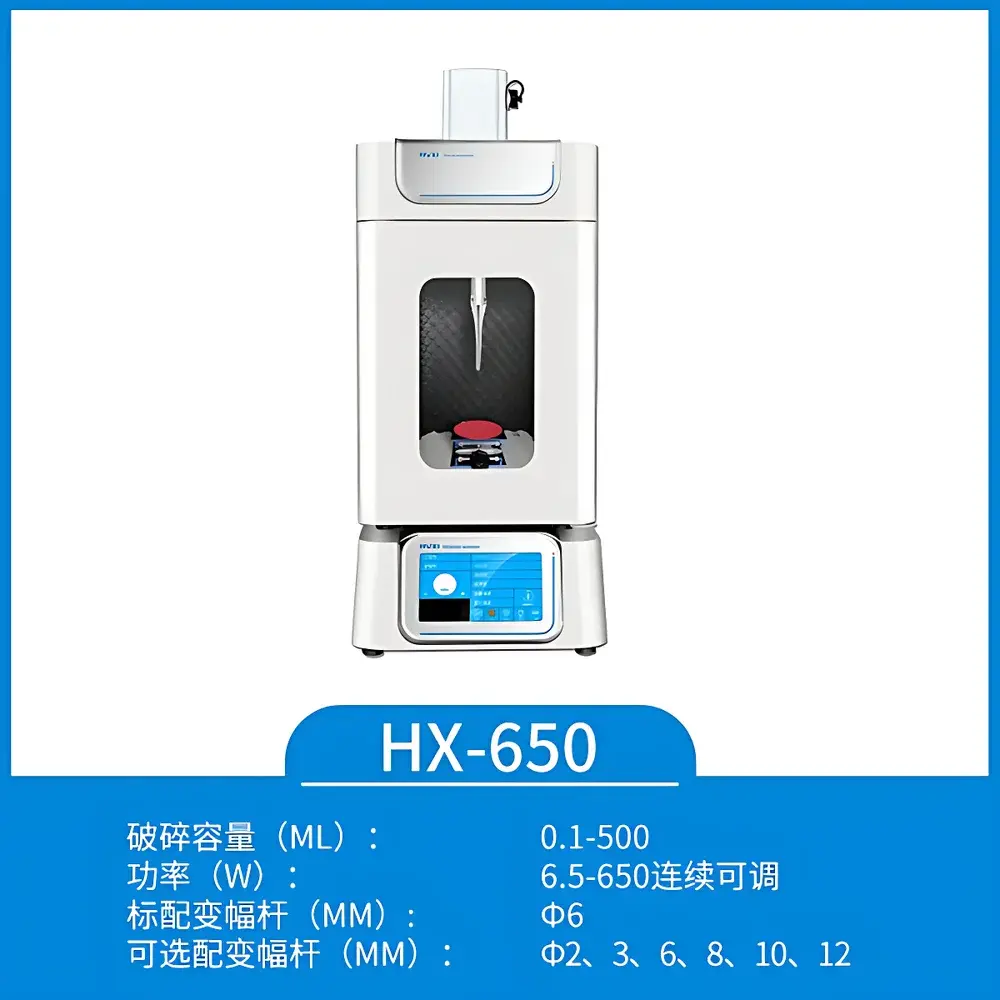
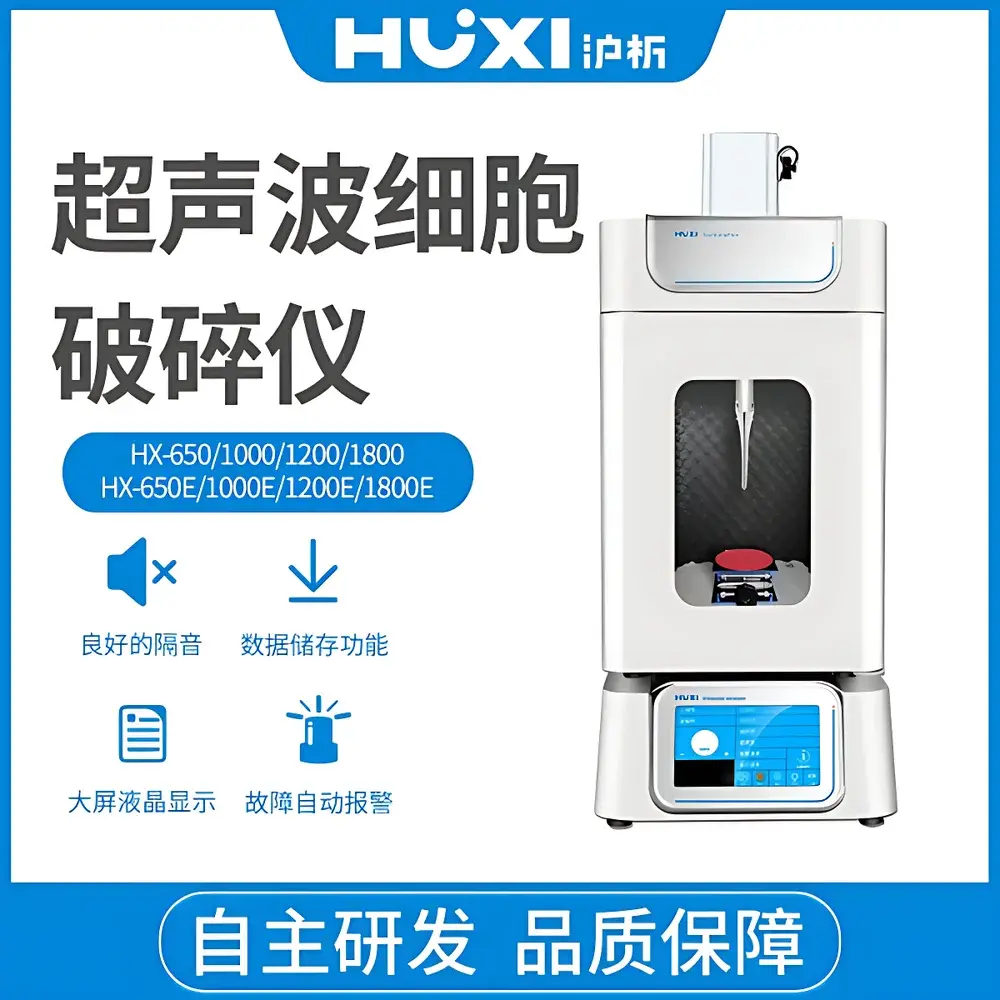
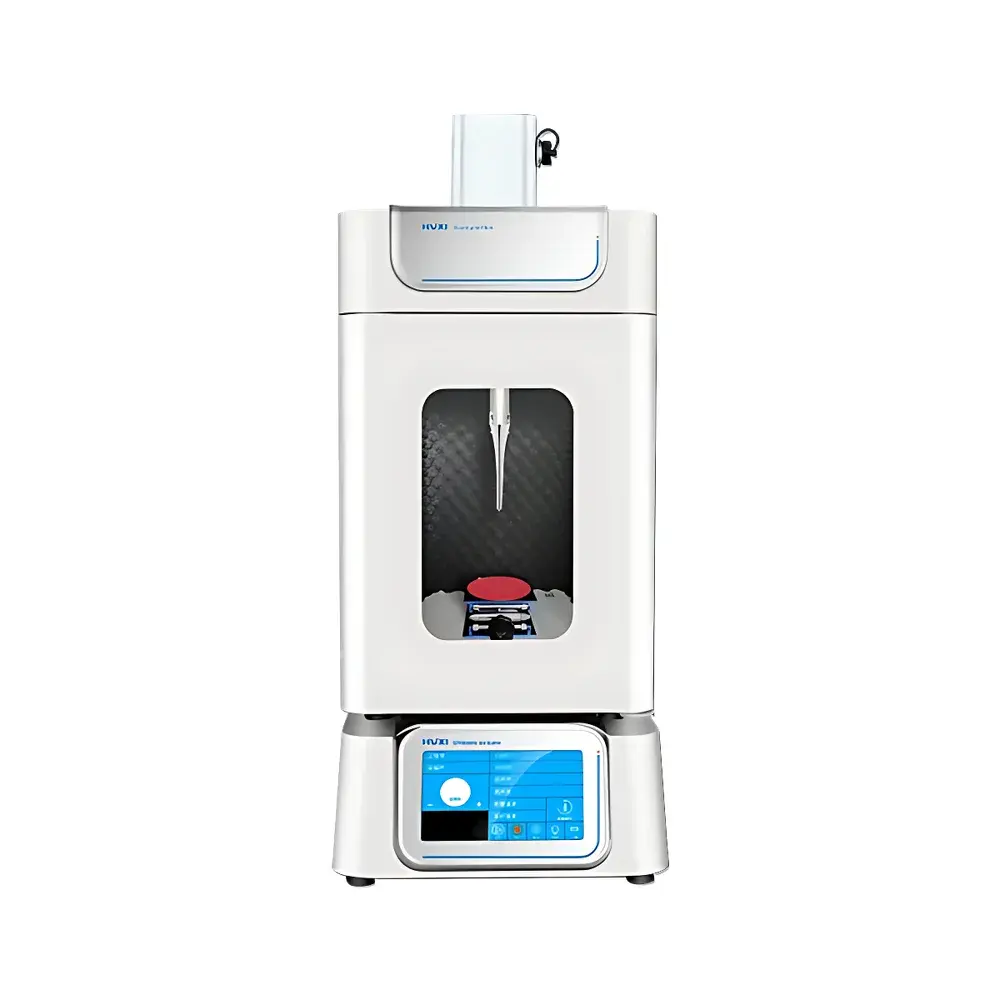
HUXI HX-650 Intelligent Ultrasonic Cell Disruptor
| Brand | HUXI |
|---|---|
| Origin | Shanghai, China |
| Manufacturer Type | Direct Manufacturer |
| Instrument Type | Ultrasonic Cell Disruptor |
| Model | HX-650 |
| Ultrasonic Power Range | 6.5–650 W (continuously adjustable) |
| Operating Frequency | 20–25 kHz |
| Temperature Control Range | 0–100 °C (low-temperature circulator optional) |
| Sample Volume Capacity | 0.1–500 mL |
| Display | 7-inch full-color capacitive touchscreen |
| Pulse Mode | Ultrasonic on-time 0.1–99.9 s, off-time 0.1–99.9 s, total cycle time up to 99 h 59 min 59 s |
| Data Storage | 20 user-defined protocols |
| Probe Options | Standard Φ6 mm |
| Safety Features | Overtemperature, overload, no-load, and time-out alarms |
| Enclosure Material | Anodized aluminum + ABS injection-molded housing (main unit) |
| Dimensions (main unit) | 427 × 340 × 168 mm (D×W×H) |
| Net Weight | 11 kg |
| Soundproof Chamber Dimensions | 320 × 320 × 520 mm (L×W×H) |
| Net Weight | 13 kg |
| Power Supply | 220 V / 50 Hz or 110 V / 60 Hz (configurable) |
Overview
The HUXI HX-650 Intelligent Ultrasonic Cell Disruptor is an engineered benchtop system designed for controlled, reproducible lysis of biological cells and tissues using high-intensity ultrasonic cavitation. Based on piezoelectric transduction at a fundamental frequency range of 20–25 kHz, the instrument generates acoustic energy that induces transient microcavitation in liquid media—resulting in localized shear forces, shock waves, and microstreaming sufficient to disrupt membranes of prokaryotic and eukaryotic cells, bacterial spores, yeast, plant protoplasts, and soft animal tissues. Unlike mechanical homogenization or enzymatic digestion, ultrasonic disruption offers rapid, scalable, and non-thermal lysis with minimal sample cross-contamination risk when operated within validated parameters. The HX-650 integrates real-time power modulation, precise thermal monitoring, and programmable pulse sequencing to support both routine QC workflows and exploratory R&D applications across molecular biology, biopharmaceutical development, and environmental microbiology.
Key Features
- Continuous ultrasonic power adjustment from 6.5 W to 650 W with ±1.5% linearity, enabling optimization for delicate samples (e.g., exosome isolation) or robust matrices (e.g., Gram-positive bacteria).
- True-color 7-inch capacitive touchscreen interface with intuitive TFT-based navigation, supporting multi-layer protocol editing, waveform visualization (power amplitude and pulse timing), and password-protected user access levels.
- Dual-stage thermal management: integrated PTC temperature sensor monitors probe tip and sample bath in real time; optional external low-temperature circulator (−10 to +40 °C) maintains sample integrity during extended sonication cycles.
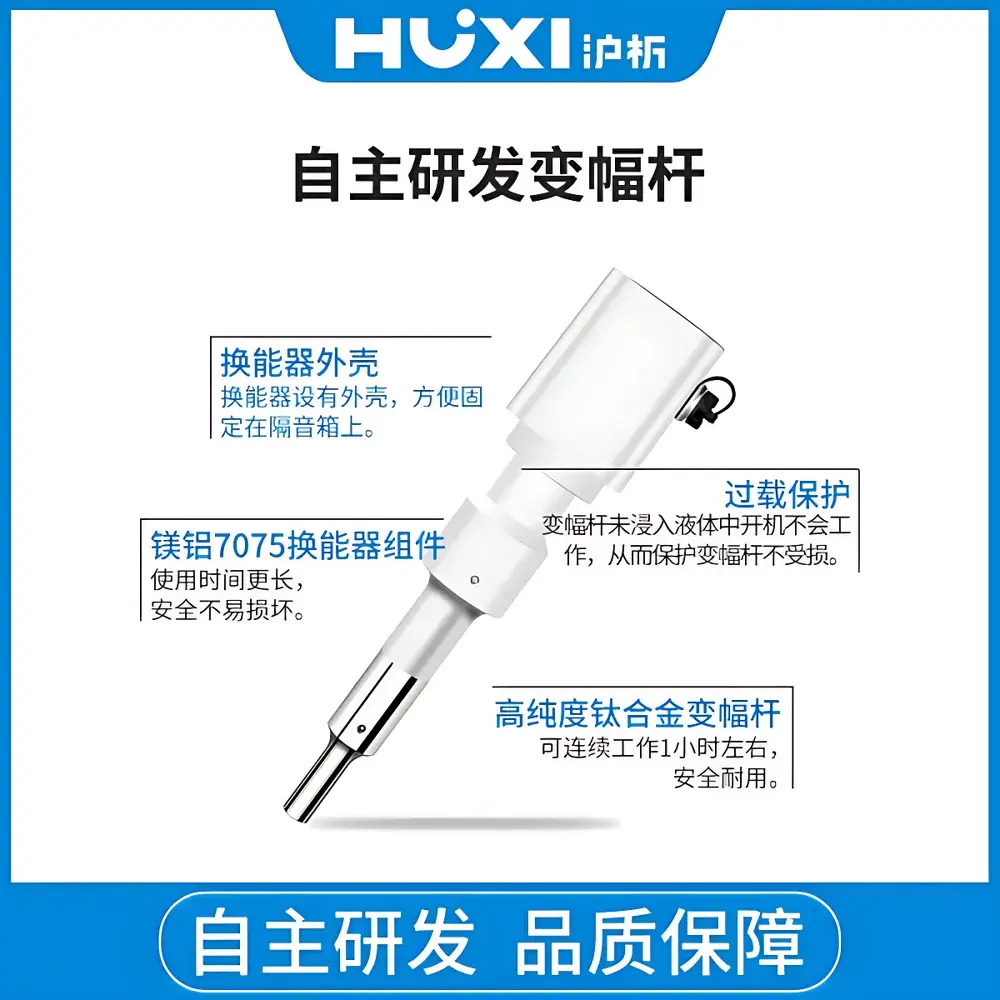
- Modular sonotrode architecture with interchangeable titanium alloy probes (Φ2–Φ12 mm), each calibrated for impedance matching and acoustic output consistency per ISO 20487:2018 guidelines for ultrasonic equipment performance verification.
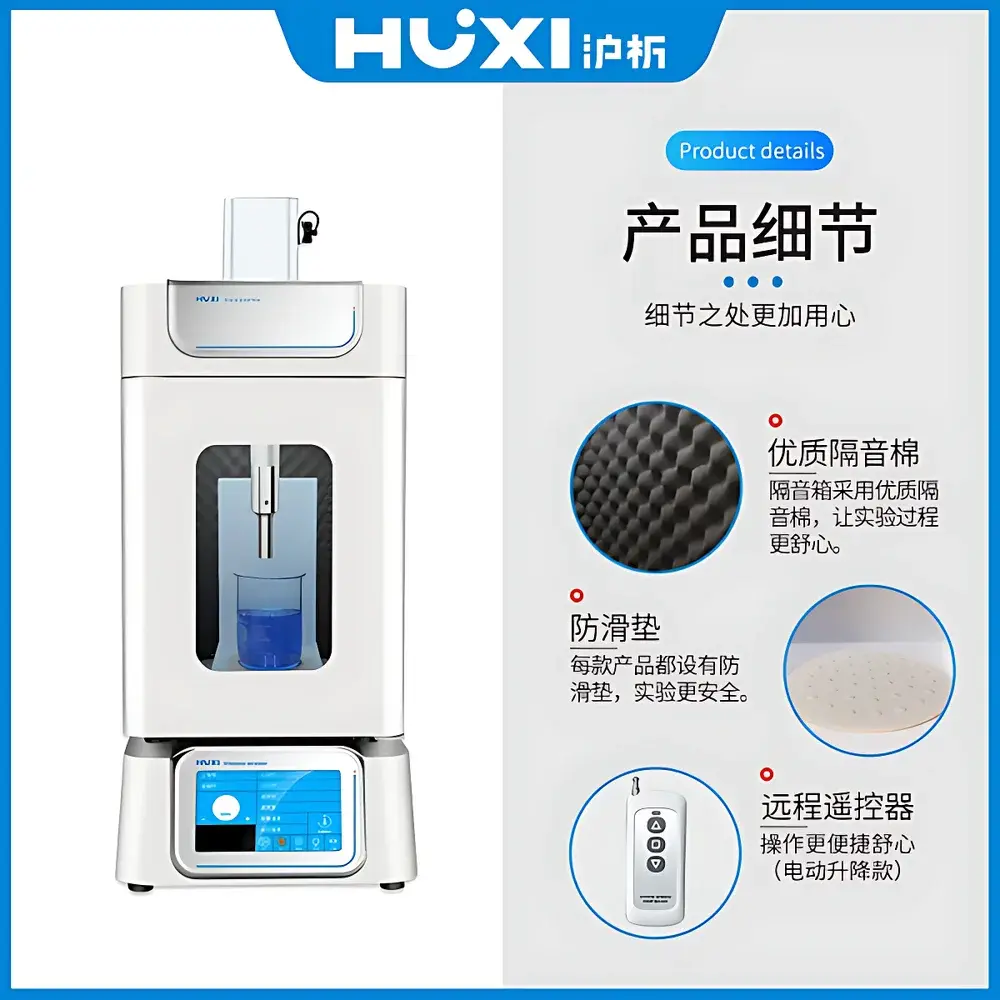
- Acoustically isolated chamber constructed from corrosion-resistant steel and ABS polymer, meeting IEC 61000-6-3 EMC emission limits and reducing ambient noise to ≤65 dB(A) at 1 m distance.
- Stackable vertical configuration (main unit + soundproof chamber) minimizes footprint to <0.15 m²—critical for space-constrained GLP-compliant laboratories.
Sample Compatibility & Compliance
The HX-650 accommodates sample volumes from 0.1 mL (microcentrifuge tubes) to 500 mL (jacketed beakers), supporting common labware including Eppendorf tubes, Falcon conical tubes, glass vials, and custom reactor vessels. It complies with ISO/IEC 17025:2017 requirements for equipment qualification and supports IQ/OQ documentation packages upon request. All operational logs—including power setpoints, temperature traces, cycle durations, and alarm events—are timestamped and stored locally with audit-trail capability. While not pre-certified for FDA 21 CFR Part 11, the system’s password-protected protocol storage, electronic signature-ready parameter locking, and non-volatile memory enable straightforward validation under GMP/GLP frameworks.
Software & Data Management
The embedded firmware enables storage of up to 20 fully customizable protocols, each defining ultrasonic duty cycle (on/off timing), total duration, power ramp profiles, and temperature thresholds. Real-time analog waveforms—displayed as oscilloscope-style plots—visualize instantaneous power delivery and pulse fidelity, facilitating troubleshooting and method transfer. Exportable CSV logs include timestamps, measured temperature, actual delivered power (via internal calibration curve), and event flags (e.g., “overtemp alarm triggered at T=42.3°C”). No proprietary software installation is required; data retrieval occurs via USB 2.0 port or manual screen capture.
Applications
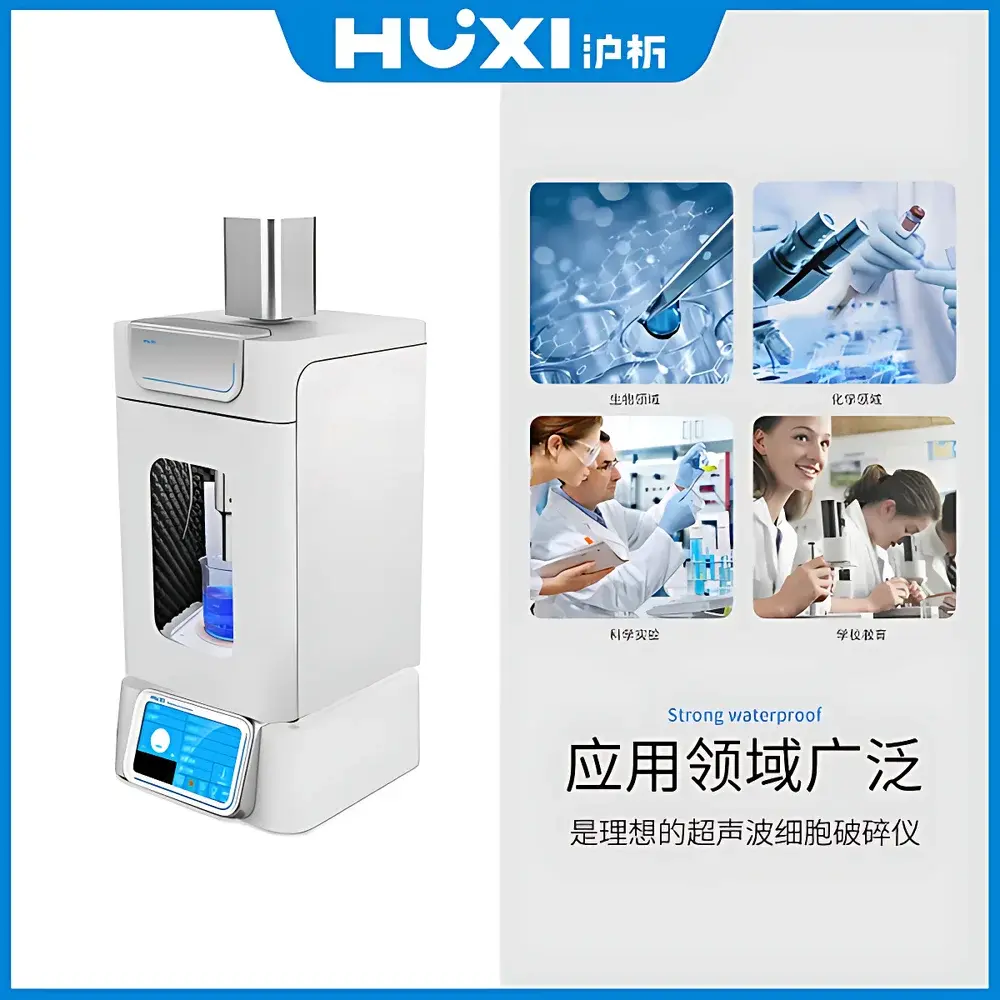
- Nucleic acid and protein extraction from mammalian cell lines (HEK293, CHO), primary neurons, and tissue homogenates.
- Lysis of recalcitrant microbes including Mycobacterium smegmatis, Bacillus subtilis, and fungal hyphae for metagenomic library preparation.
- Preparation of subcellular fractions (mitochondria, nuclei) with minimized organelle damage through pulsed-mode operation.
- Emulsification of lipid nanoparticles (LNPs) and nanostructured lipid carriers (NLCs) in mRNA vaccine formulation development.
- Accelerated solvent extraction of phytochemicals (e.g., curcuminoids, anthocyanins) from plant biomass under controlled thermal conditions.
- Dispersion of carbon nanotubes and graphene oxide in aqueous and organic media for nanomaterial characterization studies.
FAQ
What safety certifications does the HX-650 hold?
The instrument conforms to IEC 61010-1:2010 for laboratory electrical safety and IEC 61326-1:2013 for electromagnetic compatibility. CE marking is available upon configuration for EU markets.
Can the HX-650 be integrated into automated liquid handling platforms?
Yes—RS-232 and TTL-level digital I/O ports support external trigger initiation and status feedback, enabling synchronization with robotic arms or process controllers.
Is probe calibration traceable to national standards?
Each sonotrode undergoes factory calibration against reference hydrophones per ASTM E1000-22 Annex A1; calibration certificates with uncertainty budgets are supplied with premium probe kits.
How is acoustic output verified during routine use?
Users may perform in-situ calorimetric power measurement using the “water calorimetry” method described in ISO 20487:2018 Section 6.3, with built-in temperature logging facilitating ΔT calculation.
Does the system support remote monitoring or network connectivity?
Not natively—but the USB interface allows connection to host PCs running custom LabVIEW or Python-based control scripts for remote scripting and telemetry aggregation.




