
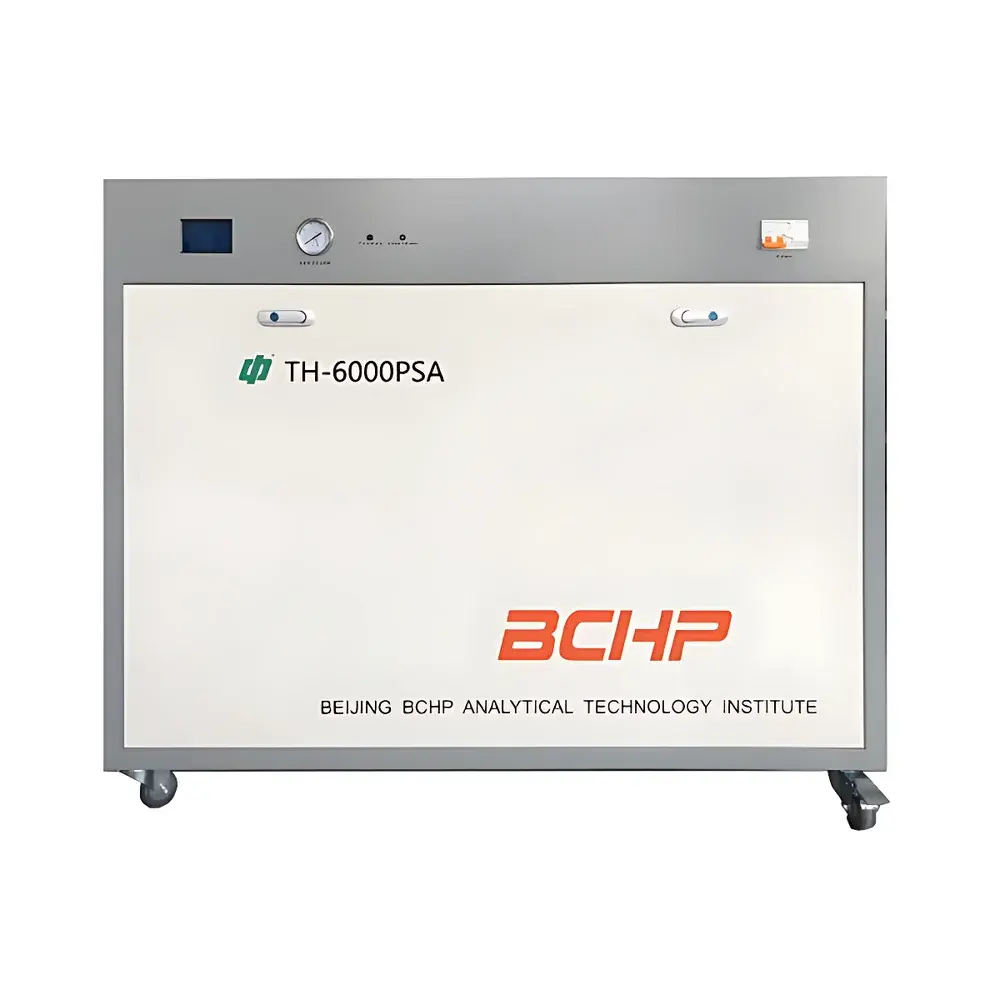
Hydrogen Generator TH-6000PSA by Zhonghuipu
| Brand | Zhonghuipu |
|---|---|
| Origin | Beijing, China |
| Manufacturer Type | Direct Manufacturer |
| Model | TH-6000PSA |
| Hydrogen Generation Principle | Pure Water Electrolysis |
| Output Flow Rate | 0–6000 mL/min |
| Output Pressure | 0–0.4 MPa |
| Hydrogen Purity | 99.999% |
| Power Consumption | 3600 W |
| Operating Temperature | 1–40 °C |
| Relative Humidity | ≤85% RH |
| Input Voltage | 220 V ±10% |
| Dimensions (L×W×H) | 1200 × 750 × 900 mm (height excludes casters) |
| Net Weight | ~150 kg |
Overview
The Zhonghuipu TH-6000PSA Hydrogen Generator is a high-capacity, on-demand laboratory hydrogen source engineered for continuous, reliable operation in analytical and research environments. It employs zero-gap solid polymer electrolyte (SPE) membrane technology—eliminating the need for liquid KOH or NaOH electrolytes—and generates ultra-high-purity hydrogen (≥99.999%) directly from deionized water via electrochemical decomposition. Unlike traditional alkaline electrolyzers, this design ensures corrosion-free operation, minimal maintenance, and intrinsic safety: no caustic solutions, no gas storage, and no high-pressure cylinders required. The system integrates pressure-regulated flow control with real-time feedback, delivering stable hydrogen output across the full 0–6000 mL/min range at up to 0.4 MPa (4 bar), making it suitable for centralized gas supply to multiple GC instruments or other hydrogen-dependent equipment.
Key Features
- Solid Polymer Electrolyte (SPE) Technology: Uses proton exchange membrane (PEM) architecture with noble-metal catalysts; eliminates liquid electrolyte handling, reduces risk of contamination, and enables rapid start-up and shutdown cycles.
- Integrated Oxygen Scavenging: Built-in catalytic oxygen removal module ensures consistent 99.999% H₂ purity without external purifiers or periodic reactivation.
- Intelligent Microprocessor Control: Embedded single-board controller manages electrolysis current, pressure regulation, flow modulation, and fault diagnostics—including dry-cell protection, over-flow alarm, and automatic shutdown upon low water level.
- Low-Moisture Output: Dual-stage drying system combines high-efficiency molecular sieve adsorption with pressure-swing adsorption (PSA) to maintain dew point below –60 °C, eliminating downstream condensation risks in sensitive instrumentation.
- Plug-and-Play Operation: No cylinder handling, no manual venting, no scheduled maintenance for consumables; powered on/off via front-panel switch with real-time LCD display (Chinese interface standard; English firmware optional upon request).
- Robust Mechanical Design: Industrial-grade stainless-steel frame, vibration-damped mounting, and IP20-rated enclosure optimized for long-term stability in ambient lab conditions (1–40 °C, ≤85% RH).
Sample Compatibility & Compliance
The TH-6000PSA is designed for compatibility with all major gas chromatography systems requiring carrier or fuel gas, including FID, TCD, and HID detectors. Its output meets ASTM D7517–22 specifications for hydrogen purity in GC applications and conforms to ISO 8573-1:2010 Class 1 compressed air quality standards (adapted for H₂) regarding particulate, moisture, and oil content. While not certified to IEC 61010-1 or UL 61010B out-of-the-box, the unit incorporates essential safety features aligned with general laboratory equipment requirements—including overpressure relief valves, thermal cut-offs, and grounded chassis. For GLP/GMP-regulated labs, optional audit-trail logging modules support 21 CFR Part 11-compliant data integrity when integrated with compatible LIMS or SCADA platforms.
Software & Data Management
The TH-6000PSA operates autonomously via its onboard microcontroller and does not require proprietary PC software for basic functionality. However, RS-232 and optional Ethernet interfaces enable remote monitoring of operational parameters—including real-time flow rate, system pressure, cell temperature, and cumulative runtime—via third-party SCADA or lab infrastructure management tools. Event logs (e.g., power cycles, alarm triggers, maintenance alerts) are stored internally for up to 30 days and can be exported manually. Firmware updates are performed via USB flash drive under technician supervision; no cloud connectivity or internet dependency is implemented, preserving network security and data sovereignty.
Applications
- Carrier gas supply for capillary GC and GC-MS systems requiring high-purity H₂
- Fuel gas generation for flame ionization detectors (FID) and helium-free GC configurations
- On-site hydrogen feed for catalytic hydrogenation reactors and electrochemical cells
- Centralized gas distribution in multi-instrument laboratories seeking to replace high-pressure cylinder banks
- Research-scale hydrogen provision in materials science, fuel cell testing, and isotopic labeling studies
- Backup or primary hydrogen source in regulated pharmaceutical QC labs where traceability and consistency are critical
FAQ
What type of water must be used as feedstock?
Deionized water with resistivity ≥1 MΩ·cm (typically Type II or higher per ASTM D1193) is mandatory. Tap water, distilled water, or reverse-osmosis-only water will cause rapid membrane fouling and irreversible performance degradation.
Is routine maintenance required for the oxygen removal catalyst?
No. The integrated catalytic oxygen scavenger is pre-activated and requires no regeneration, replacement, or periodic activation—its service life matches that of the PEM stack under normal operating conditions.
Can the TH-6000PSA operate intermittently without affecting longevity?
Yes. The system supports both continuous and intermittent operation modes. Automatic pressure hold and self-diagnostic routines ensure consistent startup performance and eliminate hydrogen purity drift between cycles.
Does the generator meet regulatory requirements for pharmaceutical use?
While the base unit complies with fundamental electrical and mechanical safety expectations for lab equipment, formal validation (IQ/OQ/PQ) and integration into 21 CFR Part 11 workflows require site-specific qualification and optional data-logging hardware/software add-ons.
What is the expected lifetime of the PEM electrolyzer stack?
Under recommended operating conditions (≤80% max rated flow, ambient temperature <35 °C, proper water quality), the stack demonstrates ≥15,000 hours of operational life with less than 10% decline in efficiency—verified through accelerated life-cycle testing per IEC 62282-6-100.
Related Products



