
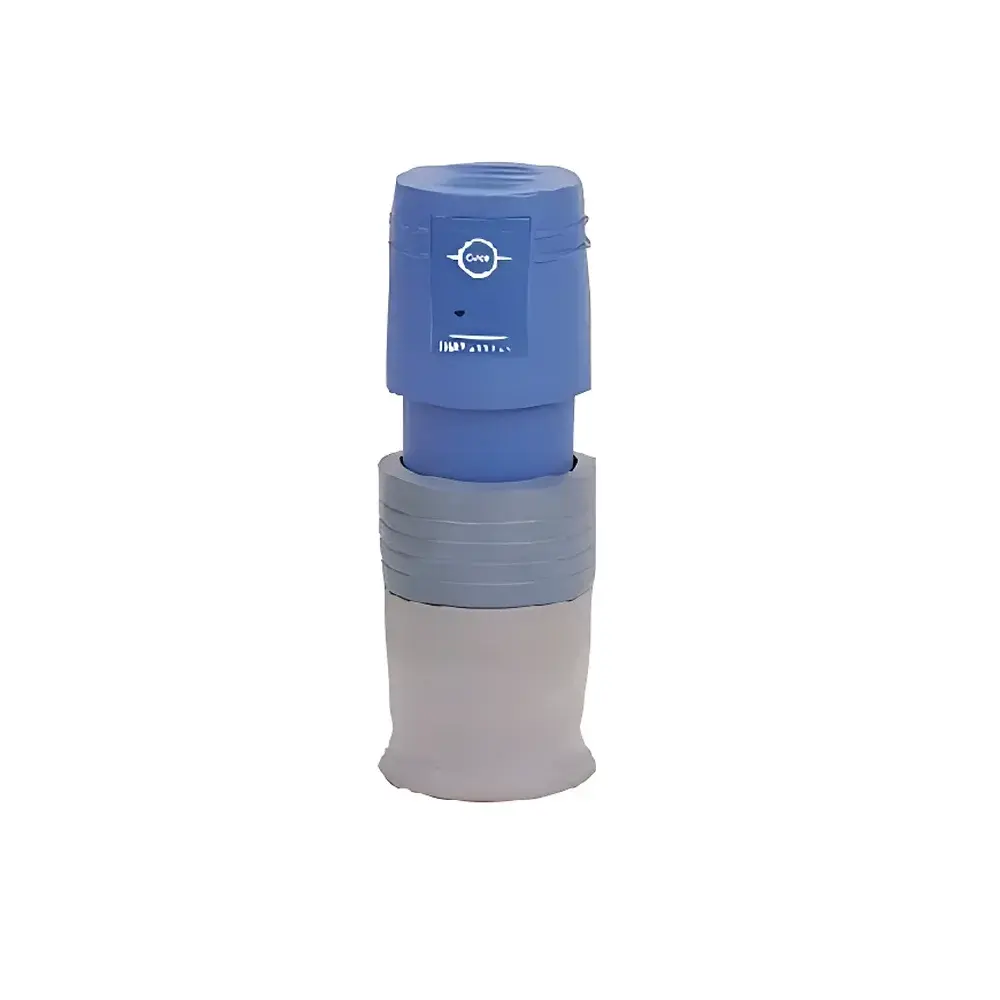
IKA A11 Basic Analytical Grinder
| Brand | IKA |
|---|---|
| Origin | Germany |
| Model | A11 |
| Instrument Type | Batch Impact & Shear Grinder |
| Sample Compatibility | Cryogenic (Liquid Nitrogen-Compatible) Samples |
| Output Particle Size Range | 0.01–0.5 mm |
| Standard Grinding Chamber | A11.5 (80 mL, PTFE-reinforced with glass fiber + 1.4571 stainless steel) |
| Optional Grinding Chamber | A11.4 (250 mL) |
| Grinding Mechanisms | Impact (integrated hardened stainless steel impact head, Mohs hardness ≈ 6) and Shear (optional shear rotor kit, sold separately) |
Overview
The IKA A11 Basic Analytical Grinder is a compact, benchtop batch grinder engineered for reproducible, controlled size reduction of solid laboratory samples prior to analytical characterization. It operates on dual mechanical principles: high-energy impact grinding for brittle, hard, or inelastic materials (e.g., minerals, pharmaceutical tablets, dried plant tissue), and optional shear-based comminution for fibrous, viscoelastic, or cohesive substances—including hydrated gels, polymers, and biological matrices. Its modular architecture supports cryogenic operation down to –196 °C using liquid nitrogen, enabling embrittlement of thermolabile or rubbery samples without thermal degradation. Designed for routine QC, R&D, and sample preparation workflows in pharmaceutical, food, environmental, and materials laboratories, the A11 delivers consistent particle size distribution within the 10–500 µm range—critical for downstream techniques such as X-ray diffraction (XRD), scanning electron microscopy (SEM), elemental analysis (ICP-OES/MS), and dissolution testing.
Key Features
- Integrated impact grinding head fabricated from high-grade stainless steel (material grade 1.4571), hardened to ~6 Mohs, ensuring long service life and minimal metallic contamination.
- Cryogenically compatible design: all standard components—including the A11.5 grinding chamber (80 mL)—are rated for direct liquid nitrogen immersion; chamber walls combine PTFE reinforced with glass fiber and corrosion-resistant stainless steel for chemical inertness and structural integrity at sub-zero temperatures.
- Modular rotor system: shear grinding module available as optional accessory (A11-SHEAR), enabling fine dispersion of soft, fibrous, or adhesive samples when combined with aqueous or solvent-based slurry media.
- Adjustable speed control (0–10,000 rpm) via analog dial, allowing precise energy input modulation to balance throughput and particle integrity.
- Robust safety interlock: motor only engages when chamber lid is fully seated and locked, preventing accidental operation during loading/unloading.
- Ergonomic chamber handling: quick-clamp mechanism enables tool-free chamber attachment/detachment; chambers are autoclavable (PTFE/stainless assembly withstands 121 °C, 2 bar).
Sample Compatibility & Compliance
The A11 accommodates heterogeneous solid samples up to 80 mL (A11.5) or 250 mL (A11.4, optional), including freeze-dried powders, frozen tissues, polymer pellets, ceramic granules, and botanical extracts. Its cryo-capability aligns with ASTM E1903-22 (Standard Guide for Cryogenic Grinding of Solid Materials) and supports GLP-compliant sample prep per OECD 105 and USP . The PTFE/glass-fiber composite chamber meets USP Class VI biocompatibility requirements for pharmaceutical excipient processing. All metallic contact surfaces comply with EN 10088-1 (stainless steel specification) and FDA 21 CFR 177.1550 (indirect food additives).
Software & Data Management
As a manually operated instrument, the A11 does not incorporate embedded software or digital connectivity. However, its analog interface ensures full operational transparency and eliminates firmware-related validation overhead—advantageous in regulated environments where audit trails must be operator-documented per ISO/IEC 17025:2017 Clause 7.7. Users maintain traceability through manual logbooks recording batch ID, sample mass, grinding time, rotational speed, cryogen volume, and post-grinding sieve analysis (e.g., ISO 3310-1). Integration with LIMS is achievable via external barcode scanners or electronic lab notebooks (ELNs) that capture metadata at the point of sample submission.
Applications
- Pharmaceutical: Pre-analysis grinding of coated tablets, lyophilized proteins, and API-excipient blends prior to content uniformity testing (USP ) or residual solvent analysis (ICH Q3C).
- Food & Agriculture: Homogenization of frozen meat, cereal grains, and spice blends for mycotoxin screening (AOAC 2005.02) or heavy metal quantification (EPA Method 6010D).
- Environmental: Size reduction of soil cores and sediment aggregates for sequential extraction protocols (BCR/EN 17257) and total organic carbon (TOC) determination.
- Materials Science: Preparation of brittle composites and sintered ceramics for particle morphology assessment (ISO 13322-2) and BET surface area analysis.
FAQ
Is the A11 suitable for grinding heat-sensitive biological samples?
Yes—when used with liquid nitrogen pre-cooling and the A11.5 PTFE/stainless chamber, it preserves biomolecular integrity during size reduction.
Can the A11 achieve sub-10 µm particles?
No—the A11 is optimized for coarse-to-medium grinding (10–500 µm); sub-micron dispersion requires planetary ball milling or high-pressure homogenization.
What maintenance is required for the impact head?
Inspect for wear after every 500 operating hours; replace if visible pitting or dimensional deviation exceeds ±0.05 mm.
Is the A11.4 250 mL chamber validated for cryogenic use?
Only the A11.5 chamber is certified for direct liquid nitrogen immersion; the A11.4 is intended for ambient or chilled (–20 °C) operation only.
Does IKA provide IQ/OQ documentation for the A11?
Yes—factory-issued Installation and Operational Qualification templates are available upon request for GMP-regulated installations.



