
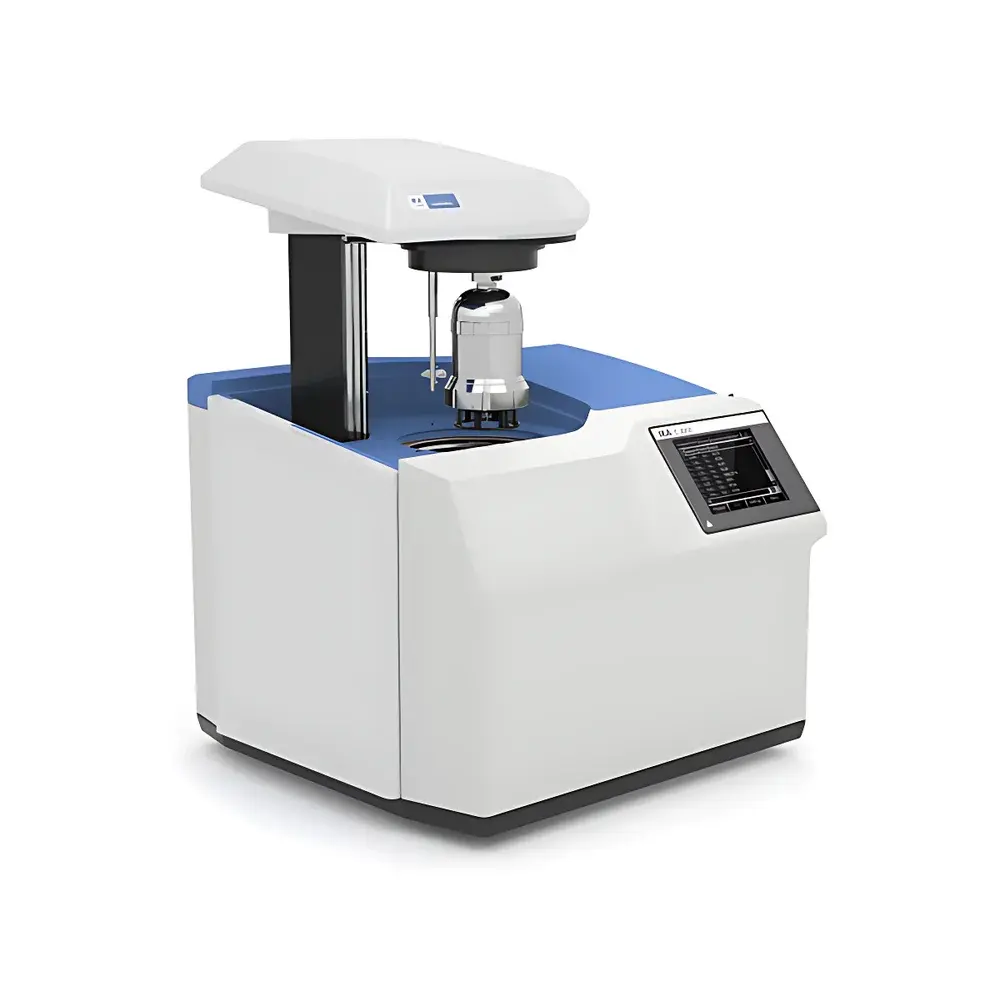
IKA C3000 eco Isoperibol Calorimeter
| Brand | IKA |
|---|---|
| Origin | Germany |
| Manufacturer Type | Original Equipment Manufacturer (OEM) |
| Product Category | Imported Instrument |
| Model | C 3000 eco |
| Calorimetric Principle | Isoperibol Oxygen Bomb Calorimetry |
| Temperature Range | 20–30 °C |
| Temperature Resolution | 0.0001 K |
| Precision | 0.05 % RSD (isoperibol mode, 1 g benzoic acid NBS 39i) |
| Single-Sample Measurement Time | 15 min |
| Heat Capacity Calibration Range | Up to 40,000 J |
| Outer Water Jacket Volume | Approx. 3.5 L |
| Inner Water Bucket Volume | Approx. 2.2 L |
| Operating Ambient Temperature | 20–30 °C |
| Relative Humidity Limit | ≤80 % RH |
| Protection Rating | IP20 (DIN EN 60529) |
| Power Supply | 220–240 V, 50/60 Hz, 1700 W |
| Dimensions (W × D × H) | 500 × 425 × 450 mm |
| Weight | 29 kg |
| Cooling Medium | Tap water or external chiller (e.g., RC 2 basic) |
| Oxygen Pressure | Up to 40 bar |
| Compliance Standards | ISO 1928, ASTM D240, ASTM D4809, ASTM D5865, GB/T 213 |
| Data Interfaces | Ethernet, RS232, USB, SD card slot |
| Optional Accessories | C6010 & C6012 decomposition bombs, RC 2 basic recirculating chiller |
Overview
The IKA C3000 eco is an advanced isoperibol oxygen bomb calorimeter engineered for high-precision determination of gross and net calorific values (higher and lower heating values) in solid and liquid fuels. It operates on the fundamental principle of isoperibol calorimetry—where the temperature of the outer water jacket remains constant during combustion, enabling accurate heat transfer quantification from the sample to the inner water bucket via calibrated thermal pathways. As the direct successor to the C2000 series, the C3000 eco integrates enhanced thermal dynamics, automated operational sequences, and multi-standard compliance to meet stringent regulatory requirements in energy, coal, cement, and waste-to-energy laboratories. Its spherical oxygen bomb head design improves pressure stability and accelerates thermal equilibration, reducing measurement cycle time without compromising reproducibility. The instrument is optimized for routine QC/QA workflows in power plants, national standards institutes, and third-party testing labs requiring traceable, auditable, and GLP-compliant calorimetric data.
Key Features
- Isoperibol measurement architecture with dual-mode operation: rapid dynamic (22 °C or 30 °C initiation) and classical isothermal (22 °C or 30 °C), both fully automated
- Integrated 7-inch capacitive touchscreen interface with optional USB mouse support for intuitive navigation and parameter configuration
- Automated oxygen charging (up to 40 bar), water filling/drainage, ignition, and post-combustion cooling control
- Spherical oxygen bomb (C6010/C6012 compatible) with uniform wall thickness and optimized heat conduction geometry for improved pressure integrity and thermal response
- Hexa-sensor temperature monitoring system: six high-stability platinum resistance thermometers (Pt1000) distributed across inner bucket, outer jacket, and reference zones ensure spatial thermal homogeneity and drift compensation
- “Rotary crucible holder” mechanism simplifies sample loading and minimizes handling errors during bomb assembly
- Modular connectivity: native Ethernet (TCP/IP), RS232, USB host/device, and SD card slot enable seamless integration into LIMS, ELN, and centralized data archiving systems
- Comprehensive safety interlocks: overpressure cutoff, temperature runaway detection, lid position verification, and real-time oxygen leak monitoring
Sample Compatibility & Compliance
The C3000 eco accommodates a wide range of combustible samples—including coal, coke, biomass pellets, municipal solid waste (MSW), fuel oils, and refuse-derived fuels (RDF)—within standardized crucibles (e.g., quartz, stainless steel, or combustion-grade graphite). Sample mass ranges from 0.5 g to 1.2 g depending on expected energy density. All measurement protocols adhere to internationally recognized standards: ISO 1928 (solid mineral fuels), ASTM D240 (liquid fuels), ASTM D4809 (diesel and heating oils), ASTM D5865 (coal and coke), and GB/T 213 (Chinese national standard for coal analysis). Calibration is performed using certified benzoic acid (NBS SRM 39i) with documented uncertainty ≤0.02 % RSD. The system supports full audit trail generation required under GLP and ISO/IEC 17025 accreditation frameworks. Optional FDA 21 CFR Part 11 compliance packages are available upon request for regulated pharmaceutical or biofuel applications.
Software & Data Management
The embedded firmware provides real-time graphical display of temperature vs. time curves, combustion onset detection, baseline correction, and automatic correction for nitric acid and sulfuric acid formation enthalpies. Raw sensor data (timestamped at 100 ms intervals) is stored locally on SD card and simultaneously streamed via Ethernet to networked servers. Export formats include CSV, XML, and PDF reports compliant with ISO/IEC 17025 documentation requirements. The optional CaloSoft Pro software (Windows-based) enables advanced statistical analysis, multi-instrument fleet monitoring, method versioning, electronic signatures, and electronic record retention aligned with ALCOA+ principles. All data modifications are logged with user ID, timestamp, and reason code—ensuring full traceability for internal audits and regulatory inspections.
Applications
- Calorific value certification for coal procurement and sales contracts in thermal power generation
- Quality control of alternative fuels (e.g., RDF, SRF, torrefied biomass) per EN 15440 and CEN/TS 15593
- Research and development of low-carbon fuels, including hydrogen-blended hydrocarbons and synthetic e-fuels
- Environmental compliance reporting under EU ETS (Emissions Trading System) and EPA Method 9040C
- Validation of combustion efficiency in industrial boilers and incinerators
- Academic research in thermochemistry, reaction energetics, and material flammability assessment
FAQ
What distinguishes isoperibol from adiabatic calorimetry?
Isoperibol calorimeters maintain constant outer jacket temperature using active cooling/heating, whereas adiabatic systems dynamically adjust jacket temperature to match the inner bucket—eliminating heat exchange. Isoperibol offers superior long-term stability, lower maintenance, and better suitability for high-throughput labs.
Can the C3000 eco measure net calorific value (NCV) directly?
Yes—the instrument calculates NCV automatically using built-in algorithms per ISO 1928 and ASTM D4809, incorporating measured hydrogen, moisture, and ash content from parallel analyses.
Is external chiller integration mandatory?
No—tap water cooling is sufficient for ambient conditions ≤27 °C and moderate throughput. However, an external recirculating chiller (e.g., RC 2 basic) is recommended for stable operation under variable lab temperatures or >4 measurements/hour.
How is calibration traceability ensured?
Each unit ships with factory calibration certificate referencing NIST-traceable benzoic acid (SRM 39i) and includes digital calibration log with date, operator, and verification results—fully exportable for QA review.
Does the system support remote diagnostics and firmware updates?
Yes—via Ethernet connection, authorized service engineers can perform secure remote diagnostics, parameter optimization, and validated firmware upgrades without onsite intervention.



