
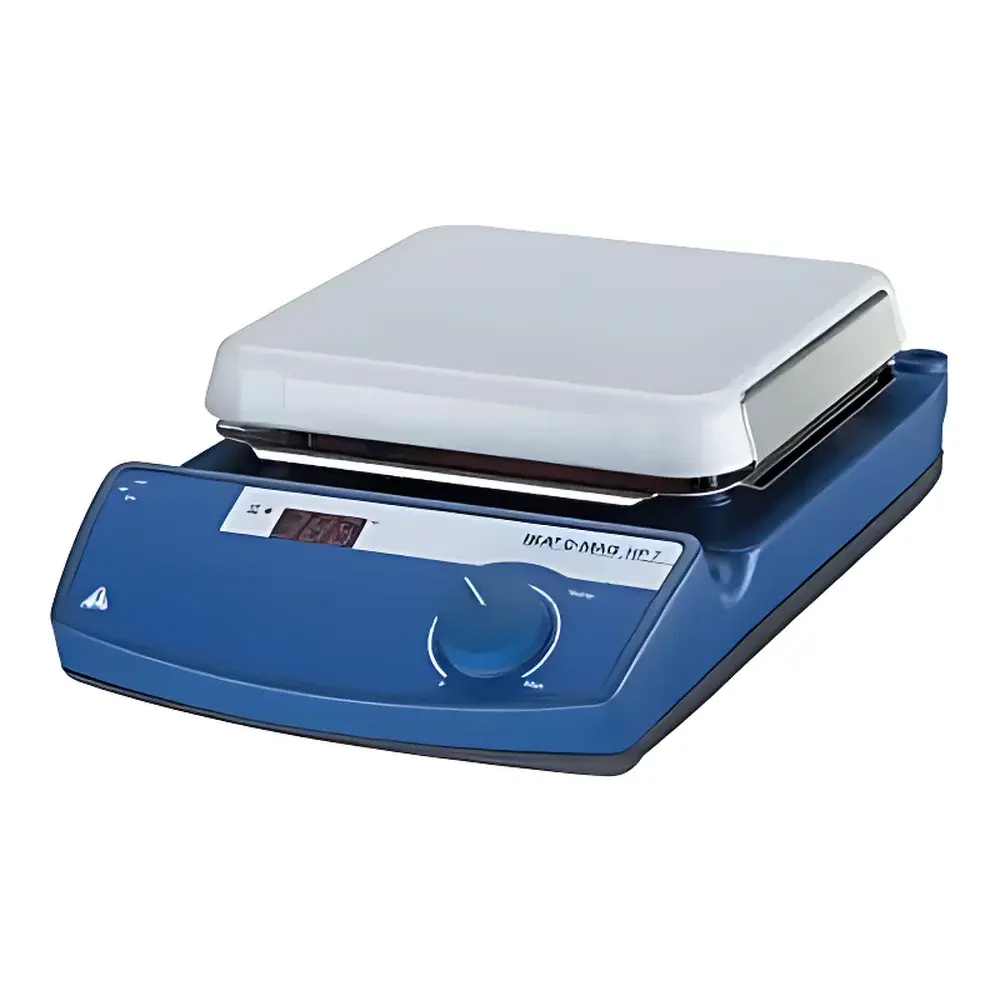
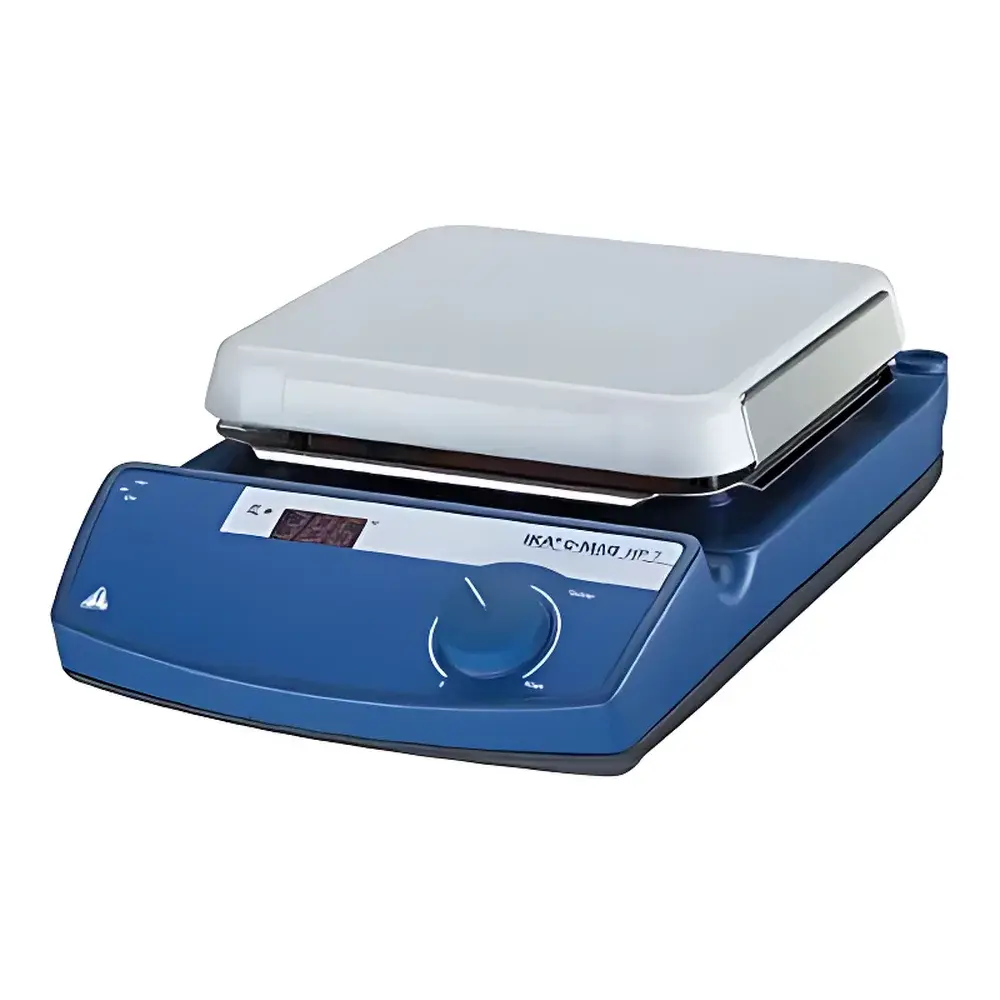
IKA C-MAG HP 7 Electric Heating Plate
| Brand | IKA |
|---|---|
| Origin | Germany |
| Model | HP-7 |
| Heating Power | 1000 W |
| Max. Heating Temperature | 500 °C |
| Temperature Uniformity | ±3 °C |
| Plate Dimensions | 200 × 200 mm |
| Heating Area | 200 × 200 mm |
| Display Type | Digital LED |
| Temperature Control Accuracy (with ETS-D5 sensor) | ±0.5 K |
| Heating Rate (1 L water) | 5 K/min |
| Protection Rating | IP21 |
| Operating Ambient | 5–40 °C, ≤80% RH |
| Voltage | 230 V, 50/60 Hz |
| Weight | 5 kg |
| Workplate Material | Ceramic |
Overview
The IKA C-MAG HP 7 is a high-performance electric heating plate engineered for precision temperature control in demanding laboratory environments. Designed and manufactured in Germany, this unit operates on the principle of resistive heating via a ceramic-coated aluminum heating element, delivering stable thermal output across its full 200 × 200 mm uniform heating surface. Unlike basic hotplates, the HP 7 integrates microprocessor-based closed-loop temperature regulation—enabling both manual setpoint operation and external feedback control when paired with the optional ETS-D5 electronic contact thermometer. Its operational range spans 50 to 500 °C, with a factory-set safety cutoff at 550 °C to prevent thermal runaway during unattended operation. The device complies with DIN EN 60529 (IP21 ingress protection), ensuring resistance to accidental splashes and particulate ingress while maintaining electrical safety under standard laboratory ambient conditions (5–40 °C, ≤80% relative humidity).
Key Features
- Ceramic worktop: Seamless, chemically inert surface resistant to strong acids, bases, and organic solvents—ideal for digestion, reflux, and solvent evaporation protocols.
- Elevated control panel: Positioned above the heating zone to minimize liquid splash exposure and improve ergonomics during parameter adjustment and digital readout verification.
- Dual-mode temperature control: Independent manual setpoint mode or sensor-coupled feedback mode (via ETS-D5 interface) for solution-level accuracy within ±0.5 K.
- Thermal safety architecture: Overtemperature shutdown at 550 °C, visual thermal warning indicator (flashing LED during active heating), and automatic power cut-off upon sensor disconnection or fault detection.
- Robust mechanical design: Cast aluminum housing with reinforced ceramic plate mounting; 5 kg mass ensures stability during magnetic stirring (when used with compatible stirrers) and reduces vibration-induced measurement drift.
- Compliance-ready interface: Supports integration into GLP/GMP workflows through traceable calibration records and documented sensor coupling—facilitating audit readiness per ISO/IEC 17025 and FDA 21 CFR Part 11 requirements when paired with validated software tools.
Sample Compatibility & Compliance
The HP 7 accommodates standard laboratory glassware including round-bottom flasks (up to 3 L), beakers (50–2000 mL), digestion vessels, and open-top reaction containers. Its flat, homogeneous heating zone ensures consistent thermal transfer without hot spots—critical for applications requiring reproducible kinetics, such as EPA Method 3050B acid digestion or ASTM D5291 sample preparation. The ceramic surface meets USP Class VI biocompatibility criteria for non-metallic materials in contact with pharmaceutical intermediates. Device certification includes CE marking per Directive 2014/30/EU (EMC) and 2014/35/EU (LVD), with conformity assessment documentation available upon request.
Software & Data Management
While the HP 7 operates as a standalone instrument, its ETS-D5 sensor port enables analog voltage output (0–10 V) proportional to measured temperature—compatible with third-party data loggers (e.g., LabVIEW-compatible DAQ systems) or centralized lab monitoring platforms. Users may record time-stamped temperature profiles for batch traceability, process validation, or regulatory submissions. When deployed in regulated environments, laboratories should implement procedural controls—including periodic verification using NIST-traceable reference thermometers—and maintain calibration logs aligned with ISO/IEC 17025 clause 6.4. No proprietary software is bundled; all configuration and monitoring rely on hardware-level controls and externally interfaced instrumentation.
Applications
- Acid digestion of environmental and biological samples prior to ICP-OES or ICP-MS analysis.
- Controlled evaporation of solvents in sample concentration workflows (e.g., EPA 8081B, 8270).
- Pre-heating and temperature conditioning of reagents in analytical chemistry and QC testing.
- Supporting gravimetric analysis procedures requiring constant-temperature drying ovens or hotplate-assisted desiccation.
- Integration into automated sample prep stations where precise, repeatable thermal input is required without magnetic agitation.
FAQ
Does the HP 7 support external temperature feedback control?
Yes—via the integrated ETS-D5 interface, enabling closed-loop regulation based on actual solution temperature rather than surface temperature.
What is the maximum recommended vessel size for uniform heating?
Vessels with base diameters ≤180 mm ensure optimal thermal coupling; larger containers may experience edge cooling effects.
Can the HP 7 be used in fume hoods?
Yes, provided ambient temperature remains within 5–40 °C and relative humidity does not exceed 80%; airflow must not impinge directly on the ceramic surface.
Is calibration documentation included with shipment?
A factory calibration certificate (traceable to national standards) is supplied; users are responsible for establishing in-house recalibration intervals per their quality management system.
How is overtemperature protection implemented?
Independent bimetallic thermal cutoff and microprocessor-monitored sensor input jointly trigger immediate power termination at 550 °C or upon sensor failure.



