
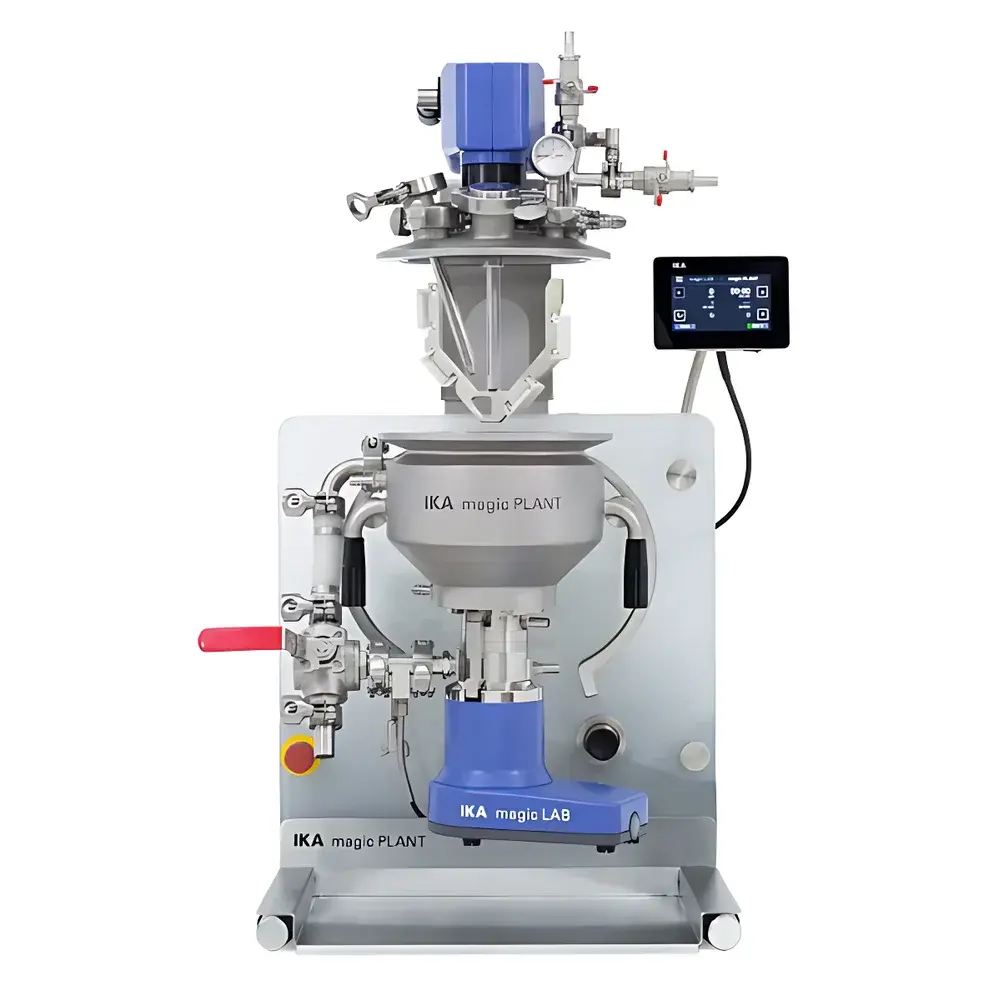
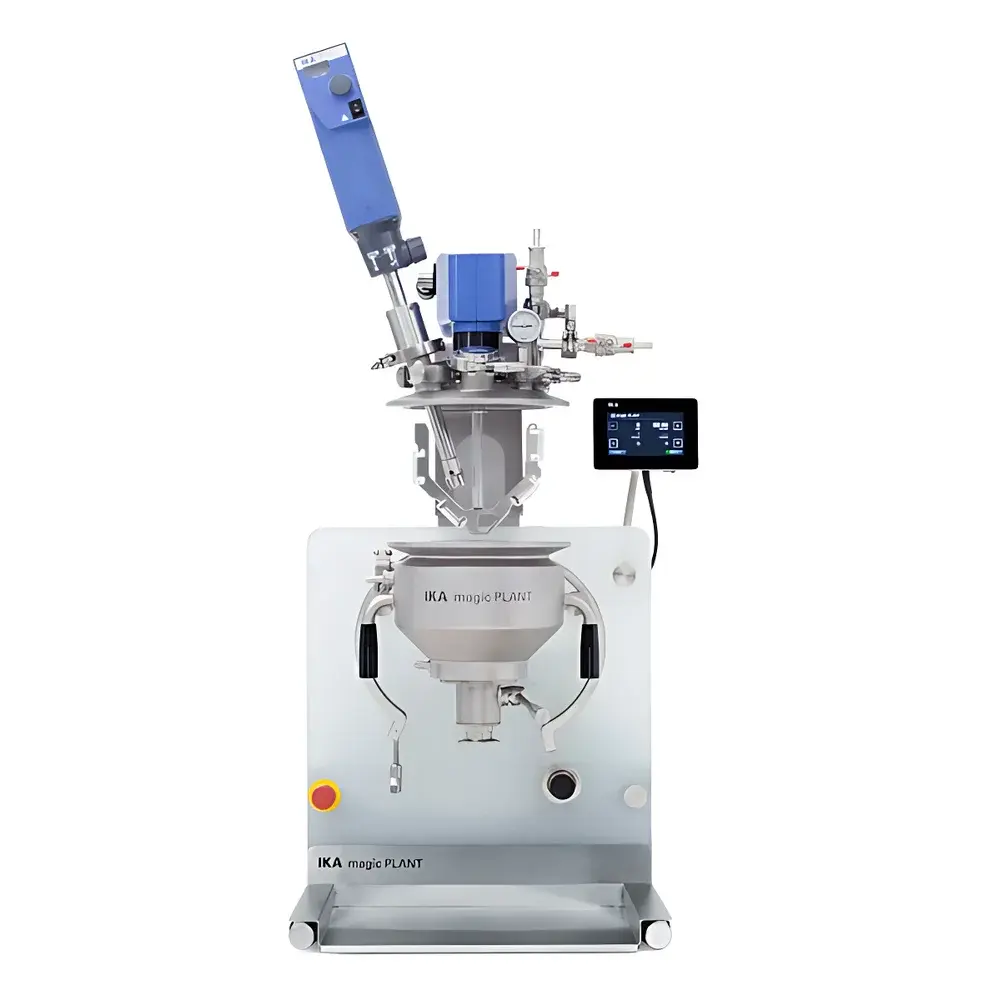
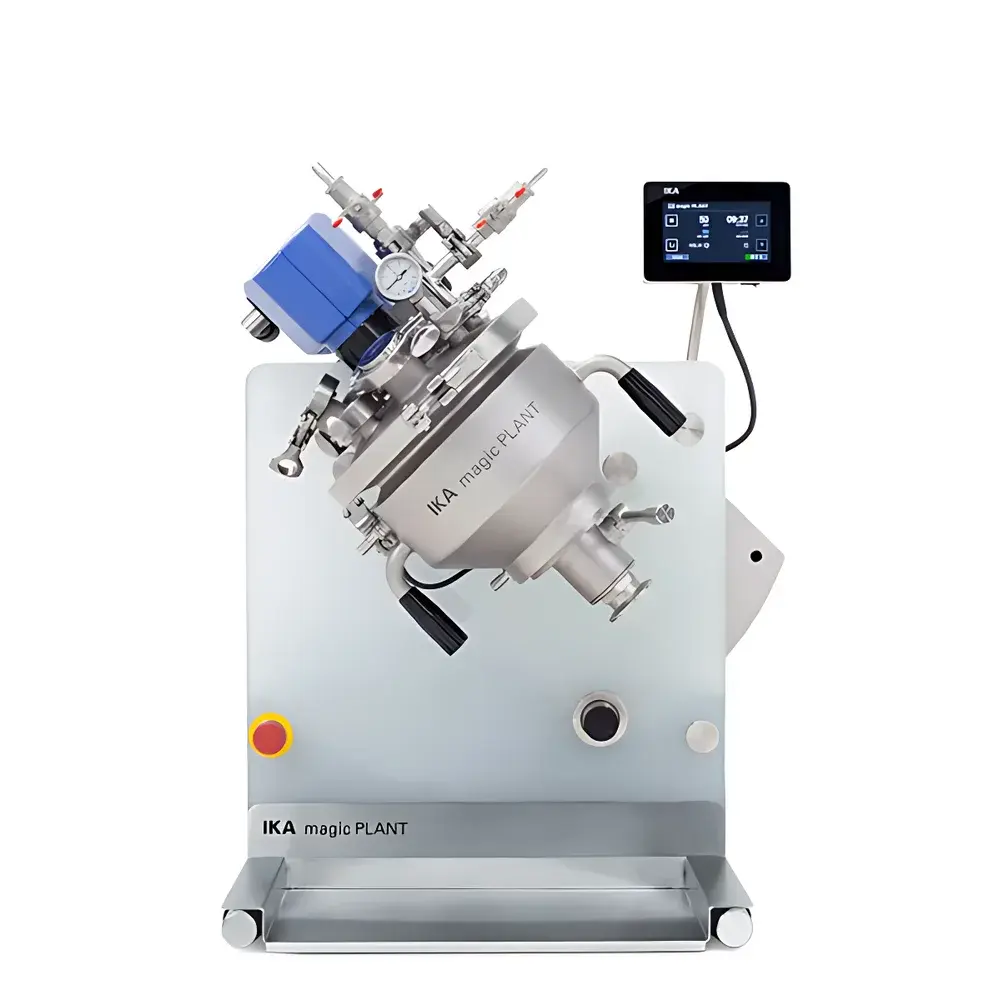
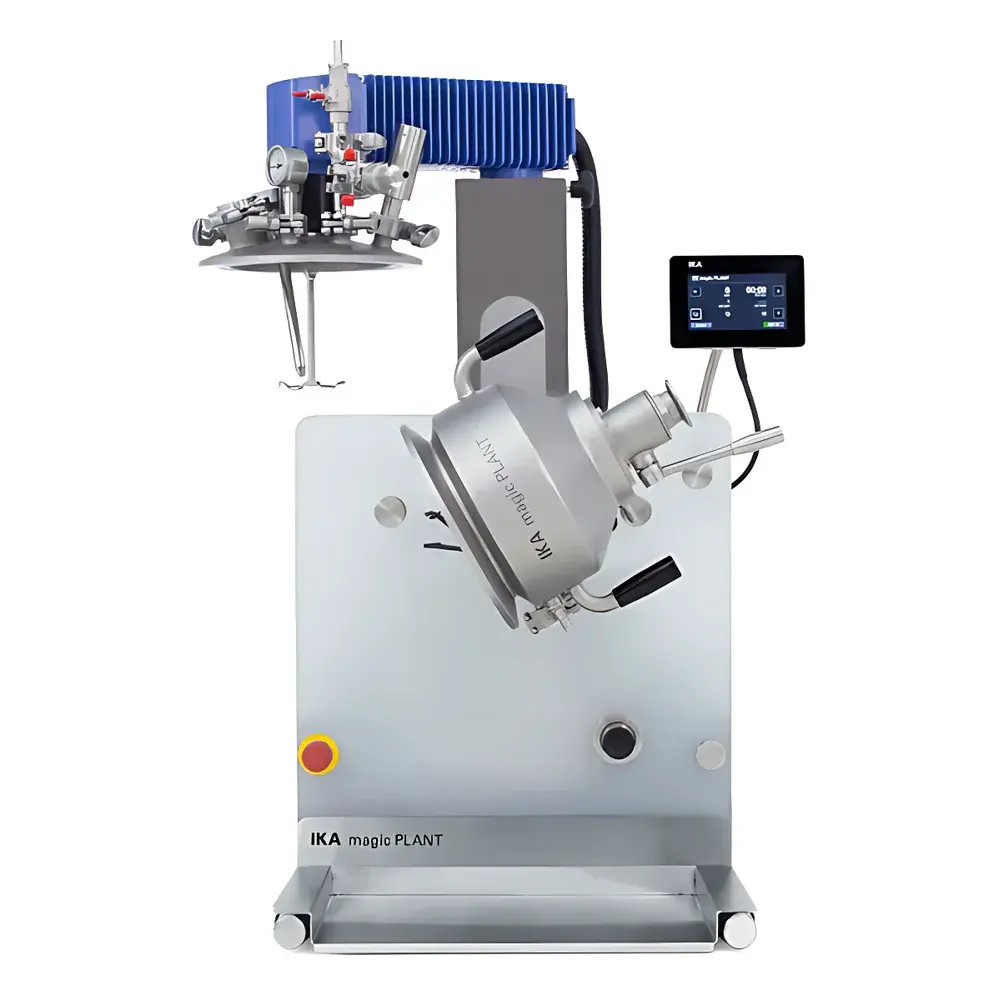
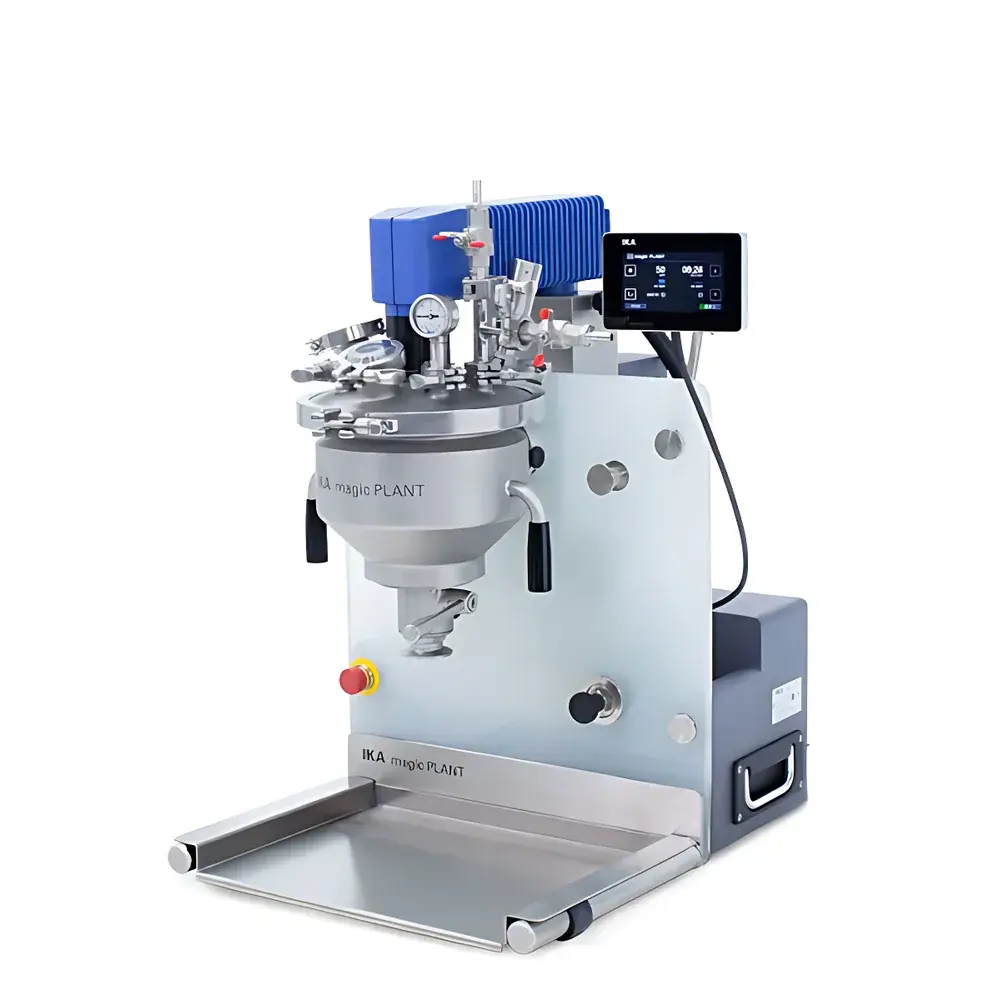
IKA magic PLANT Laboratory-Scale Modular Dispersion System
| Brand | IKA |
|---|---|
| Origin | Germany |
| Manufacturer Type | Original Equipment Manufacturer (OEM) |
| Origin Category | Imported |
| Model | magic PLANT |
| Pricing | Available Upon Request |
Overview
The IKA magic PLANT is a laboratory-scale, modular dispersion and processing system engineered for reproducible batch processing of complex formulations across R&D and pilot-scale environments. It operates on the principle of controlled mechanical energy input—via high-shear rotor-stator interaction, axial/tangential agitation, or combined shear-agitation-drying dynamics—enabling precise control over particle size reduction, droplet breakup, interfacial stabilization, and solid-state homogenization. Unlike fixed-function mixers, the magic PLANT integrates three distinct operational configurations into a single platform architecture: (1) a base mixing unit with jacketed conical vessel and top-driven agitator; (2) an inline dispersion module integrating the IKA magic LAB high-efficiency disperser via bottom-mounted flanged connection; and (3) a dedicated powder processing configuration featuring tilting vessel geometry and helical impeller design optimized for gentle yet thorough solid blending and simultaneous convective drying. This tri-modal architecture supports seamless transition from formulation screening to process parameter mapping—critical for regulatory-compliant scale-up in pharmaceutical, cosmetic, and functional food development.
Key Features
- Modular platform supporting three interchangeable configurations: Base Mixing, Inline Dispersion, and Powder Processing—each with purpose-engineered mechanical components and vessel geometries.
- Jacketed conical mixing vessel (standard configuration) enabling precise temperature control via external heating/cooling media; compatible with vacuum or inert gas overlay for oxygen-sensitive formulations.
- Top-mounted agitator with variable-speed drive (0–300 rpm typical range) and optional scraper blades for wall cleaning—minimizing material adhesion and ensuring complete batch discharge.
- Inline dispersion module equipped with IKA magic LAB disperser (single- or triple-stage rotor-stator), mounted directly to vessel base via DIN 2501 flange—enabling closed-loop recirculation for high-shear homogenization and particle size control down to sub-micron levels.
- Powder processing configuration features motorized vessel tilt mechanism (0–90° adjustable), helical impeller with radial + tangential flow profile, and integrated temperature/humidity monitoring ports—supporting GMP-aligned drying kinetics studies.
- All configurations utilize stainless steel 316L wetted parts, IP54-rated electrical enclosures, and CE/UL-certified safety interlocks including torque overload protection and lid-position sensing.
Sample Compatibility & Compliance
The magic PLANT accommodates a broad viscosity range—from low-viscosity aqueous solutions (500,000 mPa·s)—and handles heterogeneous systems including suspensions, emulsions, dispersions, and free-flowing powders with bulk densities spanning 0.2–2.5 g/cm³. Its design conforms to ISO 22000 (food safety), ISO 22716 (cosmetic GMP), and ASTM D4290 (standard practice for evaluation of mixing equipment). For pharmaceutical applications, the system supports 21 CFR Part 11-compliant electronic record generation when paired with IKA Labworldsoft™ v5.0 or higher, including audit trail logging, user access control, and electronic signatures. Vessel surface finish meets Ra ≤ 0.8 µm per ASME BPE-2022 standards for hygienic processing.
Software & Data Management
Operation is managed via IKA Labworldsoft™ software (v5.0+), which provides full recipe-based control, real-time parameter logging (torque, speed, temperature, time), and automated sequence execution. The software supports export of raw data in CSV and XML formats for integration with LIMS or statistical process control (SPC) platforms. All parameter changes are timestamped and attributed to user ID, satisfying GLP/GMP documentation requirements. Optional Ethernet/IP or Modbus TCP interfaces enable integration into centralized MES environments. Firmware updates are delivered via secure HTTPS channel with SHA-256 signature verification.
Applications
- Pharmaceutical: Wet granulation optimization, nanoemulsion formulation for oral/parenteral delivery, active pharmaceutical ingredient (API) dispersion in polymer matrices, and excipient blending under controlled humidity.
- Cosmetics: High-stability O/W and W/O emulsions (e.g., sunscreens, anti-aging serums), pigment dispersion in viscous bases, and rheology-modified gel networks.
- Food Science: Plant-based dairy alternatives (e.g., oat milk homogenization), functional ingredient encapsulation (vitamins, probiotics), and texture-modified infant nutrition formulations.
- Materials Science: Carbon nanotube dispersion in polymer precursors, ceramic slurry deagglomeration, and battery electrode slurry mixing with conductive additives.
FAQ
What is the maximum batch volume supported by the magic PLANT platform?
Standard vessel capacities range from 2 L to 20 L depending on configuration; custom vessels up to 50 L are available upon engineering review.
Can the magic PLANT be validated for GMP production use?
Yes—the system supports IQ/OQ documentation packages and is designed for compliance with Annex 15 (EU GMP) and FDA Process Validation Guidance when operated with qualified procedures and calibrated sensors.
Is explosion-proof (ATEX) certification available?
ATEX Zone 2/22 certified variants are offered for solvent-based or dust-handling applications, with customized motor housings and static-dissipative components.
How does the powder processing configuration ensure uniform drying?
Through synchronized vessel tilt rotation and helical impeller motion, which promotes continuous particle reorientation and exposes all surfaces to heated vessel walls and controlled airflow—validated via thermographic imaging and moisture gradient profiling.
What maintenance intervals are recommended for the magic LAB inline disperser?
Rotor-stator clearance inspection and bearing lubrication are recommended every 500 operating hours; full seal replacement is scheduled at 2,000-hour intervals per IKA Service Bulletin SB-MPL-2023-04.



