
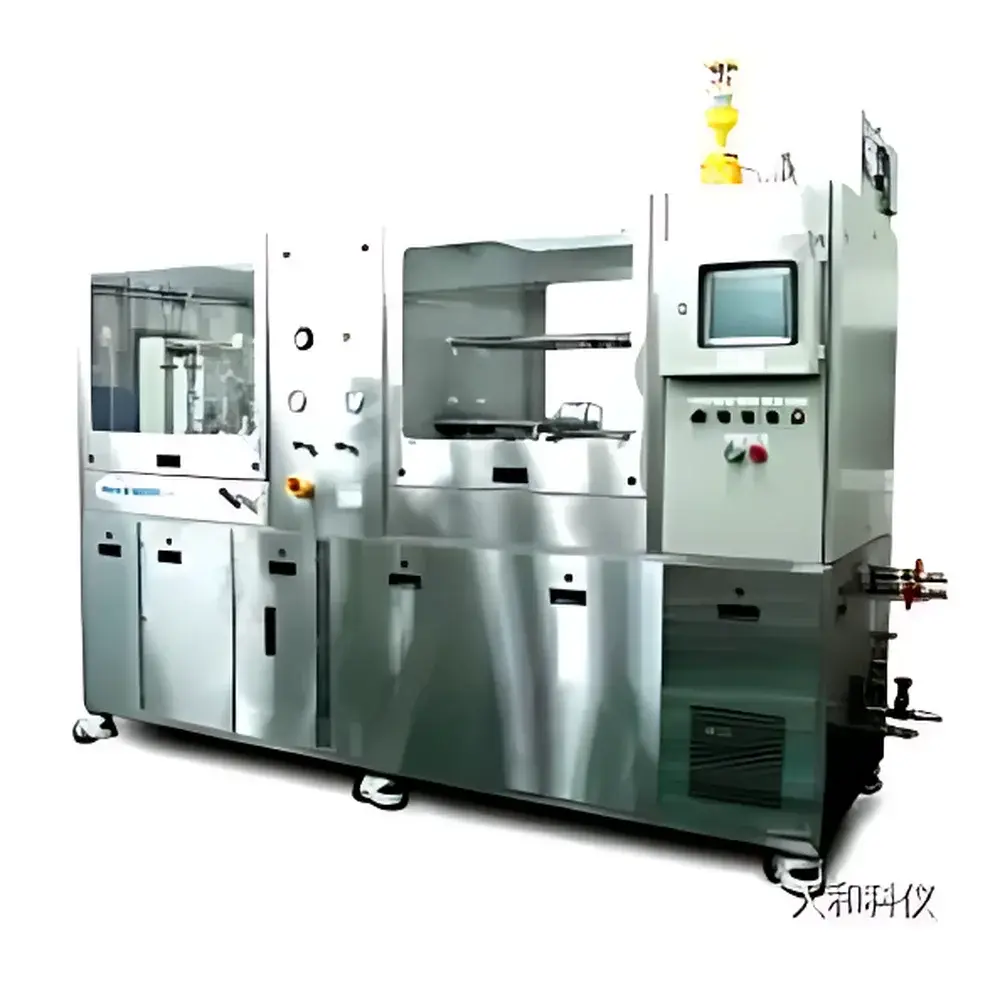
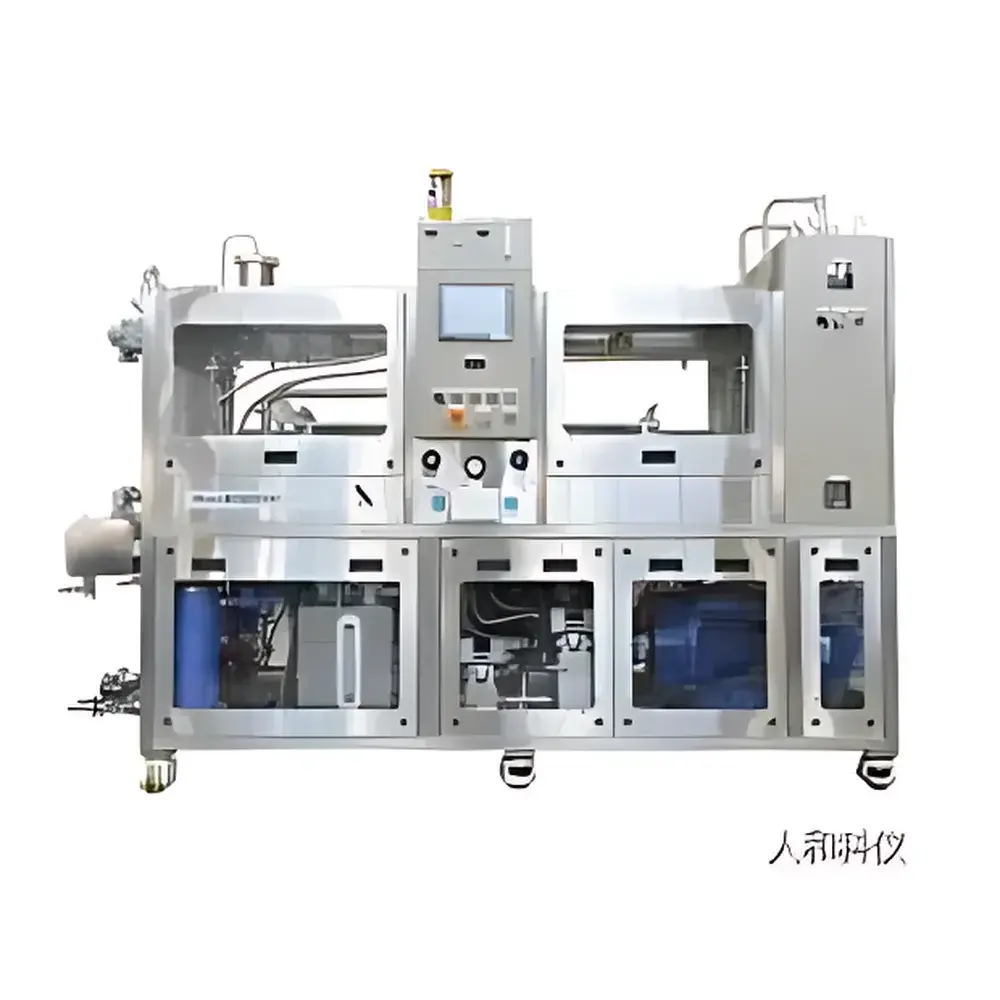
ILSHIN NH Series High-Pressure Nano Disperser
| Brand | ILSHIN Autoclave |
|---|---|
| Origin | South Korea |
| Instrument Type | High-Pressure Homogenizer |
| Model Series | NH2000 / NH4000 / NH8000 |
| Maximum Operating Pressure | 2,000 bar |
| Recommended Operating Pressure | 1,500 bar |
| Flow Rate | 2 L/h (NH2000) |
| Hydraulic Power Unit | 30 HP (NH2000) / 40 HP (NH4000) / 50 HP (NH8000) |
| Voltage/Frequency | 220/380/440 VAC, 50/60 Hz |
| Interaction Chamber Orifice Sizes | 75 µm, 100 µm, 200 µm, 400 µm |
| Chamber Configuration | Z-type or Y-type |
| Weight | 1,500 kg (NH2000) / 1,700 kg (NH4000) / 2,000 kg (NH8000) |
| Dimensions (L×W×H) | 2350×1000×2100 mm (NH2000 & NH4000) / 3100×1100×2100 mm (NH8000) |
Overview
The ILSHIN NH Series High-Pressure Nano Disperser is an industrial-grade homogenization system engineered for reproducible submicron and nanoscale particle size reduction in demanding R&D and pilot-scale production environments. Based on the principle of high-pressure microfluidic cavitation and turbulent shear, the NH Series subjects process fluids to controlled pressure-driven acceleration through precisely engineered interaction chambers—inducing intense hydrodynamic forces that disrupt aggregates, disintegrate cells, emulsify immiscible phases, and uniformly disperse nanoparticles. Unlike rotor-stator or ultrasonic systems, this hydraulic-driven homogenizer delivers consistent energy input per unit volume, enabling predictable scale-up from laboratory formulation to pre-commercial batches. Its robust architecture supports continuous operation under sustained pressures up to 2,000 bar, making it suitable for applications requiring stringent particle size distribution control—particularly where narrow PDI (<0.1) and long-term colloidal stability are critical.
Key Features
- Triple-tier modular platform: NH2000 (2 L/h), NH4000 (4 L/h), and NH8000 (8 L/h) configurations enable seamless throughput scaling while maintaining identical fluidic geometry and pressure dynamics.
- Interchangeable Z-type and Y-type interaction chambers with standardized orifice diameters (75 µm, 100 µm, 200 µm, 400 µm) allow systematic optimization of shear rate vs. cavitation intensity for diverse material classes—from soft liposomes to hard ceramic precursors.
- Hydraulically actuated intensifier pump system ensures pressure stability ±0.5% over full load range; integrated pressure feedback loop enables real-time PID-controlled regulation during extended runs.
- Stainless steel 316L wetted path compliant with ASME BPE-2022 surface finish standards (Ra ≤ 0.4 µm); fully drainable design supports CIP/SIP validation protocols.
- Integrated safety interlocks including burst-disc protection, emergency pressure dump valve, and chamber temperature monitoring (PT100) meet ISO 13857 and EN 61000-6-2 requirements.
Sample Compatibility & Compliance
The NH Series accommodates aqueous, organic, and high-viscosity suspensions (up to 10,000 mPa·s at 25°C) without pre-dilution. It has been validated for processing heat-sensitive biologics (e.g., mRNA-LNPs, protein conjugates), solvent-based pigment dispersions, and abrasive metal oxide slurries. All models comply with CE Machinery Directive 2006/42/EC, PED 2014/68/EU for pressure equipment, and carry KOLAS-accredited calibration documentation traceable to NMIK. For regulated pharmaceutical use, optional IQ/OQ documentation packages support FDA 21 CFR Part 11–compliant electronic records and audit trails when paired with certified SCADA integration.
Software & Data Management
A dedicated Windows-based control interface provides synchronized logging of pressure, flow rate, inlet/outlet temperature, and cumulative runtime. Data export conforms to ASTM E2500-22 Annex A3 for raw instrument data integrity; CSV and .tdms formats are natively supported. Optional Ethernet/IP or Modbus TCP connectivity enables integration into MES platforms (e.g., Siemens SIMATIC IT, Rockwell FactoryTalk). All operational parameters are stored with timestamped user authentication, satisfying GLP/GMP data retention requirements for batch record reconstruction.
Applications
- Pharmaceutical: Liposome encapsulation, nanoparticle drug carriers (e.g., paclitaxel-albumin), viral vector purification intermediates.
- Food Science: Nanoemulsions for functional ingredient delivery (vitamin D3, curcumin), dairy protein nano-aggregates, cold-set gelation control.
- Advanced Materials: Graphene oxide dispersion in polymer matrices, quantum dot ink formulation, SiO₂/TiO₂ antireflective coatings.
- Personal Care: Stable oil-in-water nanoemulsions for transdermal actives, UV-filter nanoparticle deagglomeration (ZnO, Avobenzone derivatives).
- Electronics: Conductive silver nanopaste homogenization, dielectric fluid nanocomposites for printed electronics.
FAQ
What is the minimum recommended sample volume for stable operation?
Minimum process volume is 500 mL for NH2000 and 1 L for NH4000/NH8000 to ensure adequate hydraulic priming and thermal equilibrium.
Can the NH Series be used for sterile processing?
Yes—when equipped with steam-jacketed interaction chambers and validated CIP/SIP cycles, it meets ISO 13408-1 sterility assurance level (SAL) 10⁻⁶ for aseptic intermediate manufacturing.
Is third-party calibration support available?
ILSHIN partners with TÜV SÜD and KRISS-certified service centers for annual pressure transducer recalibration and flow meter verification.
How does chamber geometry affect particle size distribution?
Z-type chambers emphasize laminar shear and are optimal for fragile biomolecules; Y-type chambers generate higher turbulence and cavitation density, preferred for refractory inorganic dispersions.
What maintenance intervals are specified for hydraulic oil and seals?
Hydraulic oil replacement is required every 2,000 operating hours; ceramic interaction chamber seals are rated for ≥15,000 bar-hours and inspected during quarterly preventive maintenance.



