
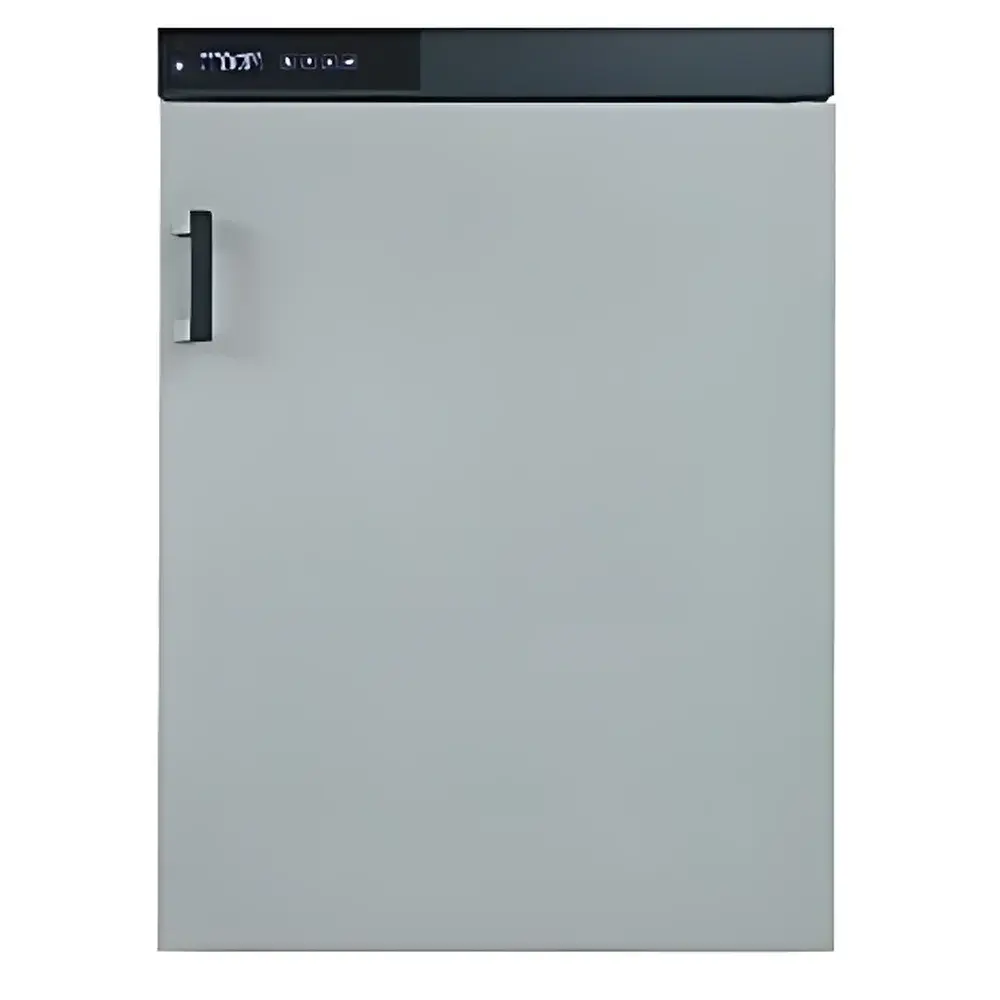
ILW Series Forced-Air Low-Temperature Incubator
| Origin | Poland |
|---|---|
| Manufacturer Type | Authorized Distributor |
| Origin Category | Imported |
| Model | ILW Series |
| Price Range | USD 2,700 – 6,800 (FOB) |
| Temperature Range | 0°C to +70°C (standard) |
| Temperature Uniformity | ±0.4°C |
| Humidity Control | Not integrated (dry-air forced convection only) |
| Chamber Capacity | 53 L, 112 L, 245 L, or 749 L configurations available |
Overview
The ILW Series Forced-Air Low-Temperature Incubator is a precision-engineered laboratory incubation system designed for applications requiring stable, programmable thermal environments across life science, microbiology, and biopharmaceutical research workflows. Unlike passive convection units, the ILW series employs a vertically oriented, high-efficiency fan-driven airflow architecture—optimized to deliver uniform temperature distribution and rapid thermal recovery after door opening. Its microprocessor-based control system maintains setpoint accuracy with a typical temperature drift of ±0.2°C over 24 hours and spatial uniformity within ±0.4°C across the entire working volume—verified per ISO 13408-1 and ASTM E2723-19 protocols for incubator performance validation. The chamber operates in dry-air mode (no built-in humidity generation), making it suitable for cell culture pre-conditioning, enzyme activity assays, stability testing of reagents, and low-temperature microbial growth studies where condensation control is critical.
Key Features
- Microprocessor-controlled PID regulation with digital LED display and intuitive 6-step programmable protocol interface (STD mode supports up to 3 user-defined programs)
- Vertical forced-air circulation system with adjustable stainless-steel shelves (quantity varies by model: 2–5 standard, up to 16 maximum)
- Robust thermal insulation: 75 mm thick polyurethane foam layer in door and walls; polished stainless-steel interior chamber resistant to corrosion and routine disinfectants
- Comprehensive safety architecture: dual independent over/under-temperature cutoffs, real-time self-diagnostic monitoring, audible/visual alarm outputs, and power-fail parameter retention
- Extended timing capability: up to 99 hours 99 minutes per cycle, with support for 999 sequential cycles in multi-stage experiments
- RS232C serial interface for external data logging, remote configuration, and integration into centralized lab management systems
- Ergonomic design: rounded edges, anti-scratch epoxy-coated exterior, door-open detection sensor, and optimized footprint-to-volume ratio
Sample Compatibility & Compliance
The ILW incubators accommodate standard laboratory vessels—including Petri dishes, multi-well plates, flasks, and test tubes—across all capacity variants. Internal dimensions are precisely engineered to maximize usable space while maintaining laminar airflow integrity. Units comply with IEC 61010-1:2010 for electrical safety in laboratory equipment and meet CE marking requirements under the EU Machinery Directive 2006/42/EC. For GxP-regulated environments, the system supports audit-ready operation when paired with validated third-party data loggers; its programmable logic and alarm history enable traceability aligned with FDA 21 CFR Part 11 principles (electronic records and signatures). While not certified for GLP/GMP out-of-the-box, the platform is routinely qualified per IQ/OQ/PQ protocols in QC labs performing stability studies per ICH Q1A(R2).
Software & Data Management
The embedded controller provides local operation without dependency on proprietary software. However, the RS232C port enables bidirectional communication with PC-based platforms such as LabVIEW, MATLAB, or custom Python scripts using Modbus RTU or ASCII command sets. Users may export timestamped temperature logs, alarm events, and program execution histories. Optional firmware upgrades include enhanced data buffering (up to 30 days at 1-min intervals) and configurable CSV output formatting. No cloud connectivity or vendor-hosted SaaS platform is included—ensuring full data sovereignty and compatibility with air-gapped network policies common in regulated biotech facilities.
Applications
- Low-temperature bacterial and fungal cultivation (e.g., Pseudomonas, Yersinia, psychrophilic strains)
- Pre-incubation of cryopreserved cells prior to thawing and plating
- Enzyme kinetics assays requiring precise sub-ambient thermal control
- Accelerated stability testing of diagnostic reagents and monoclonal antibody formulations
- Environmental simulation for plant tissue culture and seed germination studies
- Quality control of raw materials in pharmaceutical manufacturing (e.g., excipient thermal mapping)
FAQ
Does the ILW series offer humidity control?
No—this is a dry-air forced-convection incubator. Humidity regulation is not integrated; users requiring controlled RH must pair it with external humidification modules or select alternative models.
What is the minimum operating temperature for standard ILW units?
Standard configurations operate from 0°C to +70°C. Optional low-temperature variants extend the lower limit to –10°C (models ILW-112L-10 and ILW-245L-10).
Is calibration certificate included with shipment?
A factory calibration report (traceable to NIST or EU-accredited standards) is provided. On-site IQ/OQ qualification services are available through authorized partners upon request.
Can the incubator be used in cleanroom environments?
Yes—the stainless-steel interior, absence of particulate-shedding components, and smooth surface finish support ISO Class 5–8 cleanroom compatibility when installed with appropriate HVAC integration.
What power supply requirements apply?
All models operate on single-phase 230 VAC ±10%, 50/60 Hz. Power consumption ranges from 400 W (53 L) to 1800 W (749 L), with inrush current managed via soft-start circuitry.




