
Impact Testing Machine OKPZ Series – Electromechanical Shock and Collision Test System
| Key | Brand: Other Brands |
|---|---|
| Origin | Imported |
| Manufacturer Type | Authorized Distributor |
| Price | USD 14,000–70,000 (FOB) |
| Compliance Standards | MIL-STD-810H, IEC 60068-2-29, GB/T 2423.5–2022, GB/T 2423.6–2022, GJB 150.18A–2009, GJB 360B–2009 |
| Waveform Options | Half-sine, Trapezoidal, Post-peak Sawtooth |
| Control Mode | Closed-loop Acceleration Control for Collision Mode |
| Drive System | DC Motor + Precision Gear Reducer + Roller-Lift Mechanism |
| Pulse Duration Range | 1.5–25 ms |
| Peak Acceleration Range | 25–1200 m/s² |
| Drop Height Range | 0–200 mm |
| Repetition Rate | 1–120 impacts/min |
| Operating Pressure | 0.7–0.8 MPa (7–8 kgf/cm²) |
| Power Supply | AC 220 V ±5%, 50 Hz ±0.5 Hz, Single-phase Three-wire |
Overview
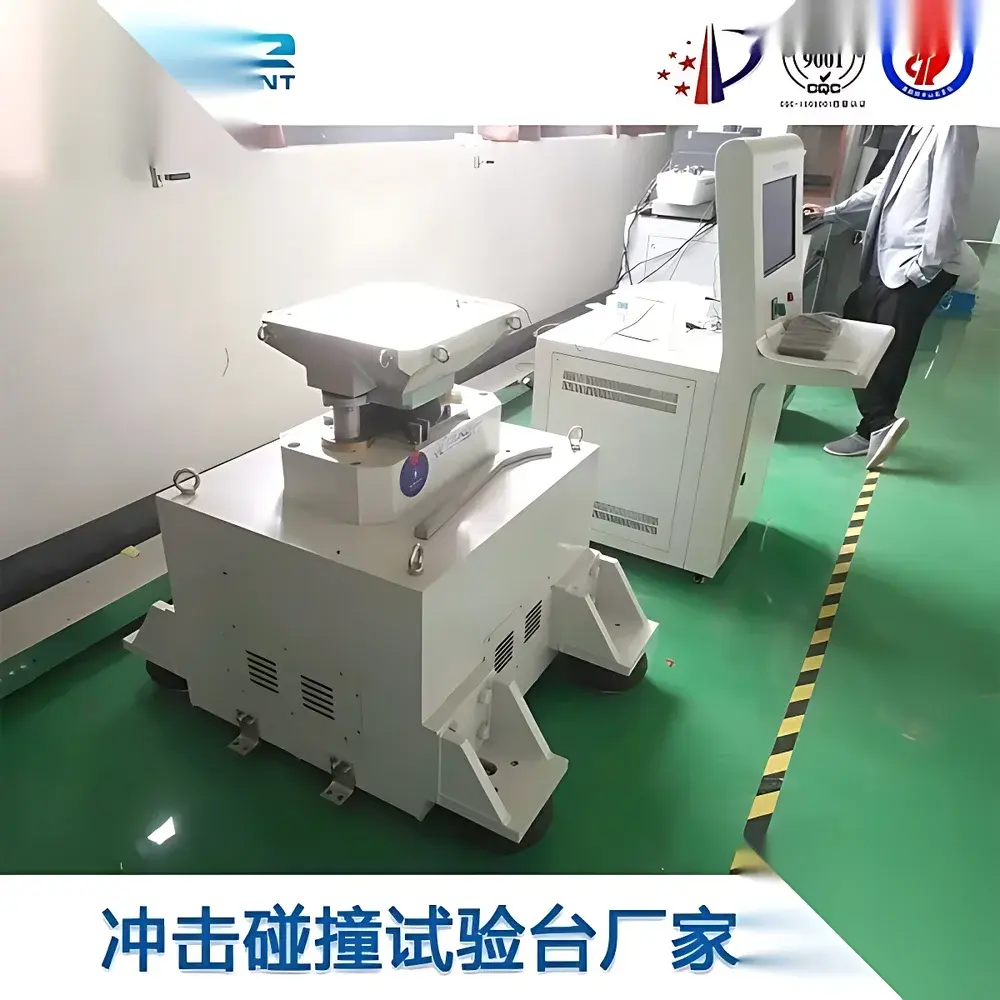
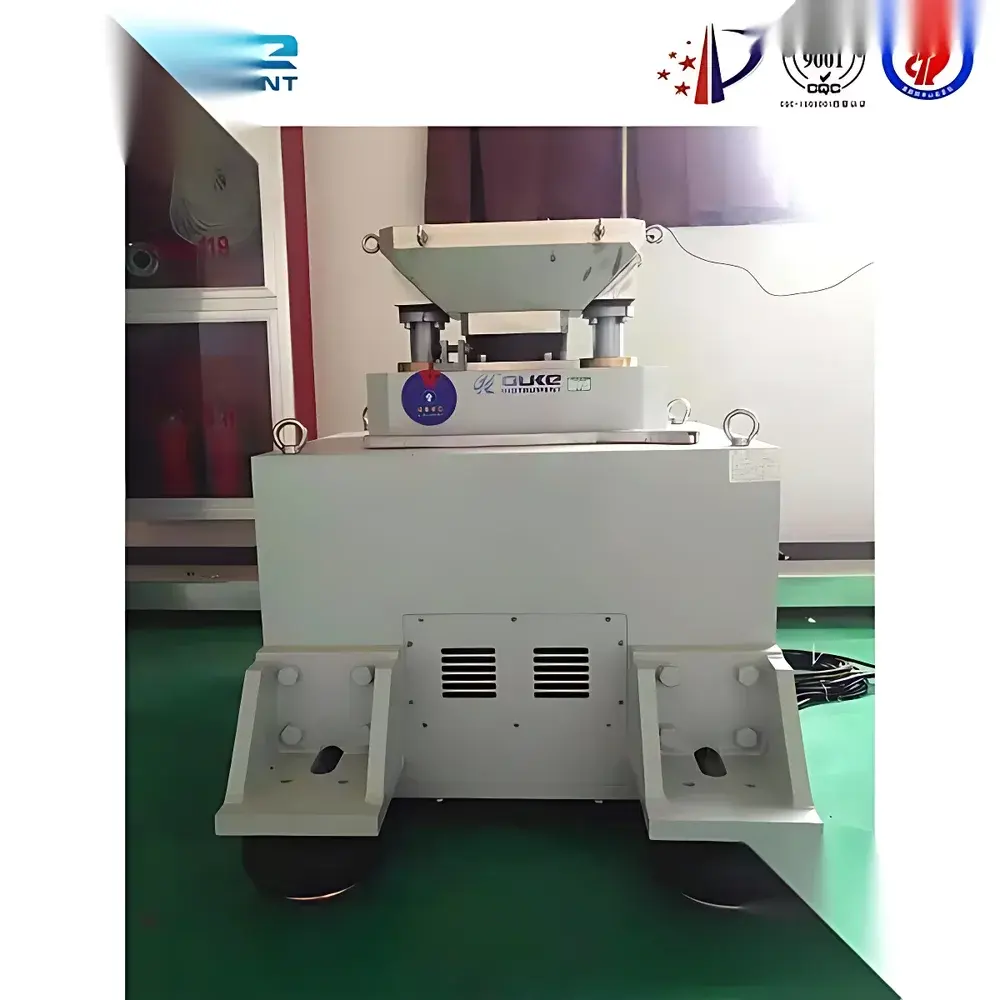
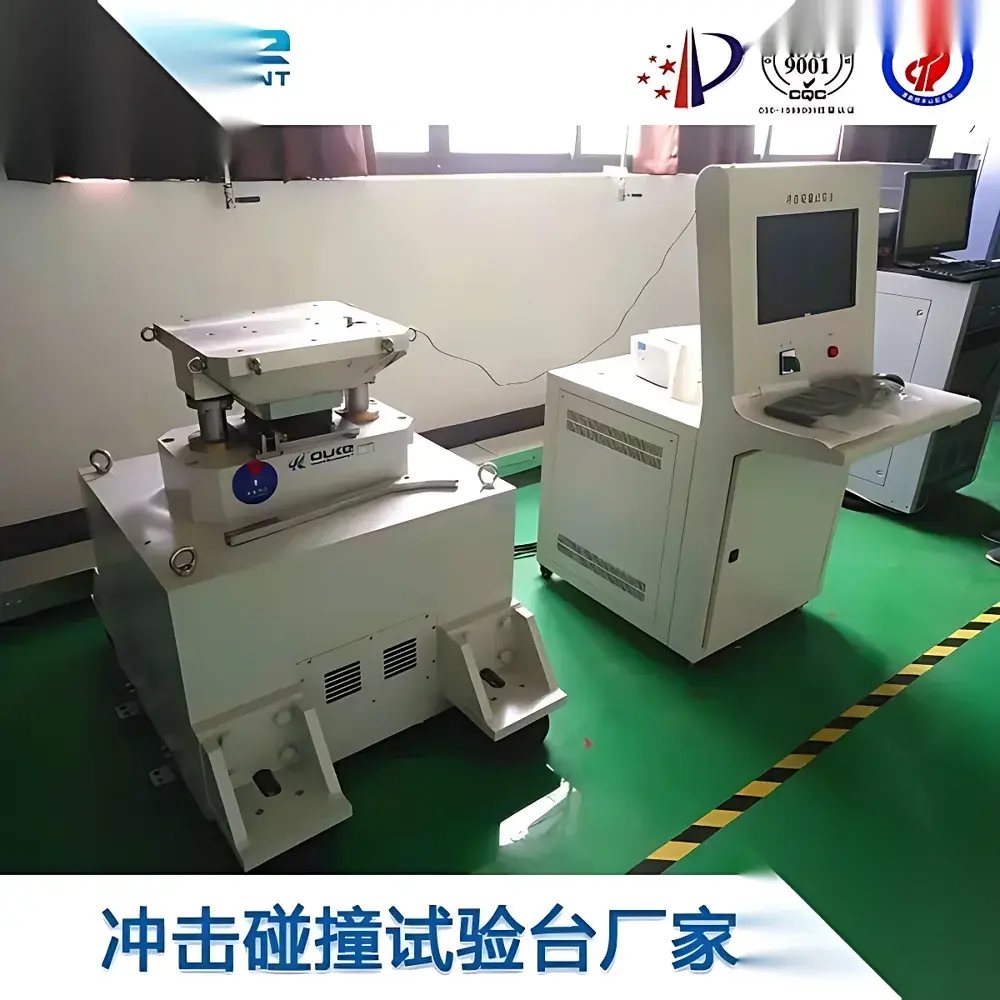
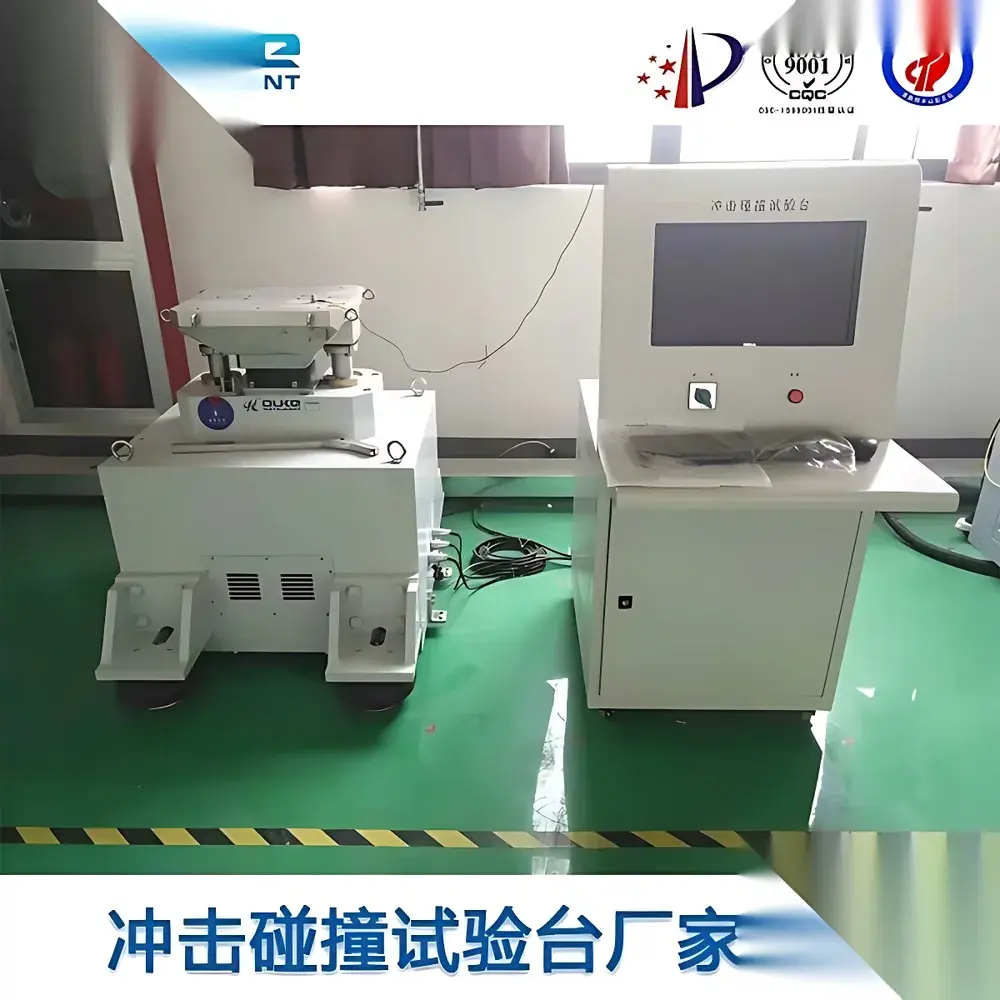
The OKPZ Series Electromechanical Shock and Collision Test System is a precision-engineered physical property testing instrument designed to replicate mechanically induced transient stress events encountered during transportation, handling, and operational deployment of electronic components, avionics modules, military-grade enclosures, and industrial control systems. Unlike pneumatic or drop-tower impact testers, this system employs a controlled electromechanical actuation principle: a regulated DC motor drives a gear-reduced lifting mechanism that elevates the test platform—along with its mounted specimen—to a programmable height. Upon release, the platform falls under gravity onto a calibrated elastomeric buffer, generating a repeatable half-sine acceleration pulse in accordance with ISO 2041 and IEC 60068-2-29 definitions. The system’s core architecture supports both shock (single-event, high-g, short-duration) and collision (repetitive, lower-g, higher-frequency) test regimes through independent adjustment of lift height (for collision amplitude), spring pre-load (for shock severity), buffer material/thickness (for pulse duration), and motor speed (for impact frequency). Its closed-loop acceleration feedback loop ensures traceable, reproducible peak g-levels across extended test cycles—critical for qualification per MIL-STD-810H Method 516.7 and GLP-compliant reliability validation.
Key Features
- High-rigidity welded steel frame and reinforced aluminum alloy test table ensure minimal modal distortion and uniform acceleration distribution across the entire surface (±5% spatial variation within specified load limits).
- Dual-mode operation: seamlessly switch between shock testing (half-sine, trapezoidal, post-peak sawtooth waveforms per IEC 60068-2-27 Annex A) and collision testing (repetitive half-sine per IEC 60068-2-29) without hardware reconfiguration.
- Closed-loop acceleration control system integrates piezoelectric accelerometers, real-time signal conditioning, and adaptive PID regulation to maintain setpoint accuracy within ±3% of nominal g-level over 10,000-cycle endurance runs.
- Modular buffer interface allows rapid interchange of elastomer compounds (e.g., silicone, nitrile rubber, polyurethane) and thicknesses (10–50 mm), enabling precise tailoring of pulse duration (1.5–25 ms) and rise/fall time symmetry.
- Integrated safety interlocks include emergency stop circuitry, door position sensing, overload current cutoff, and over-acceleration shutdown—fully compliant with EN 60204-1 and IEC 61508 SIL 2 functional safety requirements.
- Scalable platform configurations (OKPZ-50 to OKPZ-500) support payloads from 50 kg to 500 kg while maintaining structural resonance suppression below 150 Hz—verified via modal analysis per ASTM E756.
Sample Compatibility & Compliance
The OKPZ series accommodates a broad range of sample geometries and mounting configurations—including PCB assemblies, ruggedized tablets, automotive ECUs, UAV flight controllers, and sealed sensor housings—via standardized M6/M8 threaded inserts and T-slot rails on all platform variants. Each system is factory-calibrated using NIST-traceable reference accelerometers and certified to meet the mechanical shock and bump test requirements of multiple international standards: MIL-STD-810H Method 516.7 (Shock), Method 514.7 (Vibration), and Method 517.2 (Ballistic Shock); IEC 60068-2-27 (Shock) and -2-29 (Bump); GB/T 2423.5 (China National Standard for Shock Testing); GB/T 2423.6 (Collision Testing); GJB 150.18A (Chinese Military Standard for Impact); and GJB 360B (Electronic Component Environmental Test Methods). Optional documentation packages include full calibration certificates, uncertainty budgets, and audit-ready test logs compliant with FDA 21 CFR Part 11 and ISO/IEC 17025 requirements.
Software & Data Management
The embedded control unit runs deterministic real-time firmware with dual-channel synchronized data acquisition at 100 kS/s (16-bit resolution). The companion Windows-based software suite provides waveform setup wizards, live acceleration/time-domain visualization, automated pass/fail evaluation against user-defined tolerance bands, and export to CSV, MATLAB (.mat), or universal UFF 58 formats. All test sequences are timestamped, digitally signed, and archived with full audit trail metadata—including operator ID, environmental conditions (optional external sensor integration), calibration status, and system health diagnostics. For regulated environments, optional 21 CFR Part 11 compliance modules enable electronic signatures, role-based access control, and immutable record retention—fully aligned with GxP, GLP, and GMP quality management frameworks.
Applications
- Qualification testing of aerospace avionics per DO-160 Section 7 (Shock and Crash Safety).
- Reliability screening of consumer electronics prior to mass production (e.g., smartphone drop resilience, wearables impact survivability).
- Validation of packaging integrity for medical device shipments under ISTA 3A and ASTM D4169 protocols.
- Failure mode analysis of solder joint fatigue in high-vibration automotive ECUs using accelerated collision cycling.
- Development and verification of shock-absorbing materials and isolation mounts for defense electronics enclosures.
- Third-party certification testing for CE marking (EMC Directive Annex II) and China CCC certification where mechanical robustness is a mandatory assessment criterion.
FAQ
What standards does the OKPZ series officially support for shock and collision testing?
The system is configured and validated for full compliance with MIL-STD-810H Methods 516.7 and 517.2, IEC 60068-2-27 and -2-29, GB/T 2423.5 and 2423.6, GJB 150.18A, and GJB 360B. Custom waveform generation allows adaptation to proprietary OEM specifications.
Can the system generate non-half-sine waveforms such as trapezoidal or post-peak sawtooth?
Yes—mechanical waveform shaping is achieved via interchangeable cam profiles and adjustable spring-damper units. Trapezoidal and post-peak sawtooth pulses are supported per IEC 60068-2-27 Annex A, with user-selectable rise time, plateau duration, and fall characteristics.
Is closed-loop acceleration control available for both shock and collision modes?
Closed-loop control is standard for collision testing (repetitive half-sine). For single-event shock testing, open-loop operation with pre-calibrated parameter sets is employed; however, optional real-time accelerometer feedback can be integrated for high-accuracy shock validation per customer request.
What maintenance intervals and service support are recommended?
Preventive maintenance is scheduled every 12 months or 5,000 operating hours—whichever occurs first—and includes buffer replacement, gear reducer oil change, accelerometer recalibration, and structural fastener torque verification. Global technical support and spare parts logistics are provided through authorized distributor networks with ≤72-hour response SLAs.
Does the system require compressed air, and what are the utility specifications?
Yes—compressed air at 0.7–0.8 MPa (7–8 kgf/cm²) is required for buffer actuation and safety interlock pneumatics. Air must be filtered to ISO 8573-1 Class 3.0.1 and dried to a dew point of −40°C. Electrical supply is AC 220 V ±5%, 50 Hz ±0.5 Hz, single-phase three-wire, with dedicated grounding and surge protection.



