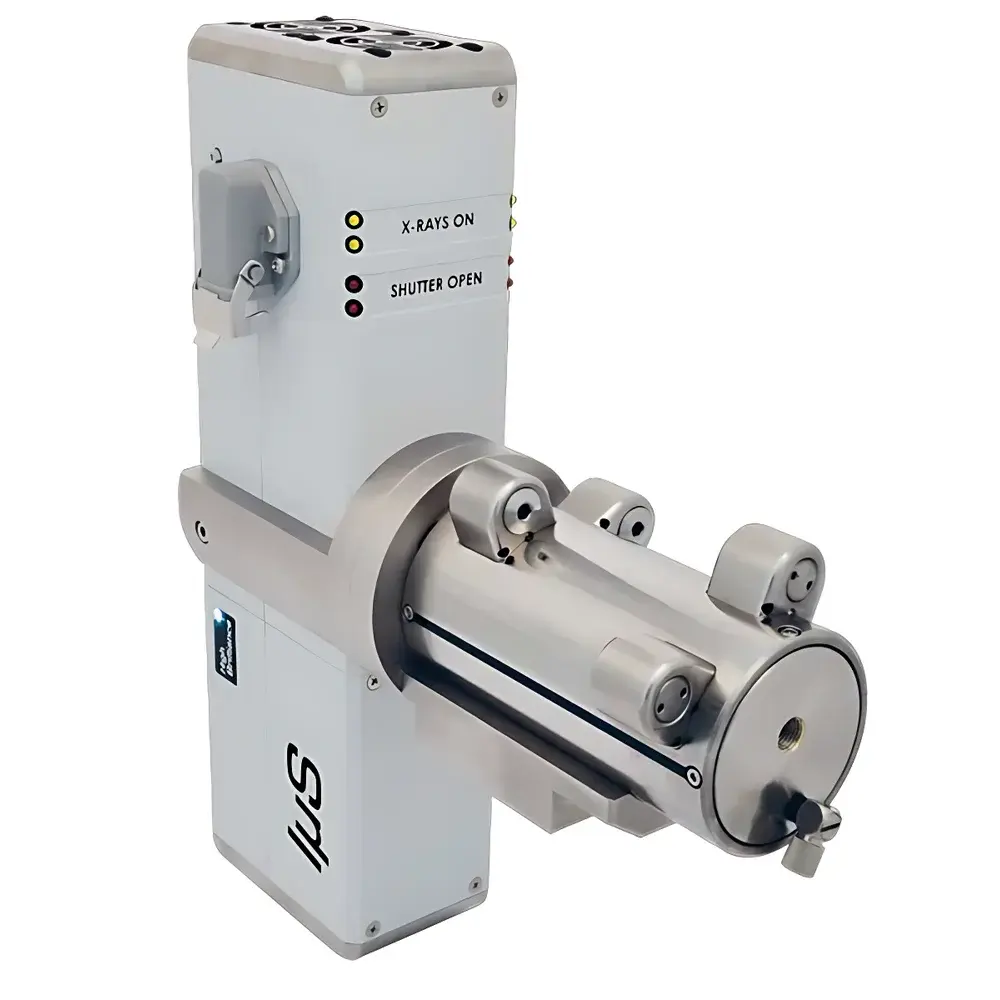
Incoatec IμS High-Brightness Microfocus X-ray Source

| Brand | Incoatec |
|---|---|
| Origin | Germany |
| Model | IμS High-Brightness (Cu/Ag/Mo) |
| Compliance | Fully compliant with EU Machinery Directive 2006/42/EC |
| Cooling | Air-cooled, maintenance-free operation |
| Lifetime | ≥3 years (warranty) |
| Photon Flux Density (Mo) | >2 × 10⁹ photons/(s·mm²) |
| Optical Integration | Quazar multilayer optics |
| Smart Component ID | DAVINCI embedded memory chips in tube, housing & optics |
| System Compatibility | Optimized for Bruker AXS D8 diffractometers |
| Safety | Radiation-safe enclosure, vacuum-tested, no moving parts |
Ask about pricing, availability and specifications.
Overview
The Incoatec IμS High-Brightness Microfocus X-ray Source is an engineered upgrade to the established IμS platform—designed specifically for single-crystal and powder X-ray diffraction (XRD), small-molecule crystallography, and high-resolution structural analysis. Based on sealed-tube microfocus technology, it operates via thermionic electron emission onto a metal anode (Cu, Mo, or Ag), generating highly collimated, spatially stable X-ray beams with focal spots down to <50 µm. Its core innovation lies in enhanced thermal management and optimized electron-optical design, enabling up to 60% higher photon flux density at the sample position compared to the standard IμS—without increasing power consumption or compromising long-term stability. Unlike rotating-anode sources or synchrotron beamlines, the IμS High-Brightness delivers laboratory-scale performance with zero infrastructure dependency: no water cooling, no high-vacuum pumps, and no scheduled maintenance over its rated lifetime.
Key Features
- Up to 60% increased photon flux density (Mo Kα), 50% (Ag Kα), and 30% (Cu Kα) versus legacy IμS—verified under identical operating conditions (40 kV / 1.0 mA)
- Air-cooled, solid-state architecture with no moving parts; designed for continuous 24/7 operation in academic and industrial labs
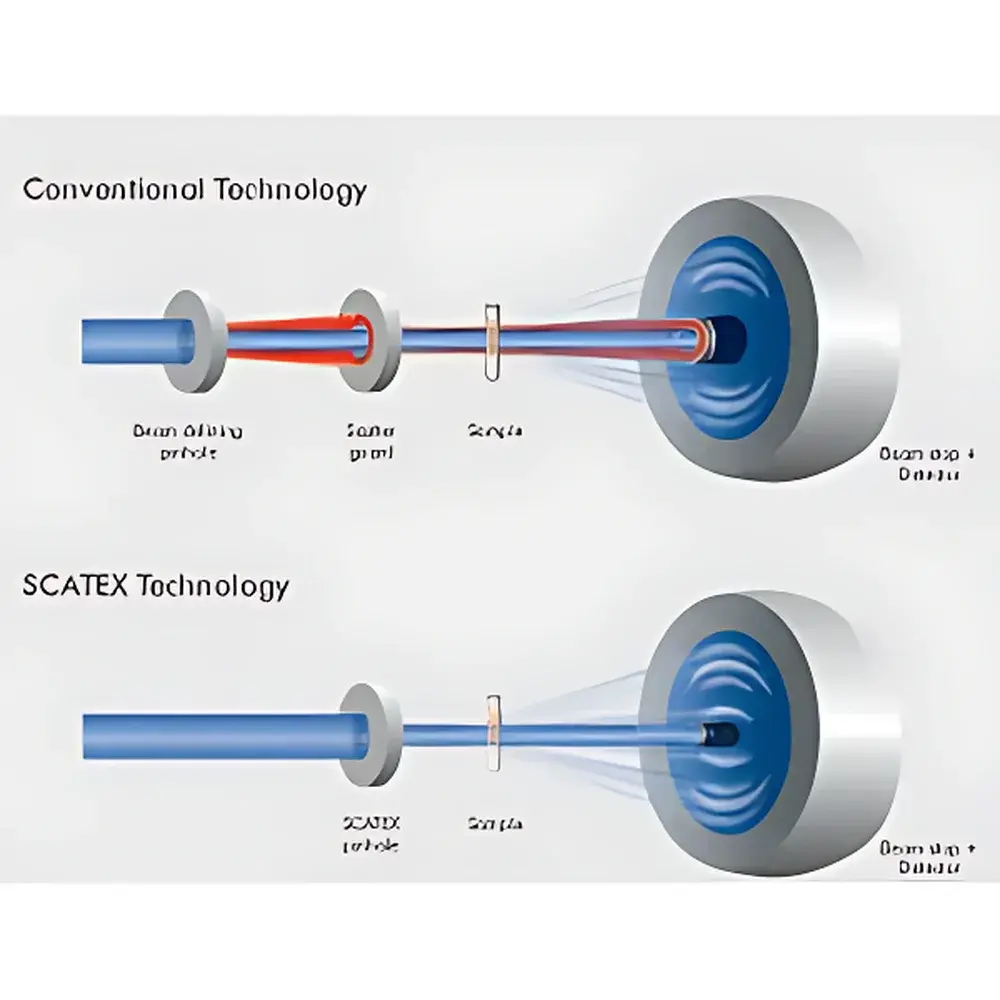
- Quazar multilayer optics integrated as standard—enabling precise 2D beam focusing or parallel-beam collimation with minimal divergence
- DAVINCI smart component identification: embedded EEPROM chips in X-ray tube, housing, and optics store serial numbers, operational hours, thermal history, and calibration metadata
- Full compliance with EU Machinery Directive 2006/42/EC—including mechanical integrity certification, vacuum integrity testing, and radiation containment validation
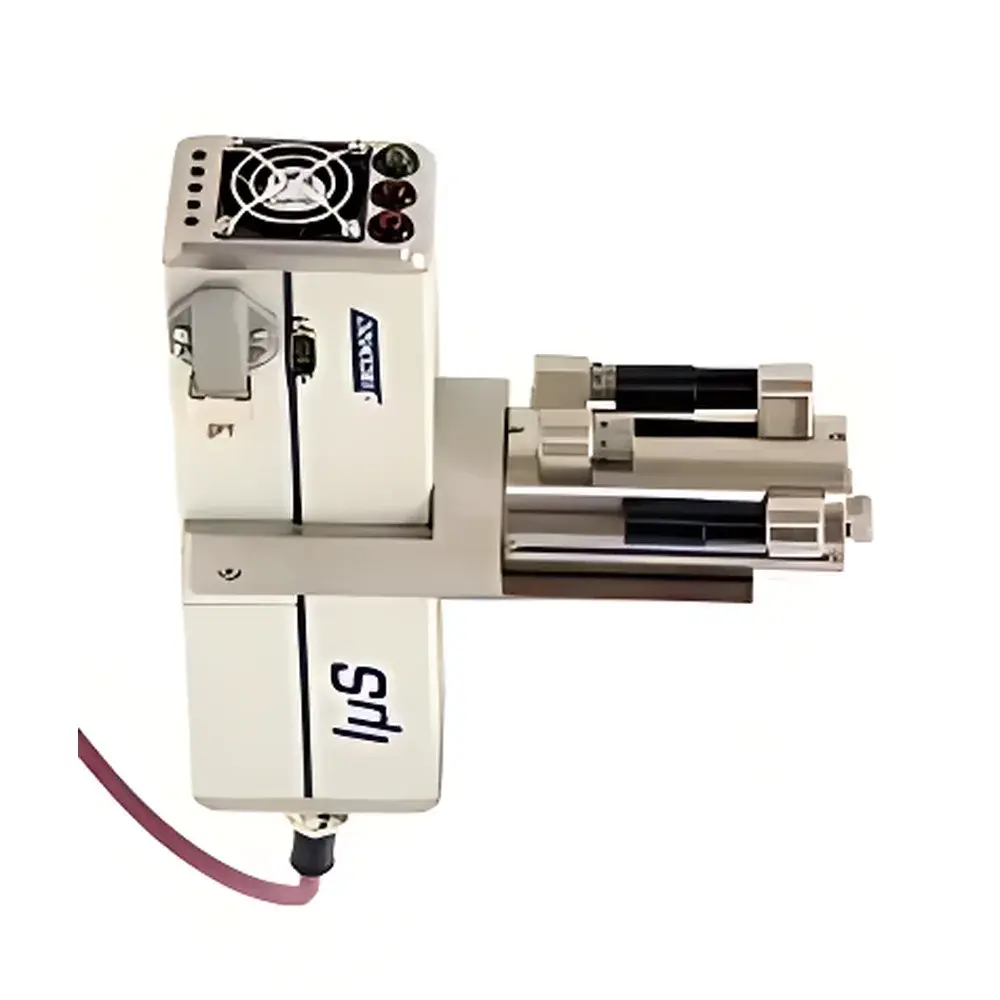
- Compact footprint (≤300 mm × 200 mm × 150 mm) enables seamless integration into existing diffractometer goniometers, including Bruker D8 platforms
Sample Compatibility & Compliance
The IμS High-Brightness supports routine and advanced crystallographic workflows across diverse sample types: air-sensitive organometallics, hydrated proteins (in cryo-capillaries), thin-film heterostructures, and polycrystalline pharmaceutical intermediates. Its stable microfocus output ensures reproducible intensity profiles essential for quantitative Rietveld refinement and absolute structure determination. From a regulatory standpoint, the system meets foundational requirements for GLP-compliant laboratories: traceable component lifetimes, immutable operational logs (accessible via USB or Ethernet), and hardware-level interlocks that prevent unintended exposure. While not a medical device, its radiation safety architecture aligns with IEC 61010-1 and ISO 20957-2 standards for laboratory equipment. Documentation packages include EU Declaration of Conformity, CE marking files, and full mechanical risk assessment reports per EN ISO 12100.
Software & Data Management
Component-level telemetry from DAVINCI chips is accessible through Incoatec’s proprietary IμS Control Suite (v3.2+), which runs on Windows-based host PCs. The software provides real-time monitoring of tube temperature, cumulative on-time, voltage/current stability, and optical alignment status. All metadata are timestamped and exportable in CSV or XML formats—supporting audit trails required under FDA 21 CFR Part 11 when used in regulated QC environments. Remote diagnostics are enabled via secure TLS-encrypted connections; service engineers can initiate firmware updates or perform predictive failure analysis without physical access. No third-party drivers or runtime dependencies are required—the control interface communicates directly with embedded microcontrollers via USB CDC ACM protocol.
Applications
- High-throughput small-molecule crystallography: improved signal-to-noise ratio reduces data collection time by ~40% for weakly diffracting crystals (e.g., heavy-atom derivatives or flexible macrocycles)
- Time-resolved powder diffraction: sustained flux stability enables reliable kinetic profiling over multi-hour in situ reactions (e.g., catalytic solid-state transformations)
- Microcrystal electron diffraction (MicroED) sample screening: pre-characterization of crystal quality and orientation prior to TEM transfer
- Residual stress mapping in engineering alloys: combined with area detectors, enables sub-0.1° angular resolution in sin²ψ measurements
- Educational crystallography labs: robustness and plug-and-play integration lower barriers to hands-on XRD instruction at undergraduate and graduate levels
FAQ
What anode materials are supported, and how do their spectral outputs differ?
The IμS High-Brightness is available with Cu, Mo, or Ag anodes. Cu Kα (λ = 1.5418 Å) remains optimal for organic and coordination compounds; Mo Kα (λ = 0.7107 Å) enables higher-resolution data for dense inorganic frameworks; Ag Kα (λ = 0.5608 Å) is used for anomalous dispersion studies near the Ag L₃ edge.
Is water cooling required?
No—this is an air-cooled source. Thermal dissipation is achieved via passive finned heatsinks and intelligent duty-cycle modulation, eliminating dependence on external chillers or deionized water loops.
Can it be retrofitted into non-Bruker diffractometers?
Yes—mechanical mounting interfaces follow ISO 10110-7 standard flanges. Custom adapter plates and beam-height alignment kits are available upon request for Rigaku, STOE, and custom-built goniometers.
What is the expected lifetime under continuous operation?
Rated minimum operational life is 3 years at nominal power (40 kV / 1.0 mA), backed by Incoatec’s global warranty. Field data from >1,200 installed units show median tube longevity exceeding 4.7 years.
How is radiation safety verified during installation?
Each unit ships with a certified radiation survey report (per DIN 6812) conducted in Incoatec’s accredited test facility. On-site verification requires only a calibrated Geiger-Müller counter; measured leakage dose rates are consistently <0.1 µSv/h at 5 cm distance—well below ICRP public exposure limits.