
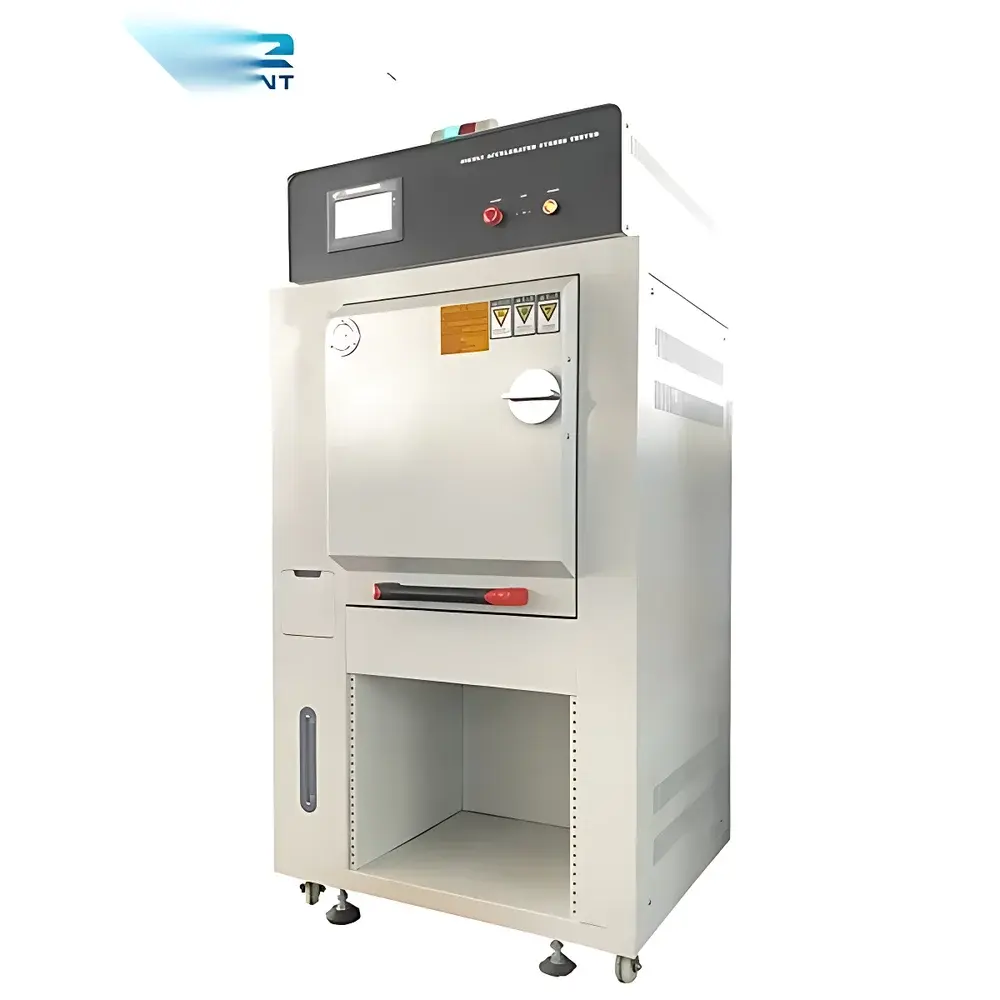
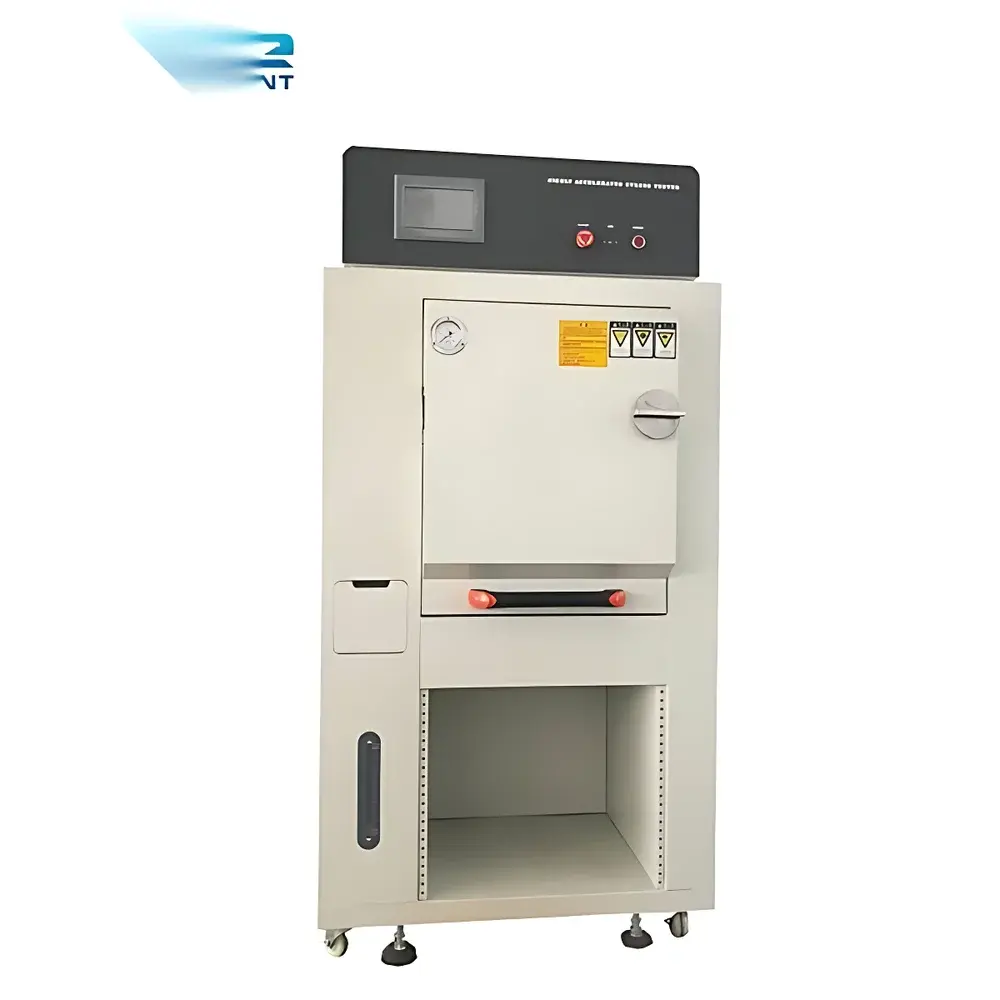
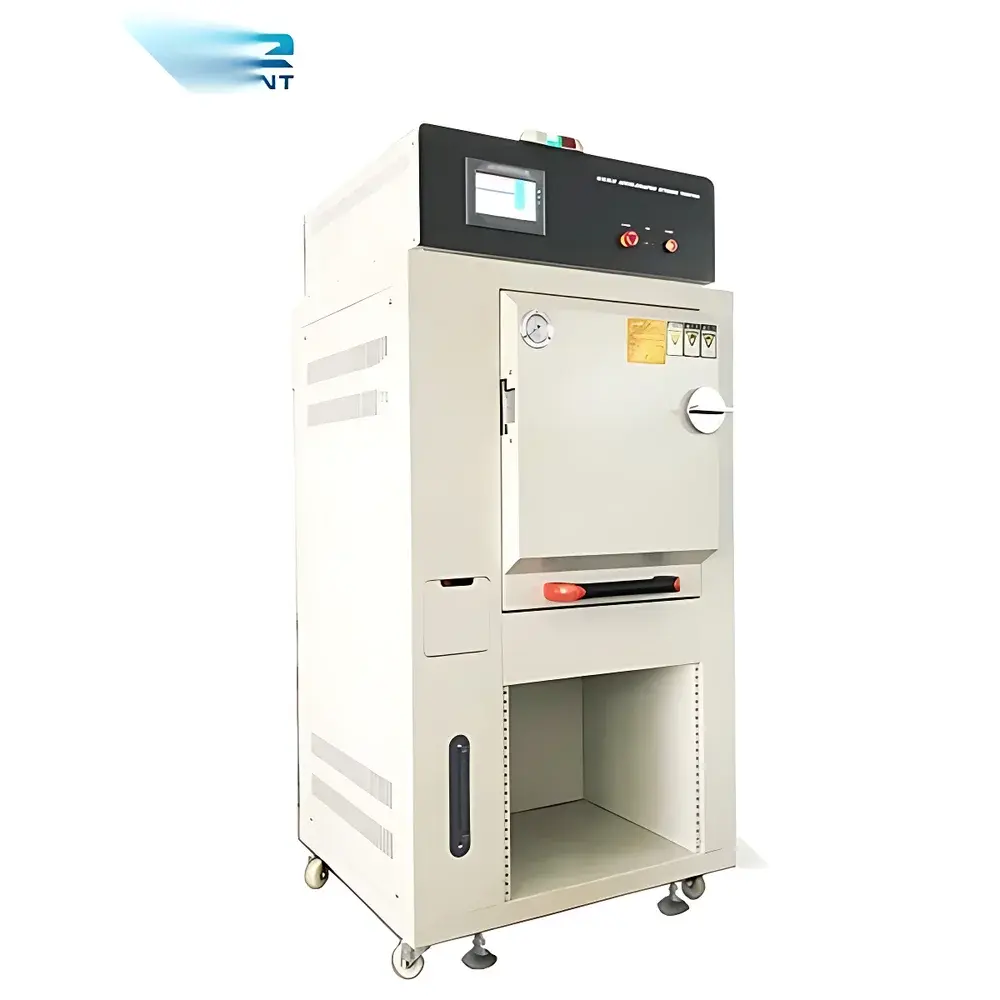
Inductance PCT Aging Test Chamber
| Brand | Other Brands |
|---|---|
| Origin | Imported |
| Manufacturer Type | General Distributor |
| Price | USD 3,950 (FOB) |
| Temperature Range | 105–132 °C (Control Point) |
| Temperature Uniformity | ±2.0 °C |
| Temperature Stability | ±0.5 °C |
| Humidity Range | 75–100% RH (Control Point) |
| Humidity Stability | ±2.5% RH |
| Humidity Uniformity | ±5.0% RH |
| Pressure Range | 0.05–0.196 MPa (0.5–2.0 kgf/cm²) |
| Ramp Time (Ambient → 132 °C) | ≤35 min |
| Pressure Ramp Time (Atmospheric → 2.0 kgf/cm²) | ≤40 min |
| Cooling System | Dual-Circuit Refrigeration with Eco-Friendly Refrigerant (R-404A or R-507) |
| Condenser Type | Air-Cooled with Forced-Air Heat Dissipation or Optional Water-Cooled Coil |
| Vacuum Preconditioning | Integrated Vacuum Pump with Filtered Air Recharge |
| Control Interface | LED Digital Timer with Start-on-Temp Trigger Logic |
| Safety | Dual-Limit Over-Temp/Over-Pressure Protection, Fault Indicator LEDs, Auto-Shutdown on Anomaly |
Overview
The Inductance PCT Aging Test Chamber is a precision-engineered environmental stress test system designed specifically for accelerated reliability evaluation of passive electronic components—particularly inductors, ferrite cores, and magnetic assemblies—under combined high-pressure, high-temperature, and high-humidity (PCT) conditions. It operates on the principle of saturated steam pressurization within a sealed, polished stainless-steel chamber, enabling controlled exposure to accelerated moisture ingress per JEDEC JESD22-A102 (Pressure Cooker Test) and IPC-TM-650 2.6.25 standards. Unlike generic humidity chambers, this unit integrates vacuum preconditioning, dual-circuit refrigeration for rapid cooldown recovery, and real-time pressure–temperature–humidity interlock control to ensure thermodynamic equilibrium during soak phases. Its architecture supports deterministic aging protocols required for qualification testing of automotive-grade AEC-Q200 inductors, power electronics used in renewable energy inverters, and RF components deployed in 5G infrastructure.
Key Features
- Stainless-steel chamber interior with electropolished finish for corrosion resistance, non-particle shedding, and ease of cleaning—critical for cleanroom-compatible validation workflows.
- Dual-stage refrigeration circuit using eco-friendly refrigerants (R-404A or R-507), enabling rapid temperature recovery post-test and stable sub-ambient cooldown capability for thermal cycling integration.
- Vacuum-assisted preconditioning cycle: integrated oil-free diaphragm vacuum pump evacuates ambient air prior to steam injection, minimizing oxygen content and ensuring repeatable saturation kinetics.
- LED digital timer with temperature-triggered start logic—initiates countdown only after chamber reaches setpoint, eliminating timing drift from thermal lag.
- Real-time analog gauges for simultaneous visual monitoring of chamber pressure (0.5–2.0 kgf/cm²) and temperature (105–132 °C), backed by calibrated transducers traceable to NIST standards.
- Automatic condensate purge system: continuously removes unsaturated vapor during pressurization to maintain true saturation conditions at target RH levels (75–100% RH).
- Comprehensive safety architecture: dual independent limit switches for over-temperature and over-pressure events, fault-specific LED indicators, and hardware-enforced auto-shutdown with latching alarm state.
Sample Compatibility & Compliance
The chamber accommodates standard JEDEC trays (JEDEC STD-20), EIA-481 tape-and-reel carriers, and custom fixtures up to Ø300 mm × 200 mm height. It meets mechanical and operational requirements for IEC 60068-2-66 (damp heat, steady state, accelerated), MIL-STD-202G Method 103 (moisture resistance), and supports full audit trails for GLP/GMP environments when paired with optional 21 CFR Part 11-compliant data loggers. All pressure vessel components conform to PED 2014/68/EU Category II design criteria. Calibration certificates include as-found/as-left data per ISO/IEC 17025-accredited laboratories.
Software & Data Management
While the base configuration features standalone analog/digital instrumentation, optional Ethernet-enabled controllers provide Modbus TCP and OPC UA interfaces for integration into MES or LabVantage platforms. Logged parameters—including chamber temperature, absolute pressure, relative humidity (calculated from PT-sensor fusion), elapsed time, and fault codes—are timestamped with microsecond resolution and stored locally on industrial-grade SD cards (16 GB, FAT32). Export formats include CSV and PDF reports compliant with ASTM E2918-20 for test documentation integrity. Audit trail functionality records all user actions, setpoint changes, and calibration events with immutable timestamps and operator ID tagging.
Applications
- Qualification testing of molded power inductors under AEC-Q200 Rev. D Clause 7 (Humidity Bias Life Test).
- Failure mode analysis of MnZn/NiZn ferrite cores exposed to combined thermal-mechanical stress and moisture-induced cracking.
- Process validation of conformal coating adhesion and dielectric stability on high-frequency choke windings.
- Reliability screening of automotive DC-DC converter chokes operating in under-hood environments (>125 °C, >95% RH).
- Accelerated lifetime modeling of planar inductors used in GaN-based fast-charging systems.
FAQ
What standards does this chamber support for PCT testing?
It is configured to execute JEDEC JESD22-A102, IPC-TM-650 2.6.25, and IEC 60068-2-66 protocols. Full compliance documentation—including pressure vessel certification and sensor calibration reports—is provided with shipment.
Is vacuum preconditioning mandatory before each test run?
Yes. The vacuum step removes residual air and reduces dissolved oxygen, which is essential to prevent oxidative degradation artifacts and ensure reproducible saturation behavior per industry best practices.
Can the chamber operate continuously across multiple test cycles without manual intervention?
With optional programmable controller and external water supply, unattended multi-cycle operation is supported—including automatic drain-refill, vacuum reconditioning, and sequential ramp-soak-cool sequences.
What maintenance intervals are recommended for long-term reliability?
Compressor oil and refrigerant should be verified annually; desiccant filters replaced every 6 months; vacuum pump oil changed quarterly; and pressure transducers recalibrated biannually per ISO/IEC 17025 guidelines.
Does the system support remote monitoring via network interface?
Yes—via optional Ethernet module supporting SNMP v3, email alerts on fault conditions, and secure HTTPS-based web HMI with role-based access control (Operator, Engineer, Admin).



