
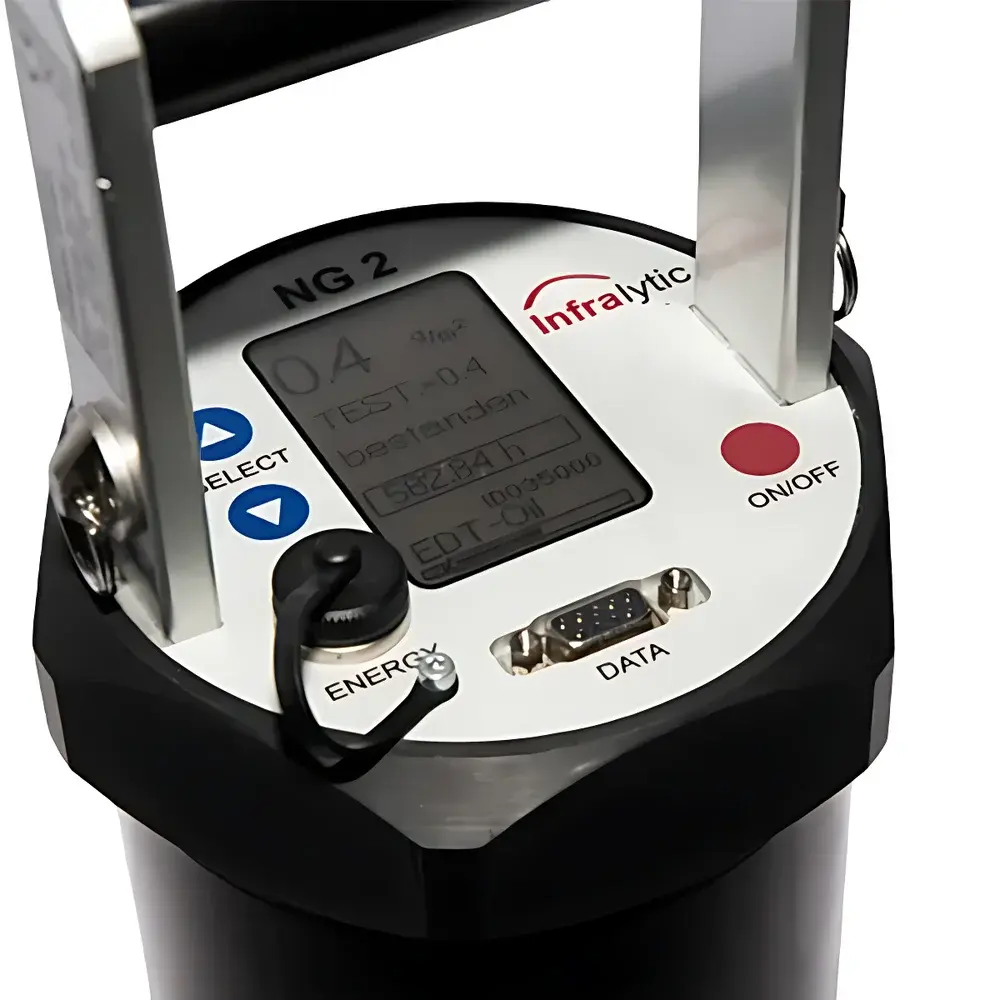
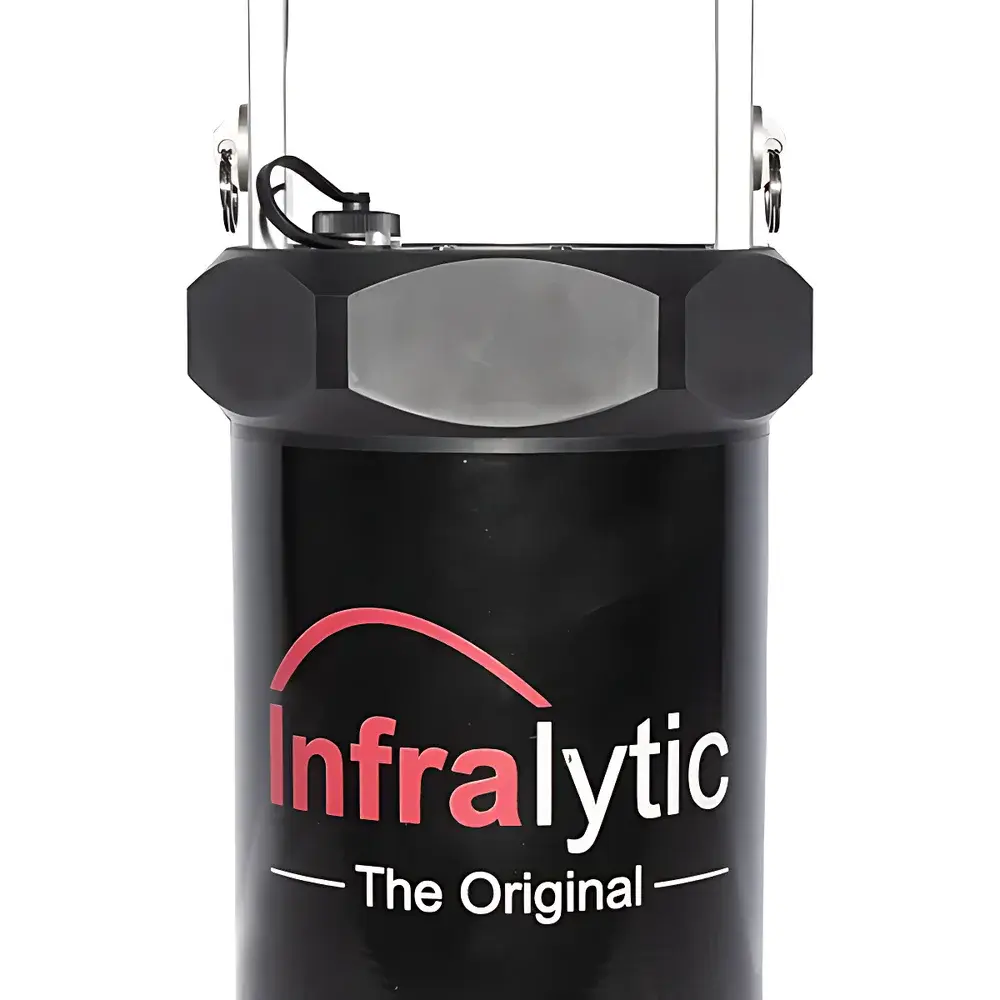
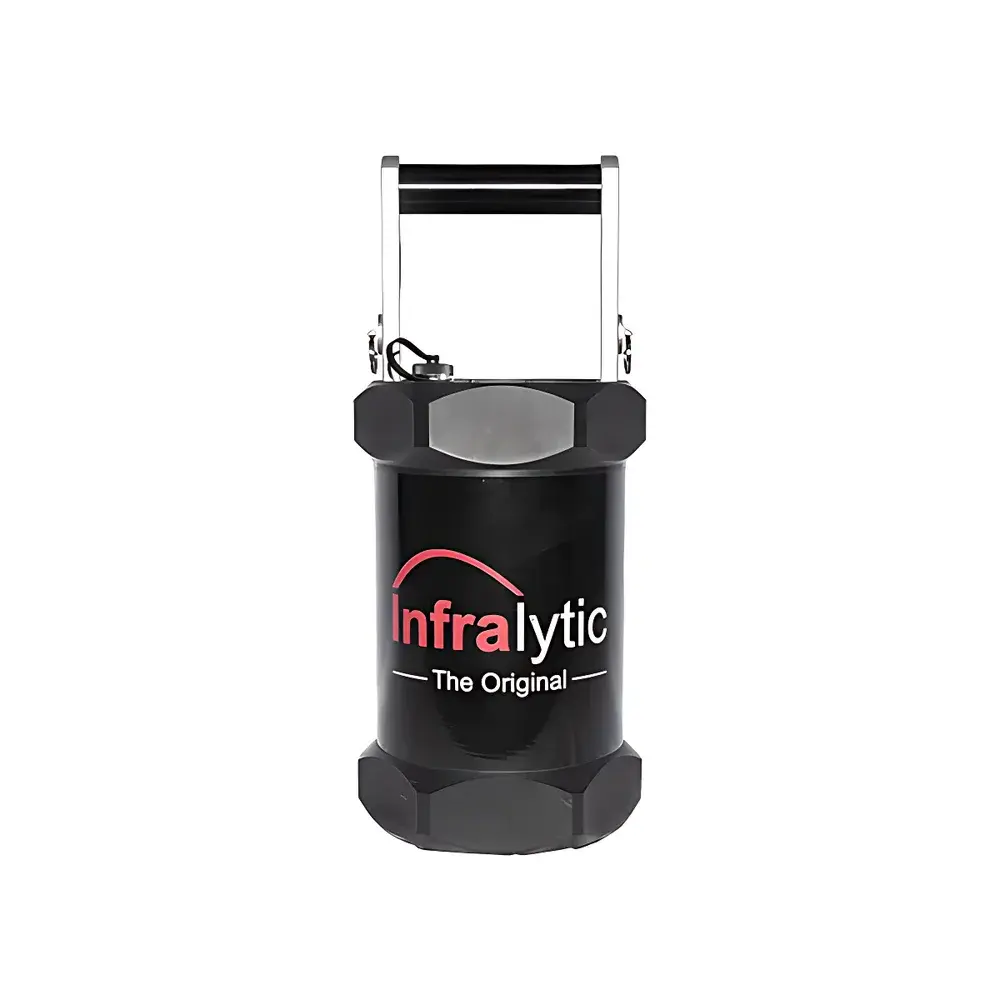
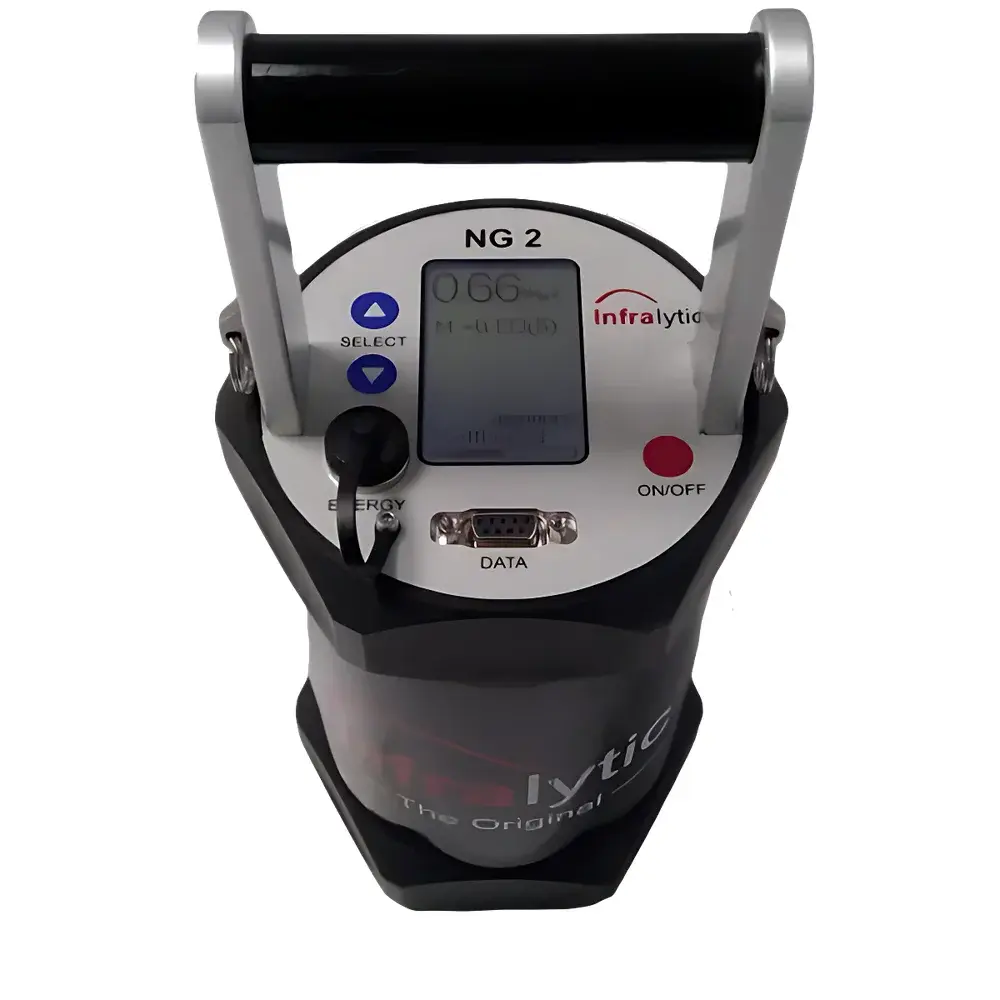
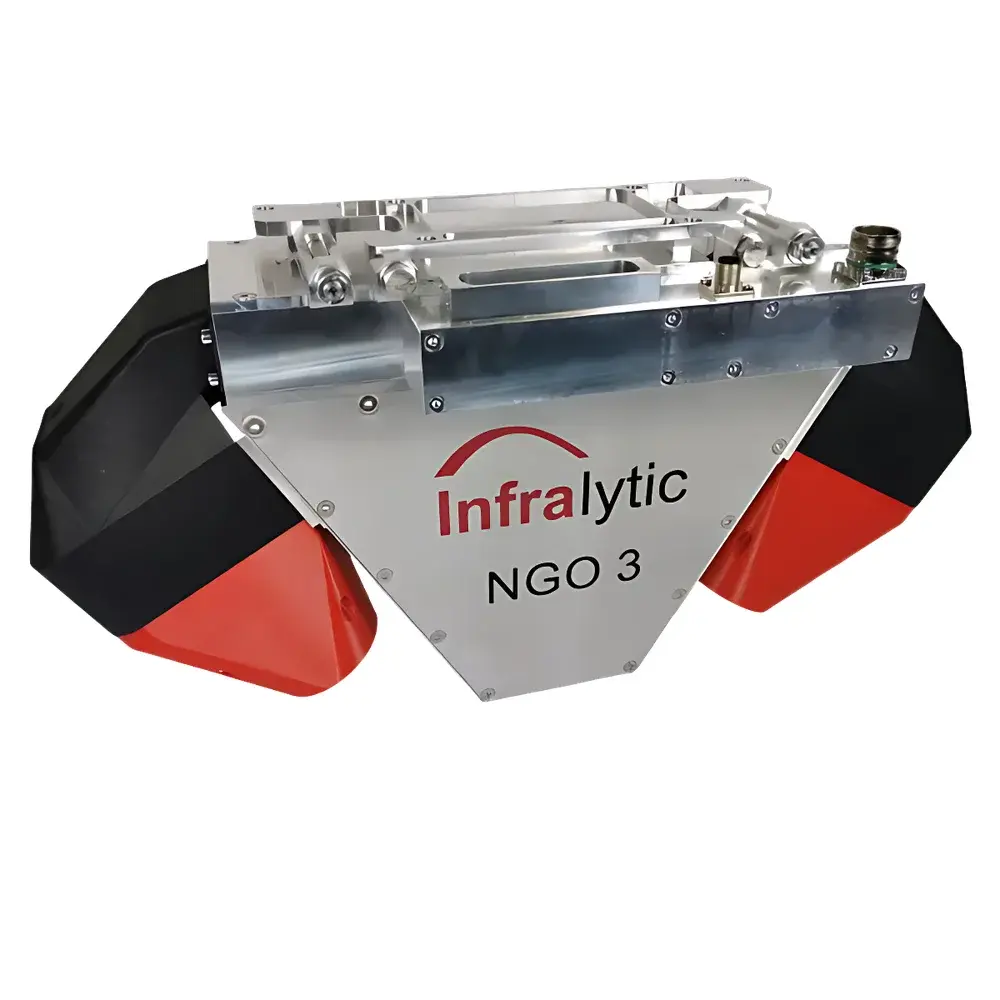
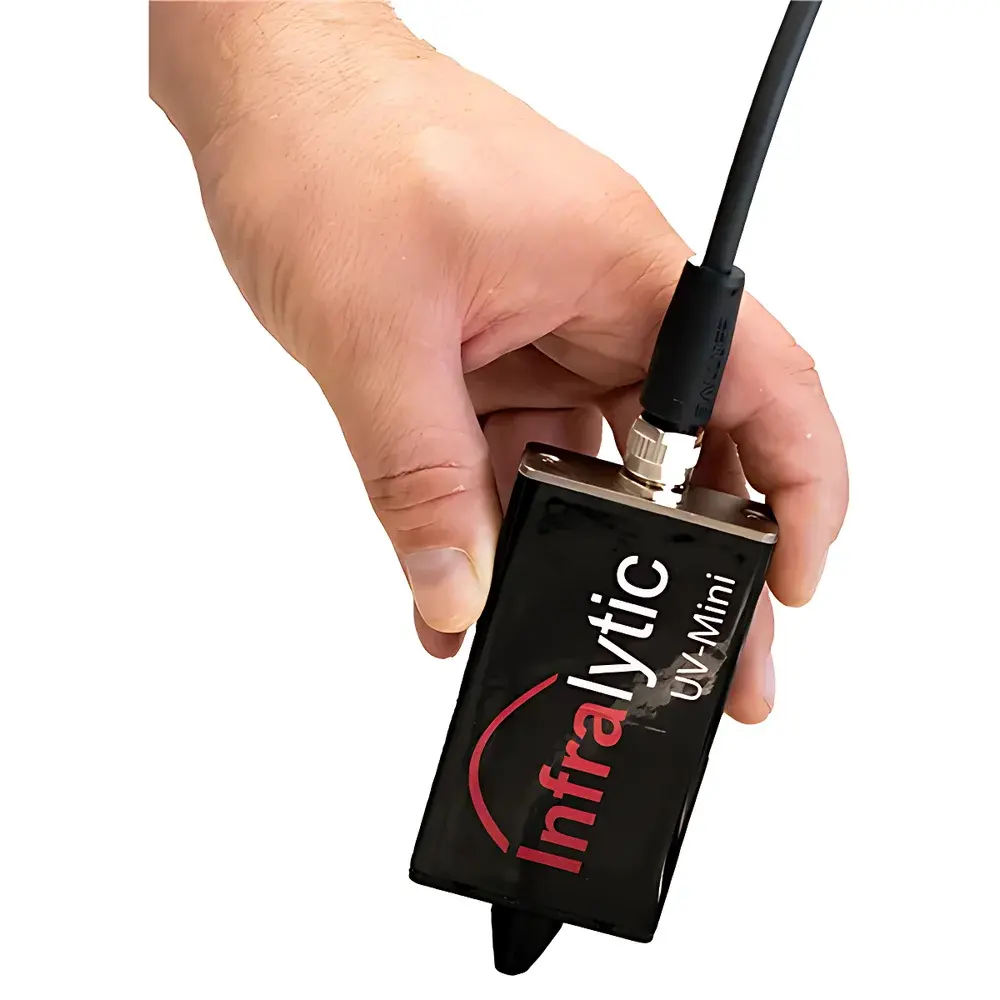
Infralytic NG1/NG2/NG3 Non-Contact Infrared Oil Film Thickness Analyzer
| Brand | Infralytic |
|---|---|
| Origin | Germany |
| Model | NG1 / NG2 / NG3 |
| Measurement Principle | Near-Infrared (NIR) Absorption Spectroscopy |
| Range | 0.05–6 g/m² |
| Accuracy | ±0.015 g/m² (0.02–0.3 g/m²), ±0.2 g/m² (0.3–2 g/m²), ±10% of reading (>2 g/m²) |
| Repeatability | <0.0010 g/m² |
| Resolution | 0.001 g/m² |
| Measurement Distance | 8 mm (+5/−2 mm) |
| IP Rating | IP65 |
| Operating Temperature | 0–45 °C |
| Substrate Compatibility | Cold-rolled steel, hot-dip galvanized (HDG), electrogalvanized (EG), phosphated EG, annealed galvannealed (GA), aluminum (polished & EDT), ZnMg-coated steel |
| Lubricant Compatibility | Mineral oils, thixotropic mineral oils, hot-melt adhesives, waxes, other organics (with custom calibration) |
Overview
The Infralytic NG1/NG2/NG3 series represents a class of industrial-grade, non-contact infrared oil film thickness analyzers engineered for precision metrology in continuous metal strip processing environments. Unlike contact-based or beta-backscatter methods, the NG platform employs calibrated near-infrared (NIR) absorption spectroscopy—leveraging characteristic vibrational overtones of C–H bonds in organic lubricants—to quantify mass per unit area (g/m²) on metallic substrates without physical interaction. This optical measurement principle ensures zero mechanical wear, no surface contamination, and immunity to vibration or belt speed fluctuations typical in coil coating, stamping, and cold rolling lines. Designed and manufactured in Germany, the NG series meets the stringent demands of Tier-1 automotive suppliers and global steel service centers requiring traceable, real-time lubricant dosing verification prior to forming or painting operations.
Key Features
- True non-contact operation: Fixed-focus NIR optics with 8 mm nominal working distance (±2 mm tolerance), enabling stable measurements across moving strip speeds up to 1,200 m/min.
- Automated in-situ validation: Internal reference channel continuously monitors optical path integrity and compensates for ambient temperature drift (0–45 °C) and dust accumulation.
- Roll direction agnostic: Dual-axis sensor alignment and adaptive signal processing eliminate dependency on strip travel orientation—critical for offline lab use and multi-directional production lines.
- Smart mobile integration: Full configuration, data capture, and photo-annotated reporting via Android/iOS app; no PC required for routine operation or field calibration checks.
- Extended autonomy: Integrated rechargeable Li-ion battery supports >12 hours of continuous measurement cycles, including spectral acquisition, internal diagnostics, and Bluetooth data streaming.
- Ruggedized industrial design: IP65-rated enclosure resists coolant mist, oil aerosols, and shop-floor particulates; stainless-steel housing with ESD-safe surface finish.
Sample Compatibility & Compliance
The NG analyzer is validated for quantitative analysis on industrially relevant metallic substrates—including untreated cold-rolled steel, hot-dip galvanized (HDG), electrogalvanized (EG), phosphated EG (with automatic phosphate layer detection), galvannealed (GA), polished and EDT-treated aluminum, and ZnMg-alloy coated steel. Lubricant compatibility spans mineral oils, thixotropic variants, hot-melt adhesives, waxes, and other hydrocarbon-based formulations; custom calibrations are available for proprietary lubricants under ISO/IEC 17025-accredited procedures. All factory calibrations are traceable to NIST-traceable reference standards and documented per ISO 9001:2015 requirements. The system supports audit-ready calibration logs, user access control, and electronic signature capability—aligning with GLP and GMP documentation expectations for regulated manufacturing environments.
Software & Data Management
Embedded firmware enables real-time statistical process control (SPC) with configurable upper/lower control limits, trend charting, and automated pass/fail flagging per EN 10131 and VDA 2 guidelines. Raw spectra (1,024-point NIR absorbance vectors) and processed results are timestamped, geotagged (when mobile app used), and exportable in CSV, XML, or SPC-compatible .spc formats. Optional Infralytic Connect cloud gateway provides secure MQTT-based integration into MES/SCADA systems (e.g., Siemens SIMATIC IT, Rockwell FactoryTalk), supporting OPC UA metadata exchange and historical data warehousing compliant with FDA 21 CFR Part 11 for electronic records and signatures.
Applications
- Pre-stamping lubricant verification in automotive body-in-white (BIW) production lines.
- Coil coating line QC for consistent oil coverage prior to chromating or painting.
- Quality gate monitoring in cold rolling mills to prevent surface scoring and die wear.
- R&D validation of new lubricant formulations on pilot-scale metal treatment lines.
- Supplier qualification audits requiring ISO 14644-compliant cleanroom-compatible measurement tools.
- Root cause analysis of paint adhesion failure linked to sub-threshold oil residue.
FAQ
Does the NG analyzer require substrate-specific calibration?
Yes—each substrate type (e.g., HDG vs. EG vs. aluminum) requires a dedicated calibration curve generated using certified reference samples. Infralytic provides pre-loaded substrate libraries; custom curves may be developed onsite under ISO/IEC 17025 supervision.
Can it measure through transparent polymer films or thin oxide layers?
No—the NIR method assumes direct optical access to the lubricant/substrate interface. Transparent topcoats >1 µm thick attenuate signal fidelity and invalidate standard calibrations.
Is operator training required for ISO 17025-compliant use?
Yes—Infralytic offers certified Level 2 operator training covering measurement uncertainty budgeting, calibration interval justification, and SPC chart interpretation per ISO 5725 and AIAG MSA guidelines.
What maintenance intervals apply to the optical head?
The sealed NIR module requires no routine optical alignment. Annual verification of spectral stability and distance sensor calibration is recommended; full factory recalibration is advised every 24 months or after 10,000 measurement cycles.
How is measurement uncertainty reported in compliance documentation?
Uncertainty budgets follow GUM (JCGM 100:2008) methodology and include contributions from repeatability, calibration standard uncertainty, environmental drift, and substrate heterogeneity—typically stated as k=2 (95% confidence) in calibration certificates.



