
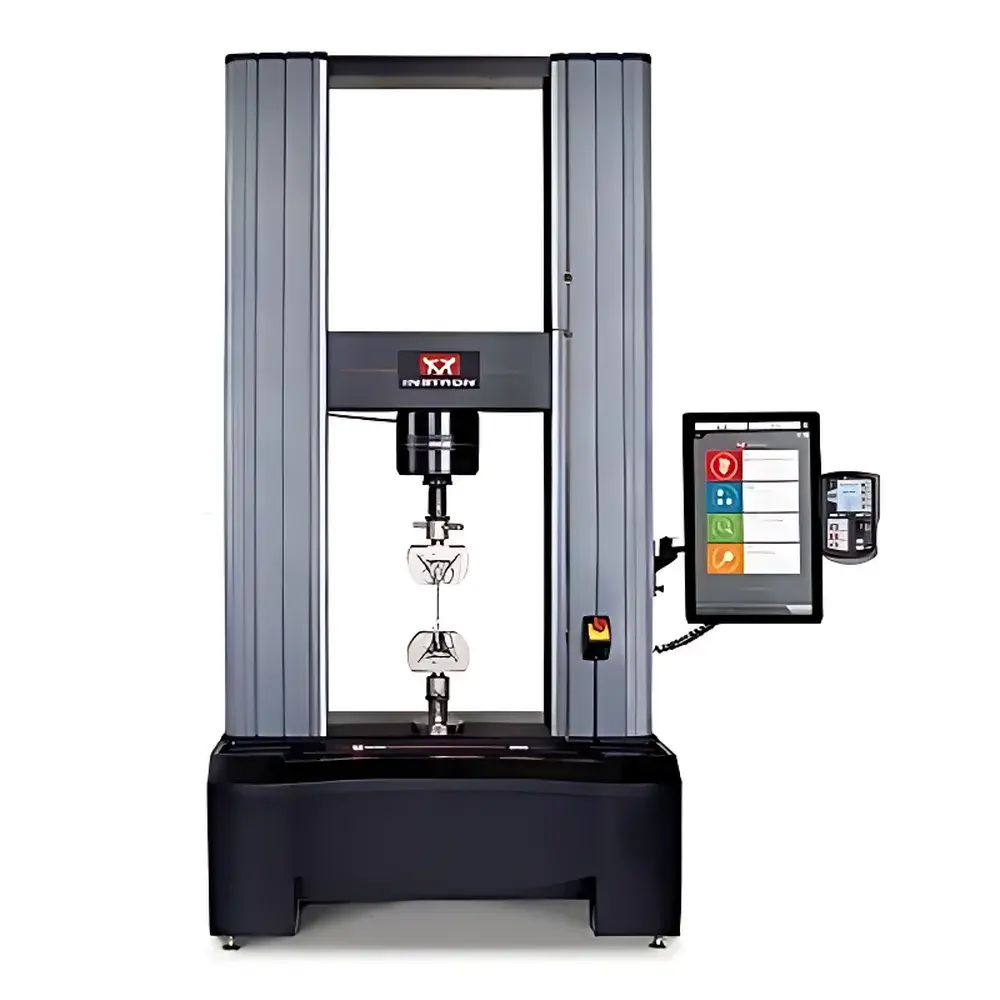
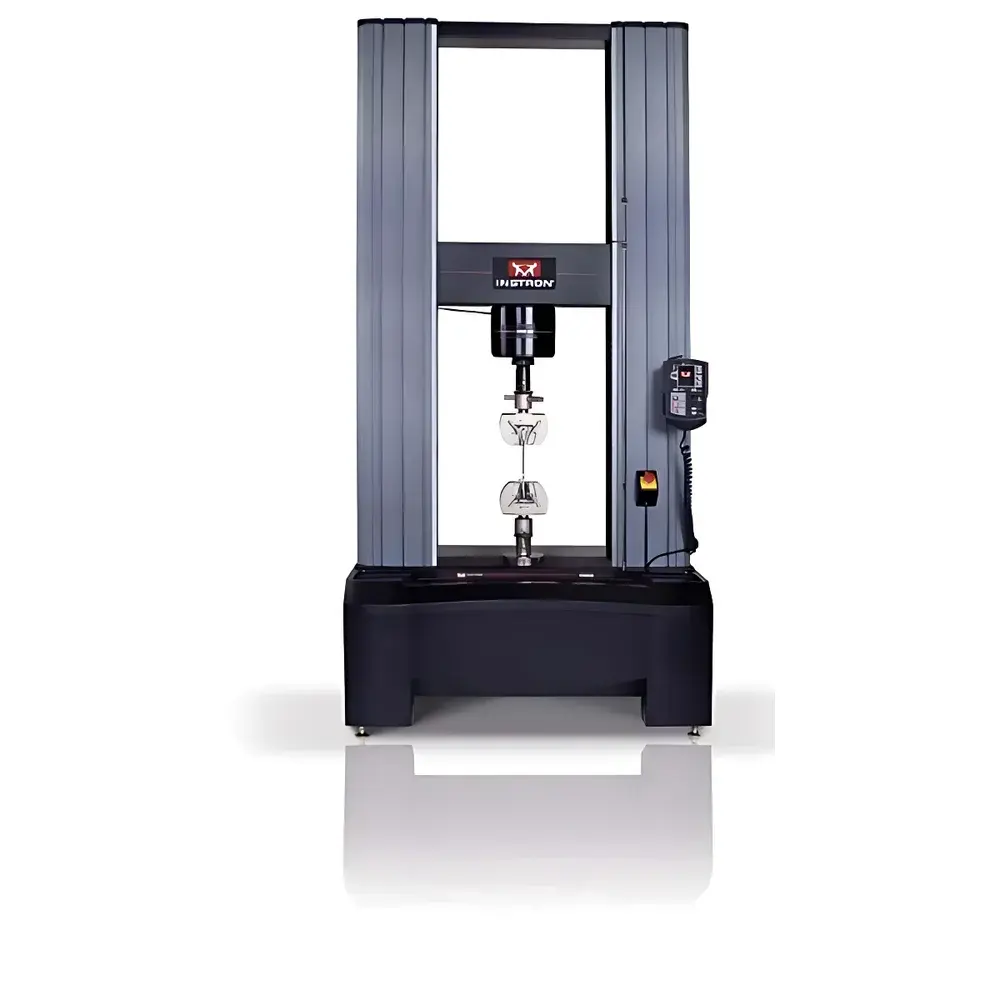
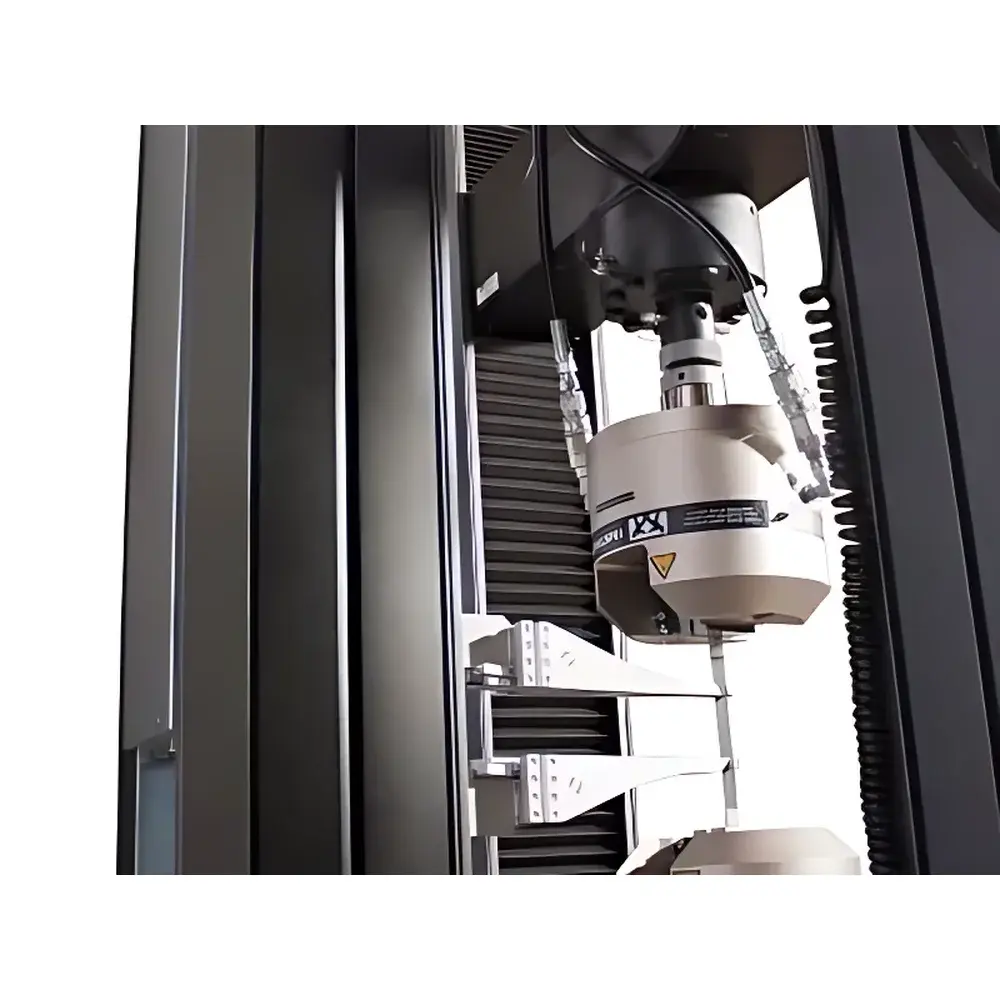
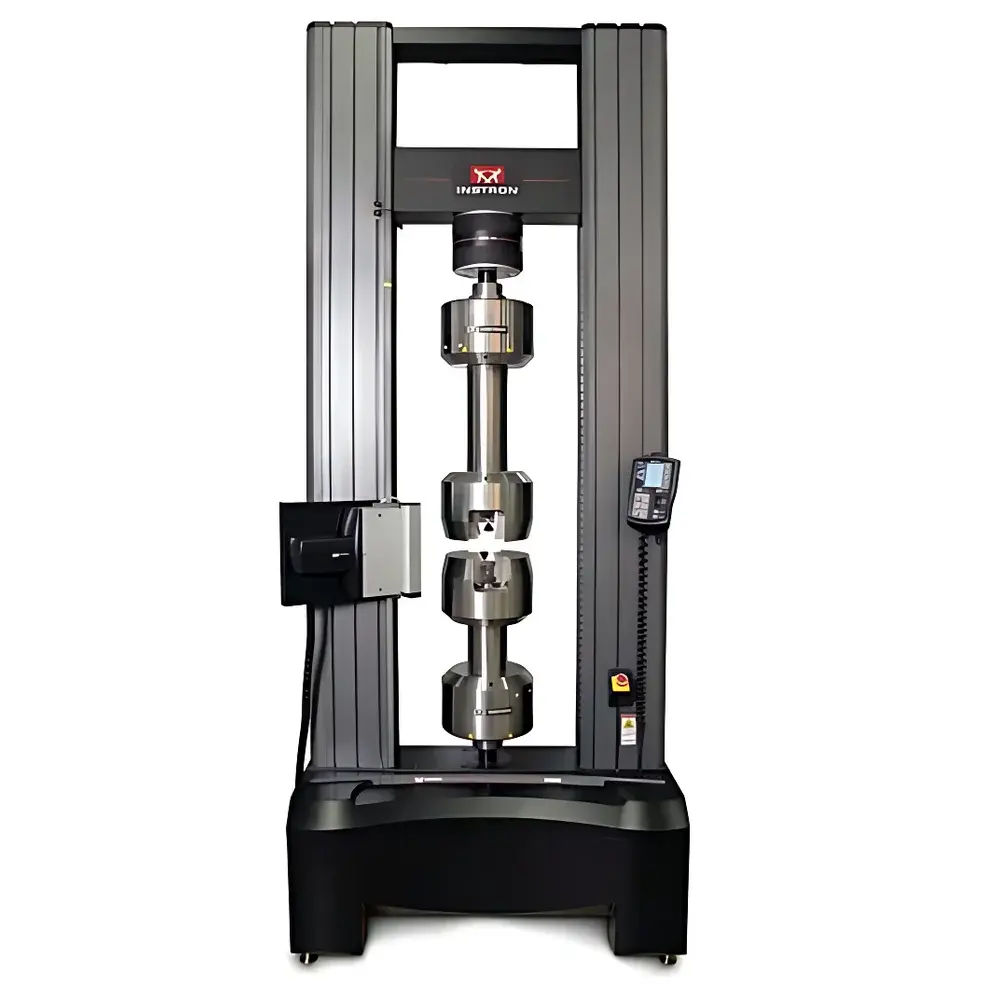
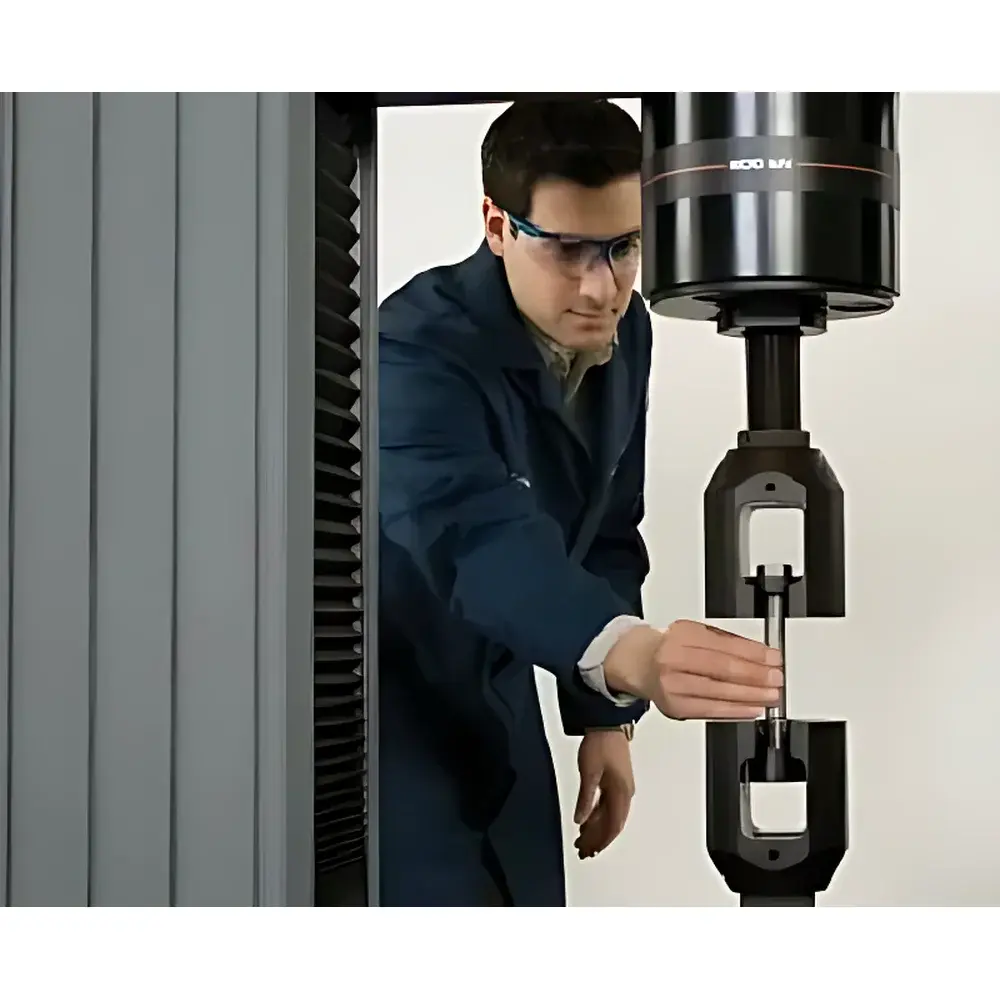
Instron 5980 Series Dual-Column Floor-Model Universal Testing Machine
| Brand | Instron |
|---|---|
| Origin | USA |
| Manufacturer | Instron Corporation |
| Product Type | Electromechanical Universal Testing System |
| Load Capacity Options | 400 kN (5988) / 600 kN (5989) |
| Vertical Test Space | 2050 mm (5988) / 2000 mm (5989) |
| Control Architecture | Digital Closed-Loop Servo-Controlled |
| Compliance Standards | ASTM E4, E8, E9, E21, ISO 7500-1, ISO 5893, USP <1041>, FDA 21 CFR Part 11 (with Bluehill software configuration) |
| Data Acquisition Rate | Up to 10 kHz |
| Speed Range | 0.001–1000 mm/min (programmable in 0.001 mm/min increments) |
| Position Resolution | ≤ 0.1 µm |
| Load Cell Options | 1 N to 600 kN full-scale, interchangeable via Auto-ID recognition |
| Integrated Interfaces | Gigabit Ethernet, USB 3.0, Analog I/O (up to 4 channels), Digital I/O |
Overview
The Instron 5980 Series is a high-performance, dual-column floor-model universal testing machine engineered for precision mechanical characterization of advanced engineering materials under static and quasi-static loading conditions. Based on Instron’s proprietary closed-loop servo-controlled electromechanical architecture—first commercialized in 1946—the system employs real-time digital feedback from load cells, extensometers, and crosshead position encoders to maintain strict control over force, displacement, and strain rates per ASTM E4 and ISO 7500-1 metrological requirements. Designed for structural integrity validation and quality assurance in R&D, production, and certification laboratories, the 5980 accommodates test specimens ranging from thin metallic foils (<0.1 mm) to full-scale aerospace subassemblies (e.g., wing spar sections, landing gear components), with maximum load capacities of 400 kN (model 5988) or 600 kN (model 5989). Its rigid cast-iron base, precision-ground dual columns, and preloaded linear motion bearings ensure axial alignment accuracy better than ±0.01 mm over full stroke—critical for valid determination of modulus, yield strength, ultimate tensile strength, and fracture toughness in compliance with ASTM E8/E21 and ISO 6892-1.
Key Features
- High-rigidity structural frame with integrated T-slot test table (standard on all models) for rapid fixture mounting and modular test setup reconfiguration
- Intelligent touchscreen controller with context-sensitive soft keys, real-time graphical display of force-displacement curves, and hardware-enforced specimen protection limits (e.g., automatic stop on overload or overtravel)
- Gigabit Ethernet interface enabling deterministic communication latency (<10 ms) with host PCs running Bluehill Universal software—supporting remote operation, audit trail logging, and synchronized multi-instrument control
- Auto-ID compatible load cell system: plug-and-play recognition of calibrated transducers (1 N–600 kN), eliminating manual scaling and reducing calibration documentation overhead
- Expanded speed range (0.001–1000 mm/min) with ±0.05% speed accuracy across full range, validated per ISO 5893 Annex B
- Enhanced data acquisition capability: synchronized sampling at up to 10 kHz across force, displacement, and up to four auxiliary analog channels (e.g., extensometer, temperature, acoustic emission)
- Modular sensor expansion: optional built-in support for up to four simultaneous analog input channels without external DAQ hardware
Sample Compatibility & Compliance
The 5980 Series supports standardized and custom test configurations for metallic alloys (including Ti-6Al-4V, AA7075-T6), fiber-reinforced polymer composites (CFRP, GFRP), adhesives, elastomers, biomedical implants, and fastener systems (bolts, rivets, threaded inserts). Standard-compliant testing includes ASTM D638 (tensile plastics), ASTM D3039 (composite tension), ASTM F136 (Ti-6Al-4V implant alloy), ISO 527-2, and EN 10002-1. All systems are supplied with factory-accredited calibration certificates traceable to NIST standards and comply with ISO/IEC 17025 requirements for testing laboratories. When configured with Bluehill Universal v4.0+ and enabled audit trail settings, the platform meets FDA 21 CFR Part 11 electronic record/electronic signature (ERES) requirements for regulated environments.
Software & Data Management
Bluehill Universal software serves as the integrated control, analysis, and reporting engine for the 5980 Series. It provides method-driven test sequencing, real-time pass/fail evaluation against user-defined acceptance criteria, and automated report generation in PDF, Excel, or XML formats—including embedded metadata (operator ID, timestamp, calibration status, environmental conditions). The software supports GLP/GMP-aligned workflows with role-based access control, electronic signatures, and immutable audit trails compliant with 21 CFR Part 11 Subpart B. Data export adheres to ASTM E1447 and ISO/IEC 17025 Annex A3 requirements for raw data integrity and long-term archival.
Applications
- Mechanical property validation of aerospace-grade aluminum-lithium alloys and carbon-fiber laminates per Boeing D6-17487 and Airbus AITM standards
- Tensile, compression, flexure, and shear testing of automotive structural adhesives and thermoplastic composites per SAE J2232 and ISO 11339
- Fastener proof loading, wedge testing, and bolted joint simulation per ASTM F606, ISO 898-1, and NASM1312
- Creep and stress relaxation studies on high-temperature superalloys using optional environmental chambers (−70°C to +1000°C)
- Medical device component testing per ISO 14801 (dental implants) and ASTM F2193 (spinal fixation devices)
- Quality control of rolled steel plates and welded joints per ASTM A370 and EN 10002-5
FAQ
What load frame stiffness values are specified for the 5988 and 5989 models?
The 5988 achieves ≥ 1,200 kN/mm vertical stiffness; the 5989 achieves ≥ 1,450 kN/mm, both measured per ASTM E4 Annex A3 using the direct deflection method.
Can the system be integrated into an existing MES or LIMS infrastructure?
Yes—via Bluehill’s RESTful API and OPC UA server module, supporting bidirectional data exchange with Siemens Opcenter, LabVantage, and Thermo Fisher SampleManager.
Is third-party extensometer compatibility supported?
The 5980 accepts analog-output extensometers from MTS, Zwick, and Epsilon via its configurable analog input channels; digital LVDTs require optional signal conditioning modules.
How is traceability maintained during sensor interchange?
Each Instron load cell and extensometer contains embedded EEPROM storing calibration coefficients, serial number, and expiration date—automatically read and applied upon connection.
What safety certifications apply to the 5980 Series?
CE marked per Machinery Directive 2006/42/EC, UL 61010-1 certified, and compliant with ISO 13857 (safe distances) and ISO 14120 (guarding requirements).



