
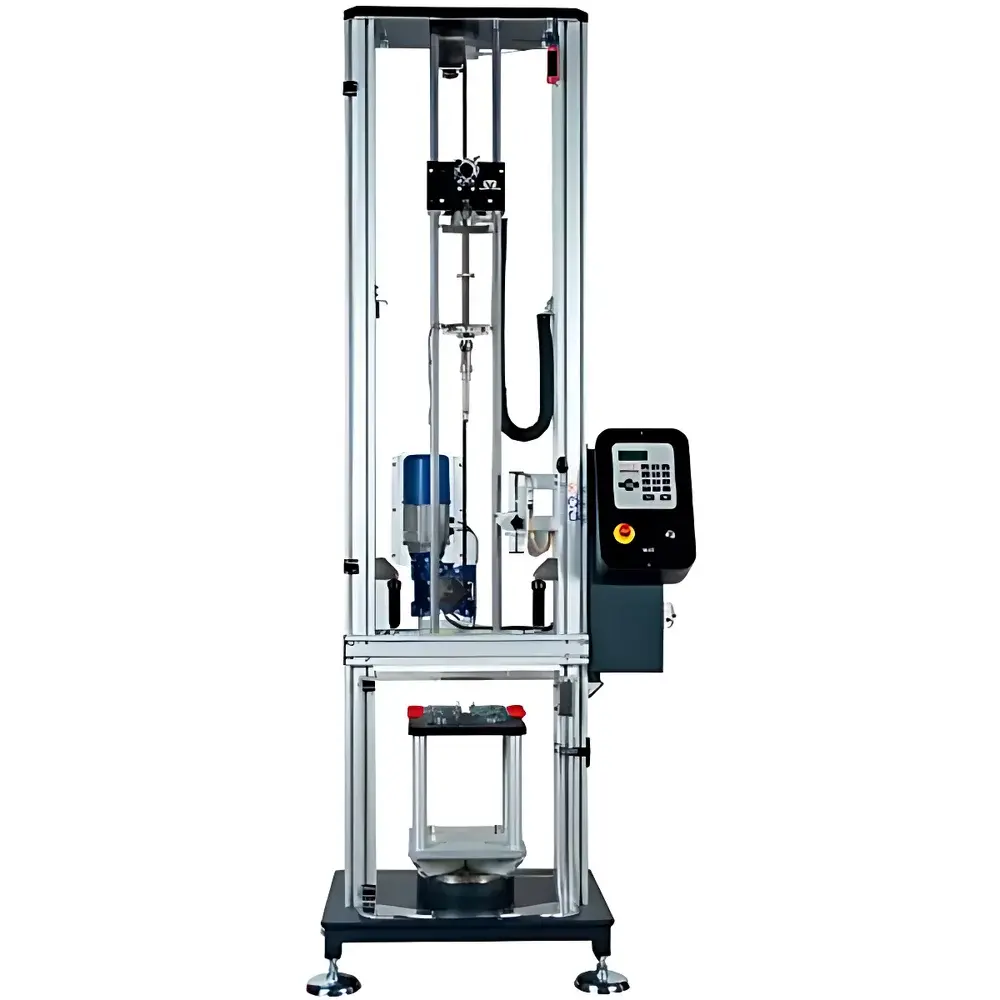
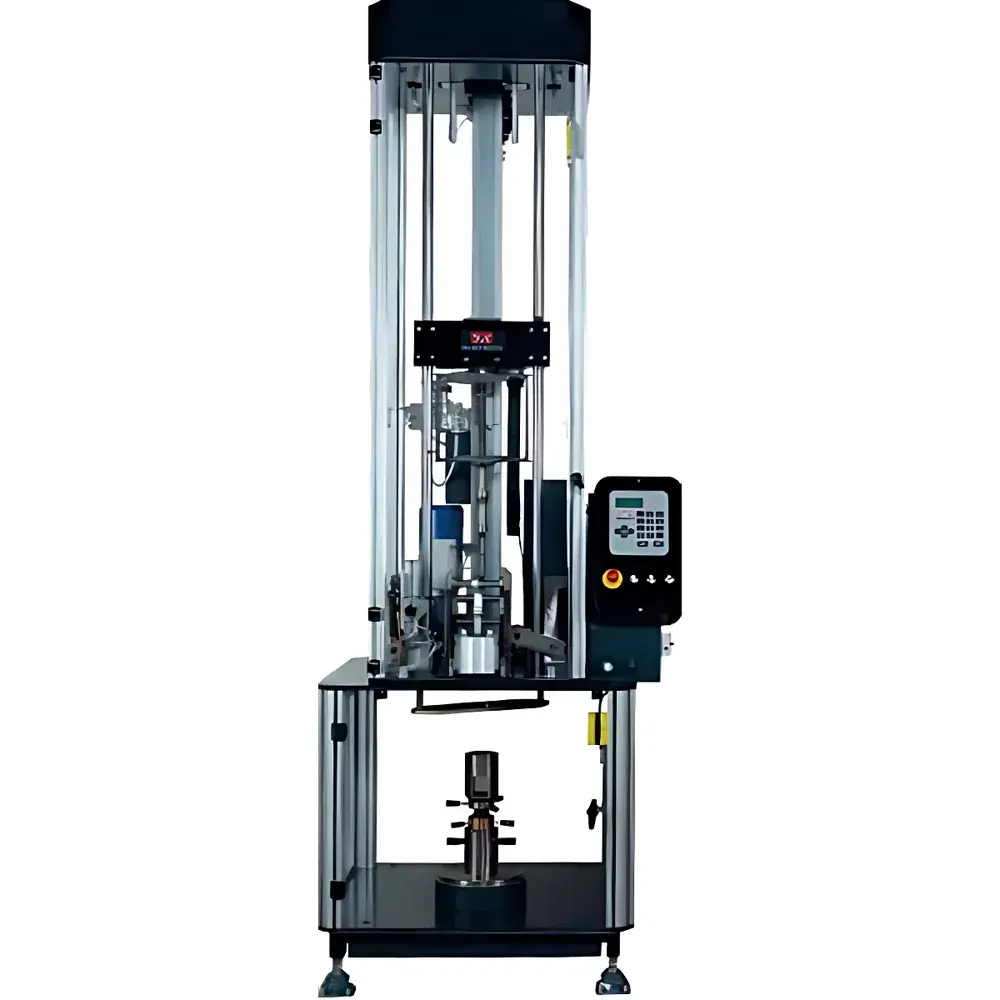
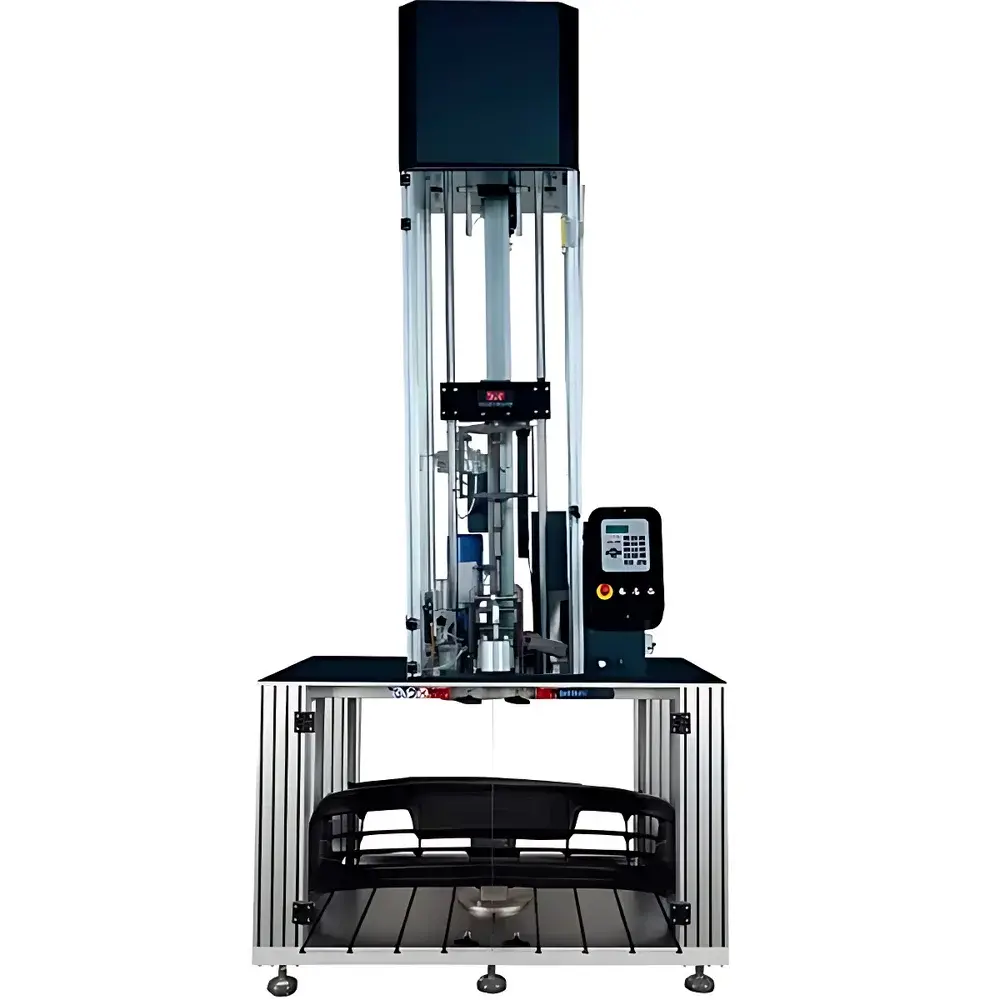
Instron 9400 Series Dynatup Drop Tower Impact Testing System
| Brand | Instron |
|---|---|
| Origin | USA |
| Manufacturer Type | Authorized Distributor |
| Origin Category | Imported |
| Model | 9400 Series |
| Pricing | Available Upon Request |
Overview
The Instron 9400 Series Dynatup Drop Tower Impact Testing System is a high-precision, modular drop-weight impact tester engineered for quantitative evaluation of material response under dynamic loading conditions. Based on the fundamental principle of gravitational energy conversion—where a calibrated mass is elevated to a defined height and released to impact a specimen at a controlled velocity—the system delivers repeatable kinetic energy inputs ranging from low-energy puncture events to high-velocity impacts up to 24 m/s (model 9450 configuration). It supports standardized mechanical characterization across transient deformation regimes, capturing critical parameters including peak force, energy absorption, displacement-time history, and load-deflection behavior. Designed for compliance with international test standards, the 9400 Series serves as a primary tool for R&D, quality control, and regulatory validation in industries where impact performance directly affects safety and service life—particularly aerospace composites, automotive thermoplastics, defense-grade laminates, and medical device polymers.
Key Features
- Modular drop tower architecture with scalable energy capacity (up to 200 J standard; extended configurations support higher energies)
- High-speed data acquisition system featuring Instron-engineered 1 MHz sampling rate force transducers and synchronized displacement sensing
- Integrated safety enclosure with interlocked access doors and programmable emergency stop circuitry compliant with ISO 13857 and ANSI B11.19
- Bluehill® Impact software with touchscreen dashboard, step-by-step guided workflows, and real-time visual feedback for operator-assisted setup and validation
- Quick-change fixture platform supporting ASTM D3763 (multiaxial impact), ISO 6603 (puncture), ASTM D7136 (impact compression after impact, CAI), ISO 11343 (wedge peel impact), and ISO 8256 (impact tensile) test methods
- Configurable mass carriage system with precision-machined weights (0.25–25 kg range), adjustable drop heights (0.1–2.5 m), and optional velocity verification via laser gate or high-speed imaging (≥10,000 fps)
- Dual-mode actuation: gravity-driven free-fall and optional servo-pneumatic pre-load capability for hybrid quasi-static/dynamic protocols
Sample Compatibility & Compliance
The 9400 Series accommodates specimens from thin films (≥0.1 mm) to structural components (up to 600 × 600 mm footprint), including thermoplastics, fiber-reinforced composites, elastomers, metallic foils, and sandwich panels. Fixture adaptability enables testing per major global standards—including ASTM D7136/D7137 (CAI of composite laminates), ISO 6603-2 (puncture resistance of plastics), ISO 179-1 (Charpy unnotched), and ISO 180 (Izod). System design incorporates traceable calibration paths aligned with ISO/IEC 17025 requirements; force sensors are NIST-traceable and verified per ASTM E4. All hardware and software configurations support GLP/GMP environments, with Bluehill Impact offering 21 CFR Part 11-compliant audit trails, electronic signatures, and secure user-role management.
Software & Data Management
Bluehill Impact provides an integrated environment for method development, execution, analysis, and reporting. Test methods—including drop height, mass, striker geometry, support span, and environmental conditioning parameters—are stored as reusable templates with version control. Real-time plotting of force-displacement, energy-time, and velocity-time curves allows immediate assessment of ductile-brittle transitions and failure initiation thresholds. Raw data exports in CSV, XML, and universal .tdms formats ensure compatibility with third-party analysis tools (e.g., MATLAB, Python pandas). The embedded file management system enables secure intra-laboratory sharing and cross-site collaboration via encrypted network repositories—supporting centralized validation of material databases across global product development teams.
Applications
- Quantification of impact toughness and damage tolerance in carbon-fiber epoxy laminates for aircraft fuselage panels
- Evaluation of puncture resistance in polymer battery separator membranes under simulated nail penetration (ISO 6603-2)
- Impact-after-impact (IAI) and compression-after-impact (CAI) residual strength assessment per ASTM D7136 for rotorcraft blade materials
- Dynamic fracture mechanics analysis of thermoplastic elastomer blends used in wearable medical devices
- Validation of automotive interior trim materials against FMVSS 201 (head injury criteria) and ECE R21 impact requirements
- High-strain-rate characterization of additive-manufactured metal parts for defense applications
FAQ
What standards does the 9400 Series support out-of-the-box?
ASTM D3763, ASTM D7136, ASTM D7137, ISO 6603-1/-2, ISO 11343, ISO 8256, ISO 179-1, and ISO 180—configurable via Bluehill Impact method templates.
Can the system be upgraded for higher impact velocities?
Yes—model 9450 variants support up to 24 m/s through enhanced guidance columns, reinforced base structure, and optional high-speed camera synchronization.
Is force sensor calibration traceable to national standards?
All load cells are factory-calibrated with NIST-traceable documentation and include on-site verification procedures per ASTM E4.
Does Bluehill Impact meet regulatory requirements for auditable testing?
Yes—it provides full 21 CFR Part 11 compliance, including electronic signatures, immutable audit trails, and role-based access control.
How is operator safety ensured during high-energy testing?
The fully enclosed test chamber integrates dual-channel safety relays, door position monitoring, and automatic system shutdown upon any breach of interlock integrity per ISO 13857 Category 3 PLd requirements.



