
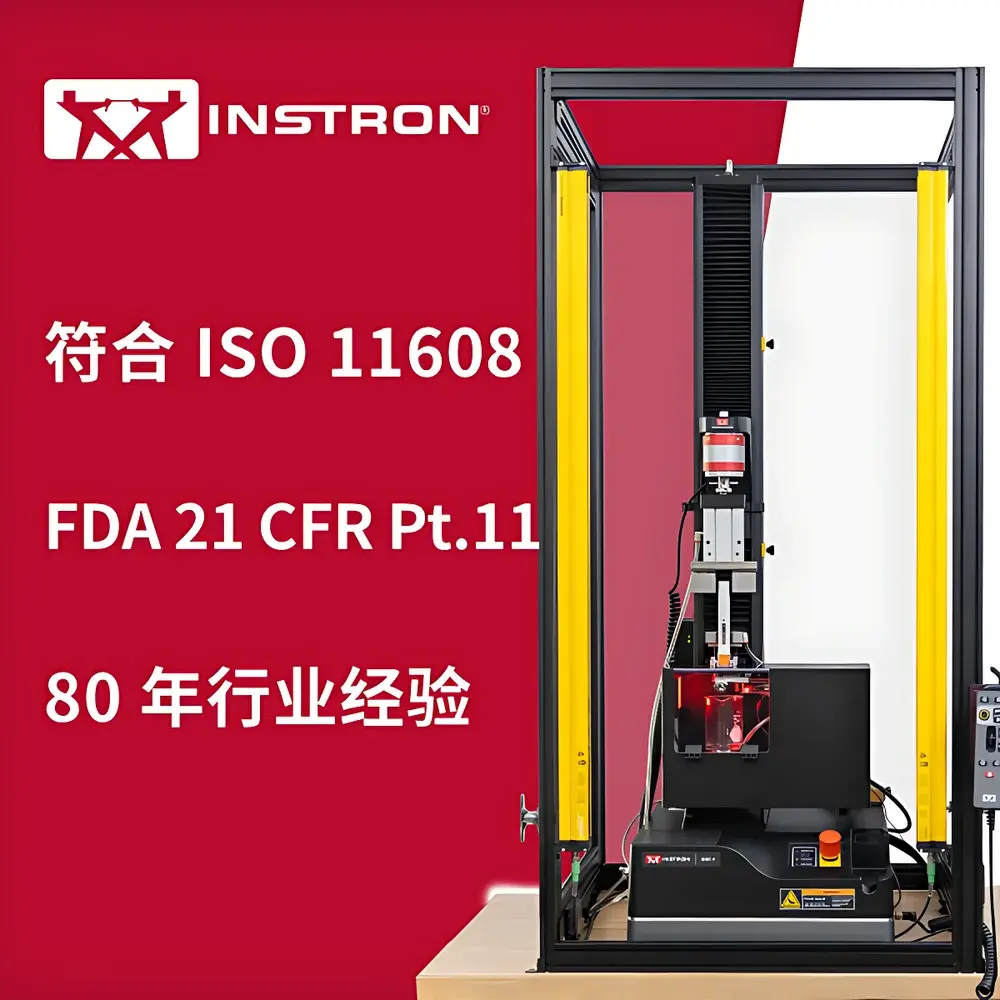
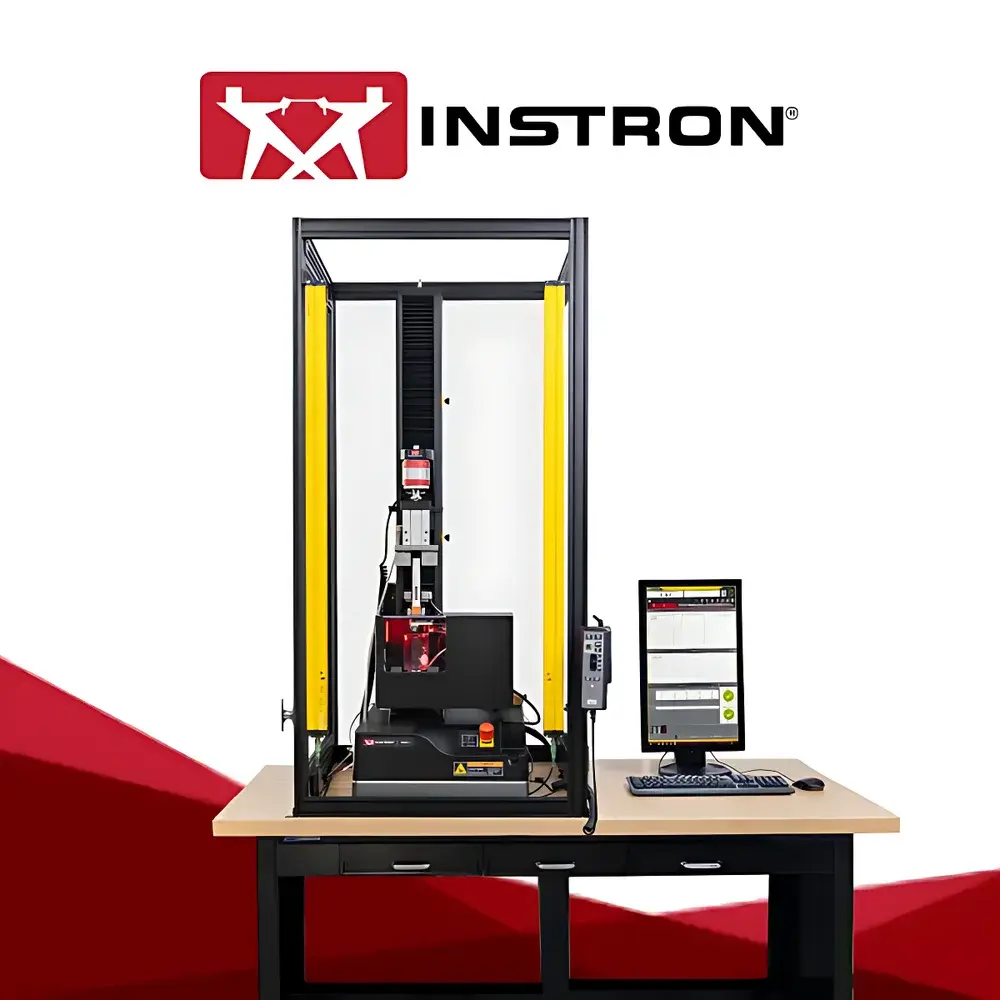
Instron AutoInjector Automated Syringe and Pen Injector Testing System
| Brand | Instron |
|---|---|
| Origin | USA |
| Manufacturer Type | Original Equipment Manufacturer (OEM) |
| Product Category | Imported Instrument |
| Model | AutoInjector |
| Instrument Type | Electromechanical Universal Testing Machine |
| Compliance | ISO 11608, FDA 21 CFR Part 11, ISO 13485, ISO/IEC 17025, GMP/GLP-ready |
Overview
The Instron AutoInjector Automated Syringe and Pen Injector Testing System is a purpose-built electromechanical universal testing platform engineered specifically for functional performance evaluation of parenteral drug delivery devices. Designed in close collaboration with pharmaceutical and medical device manufacturers, the system implements a unified, single-platform approach to replace fragmented multi-instrument workflows traditionally required for comprehensive injector qualification. It operates on a precision-controlled servo-electromechanical actuation architecture, integrating synchronized force measurement (up to 500 N), high-resolution machine vision, real-time acoustic event detection, and gravimetric mass tracking to quantify critical mechanical and functional parameters—including cap removal force, actuation force, injection time, needle insertion depth, dose accuracy (via mass displacement), and safety shield engagement force. The system adheres to the metrological rigor demanded by regulatory frameworks governing injectable device validation, including ISO 11608-1 through -5 (Needle-based injection systems), USP (Pharmacokinetic and Pharmacodynamic Evaluation), and ICH Q5E (Comparability of Biotechnological/Biological Products). Its architecture supports both development-stage design verification and production-line quality control under GMP-compliant environments.
Key Features
- Integrated machine vision subsystem with calibrated optical imaging for non-contact, high-accuracy measurement of needle insertion depth at injection onset and termination—enabling traceable spatial quantification independent of fluid viscosity or drive mechanism.
- Dual-camera configuration: A high-resolution video camera records full injection process for post-test root-cause analysis; a dedicated machine vision camera captures synchronized depth/time data points embedded directly into Bluehill Universal test records.
- Acoustic event detection via in-chamber microphone to identify first and second “click” events—corresponding to primary actuation and shield lock engagement—with signal time-stamped and overlaid onto force–displacement curves.
- Pneumatic cap removal and post-injection droplet blow-off system ensures sequential, contamination-free transition between test phases without manual intervention.
- Modular, tool-less adapter system for cap removal fixtures—featuring a fixed base alignment platform and interchangeable, thumb-screw-mounted adapters—guarantees repeatable axial alignment across diverse injector geometries (e.g., BD Physioject™, Ypsomed YpsoMate™, SHL Molly®).
- Force-controlled pneumatic grip with programmable clamping pressure (stored within test method) ensures consistent lateral constraint during shield break testing and eliminates inter-system variability.
- Triple-safety enclosure with light curtain interlock and optional transparent polycarbonate front panel meets ISO 13857 and IEC 61508 functional safety requirements.
Sample Compatibility & Compliance
The AutoInjector system accommodates standard auto-injectors and pen injectors utilizing either button-actuated or shield-triggered mechanisms, including devices conforming to dimensional specifications from BD, Halozyme, SHL, and Ypsomed. Adapter kits support ISO 11608-defined cap removal geometries and are validated for use with commercially available prefilled syringes (1.0 mL and 2.25 mL formats). Custom adapters can be rapidly designed using Instron’s open mechanical interface specifications. All hardware and software components comply with ISO 13485:2016 (Medical Devices – Quality Management Systems) and are pre-qualified for installation and operational qualification (IQ/OQ) per FDA 21 CFR Part 820 and Annex 11. System suitability testing (SST) routines—covering load cell linearity, vision camera focus calibration, balance repeatability, and acoustic trigger sensitivity—are enforced prior to test execution and logged with full audit trail in accordance with FDA 21 CFR Part 11 electronic record requirements.
Software & Data Management
Bluehill Universal software provides a validated, GMP-ready environment for method creation, execution, and reporting. Preconfigured test method templates align with ISO 11608 subclauses for cap removal, injection, and shield locking tests. TestProfiler enables full parametric customization—including variable ramp rates, dwell times, and conditional branching—for novel device architectures. System suitability testing (SST) is fully integrated: administrators define sensor verification frequency (per shift, per batch, or per sample), and SST completion is mandatory before test initiation. All SST results generate PDF reports with digital signatures and are archived in the traceability module alongside raw data, metadata, and operator logs. Bluehill Central enables centralized management of users, methods, and audit trails across multiple Instron systems, supporting enterprise-wide compliance with ISO/IEC 17025 and Nadcap AC7101/3 requirements. Remote validation support includes IQ/OQ documentation packages, on-site service engineer execution, and traceable calibration certificates for force, displacement, mass, and optical axes.
Applications
The AutoInjector system supports end-to-end functional assessment across the product lifecycle: early-stage design verification (e.g., actuation force optimization, shield lock robustness under environmental stress), regulatory submission testing (e.g., ISO 11608-1 conformance for dose accuracy and injection time), and routine QC release testing in GMP manufacturing. Specific applications include quantification of dose consistency across temperature/humidity gradients; evaluation of shield lock integrity after drop impact or torsional stress; correlation of acoustic signature timing with mechanical event sequence; and statistical process control (SPC) of cap removal force distributions (Cpk analysis). The system also facilitates comparative studies between legacy and next-generation devices—such as those employing spring-driven, motorized, or pneumatic actuation—by decoupling measurement modality from drive physics.
FAQ
Does the AutoInjector system support custom injector geometries beyond listed OEM models?
Yes—modular adapter design allows rapid integration of non-standard devices; mechanical drawings and mounting specifications are provided for customer-led adapter development.
How is traceability ensured for sensor calibrations and system suitability checks?
All calibrations are performed using NIST-traceable standards; SST results are digitally signed, time-stamped, and stored with immutable audit logs compliant with FDA 21 CFR Part 11.
Can Bluehill Universal export data directly to LIMS or statistical analysis platforms?
Yes—native CSV, XML, and PDF export formats support seamless integration with LabVantage, Thermo Fisher SampleManager, JMP, and Minitab.
Is on-site IQ/OQ support available globally?
Yes—Instron-certified service engineers provide turnkey IQ/OQ execution, including protocol review, witness testing, and final validation report delivery.
What maintenance intervals are recommended for the machine vision and acoustic subsystems?
Quarterly optical path inspection and microphone sensitivity verification are recommended; automated self-diagnostic routines run at startup and are logged in the system health dashboard.



