
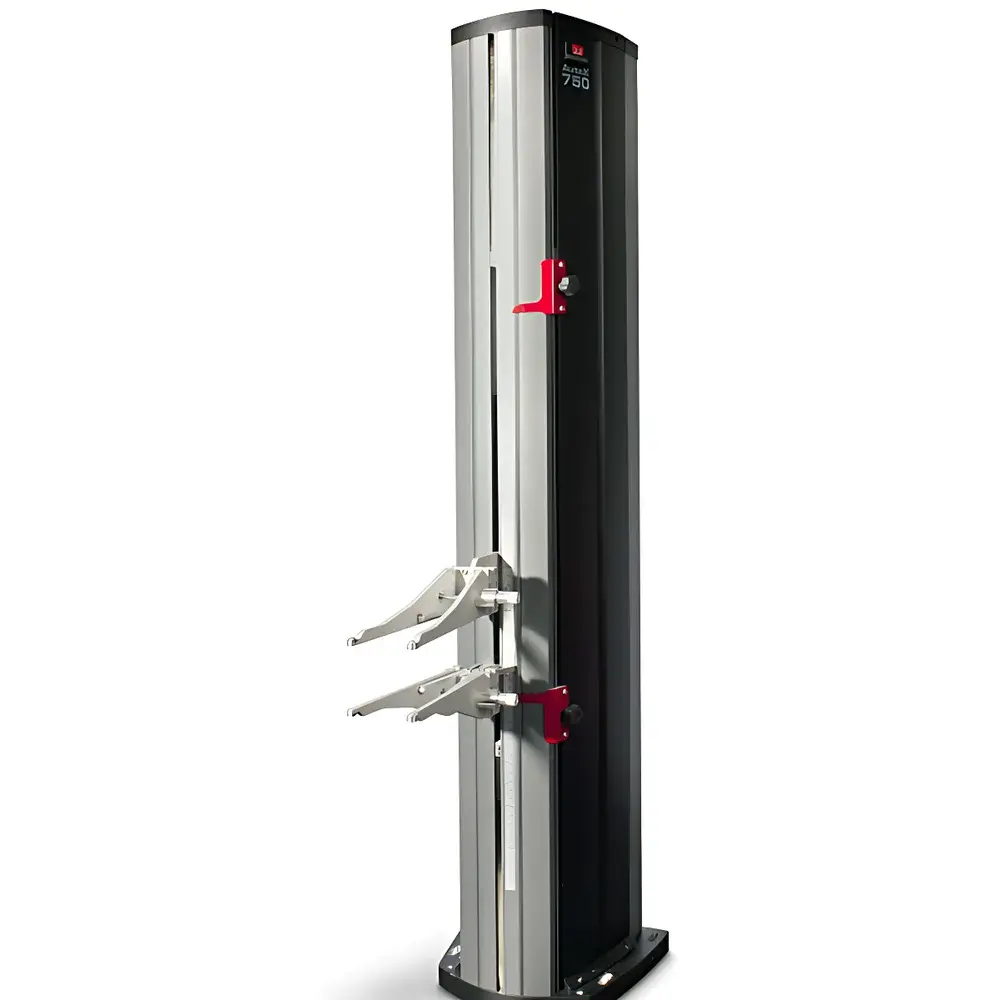
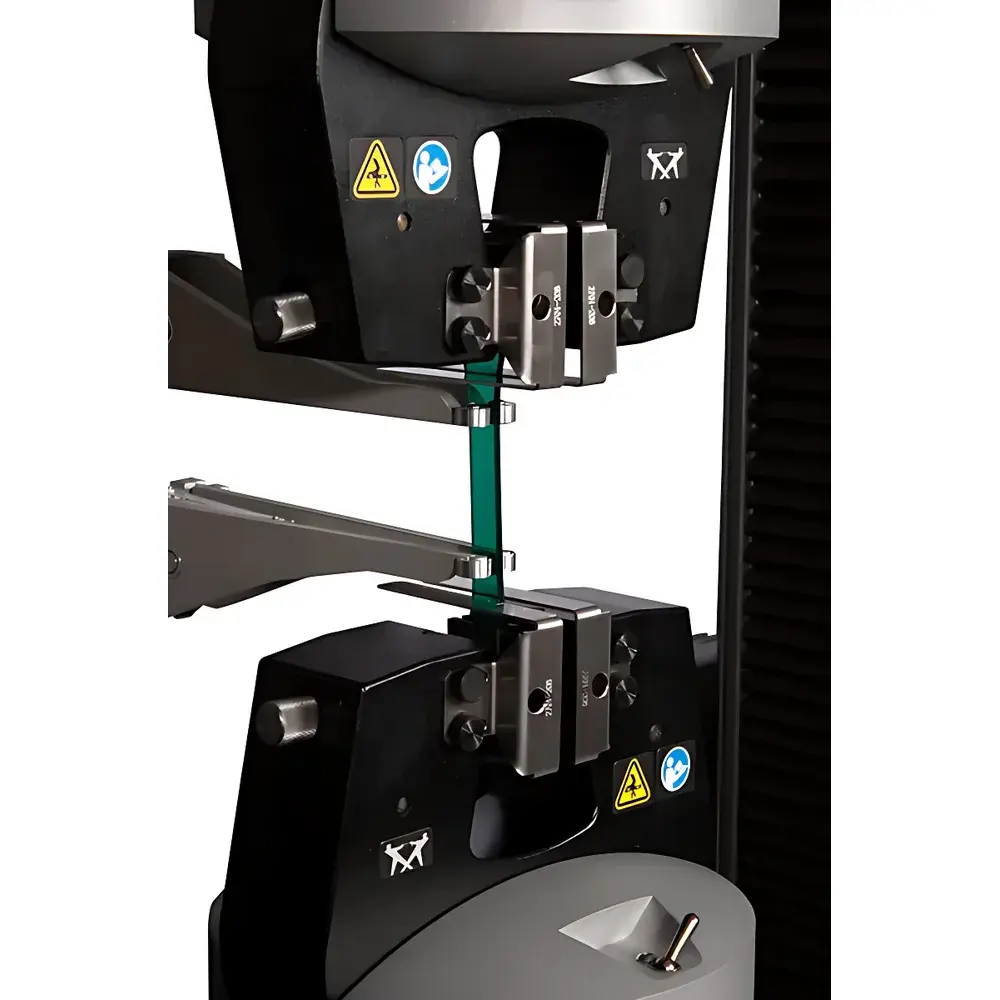
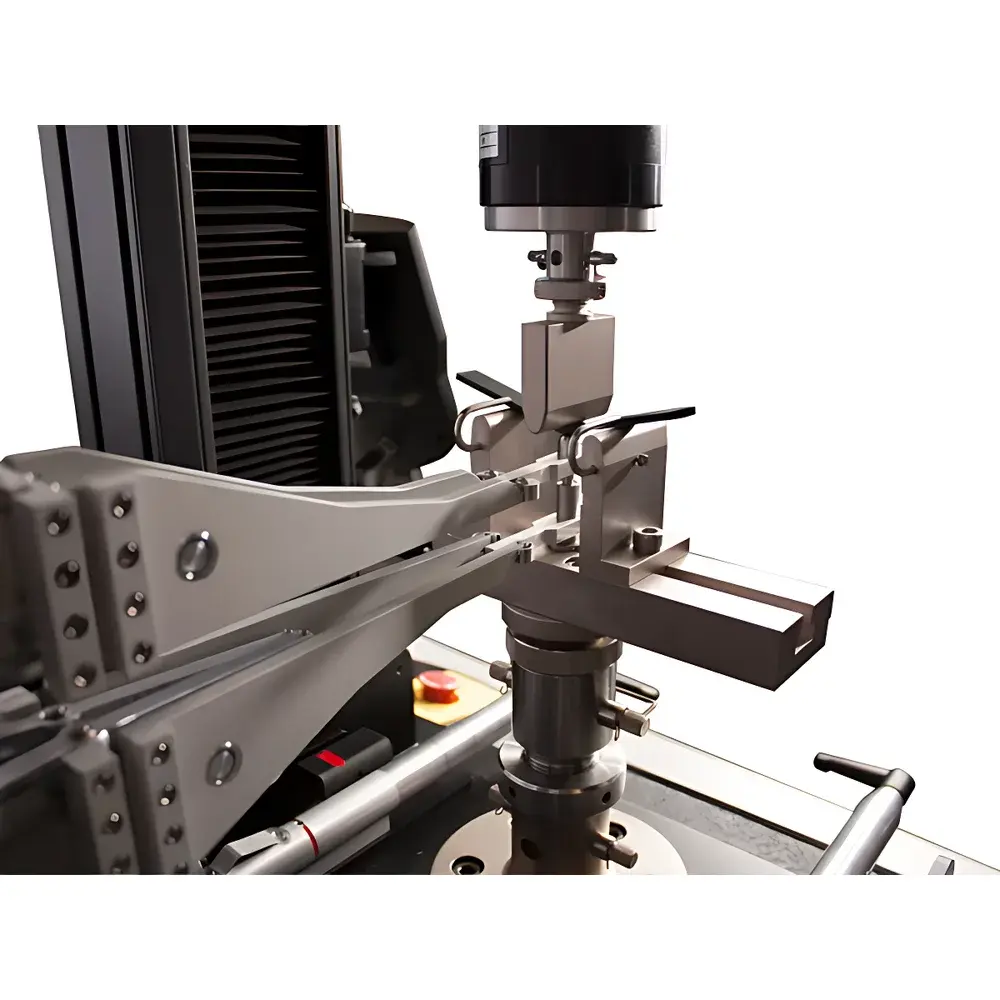
Instron AutoX 750 Fully Automatic Contact Extensometer
| Brand | Instron |
|---|---|
| Origin | USA |
| Manufacturer Type | Original Equipment Manufacturer (OEM) |
| Origin Category | Imported |
| Model | AutoX 750 |
| Pricing | Upon Request |
Overview
The Instron AutoX 750 is a fully automatic, motor-driven contact extensometer engineered for high-precision axial strain measurement during uniaxial tensile and compressive testing. It operates on the principle of direct mechanical displacement sensing via dual symmetrically mounted measurement arms that track specimen elongation in real time—eliminating reliance on crosshead motion or machine frame deflection. Designed specifically for integration with Instron’s 3300, 5500, and 5900 series universal testing systems, the AutoX 750 delivers traceable, high-fidelity strain data essential for determining modulus of elasticity, yield strength (including upper/lower yield points), ultimate tensile strength, fracture elongation, and anisotropic plasticity parameters such as r-value (plastic strain ratio) and n-value (strain hardening exponent). Its closed-loop strain control capability enables true ISO 6892-1 Method A (constant crosshead speed with active strain feedback) and ASTM E8 Method B (strain-rate-controlled testing), ensuring compliance with internationally recognized mechanical testing protocols.
Key Features
- Fully automated gauge length positioning and specimen contact initiation via integrated stepper motors—no manual alignment or operator intervention required.
- Multiple interchangeable knife-edge options (e.g., flat, curved, serrated) to accommodate diverse material geometries and surface characteristics—including metallic sheets, thermoplastics, fiber-reinforced composites, and elastomers.
- Adjustable clamping force optimized per material class to prevent slippage without inducing localized deformation or premature failure.
- High-resolution analog-to-digital conversion (≥24-bit) delivering sub-micron displacement resolution and repeatability better than ±0.5 µm over full stroke.
- Extended travel range up to 750 mm, supporting standardized test specimens per ASTM E8, ISO 6892-1, ISO 527-1:2011, and ASTM D638 across multiple gauge lengths (e.g., 25 mm, 50 mm, 100 mm).
- Rigid, low-inertia aluminum alloy housing with precision-ground linear bearing guides—ensuring near-frictionless arm movement and eliminating gravitational loading artifacts on the specimen.
- Automatic disengagement of drive mechanism prior to test initiation, allowing passive, inertia-free tracking throughout the entire deformation cycle—even to specimen fracture.
Sample Compatibility & Compliance
The AutoX 750 is validated for use with flat, round, hexagonal, and dog-bone shaped specimens across ambient and elevated temperature environments (when paired with compatible environmental chambers). It meets the accuracy class requirements defined in ISO 9513 (Class 0.5 for extensometers), ASTM E83 (Grade B-1), and ISO 527-1:2011 Annex B for tensile testing of plastics. Its design supports GLP/GMP-aligned workflows through full audit trail support in Bluehill software—including user-defined calibration history, parameter change logs, and timestamped configuration snapshots. Data integrity complies with FDA 21 CFR Part 11 when configured with electronic signatures and role-based access controls.
Software & Data Management
The AutoX 750 interfaces exclusively via USB with Bluehill Universal software (v4.0+), providing intuitive graphical setup wizards for arm opening/closing, reference arm placement, and gauge length definition. Real-time strain feedback is embedded directly into test method sequences, enabling dynamic load/strain hold steps, multi-stage ramp profiles, and conditional logic triggers (e.g., initiate unload at 0.2% offset yield). All raw displacement data are stored in native .ibw format with metadata tagging (operator ID, calibration certificate ID, environmental conditions), exportable to CSV, Excel, or third-party analysis platforms (MATLAB, Python Pandas). Calibration certificates are digitally linked and version-controlled within the software database.
Applications
- Tensile testing of metallic sheet and strip materials for automotive and aerospace applications—enabling accurate r/n-value determination per ASTM E517 and ISO 10113.
- Mechanical characterization of carbon-fiber-reinforced polymer (CFRP) laminates under quasi-static loading per ASTM D3039.
- ISO 527-1 compliant tensile and flexural testing of engineering thermoplastics (e.g., PA6, PEEK, PC) and biopolymers.
- Low-modulus elastomer testing (e.g., silicone, natural rubber) where crosshead-derived strain introduces unacceptable error due to system compliance.
- High-strain-rate prequalification tests requiring uninterrupted strain continuity from elastic onset through necking and rupture.
FAQ
Does the AutoX 750 require recalibration after each specimen change?
No—its self-centering kinematic mount and repeatable motorized positioning eliminate the need for per-specimen recalibration. However, periodic verification per ISO 9513 is recommended every 90 days or after 500 test cycles.
Can it be used with non-Instron test frames?
The AutoX 750 is designed exclusively for Instron 3300, 5500, and 5900 series systems. It relies on proprietary firmware handshake and power delivery via the frame’s auxiliary bus—third-party integration is not supported.
Is thermal compensation available for elevated temperature testing?
Yes—when used with Instron’s 3119-600 Series environmental chambers and Bluehill’s temperature-compensated strain calculation module, linear thermal expansion offsets are automatically subtracted using user-input CTE values.
What maintenance is required?
Annual inspection of linear guide lubrication, knife-edge wear assessment, and verification of motor torque response using Instron’s diagnostic utility suite. No field-serviceable electronics are present.
How is traceability ensured for ISO/IEC 17025 accredited labs?
Each unit ships with NIST-traceable calibration certificate (ISO/IEC 17025 accredited lab), and Bluehill supports full electronic record retention—including calibration due dates, deviation reports, and re-certification workflows aligned with ILAC P10 requirements.



