
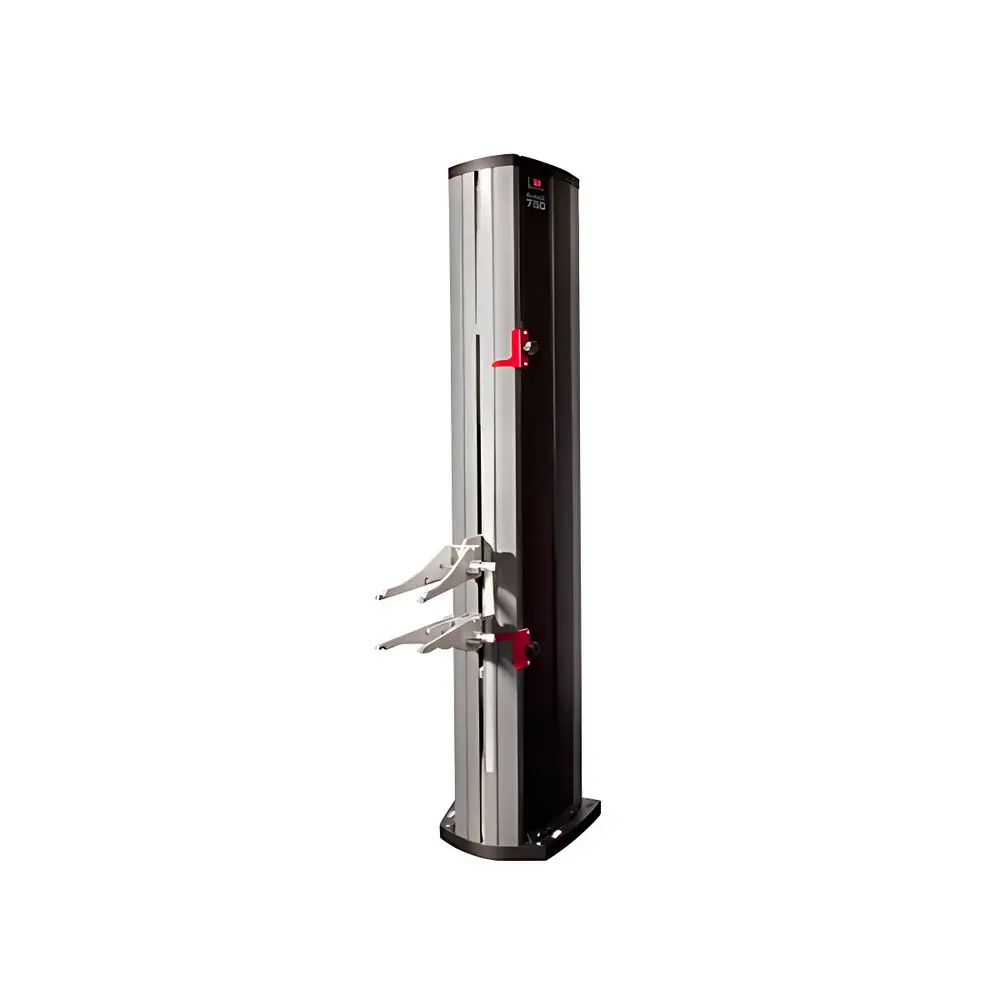
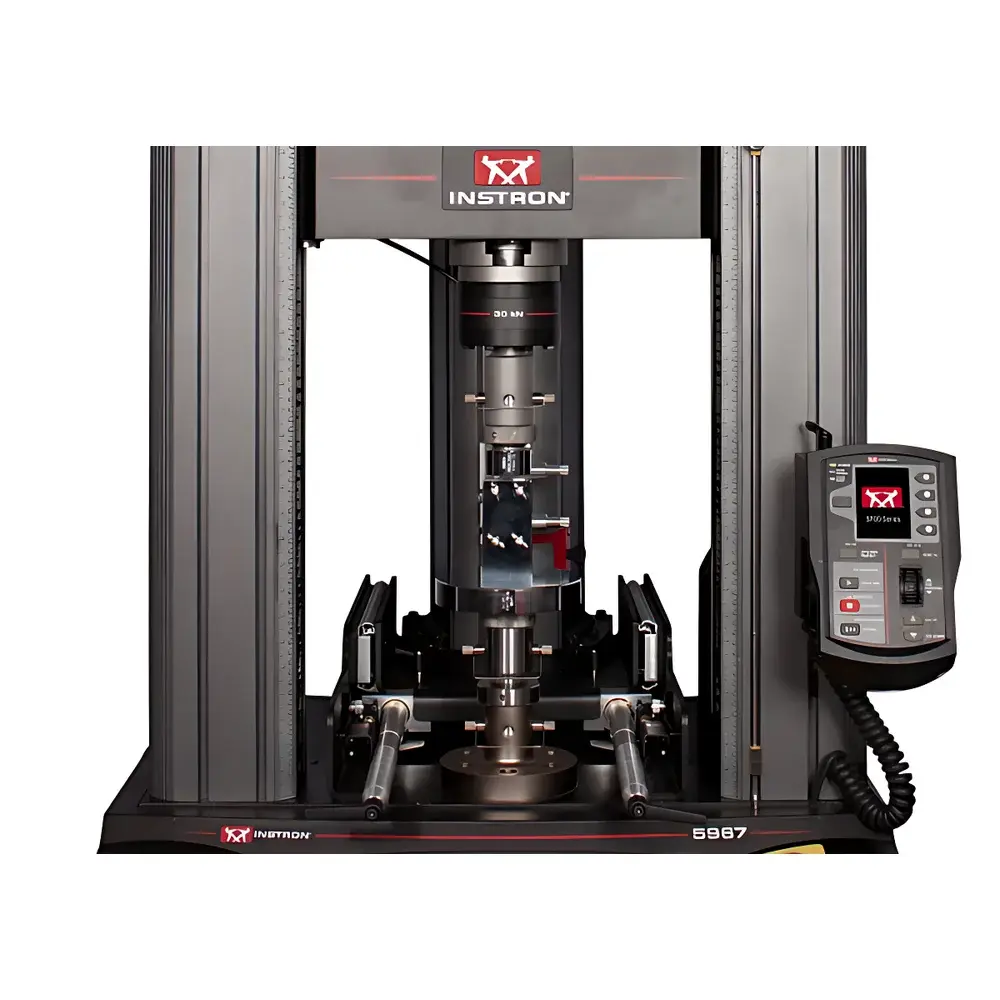
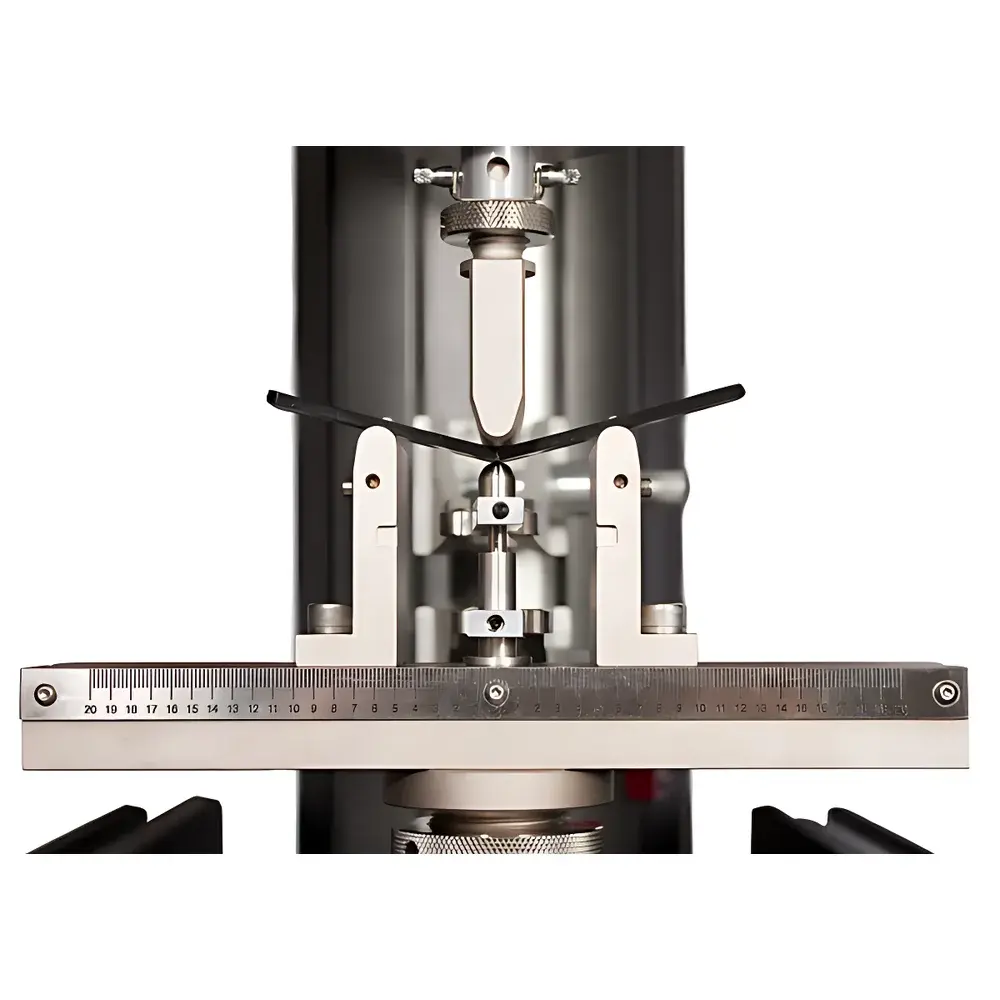
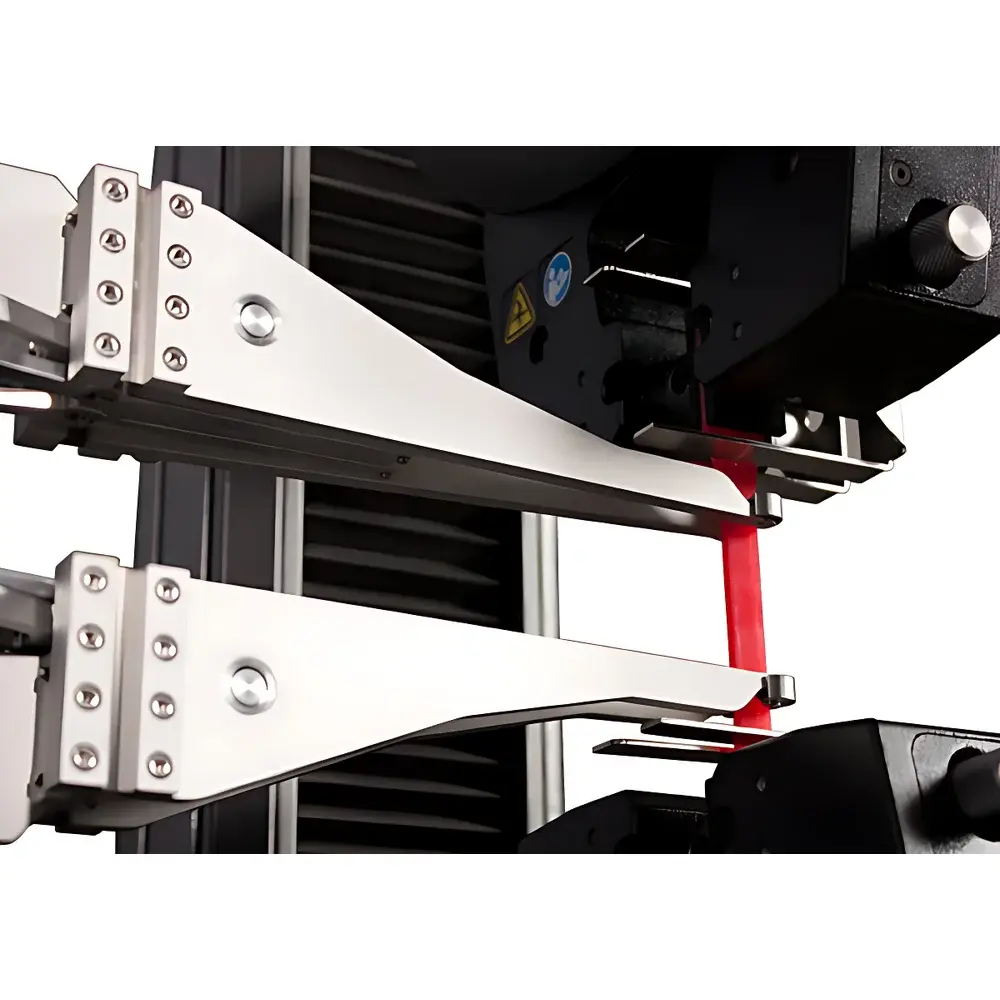
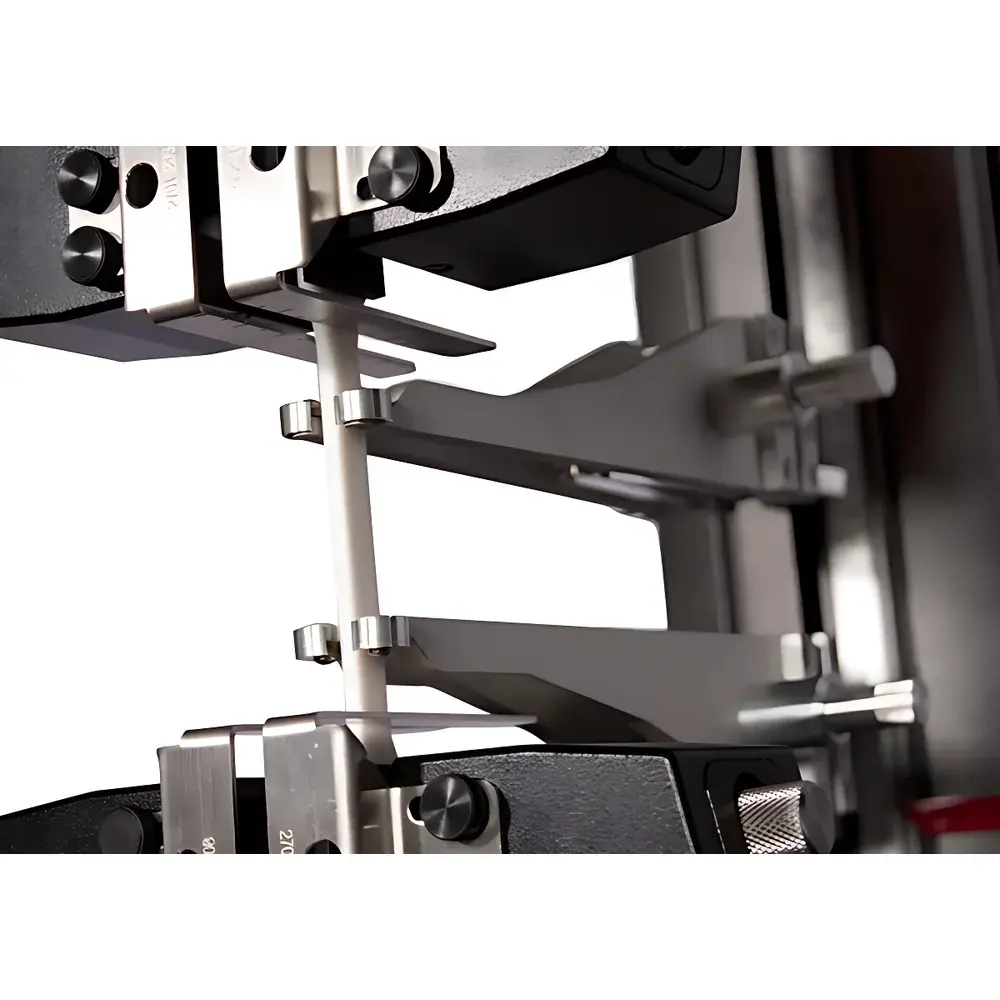
Instron AutoX750 Fully Automated Contact Extensometer
| Brand | Instron |
|---|---|
| Origin | USA |
| Manufacturer Type | Original Equipment Manufacturer (OEM) |
| Country of Origin | Imported |
| Model | AutoX750 |
| Pricing | Upon Request |
Overview
The Instron AutoX750 Fully Automated Contact Extensometer is an engineered solution for high-precision axial strain measurement in tensile, compression, and flexural testing of metallic, polymeric, composite, and elastomeric materials. Operating on the principle of motor-driven, optically referenced displacement sensing, the AutoX750 eliminates manual positioning and clamping variability inherent in traditional clip-on extensometers. It delivers traceable, repeatable strain data by maintaining consistent gage length alignment and contact force throughout the test — from initial loading to specimen fracture. Designed for integration with Instron’s 3300, 5500, and 5900 series electromechanical universal testing systems, as well as LX, DX, HDX, and KPX static hydraulic frames (with Bluehill® 3 software), the AutoX750 supports both ambient and elevated/low-temperature testing environments when used with compatible environmental chambers. Its closed-loop strain control architecture complies with ISO 6892-1 Method A and ASTM E8 Method B, enabling direct feedback to the test controller for strain-rate-controlled protocols required in modulus, yield strength, elongation at break, and plastic strain ratio (r-value/n-value) determinations.
Key Features
- Automated gage length positioning via servo-motor actuation, ensuring repeatable alignment without operator intervention
- Interchangeable knife-edge options to optimize contact pressure for diverse material classes — including soft polymers, high-strength alloys, and fiber-reinforced composites
- High-resolution optical encoder system delivering sub-micron displacement resolution over extended travel range
- Fully integrated with Bluehill® 3 software for intuitive setup: arm open/close, reference arm calibration, and gage length definition via graphical interface
- Balanced mechanical design with low-friction linear guidance system — decouples extensometer mass from specimen load path to prevent measurement artifact
- Auto-retract functionality triggered by peak stress detection or user-defined criteria, protecting the device during post-yield instability or fracture events
- Quick-release mounting bracket enables rapid removal from test zone without disassembling grips or tooling — enhancing lab safety and throughput
Sample Compatibility & Compliance
The AutoX750 accommodates flat, round, hexagonal, and dog-bone shaped specimens per ISO 6892-1, ASTM E8/E21, ISO 527-1:2011, and ASTM D638. Its adjustable gage length range (25–200 mm standard; optional extensions available) and programmable contact force profiles ensure reliable performance across thin sheet metal (for r/n-value testing), thick-section castings, injection-molded thermoplastics, and carbon-fiber laminates. The system meets metrological requirements defined in ISO 9513 (Class 0.5 or better) and ASTM E83 (Class B-1), supporting GLP/GMP-aligned workflows where audit trails, calibration history, and instrument qualification are mandatory. When deployed with Bluehill® 3 configured for 21 CFR Part 11 compliance, it provides electronic signatures, secure user roles, and immutable test data archiving.
Software & Data Management
Control and configuration are executed exclusively through Bluehill® 3 software, which embeds the AutoX750 as a native hardware module within the test method editor. Real-time strain feedback enables dynamic strain-rate control, while synchronized data acquisition ensures time-aligned recording of load, displacement, and axial strain at up to 1 kHz sampling rate. All calibration parameters — including gage length offset, sensitivity factor, and thermal drift compensation coefficients — are stored in encrypted device memory and automatically loaded upon connection. Export formats include CSV, XML, and ASTM E1434-compliant test report templates. For enterprise-level deployment, Bluehill Universal supports centralized license management, remote firmware updates, and integration with LIMS via ODBC or RESTful API.
Applications
- Tensile testing of sheet metals per ISO 10113 and ASTM E517 for r-value and n-value characterization
- Modulus determination in structural composites under ASTM D3039 and ISO 527-4
- Yield point detection and plastic strain measurement in high-strength steels per ASTM A370
- Elongation-at-break quantification in thermoplastics and elastomers per ISO 527-2 and ASTM D412
- Creep and stress-relaxation testing with sustained strain hold capability
- Multi-axis strain mapping when paired with AutoXBiax for simultaneous axial/transverse strain capture
FAQ
Is the AutoX750 compatible with non-Instron test frames?
No — the AutoX750 requires native communication via USB with Instron controllers and Bluehill® 3 software. Integration with third-party frames is not supported.
Does the AutoX750 require recalibration after each specimen change?
No — once calibrated per ISO 9513, the system retains its metrological integrity across specimens; only gage length and contact force settings are adjusted per test method.
Can the AutoX750 operate inside environmental chambers?
Yes — provided the chamber has a USB passthrough port and maintains temperature stability within the extensometer’s specified operating range (−40 °C to +150 °C with appropriate chamber-rated version).
What maintenance is required for long-term accuracy?
Annual verification against traceable gage blocks and optical interferometer standards is recommended; routine cleaning of knife edges and linear guides with isopropyl alcohol is sufficient between tests.
How does the AutoX750 handle specimen necking or localized deformation?
Its balanced arm geometry and frictionless guidance maintain consistent contact pressure and alignment even during asymmetric yielding, minimizing slippage and measurement hysteresis observed in spring-loaded alternatives.



