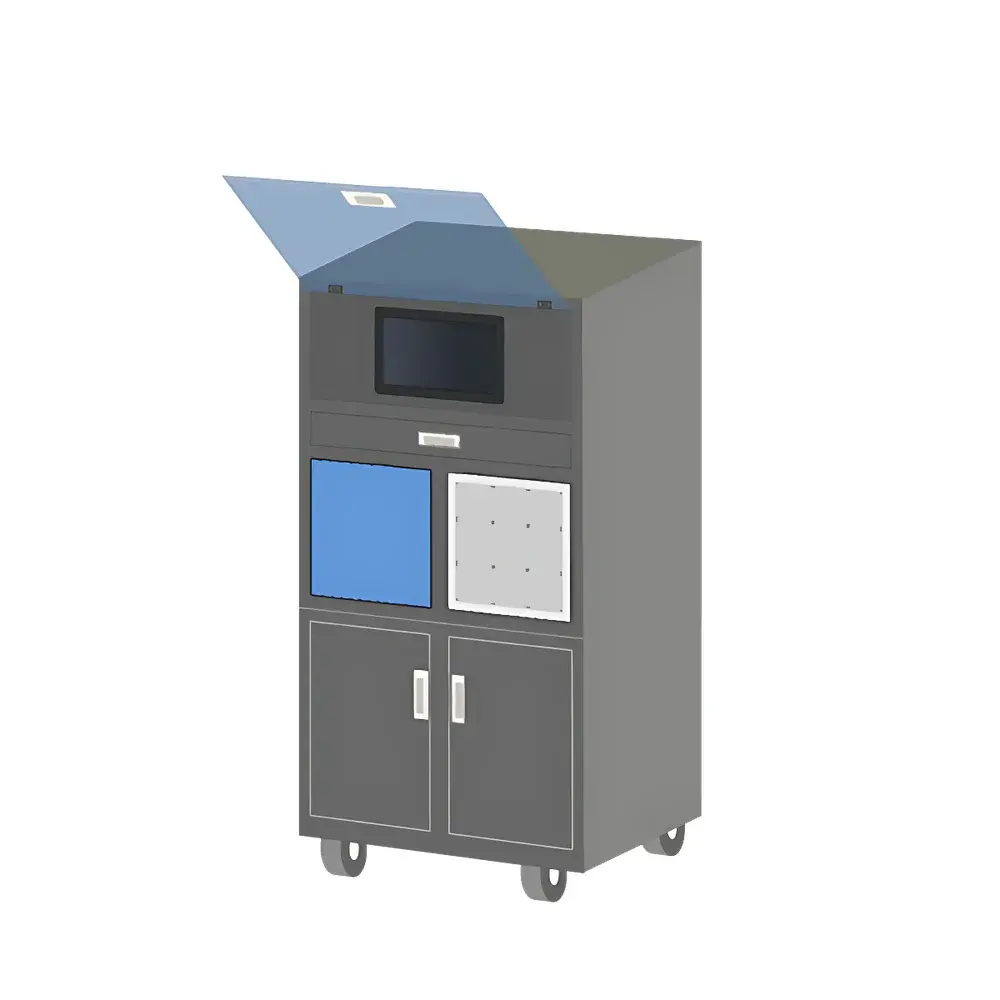
Instrulink 3.101.0000 Online Titration Process Analyzer
| Brand | Instrulink |
|---|---|
| Origin | Shanghai, China |
| Manufacturer Type | Authorized Distributor |
| Country of Origin | China |
| Model | 3.101.0000 |
| Pricing | Upon Request |
Overview
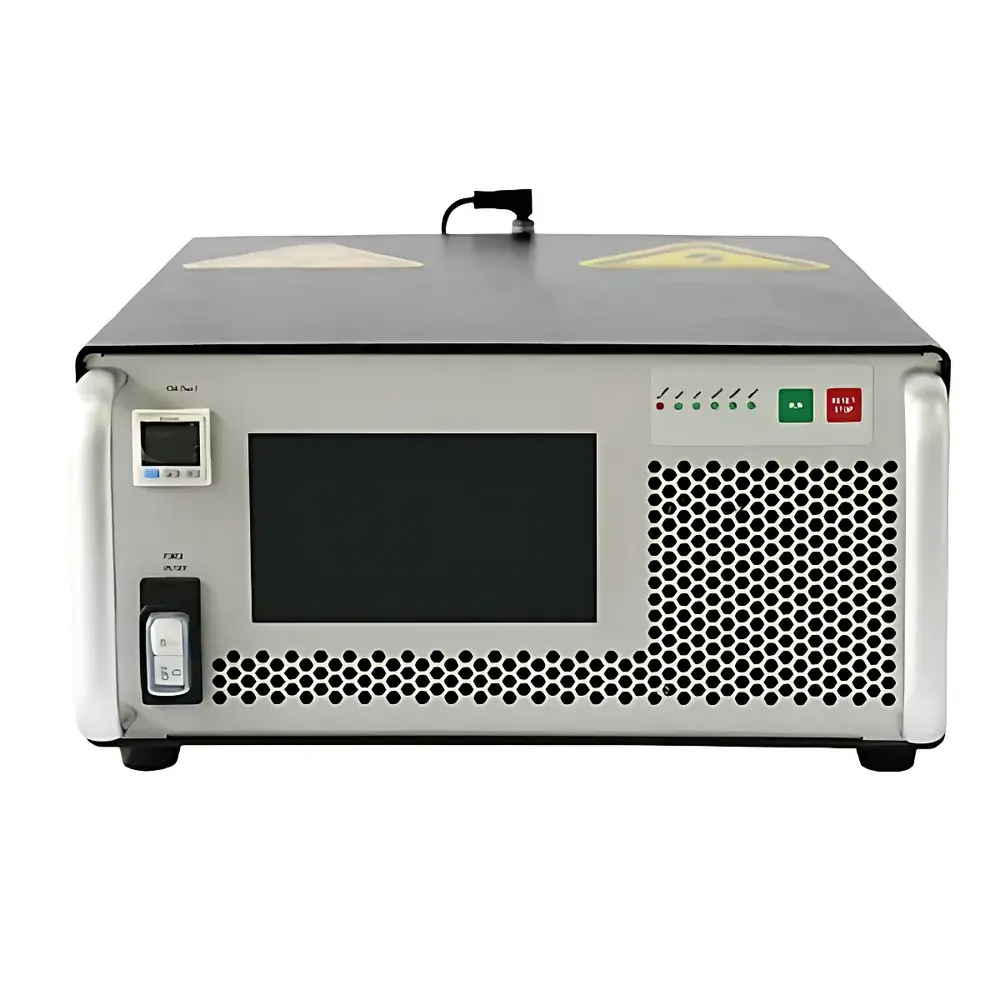
The Instrulink 3.101.0000 Online Titration Process Analyzer is an industrial-grade, fully automated titrimetric analyzer engineered for continuous, unattended operation in harsh production environments. It implements classical volumetric titration—based on stoichiometric reaction endpoints detected via potentiometric, pH, or redox sensors—to deliver precise, traceable quantitative analysis of key process parameters such as acidity, alkalinity, chloride, hardness, peroxide value, or free fatty acid content. Unlike laboratory-based titrators, this system integrates directly into live process streams, enabling real-time feedback control loops with Manufacturing Execution Systems (MES) and Distributed Control Systems (DCS). Its architecture supports closed-loop material dosing decisions—e.g., acid/base addition, neutralization correction, or catalyst adjustment—based on validated analytical results updated at user-defined intervals (e.g., every 5–30 minutes), thereby enhancing batch consistency, reducing off-spec product, and minimizing manual intervention.
Key Features
- Multi-stream capability: Simultaneous analysis of up to four independent process lines using shared reagent modules and a single titration core—optimized for cost-effective deployment across parallel reactors or separation units.
- 24/7 operational reliability: Industrial PLC-controlled sequencing, redundant sensor monitoring, and self-diagnostic routines ensure ≥99.5% uptime under continuous operation; rated IP65 for dust/water resistance and operating temperature range of −10 °C to +50 °C.
- Integrated sample conditioning: Onboard filtration (5–50 µm), temperature stabilization (±0.5 °C), degassing (for CO₂-sensitive titrations), and dilution modules ensure representative, matrix-stabilized samples prior to titration.
- Programmable titration methods: Direct import of validated lab methods (e.g., ASTM D974, ISO 8238, USP <741>) via drag-and-drop workflow editor; supports endpoint detection modes (first derivative, fixed potential, Gran plot) and multi-step titrations (e.g., carbonate/bicarbonate differentiation).
- Embedded industrial computing: Rugged fanless PC with touch-enabled HMI, SSD storage, and real-time OS ensures deterministic timing for critical titration steps; local data retention for ≥90 days without external backup.
- Secure connectivity: Dual Ethernet ports supporting TCP/IP, Modbus TCP, and OPC UA; optional TLS 1.2 encryption for remote configuration and audit-trail transmission compliant with FDA 21 CFR Part 11 requirements.
Sample Compatibility & Compliance
The analyzer accommodates aqueous, mildly corrosive, and low-viscosity process streams (up to 50 cP) with suspended solids ≤100 ppm. Sample inlet pressure range: 0.1–6 bar; flow rate: 0.5–5 L/min. All wetted parts are constructed from chemically resistant materials including PTFE, PVDF, and sapphire-tipped electrodes. The system complies with IEC 61000-6-2 (EMC immunity) and IEC 61000-6-4 (EMC emission) standards. Method validation documentation supports GLP and GMP-aligned implementation, including IQ/OQ protocols, calibration traceability to NIST-certified standards, and electronic signature functionality for analyst authentication.
Software & Data Management
The Instrulink ProcessTitrate™ software provides a browser-accessible interface for method development, real-time curve visualization (pH vs. titrant volume), and historical trend analysis. All raw titration curves, intermediate calculations, and final reports are stored in a relational SQLite database with automatic daily backups to network shares or cloud endpoints. Role-based access control (RBAC) enforces separation of duties: operators view results only; analysts modify methods; administrators manage users and audit logs. Audit trails record timestamped events—including method edits, calibration actions, and result approvals—with immutable hashing to prevent tampering. Data export formats include CSV, PDF (with digital signature), and XML for MES/SCADA integration.
Applications
- Chemical manufacturing: Real-time monitoring of sulfonation degree in surfactant synthesis or residual monomer content in polymerization reactors.
- Food & beverage: Continuous titration of titratable acidity in dairy processing or free fatty acid (FFA) in edible oil refining.
- Water treatment: Automated alkalinity/hardness profiling in boiler feedwater or coagulant dosing control in municipal wastewater plants.
- Pharmaceutical intermediates: In-line verification of stoichiometric equivalence during salt formation or hydrolysis reactions.
- Pulp & paper: Monitoring of caustic soda concentration in kraft liquor recovery cycles.
FAQ
Does the system support ASTM or ISO-standardized titration methods?
Yes—preconfigured templates for ASTM D664, ISO 2952, and ISO 8238 are included; custom methods may be built using the drag-and-drop editor and validated per ICH Q2(R2) guidelines.
How is calibration maintained during unattended operation?
Automatic daily calibration checks using certified standard solutions; drift compensation algorithms adjust endpoint detection based on reference electrode stability metrics.
Can the analyzer interface with legacy DCS systems lacking modern protocols?
Yes—via optional analog I/O (4–20 mA outputs for result values) or Modbus RTU over RS-485, ensuring compatibility with systems installed prior to 2010.
What maintenance is required for long-term reliability?
Scheduled replacement of consumables (electrodes every 6–12 months, tubing every 3 months); no routine mechanical servicing required due to solid-state fluidic design.
Is cybersecurity certification available for regulated industries?
The system supports IEC 62443-3-3 Level 2 compliance when deployed with enterprise firewall policies, segregated VLANs, and certificate-based authentication—documentation provided upon request.