
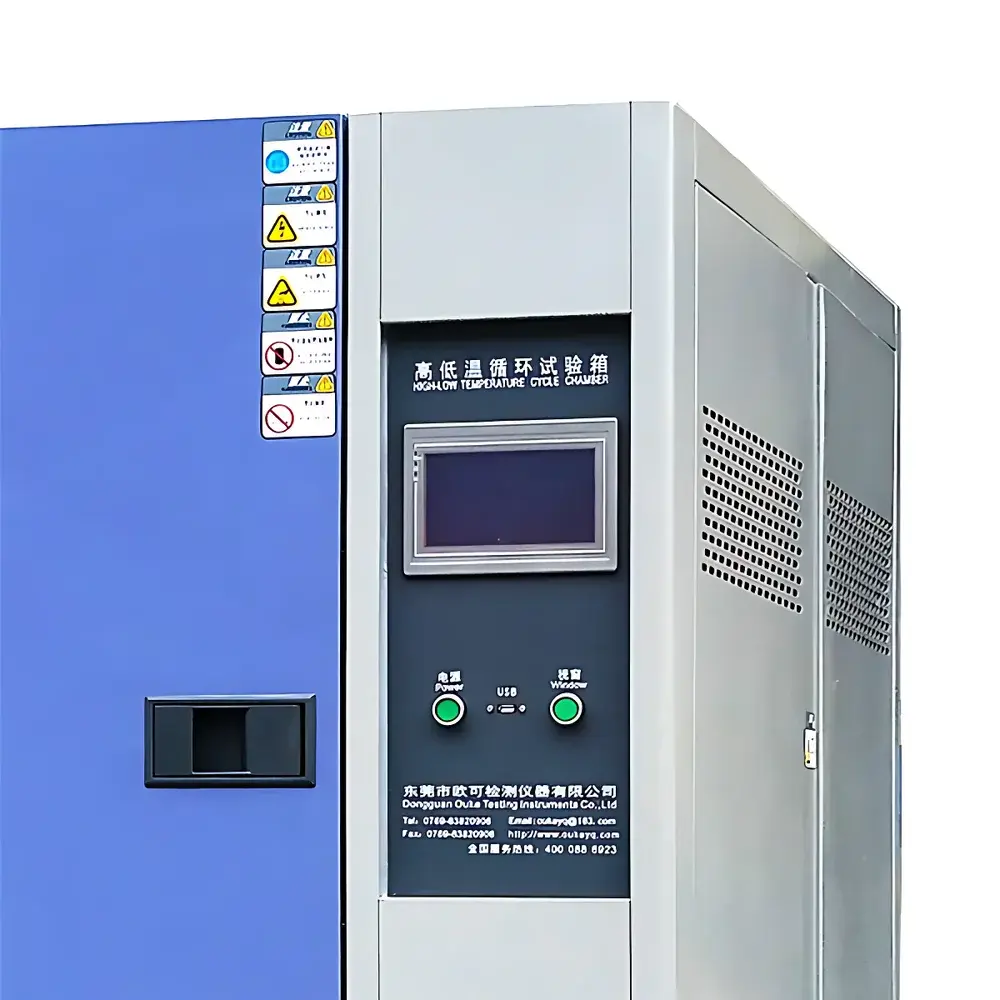
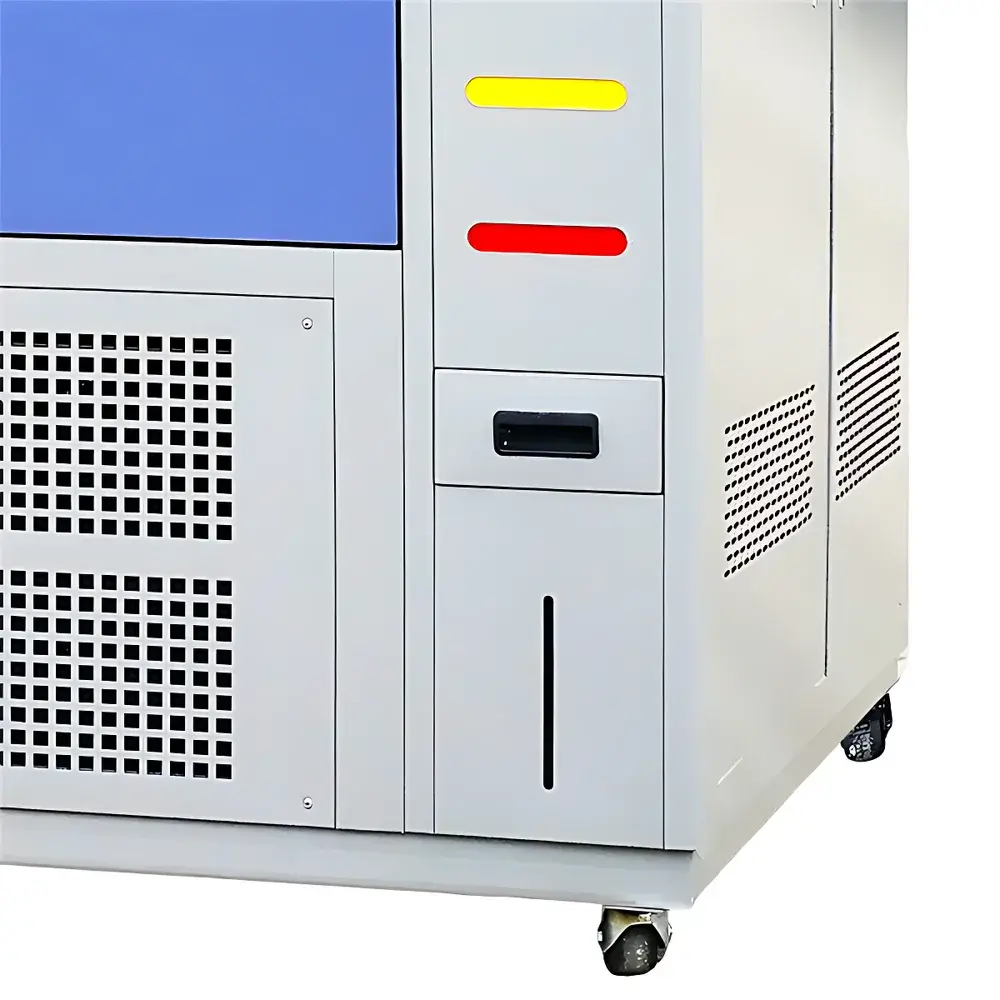
OK Instruments OK-TH-100.0 Temperature and Humidity Controlled Chamber
| Brand | OK Instruments |
|---|---|
| Origin | Guangdong, China |
| Manufacturer Type | Direct Manufacturer |
| Country of Origin | China |
| Model | OK-TH-100.0 |
| Instrument Type | Benchtop |
| Condensation Method | Air-Cooled |
| Temperature Range | −40 °C to +150 °C |
| Humidity Range | 20–98 % RH |
| Temperature Uniformity | ≤ ±2 °C |
| Temperature Fluctuation | ±1 °C (high-temp), ±2 °C (low-temp) |
| Humidity Uniformity | ≤ ±3 % RH |
| Humidity Fluctuation | ±3 % RH |
| Heating Rate | 1.0–3.0 °C/min |
| Internal Chamber Dimensions | 500 × 500 × 400 mm (W × D × H) |
Overview
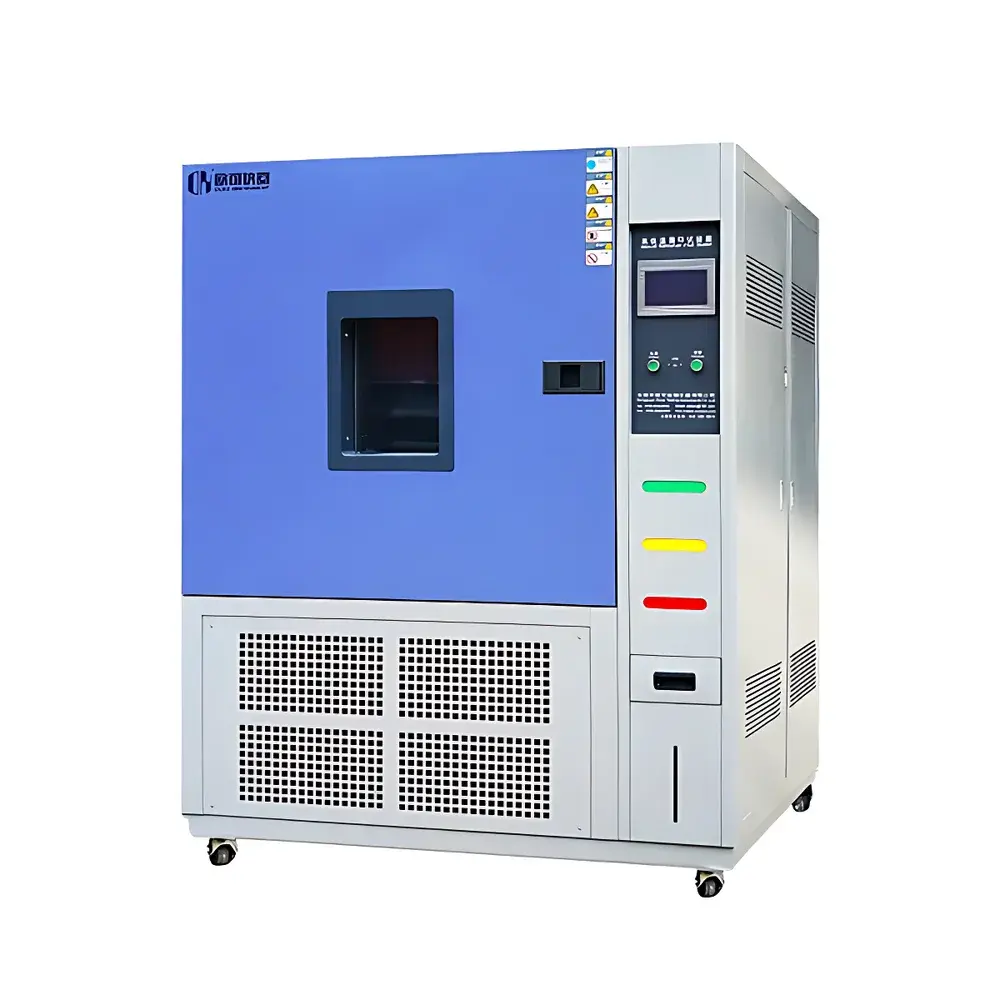
The OK Instruments OK-TH-100.0 Temperature and Humidity Controlled Chamber is a benchtop environmental test system engineered for precise, repeatable simulation of climatic conditions across a wide operational envelope. It operates on dual independent control principles: thermoelectric and refrigerant-based thermal regulation combined with vapor-phase humidity modulation. Temperature control leverages PID-driven resistive heating elements and an air-cooled cascade refrigeration circuit—comprising hermetically sealed compressors, copper-alloy condensers, and finned evaporators—to achieve stable setpoints from −40 °C to +150 °C. Humidity regulation integrates steam-generation humidification (via stainless-steel immersion heaters) and cold-surface condensation dehumidification, enabling continuous operation between 20 % and 98 % RH. The chamber’s structural design emphasizes thermal inertia minimization and airflow homogeneity, with forced convection via axial fans ensuring uniform distribution per IEC 60068-3-5 and ISO 22915-2 requirements.
Key Features
- Benchtop footprint optimized for laboratory integration: external dimensions accommodate standard lab benches without floor-mounting requirements.
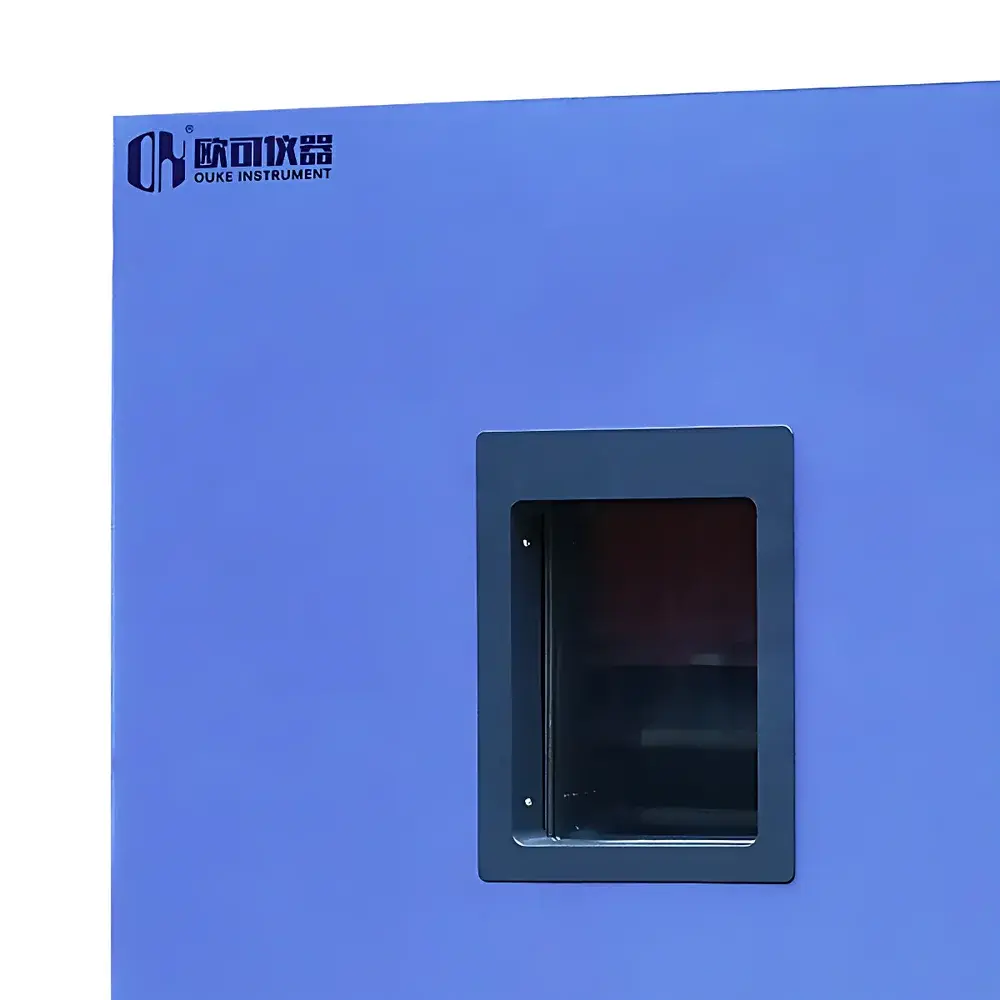
- Triple-layer vacuum-coated observation window with integrated low-power fluorescent lighting—optically stable, anti-fog, and maintenance-free under sustained high-humidity operation.
- Electrical isolation between humidification piping and control circuitry—compliant with IEC 61000-6-2 immunity standards and UL 61010-1 safety classification.
- LCD touchscreen controller with real-time graphical trend display, programmable multi-step profiles, and event-triggered logging (e.g., door open/close, alarm activation).
- Critical components sourced from globally certified suppliers: hermetic scroll compressors (rated for >30,000 hr MTBF), R404A/R23 eco-friendly refrigerant blend, and corrosion-resistant electrogalvanized steel interior chamber.
- Thermal insulation: 100 mm polyurethane foam (λ = 0.022 W/m·K) with seamless foaming process—reducing standby power consumption by 37% versus industry-standard 80 mm variants.
Sample Compatibility & Compliance
The OK-TH-100.0 accommodates samples up to 35 kg gross mass within its 100 L internal volume (500 × 500 × 400 mm). Load configuration supports standardized test fixtures—including DIN 50017-compliant sample racks, ISO 16750-4 mounting plates, and ASTM D4332 humidity exposure trays. It meets essential regulatory frameworks for product validation: compliance with ISO 14644-1 (cleanroom-compatible airflow design), adherence to IEC 60068-2-1 (cold), -2 (dry heat), -14 (change of temperature), and -30 (damp heat, cyclic) test methods, and full traceability support for GLP/GMP documentation workflows. Optional calibration certificates are available per ISO/IEC 17025:2017 with NIST-traceable references for temperature (PT100 Class A) and relative humidity (capacitive polymer sensor, ±1.5 % RH accuracy).
Software & Data Management
The embedded controller firmware supports USB export of CSV-formatted time-series data (temperature, humidity, setpoint, alarm status) at user-defined intervals (1 s to 60 min resolution). Optional Ethernet interface enables remote monitoring via Modbus TCP or HTTP REST API—compatible with LabVIEW™, MATLAB® Instrument Control Toolbox, and enterprise MES platforms (e.g., Siemens Opcenter, Rockwell FactoryTalk). Audit trails record all parameter modifications, user logins, and system events with timestamped digital signatures—fully aligned with FDA 21 CFR Part 11 electronic record requirements when paired with optional PKI authentication module.
Applications
- Automotive Electronics: Validation of battery management systems (BMS), onboard chargers (OBC), and ADAS sensors under combined thermal shock and damp heat per ISO 16750-4 and LV-124.
- Telecom Infrastructure: Long-duration reliability testing of 5G active antenna units (AAUs) and edge computing nodes under 85 °C/85 % RH stress per Telcordia GR-3108.
- Consumer Electronics: Accelerated life testing of OLED displays, lithium-ion pouch cells, and MEMS microphones per JEDEC JESD22-A108F and IEC 60068-2-78.
- Power Conversion Systems: Evaluation of photovoltaic inverters and energy storage converters for condensation resistance, dielectric strength degradation, and thermal cycling fatigue.
- Pharmaceutical Packaging: Stability studies per ICH Q1A(R2) and USP , including long-term (25 °C/60 % RH) and accelerated (40 °C/75 % RH) conditions.
FAQ
What is the maximum sample weight the OK-TH-100.0 can accommodate without compromising thermal uniformity?
The chamber maintains specified uniformity (±2 °C / ±3 % RH) with loads up to 35 kg, provided samples occupy ≤60% of internal volume and do not obstruct rear wall air inlets.
Does the unit support automated ramp-soak profiles with humidity coupling?
Yes—the controller permits fully synchronized temperature/humidity ramps, including dew point tracking mode where RH setpoint adjusts dynamically to maintain constant surface condensation risk.
Is third-party calibration certification included with purchase?
Factory calibration is performed pre-shipment using NIST-traceable references; ISO/IEC 17025-certified calibration reports are available as a configurable option.
Can the chamber operate continuously at −40 °C and 20 % RH simultaneously?
Yes—its cascade refrigeration architecture and dedicated desiccant-assisted dehumidification path enable concurrent extreme low-temperature/low-humidity operation without compressor overload or ice accumulation.
What maintenance intervals are recommended for optimal performance?
Compressor oil inspection every 12 months, condenser coil cleaning every 3 months (in non-cleanroom environments), and humidity sensor recalibration annually—or after 2000 cumulative hours of high-RH operation.



