
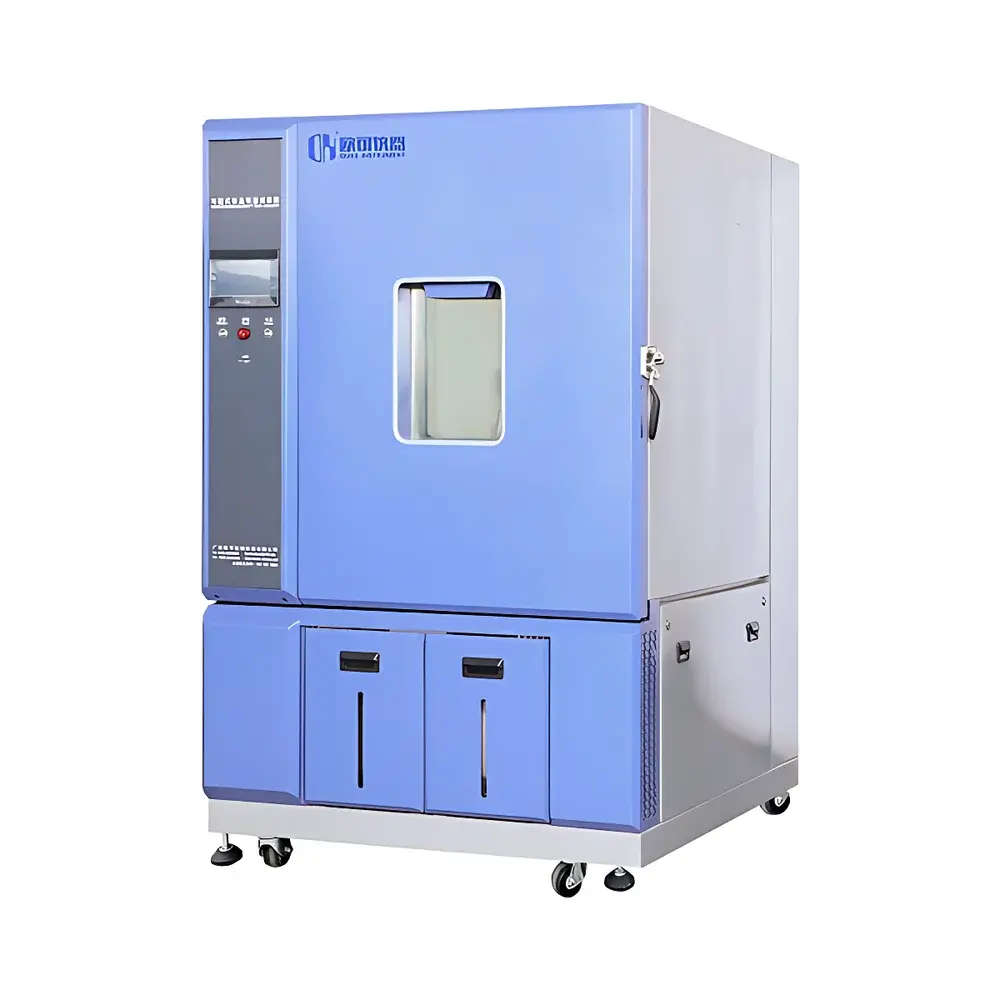
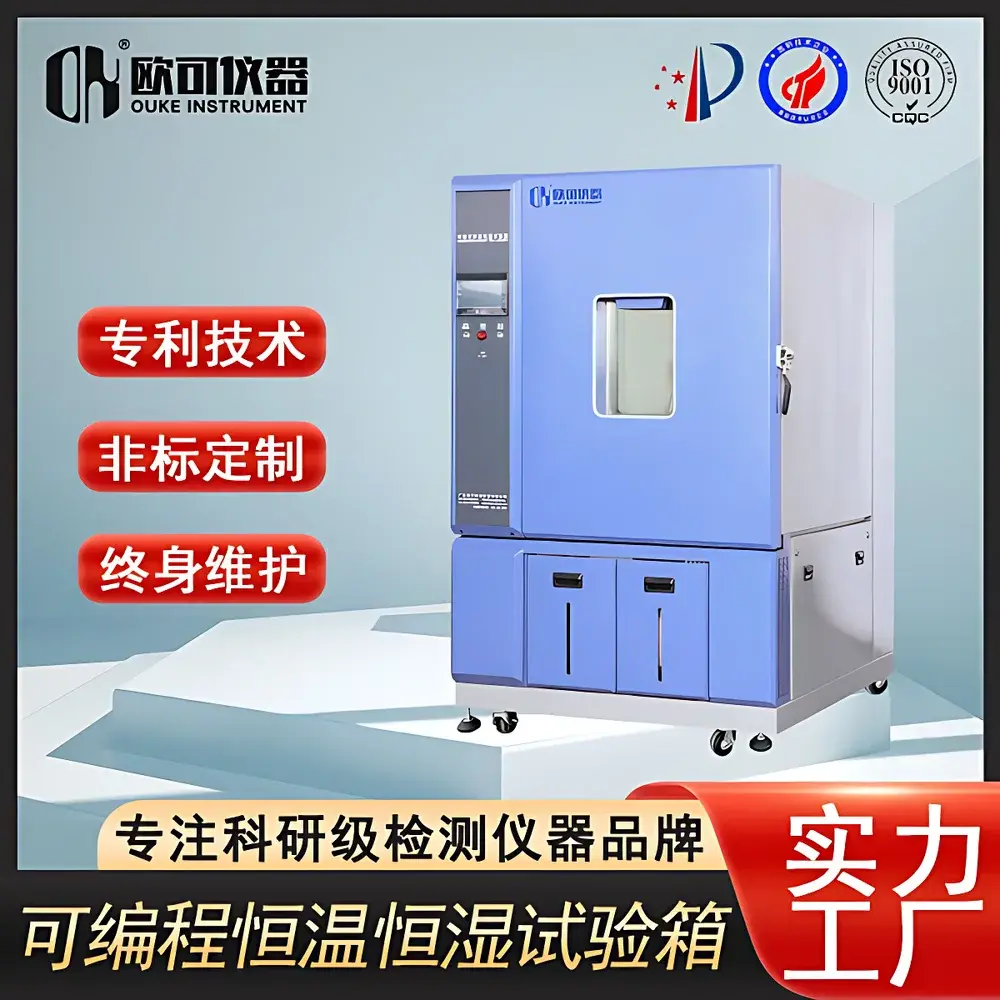
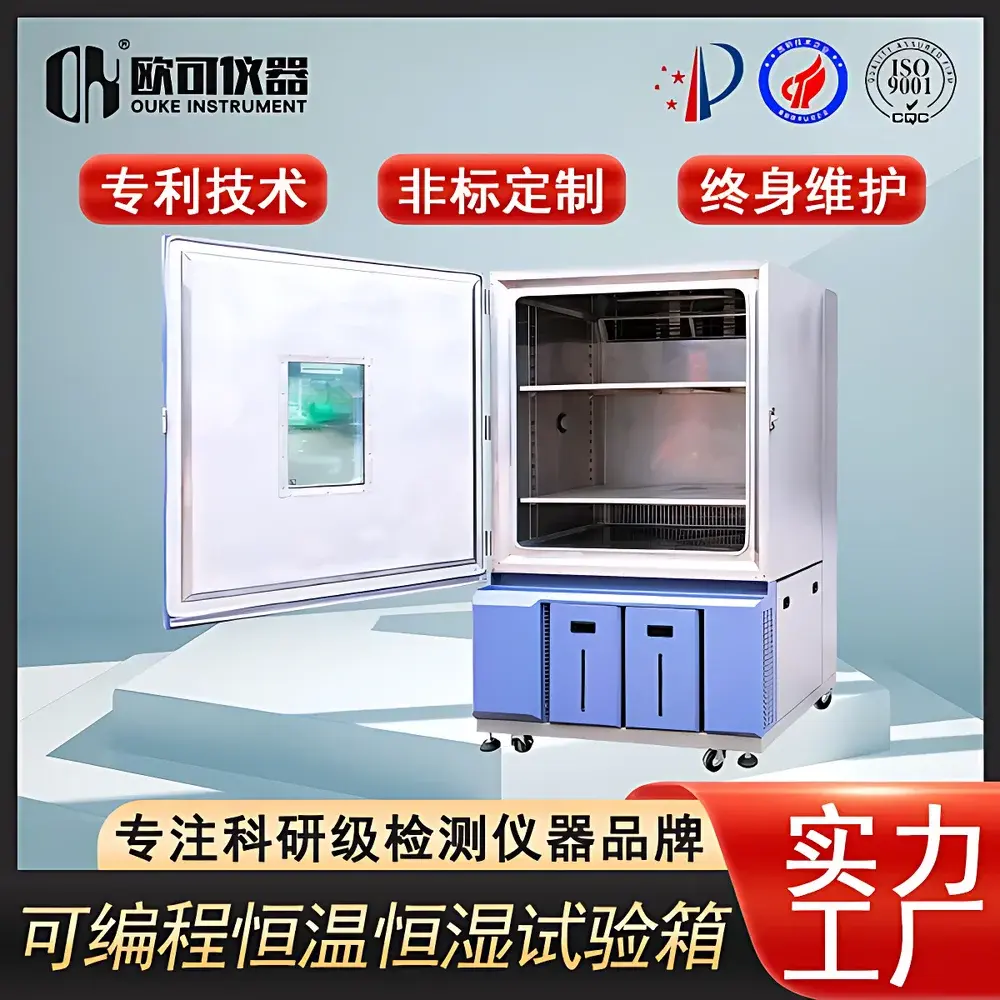
OK Instruments OK-TH-16 Battery-Specific Temperature and Humidity Environmental Test Chamber
| Brand | OK Instruments |
|---|---|
| Origin | Guangdong, China |
| Manufacturer Type | Direct Manufacturer |
| Product Category | Domestic |
| Model | OK-TH-16 |
| Instrument Type | Upright Chamber |
| Condensation Method | Water-Cooled |
| Temperature Range | −40 °C to +150 °C |
| Humidity Range | 20–98 % RH |
| Temperature Uniformity | ≤ ±2 °C |
| Temperature Fluctuation | ±1 °C (High Temp), ±2 °C (Low Temp) |
| Humidity Uniformity | ≤ ±3 % RH |
| Humidity Fluctuation | ±3 % RH |
| Heating Rate | 1.0–3.0 °C/min |
| Internal Chamber Dimensions (W×D×H) | 600 × 500 × 400 mm |
Overview
The OK Instruments OK-TH-16 Battery-Specific Temperature and Humidity Environmental Test Chamber is an engineered solution for rigorous environmental stress testing of lithium-ion, nickel-metal hydride, solid-state, and other electrochemical energy storage devices. It operates on the principle of forced-air convection with dual independent PID-controlled refrigeration and humidification subsystems, enabling precise, stable, and repeatable simulation of climatic conditions across a wide operational envelope. Designed specifically for battery R&D labs, quality assurance departments, and third-party certification facilities, this chamber supports standardized test protocols mandated by IEC 62133, UN Manual of Tests and Criteria Part III, Section 38.3, UL 1642, GB/T 31485, and ISO 12405 series. Its architecture prioritizes functional safety, data integrity, and long-term thermal-hygrometric stability—critical requirements when evaluating thermal runaway propagation, electrolyte volatility, separator integrity, and interfacial degradation under accelerated aging conditions.
Key Features
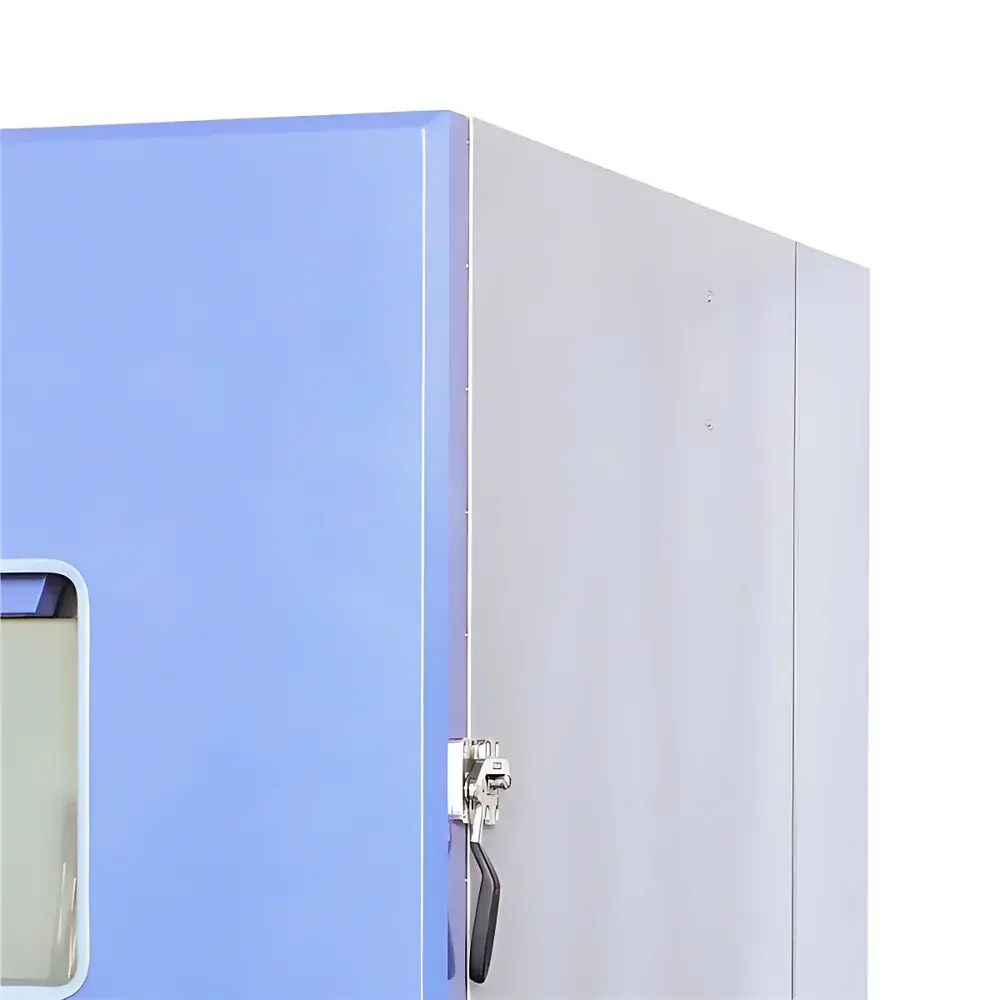
- Reinforced explosion-resistant chamber construction with pressure-relief venting mechanism and laminated anti-spall observation window compliant with IEC 60079-0 design principles.
- Stainless-steel inner chamber (AISI 304) with intrinsically safe internal components—including Ex-d rated lighting, spark-proof fan motors, and sealed humidity sensors—to eliminate ignition sources during volatile off-gas testing.
- Dedicated external exhaust interface (DN80 flanged port) compatible with activated carbon scrubbers or fume hood ducting for continuous removal of HF, CO, VOCs, and other decomposition byproducts.
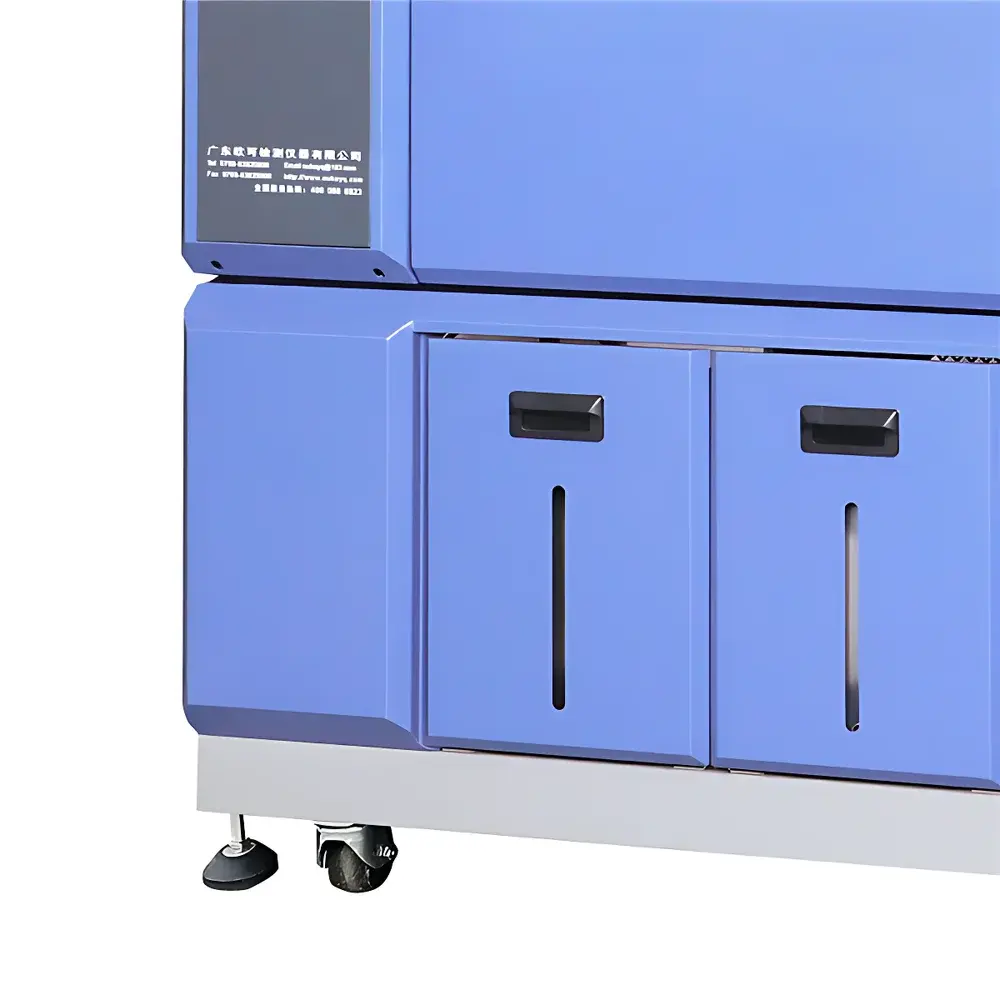
- Water-cooled refrigeration system ensures stable operation at high ambient temperatures and enables sustained performance at −40 °C without compressor cycling instability.
- Multi-layer thermal insulation (≥120 mm polyurethane foam + vacuum panel hybrid) minimizes heat leakage and improves temperature ramp linearity and recovery time after door opening.
- Independent dual-channel safety monitoring: redundant platinum RTD sensors with automatic cut-off at ±5 °C deviation; separate humidity over-limit shutdown at 100 % RH; real-time current leakage detection per IEC 61000-4-5.
Sample Compatibility & Compliance
The OK-TH-16 accommodates cylindrical (18650, 21700), prismatic, pouch, and custom-format cells up to 600 mm in height, with configurable mounting fixtures and integrated terminal access ports (4× insulated feedthroughs, rated to 600 V DC). All internal wiring complies with UL 758 and EN 50581 for hazardous location use. The chamber meets CE marking requirements under the Low Voltage Directive (2014/35/EU) and EMC Directive (2014/30/EU), and its control firmware supports audit-ready event logging aligned with GLP and GMP Annex 11 expectations. Optional calibration certificates traceable to NIM (China National Institute of Metrology) are available upon request.
Software & Data Management
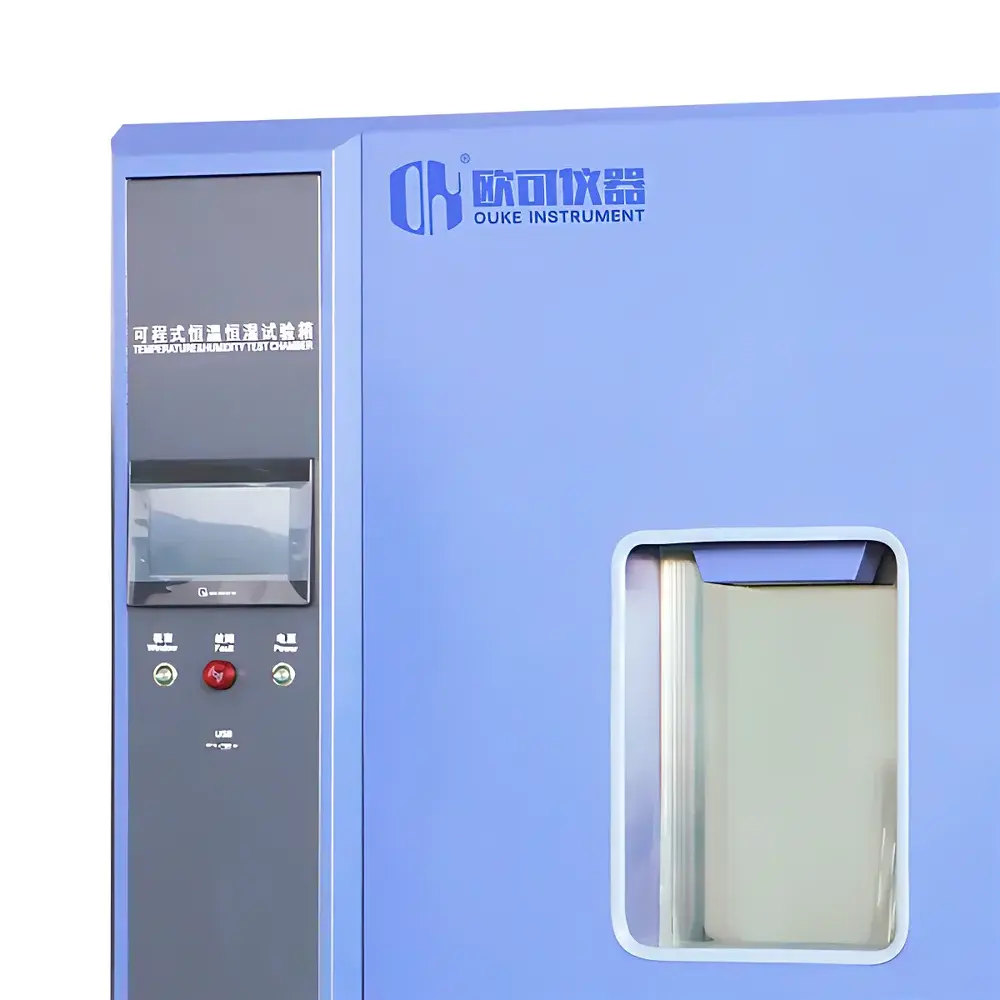
Equipped with OK-LogPro v3.2 embedded controller featuring a 10.1″ capacitive touchscreen HMI, the system provides real-time visualization of up to 16 user-defined parameters—including chamber setpoint, actual T/RH, ramp rate, and external voltage/temperature inputs via optional analog expansion modules. Data is logged at configurable intervals (1 s to 60 min) to internal SD card (32 GB) and simultaneously mirrored to networked NAS via Ethernet (TCP/IP). Export formats include CSV, PDF test reports, and XML-compliant datasets compatible with LIMS integration. Audit trail functionality records all operator actions, parameter modifications, and alarm events with timestamp, user ID, and IP address—fully compliant with FDA 21 CFR Part 11 requirements when paired with digital signature module.
Applications
- Accelerated life testing per IEC 62660-2: evaluation of capacity fade and impedance rise under 45 °C/93 % RH storage.
- Thermal shock validation using programmable two-step profiles (e.g., −40 °C ↔ +85 °C, 30 min dwell, 5 °C/min transition).
- UL 1642 clause 10.2.2 abusive charging tests under elevated humidity to assess dendrite-induced short-circuit risk.
- UN 38.3 T1–T5 sequence execution including high-temperature storage (72 h at +75 °C), thermal cycling (−40 °C ↔ +75 °C, 10 cycles), and altitude simulation (via optional vacuum interface).
- Material compatibility screening: sealing gasket swelling, aluminum can corrosion, and polymer electrolyte hydrolysis kinetics.
FAQ
Does the OK-TH-16 support automated temperature/humidity ramp-and-soak profiles?
Yes—up to 99 segments per program, with individual slope control, dwell time, and loop repetition capability.
Can external battery voltage and surface temperature signals be acquired and synchronized with chamber data?
Yes—four isolated analog inputs (0–10 V / 4–20 mA) are standard; additional channels available via optional I/O expansion module.
Is remote monitoring and control possible via LAN or cloud?
Yes—the embedded web server supports secure HTTPS access, Modbus TCP protocol, and SNMP v3 traps for enterprise SCADA integration.
What is the recommended maintenance interval for the water-cooled condenser?
Quarterly descaling and annual coolant replacement are advised; OK Instruments provides OEM-certified service kits and field technician dispatch.
Are validation documents (IQ/OQ/PQ) included with delivery?
Factory-issued IQ/OQ documentation is provided; PQ execution requires site-specific sensor mapping and is supported by OK’s certified validation engineers.



