
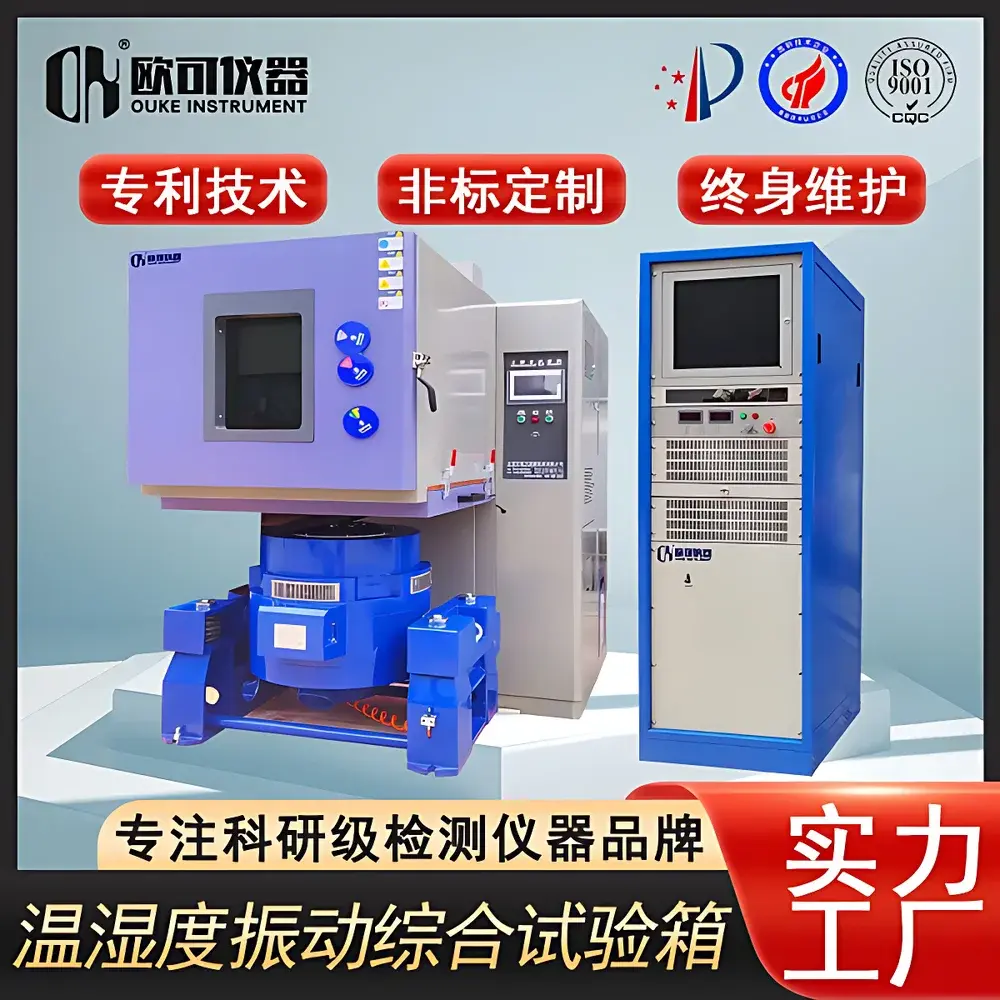
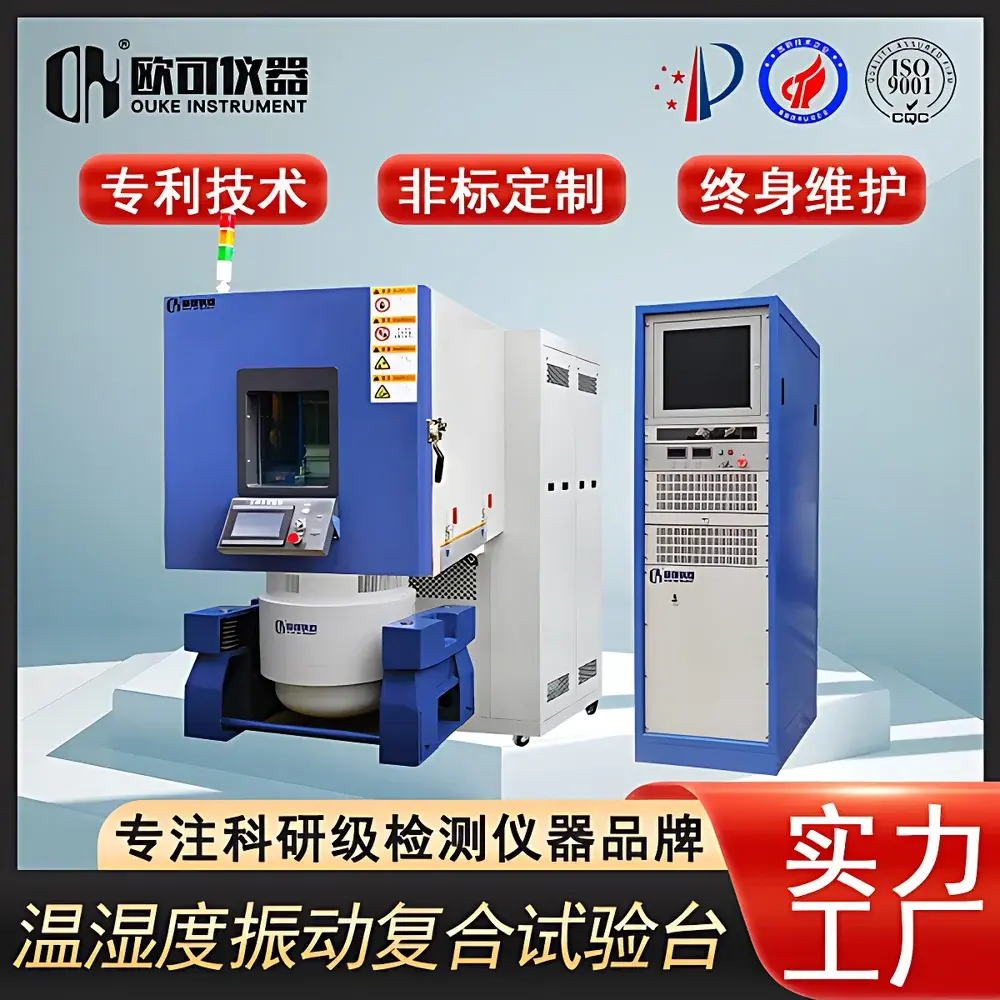
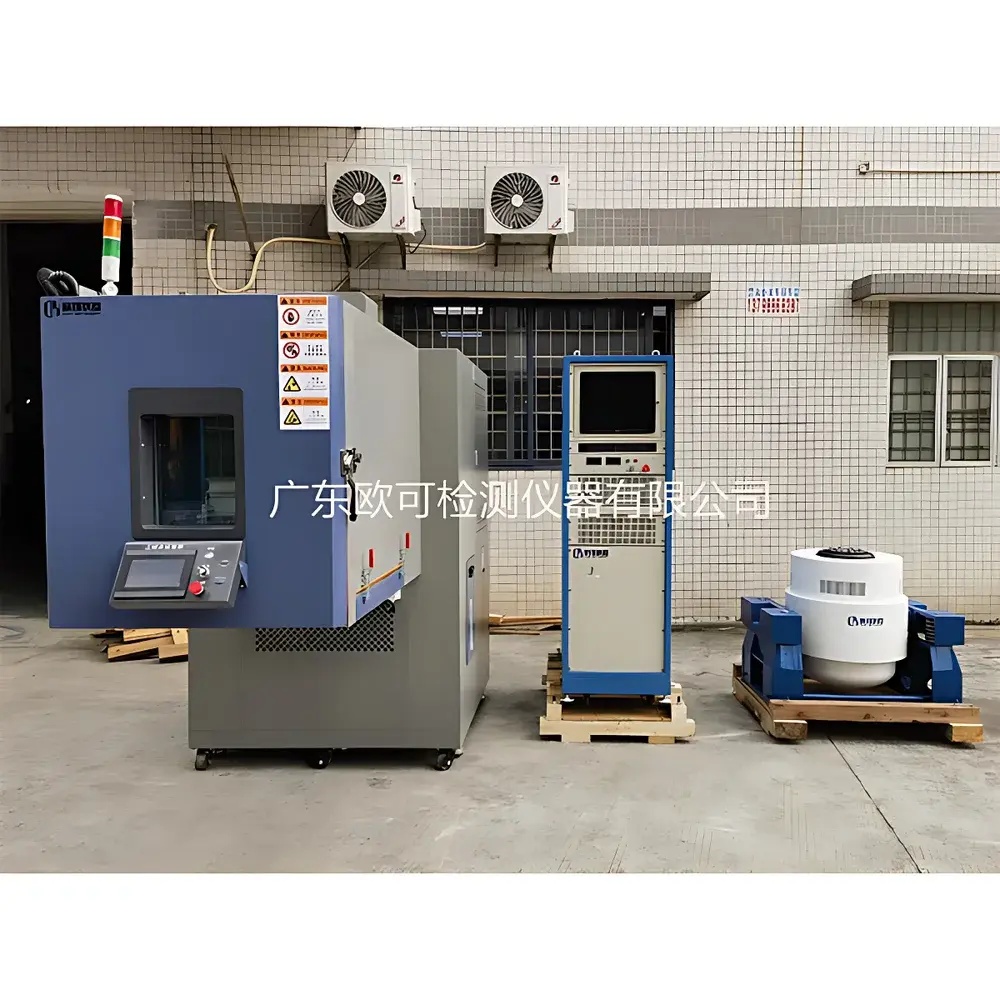
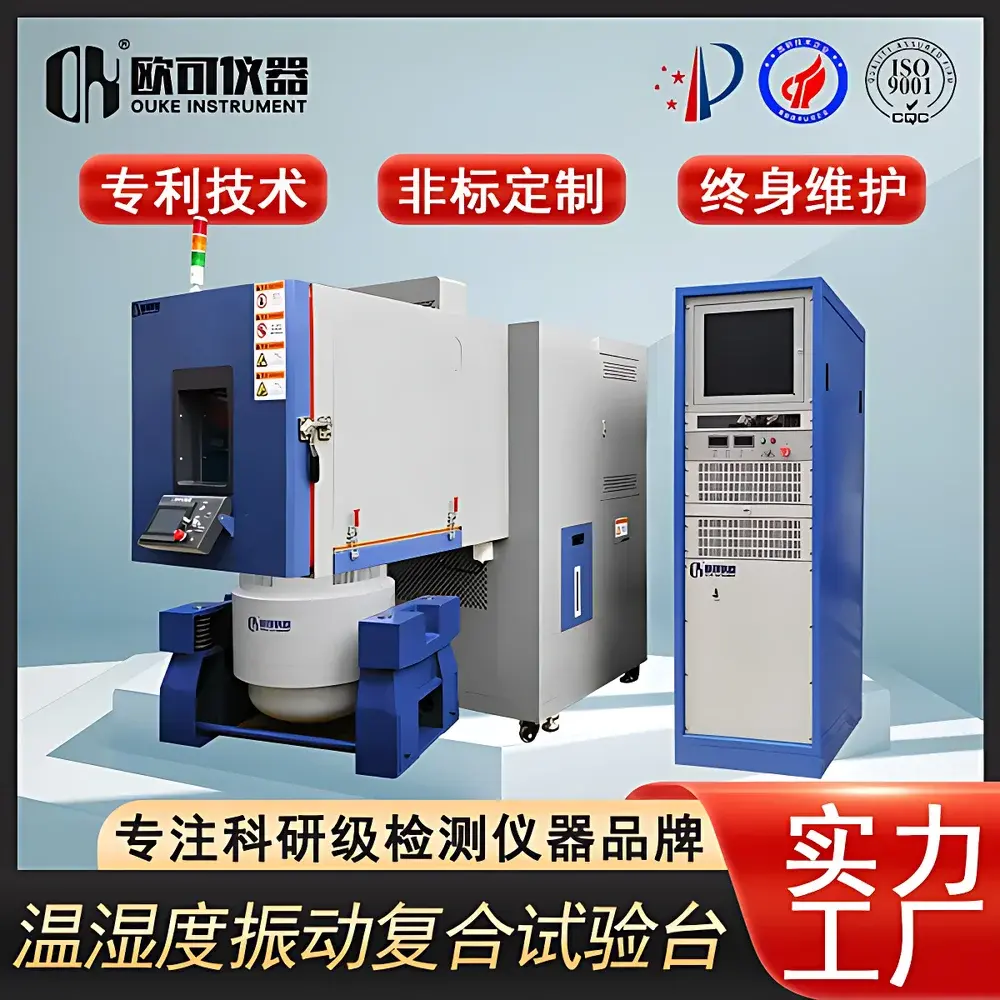
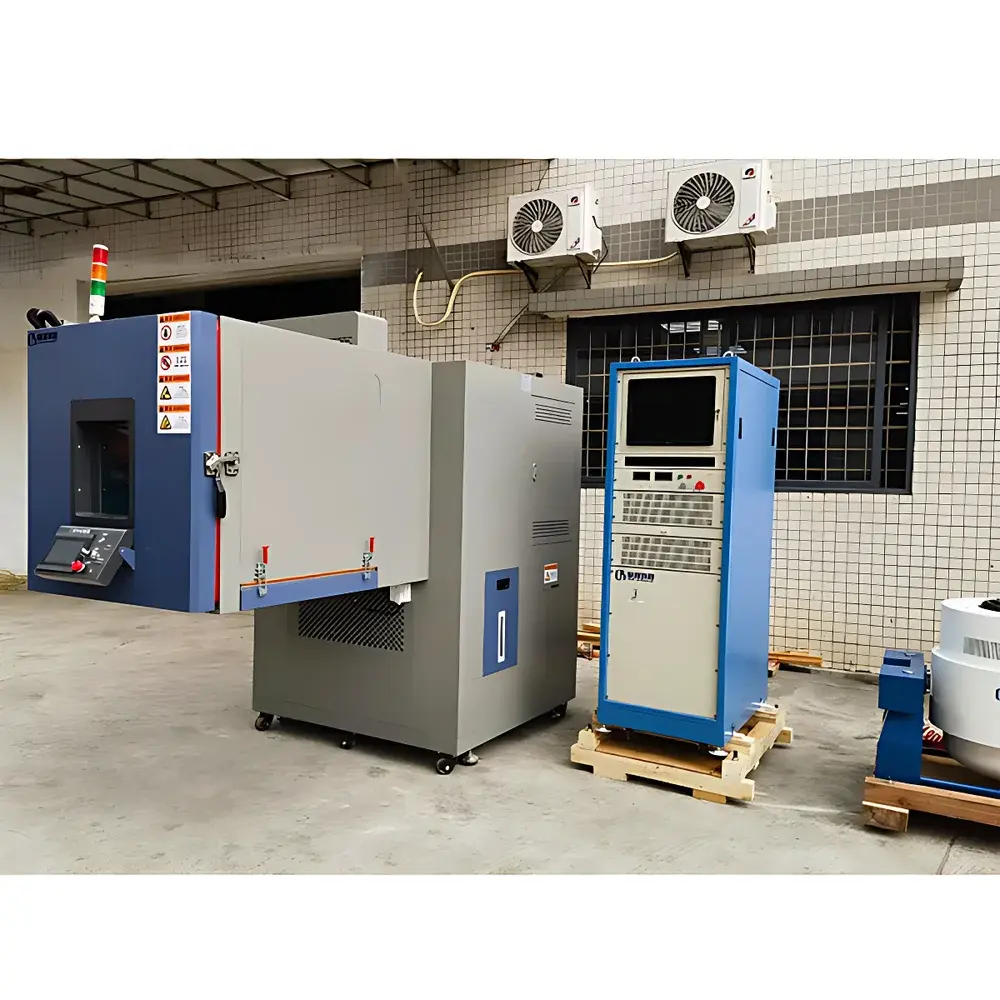
OK Instruments OK-ZTH-1000.36 Combined Temperature-Humidity-Vibration Test System
| Brand | OK Instruments |
|---|---|
| Origin | Guangdong, China |
| Manufacturer Type | Direct Manufacturer |
| Product Category | Domestic |
| Model | OK-ZTH-1000.36 |
| Temperature Range | −70 °C to +150 °C |
| Humidity Range | 20–98 %RH at 20–85 °C |
| Temperature Ramp Rate | 5 / 10 / 15 °C/min |
| Temperature Uniformity | ≤ ±0.5 °C |
| Standard Load Capacity | 15 kg aluminum mass, 350 W internal heat dissipation |
Overview
The OK Instruments OK-ZTH-1000.36 Combined Temperature-Humidity-Vibration Test System is an integrated environmental reliability platform engineered for automotive component validation under multi-stress conditions. It simultaneously applies controlled thermal cycling, humidity exposure, and mechanical vibration—mimicking real-world operational environments encountered during vehicle development, manufacturing qualification, and regulatory compliance testing. The system operates on a triaxial stress-coupling principle: temperature and humidity are regulated within a sealed climatic chamber mounted directly atop a high-fidelity electrodynamic shaker; vibration profiles (sine sweep, random, transient) are precisely synchronized with thermal-hygrometric transients via a centralized deterministic control architecture. This architecture ensures temporal alignment of stress application down to millisecond-level resolution—critical for reproducing failure modes such as condensation-induced short circuits, thermomechanical fatigue in solder joints, or hygroscopic swelling in polymer-based interior trim.
Key Features
- Triple-stress integration: Fully synchronized control of temperature (−70 °C to +150 °C), relative humidity (20–98 %RH over 20–85 °C), and broadband vibration (frequency range and acceleration capability dependent on configured shaker module).
- High-rate thermal profiling: Programmable ramp rates up to 15 °C/min, enabling accelerated thermal shock evaluation per ISO 16750-4 and GMW 3172 Section 5.2.
- Stable climatic chamber: Achieves ≤ ±0.5 °C temperature fluctuation and uniformity across working volume; humidity control maintains traceable stability within ±2 %RH under dynamic load conditions.
- Modular shaker interface: Designed for direct mechanical coupling with standard electrodynamic vibration systems (e.g., LDS V875, TIRA TV 50120); supports payload up to 15 kg including fixture and DUT, with maximum power dissipation of 350 W accommodated without chamber performance degradation.
- Robust structural integration: Reinforced chamber baseplate with precision-machined mounting interface minimizes modal interference between thermal and vibrational domains—validated via modal analysis per ASTM E1876.
- Comprehensive safety architecture: Includes dual-channel independent overtemperature cutoff, humidity saturation alarm, emergency stop with hardware interlock, and real-time shaker armature displacement monitoring.
Sample Compatibility & Compliance
The OK-ZTH-1000.36 is validated for testing automotive components across powertrain, chassis, body electronics, and interior systems. Typical DUT categories include battery management systems (BMS), ADAS sensors (radar, camera housings), infotainment displays, HVAC actuators, and high-voltage connectors. The system supports test execution compliant with international and OEM-specific standards including ISO 16750-4 (Environmental conditions and electrical testing for electrical and electronic equipment), ISO 19453-2 (Electrically propelled road vehicles — Environmental conditions), SAE J1211 (Recommended Practice for Reliability of Automotive Electrical/Electronic Components), and Volkswagen VW 80000 (Environmental stress screening). All control algorithms and data logging meet GLP/GMP-aligned traceability requirements; audit trails, user access levels, and electronic signature support are configurable to align with FDA 21 CFR Part 11 readiness protocols.
Software & Data Management
Control and monitoring are executed through OK Instruments’ proprietary TriSync™ software suite, built on a deterministic real-time OS (QNX-based). The interface enables simultaneous definition of multi-segment temperature/humidity ramps and vibration spectra—including time-history waveforms, PSD profiles, and mixed-mode sequences. Real-time data acquisition records up to 128 channels at 10 kHz sampling rate, with synchronized timestamping referenced to GPS-disciplined clock. Export formats include IEEE C37.118-compliant CSV, HDF5, and ASAM MDF 4.2. All raw and processed datasets are stored with immutable metadata: operator ID, calibration certificate IDs, environmental chamber sensor drift logs, and shaker force feedback residuals—ensuring full reproducibility and audit readiness.
Applications
- Pre-validation of EV battery enclosures under combined thermal cycling and road-spectrum vibration to assess seal integrity and thermal interface material performance.
- Reliability screening of automotive-grade microcontrollers exposed to condensing humidity cycles while undergoing resonant frequency sweeps.
- Design verification of LED headlamp assemblies subjected to rapid temperature transitions (−40 °C ↔ +85 °C) under 5–2000 Hz random vibration per Ford FLTM BI 101-05.
- Failure mode analysis of MEMS pressure sensors under simultaneous high-humidity soak (85 %RH/85 °C) and low-frequency sinusoidal excitation (10–50 Hz).
- Qualification testing of charging port assemblies per GB/T 18487.1 and IEC 62196-2, incorporating thermal soak, humidity dwell, and mechanical mating/unmating vibration profiles.
FAQ
What standards does the OK-ZTH-1000.36 support out-of-the-box?
The system includes preloaded test templates for ISO 16750-4, SAE J1211, and GMW 3172. Custom profile libraries can be imported in ASCII or ASAM ODS format.
Can the chamber accommodate fixtures with active cooling or heating elements?
Yes—the 350 W internal heat load rating accounts for both passive DUT thermal mass and actively powered fixtures, provided total convective and conductive heat transfer remains within chamber thermal capacity limits.
Is remote monitoring and control supported?
TriSync™ software includes TLS-secured web-based HMI accessible via corporate intranet or VPN; no cloud dependency or external data routing is required.
How is synchronization accuracy between temperature and vibration verified?
Each system undergoes factory calibration using NIST-traceable thermal transient generators and laser Doppler vibrometer reference measurements; synchronization jitter is certified ≤ ±2 ms across full operating range.
Does OK Instruments provide installation and validation services?
IQ/OQ documentation packages compliant with ISO/IEC 17025 are available; on-site FAT (Factory Acceptance Test) and SAT (Site Acceptance Test) support is included in extended warranty options.



