
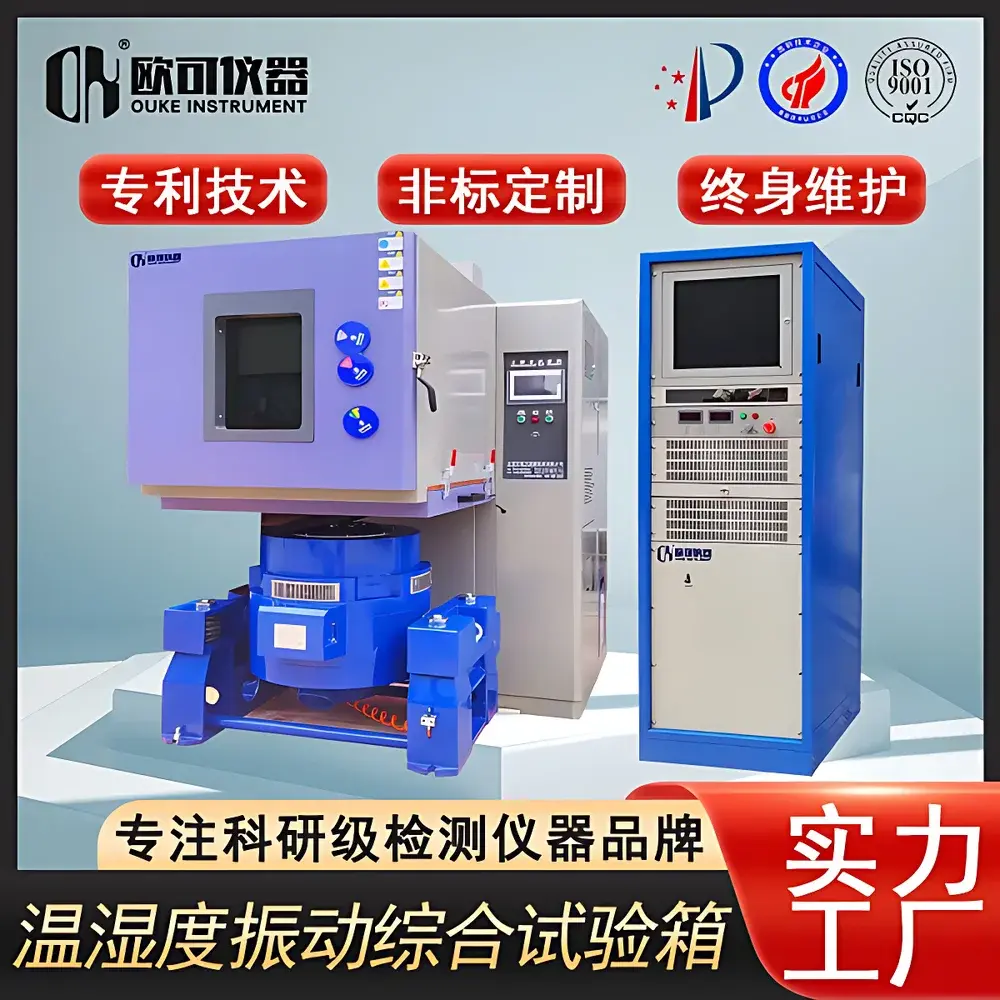
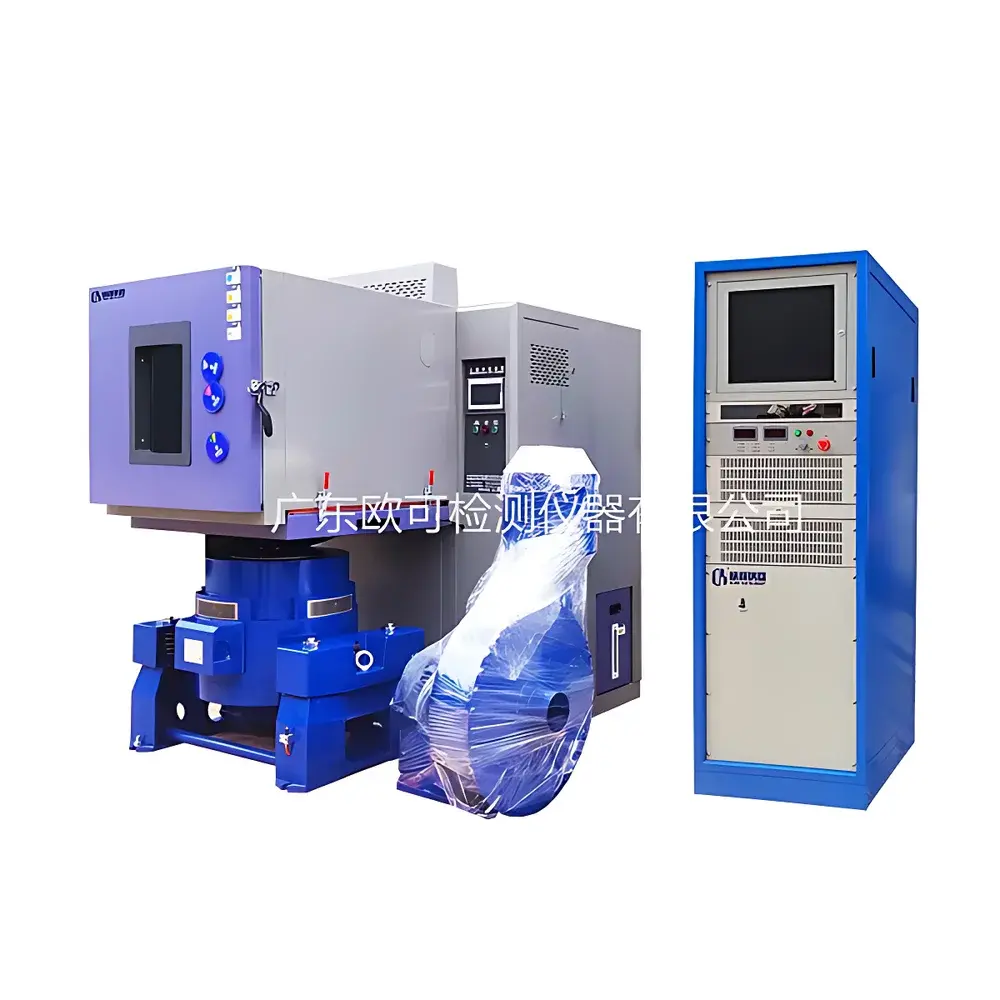
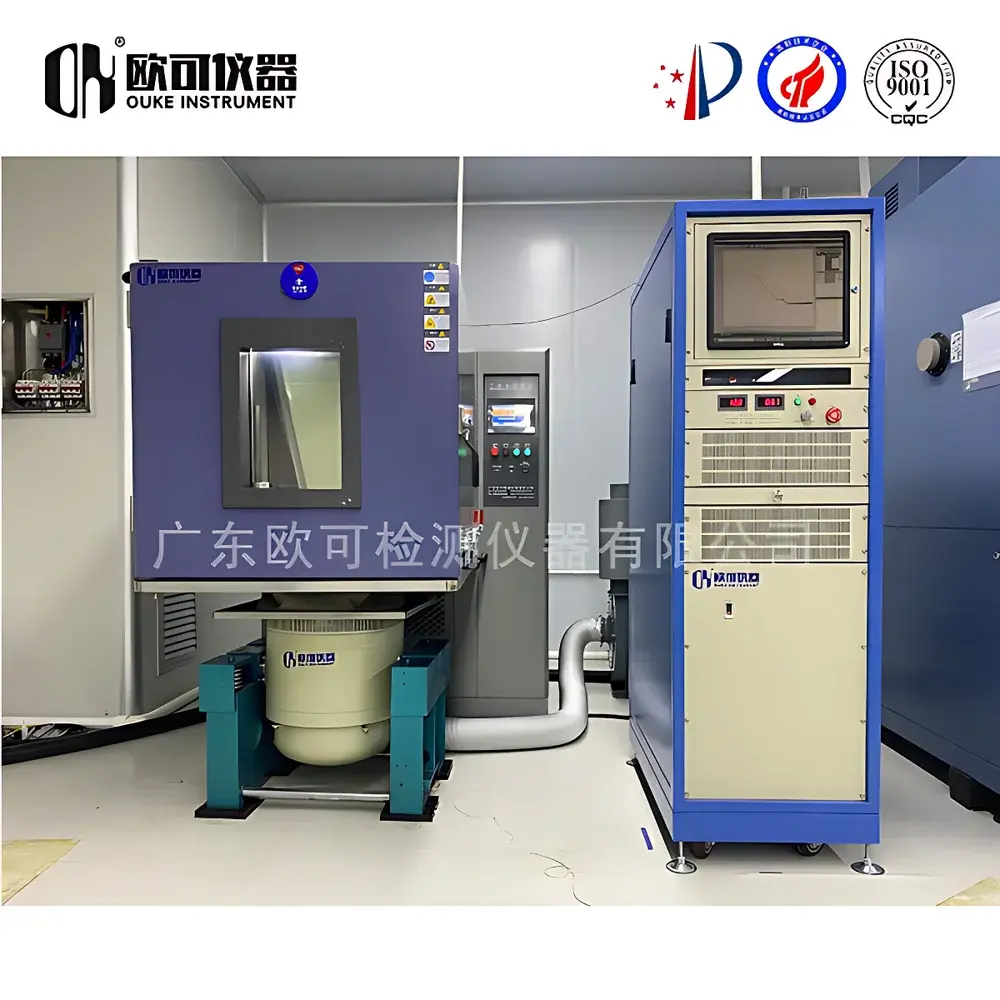
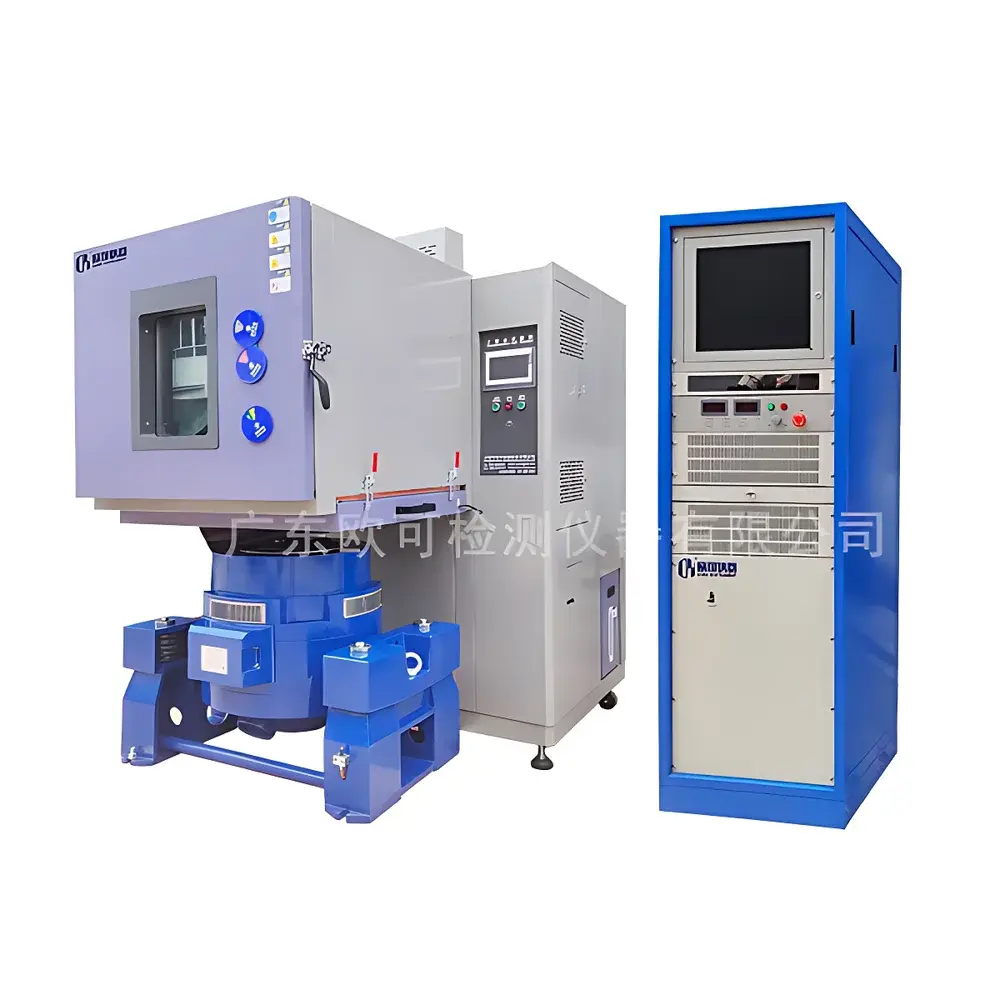
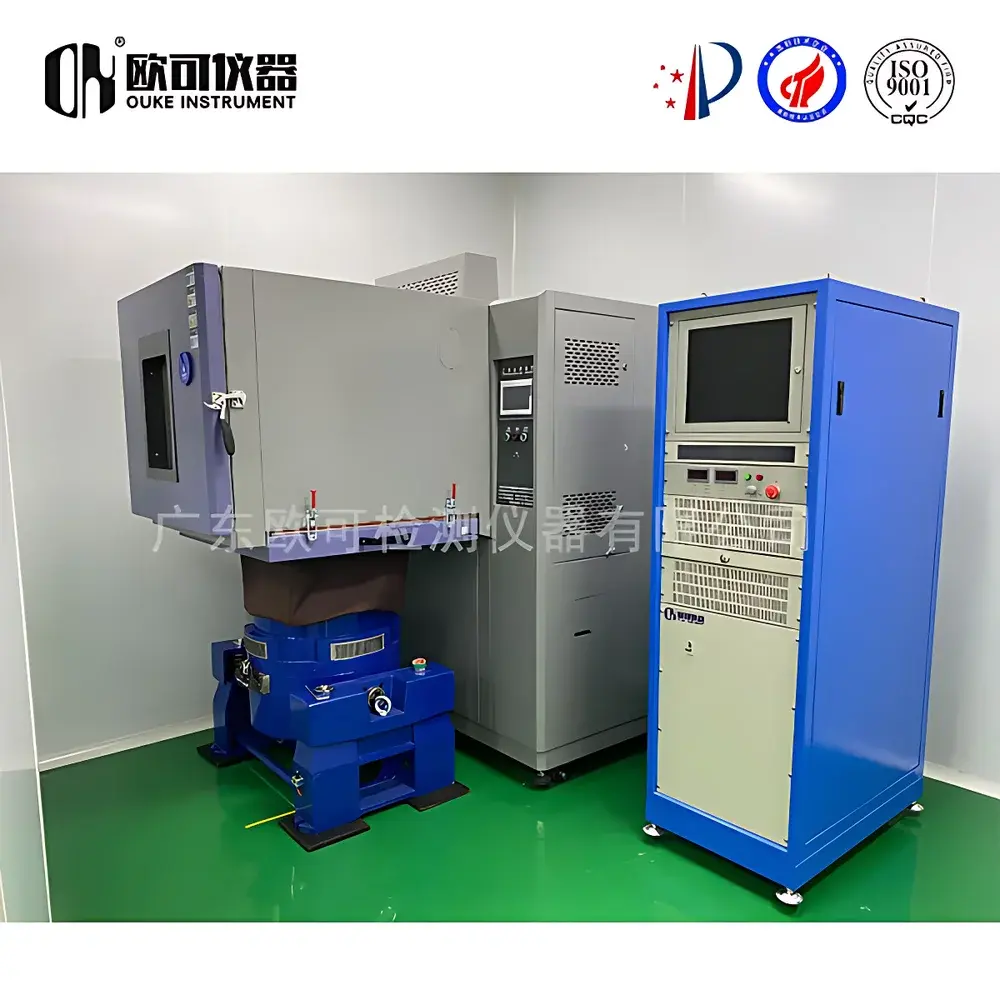
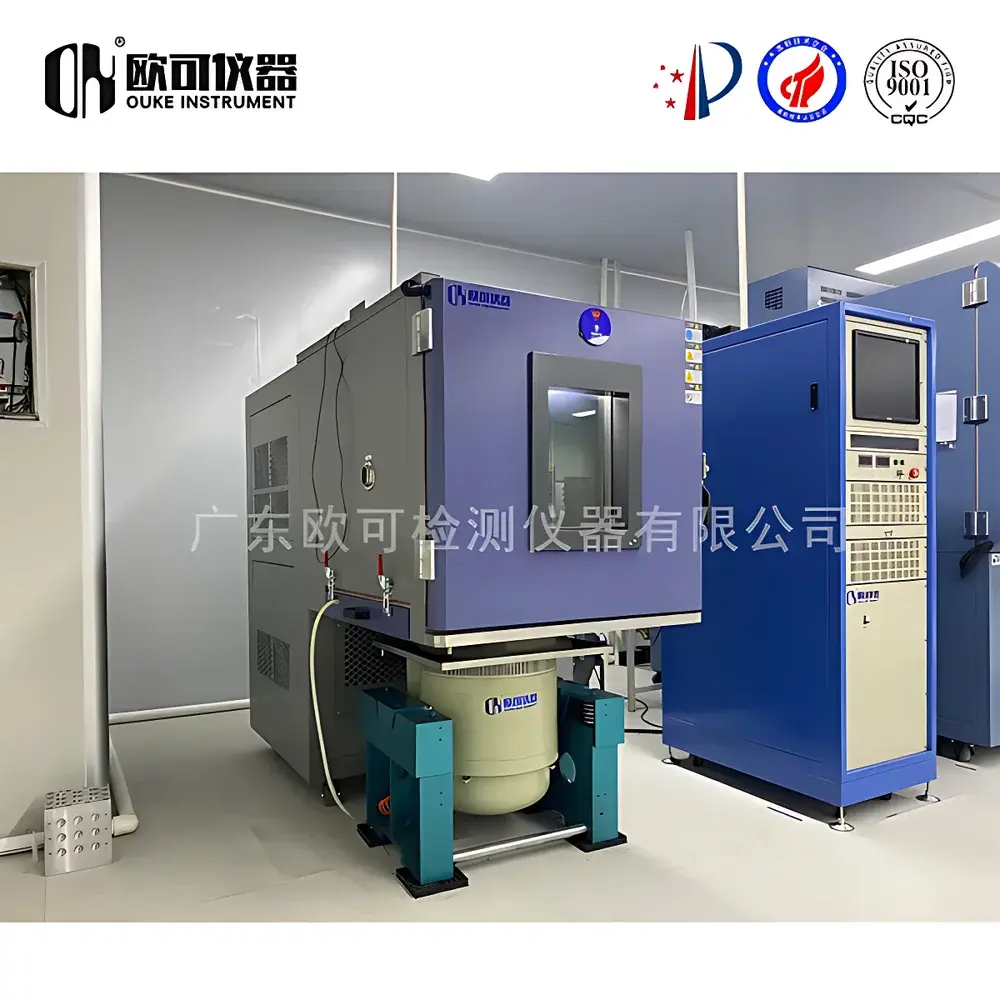
OK Instruments OK-ZTH-1440.15 Combined Temperature-Humidity-Vibration Test System
| Brand | OK Instruments |
|---|---|
| Origin | Guangdong, China |
| Manufacturer Type | Direct Manufacturer |
| Product Origin | Domestic (China) |
| Model | OK-ZTH-1440.15 |
| Temperature Range | −70 °C to +150 °C |
| Humidity Range | 20–98 %RH at 20–85 °C |
| Temperature Ramp Rate | 5 / 10 / 15 °C/min |
| Temperature Uniformity & Stability | ≤ ±0.5 °C |
| Standard Load Capacity | 15 kg aluminum mass (350 W thermal dissipation) |
Overview
The OK Instruments OK-ZTH-1440.15 Combined Temperature-Humidity-Vibration Test System is an integrated environmental stress screening platform engineered for simultaneous, synchronized application of thermal, hygric, and mechanical (vibrational) stresses. It operates on the principle of multi-stress coupling—where temperature cycling, controlled relative humidity, and programmable vibration profiles (sinusoidal, random, or transient shock) are executed in precise temporal coordination within a single test chamber. This architecture enables replication of real-world operational and logistical environments where products experience concurrent stressors: e.g., automotive ECUs subjected to road-induced vibration while operating under engine-bay thermal transients; avionics exposed to rapid altitude-driven cooling combined with aerodynamic excitation; or battery modules undergoing thermal soak and mechanical resonance during transport simulation. Unlike sequential single-stress testing, this system induces coupled failure modes—including interfacial delamination, solder joint fatigue, connector fretting corrosion, gasket compression set, and piezoelectric sensor drift—that remain undetected under isolated conditions.
Key Features
- Triple-stress synchronization: Integrated master controller coordinates temperature ramping, humidity modulation, and vibration profile execution with sub-second timing resolution and phase-lock capability.
- High-fidelity thermal subsystem: Dual-stage refrigeration (cascade compressor system) enables stable operation down to −70 °C; resistive heating elements support up to +150 °C with ≤ ±0.5 °C chamber uniformity (measured per IEC 60068-3-5).
- Humidity control precision: Steam-generation humidification and refrigerant-based dehumidification maintain 20–98 %RH across 20–85 °C, compliant with IEC 60068-2-78 test methods.
- Vibration interface: Electrodynamically driven shaker table (integrated via low-thermal-conductance extension head) delivers controlled motion to samples inside the climate chamber without compromising environmental integrity.
- Structural isolation: Active/passive vibration isolation base minimizes floor-transmitted interference and prevents cross-coupling between chamber and external instrumentation.
- Robust chamber construction: Double-wall stainless-steel enclosure with high-efficiency polyurethane insulation ensures long-term thermal stability and condensation-free operation during rapid transitions.
Sample Compatibility & Compliance
The OK-ZTH-1440.15 accommodates standard test specimens up to 15 kg mass (aluminum reference load), with thermal dissipation capacity of 350 W—sufficient for active electronic assemblies under bias. Chamber internal dimensions support typical automotive ECU housings, PCB subassemblies, and small-scale aerospace components. The system supports full compliance with internationally recognized environmental test standards, including MIL-STD-810H Method 520.5 (Combined Stress), IEC 60068-2-68 (Combined Temperature/Humidity/Vibration), RTCA DO-160G Section 21 (Environmental Conditions and Test Procedures for Airborne Equipment), and ISO 16750-4 (Road Vehicles – Environmental Conditions for Electrical and Electronic Equipment). All control algorithms and data logging meet GLP/GMP traceability requirements, with optional FDA 21 CFR Part 11-compliant audit trail functionality available upon configuration.
Software & Data Management
The embedded OK-TestSuite™ control software provides intuitive graphical programming of multi-segment test sequences—including nested loops, conditional branching, and real-time parameter overrides. Each test run generates time-synchronized datasets for temperature, humidity, acceleration (X/Y/Z axes), displacement, and chamber pressure, timestamped to microsecond resolution. Raw data export is supported in CSV, HDF5, and MATLAB .mat formats. Remote monitoring and alarm notification (email/SNMP) are enabled via Ethernet/IP. For regulatory environments, optional validation packages include IQ/OQ documentation, uncertainty budgets per ISO/IEC 17025, and electronic signature workflows aligned with Annex 11 and GAMP5 guidelines.
Applications
- Automotive R&D: Validation of ADAS sensors, powertrain control units, and EV battery management systems under combined thermal shock and road-spectrum vibration.
- Aerospace qualification: Screening of satellite payload electronics for launch vibration + upper-atmosphere thermal cycling.
- Medical device reliability: Accelerated life testing of implantable pulse generators under simulated body-temperature humidity and physiological motion profiles.
- Industrial IoT hardware: Stress testing of edge computing nodes deployed in outdoor enclosures subject to diurnal cycling and wind-induced resonance.
- Defense electronics: MIL-SPEC conformance testing of ruggedized communication terminals under tactical transport scenarios.
FAQ
What is the maximum sample size that can be mounted on the internal vibration table?
The internal shaker interface supports fixtures up to 400 mm × 400 mm footprint, with vertical clearance of 350 mm above the mounting surface. Custom adapter plates and lightweight composite fixtures are recommended for optimal dynamic response.
Does the system support real-time vibration spectrum editing during a temperature ramp?
Yes—the controller permits dynamic update of PSD profiles, sine sweep parameters, or shock pulse definitions while maintaining synchronized thermal/hygric setpoints, enabling adaptive stress profiling based on in-situ diagnostics.
Is calibration traceable to national metrology institutes?
All factory calibrations are performed using NIST-traceable reference standards for temperature (PRTs), humidity (chilled-mirror hygrometers), and acceleration (laser interferometry), with certificates issued per ISO/IEC 17025.
Can the system be integrated into an existing test lab automation framework?
Yes—it features Modbus TCP, OPC UA, and RESTful API interfaces for seamless integration with MES, LIMS, and automated test executive platforms such as NI TestStand or Keysight PathWave.
What maintenance intervals are recommended for long-term operational reliability?
Preventive maintenance is scheduled every 1,000 operating hours or annually—whichever occurs first—with emphasis on refrigerant charge verification, shaker armature alignment, humidity sensor recalibration, and controller firmware updates.



