
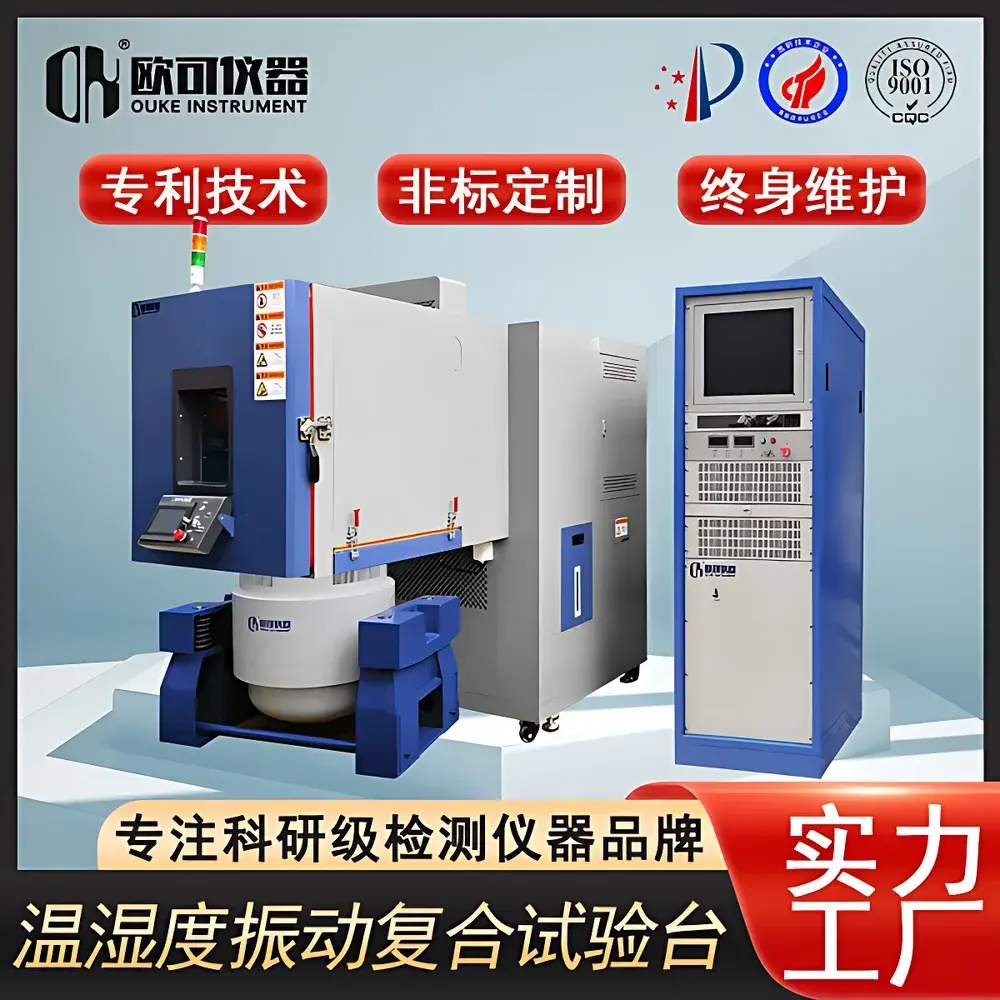
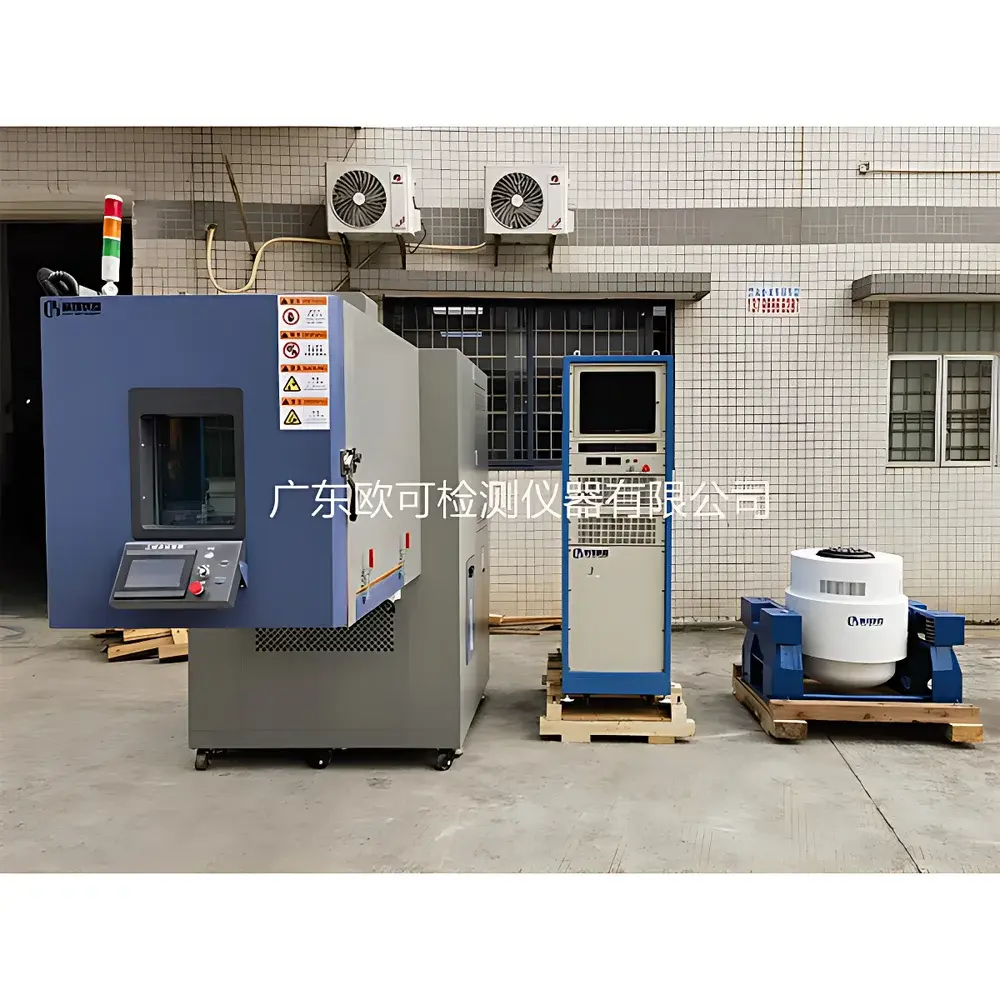
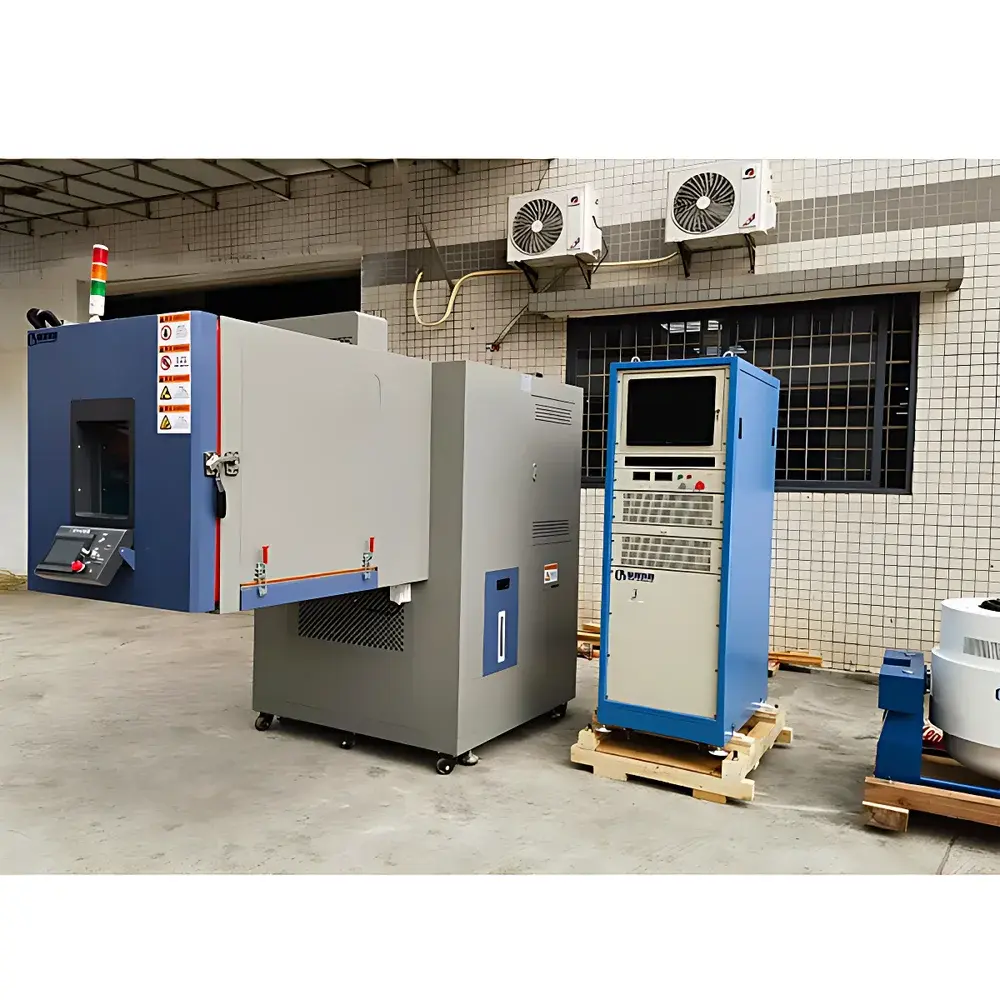
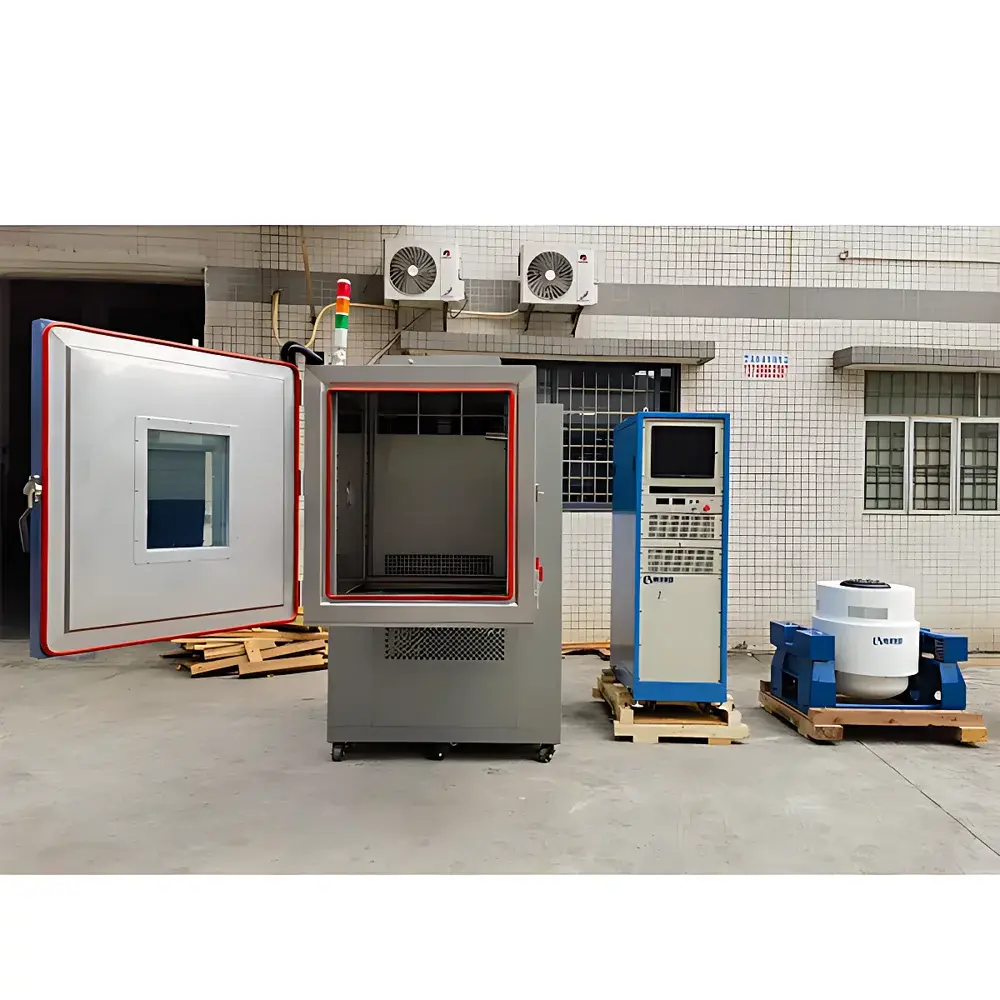
OK Instruments OK-ZTH-1440.36 Combined Temperature-Humidity-Vibration Test System
| Brand | OK Instruments |
|---|---|
| Origin | Guangdong, China |
| Manufacturer Type | Direct Manufacturer |
| Product Category | Domestic |
| Model | OK-ZTH-1440.36 |
| Temperature Range | −70 °C to +150 °C |
| Humidity Range | 20–98 %RH at 20–85 °C |
| Temperature Ramp Rate | 5 / 10 / 15 °C/min |
| Temperature Uniformity | ≤ ±0.5 °C |
| Standard Load Capacity | 15 kg aluminum mass (350 W thermal dissipation) |
Overview
The OK Instruments OK-ZTH-1440.36 Combined Temperature-Humidity-Vibration Test System is an integrated environmental reliability platform engineered for simultaneous or sequenced application of thermal, hygric, and mechanical stress stimuli. Unlike stacked single-stress chambers, this system employs a unified control architecture that synchronizes temperature conditioning, humidity regulation, and electrodynamic vibration excitation within a single test volume—enabling physically coherent multi-stress exposure aligned with real-world operational and transportation environments. Its core measurement paradigm follows the principles of accelerated life testing (ALT) and highly accelerated stress screening (HASS), where synergistic interactions among temperature gradients, moisture diffusion, and dynamic mechanical loading are leveraged to precipitate latent design, material, or process defects. The system complies with foundational test methodology frameworks including IEC 60068-2, MIL-STD-810H, ISO 16750-4, and GB/T 2423 series standards—ensuring traceability to internationally recognized qualification protocols.
Key Features
- Integrated tri-stress architecture: Simultaneous or programmable sequential control of temperature, relative humidity, and vibration—enabled by synchronized PID/PLC-based master controller with real-time cross-coupling compensation.
- Thermal subsystem: Dual-stage cascade refrigeration system with nickel-chromium alloy heating elements; achieves stable operation across −70 °C to +150 °C with ramp rates configurable at 5, 10, or 15 °C/min (linear).
- Humidity subsystem: Steam-generation humidification combined with evaporative dehumidification via chilled coil condensation; maintains 20–98 %RH accuracy within ±2 %RH tolerance over 20–85 °C operating band.
- Vibration subsystem: Electromagnetic shaker integrated beneath chamber baseplate; features rigid vertical coupling through sealed feedthrough shaft to internal test table—designed to minimize thermal leakage and maintain chamber integrity during dynamic operation.
- Structural integration: Reinforced stainless-steel inner chamber with double-wall insulation, silicone-sealed observation window, and multiple standardized test ports (Φ50 mm, Φ100 mm) fitted with hermetic gland connectors for signal/power feedthrough.
- Safety & monitoring: Comprehensive protection suite includes overtemperature cutoff, refrigerant pressure monitoring, vibration fault detection, ground-fault circuit interruption (GFCI), and real-time thermal runaway prevention logic.
Sample Compatibility & Compliance
The OK-ZTH-1440.36 accommodates samples up to 15 kg mass with maximum power dissipation of 350 W under nominal thermal load conditions. Chamber internal dimensions support typical electronics enclosures, automotive ECUs, avionics modules, and industrial sensors. All operational modes—including synchronous triple-stress profiling, humidity-soak + vibration burst, and temperature cycling with superimposed random vibration—are fully compliant with test plan requirements defined in IEC 60068-2-6 (vibration), IEC 60068-2-30 (damp heat cyclic), and MIL-STD-810H Method 514.7 (vibration) and Method 502.7 (temperature/humidity). Data acquisition timestamps, setpoint deviations, and alarm logs are structured to support GLP/GMP audit readiness and FDA 21 CFR Part 11-compliant electronic record retention when paired with validated software packages.
Software & Data Management
Control and data acquisition are managed via OK Instruments’ proprietary TriSync™ software platform, running on embedded industrial PC with Windows IoT Enterprise OS. The interface supports drag-and-drop test profile construction—including nested loops, conditional branching, and event-triggered transitions between temperature-humidity-vibration phases. Real-time graphical overlay displays concurrent sensor traces (chamber air temp/RH, table acceleration, displacement, and thermal load voltage/current). Export formats include CSV, MATLAB (.mat), and PDF-certified reports with digital signature capability. Raw data streams are stored locally on encrypted SSD with optional network backup to secure NAS or cloud archive—configured to meet ISO/IEC 17025 documentation traceability requirements.
Applications
- Reliability Qualification: Validation of product robustness per customer-specific environmental specifications prior to launch or certification submission.
- Failure Mode Identification: Detection of thermo-mechanical fatigue, corrosion-induced contact resistance shifts, solder joint delamination, and polymer seal degradation under coupled stress.
- Environmental Stress Screening (ESS): High-volume production line screening to eliminate infant mortality failures using optimized HASS profiles derived from HALT studies.
- Design Verification Testing (DVT): Iterative evaluation of PCB layout, enclosure sealing, and mounting interface performance under realistic field-representative stress combinations.
- Standards Conformance Testing: Execution of mandatory test sequences required for CE marking, UL recognition, AEC-Q200 qualification, and aerospace DER approvals.
FAQ
What vibration frequency range does the OK-ZTH-1440.36 support?
The integrated electromagnetic shaker operates from 5 Hz to 2000 Hz, with programmable sine, random, shock, and swept-sine excitation modes. Maximum acceleration is 100 m/s² peak; peak-to-peak displacement is 51 mm—subject to payload and frequency-dependent derating per ISO 10816-1.
Can the system perform independent humidity-only or vibration-only tests?
Yes. The TriSync™ controller supports standalone mode operation for each stress domain, allowing full utilization as a precision climatic chamber or high-fidelity shaker system when multi-stress integration is not required.
How is thermal leakage minimized at the vibration feedthrough interface?
A dual-stage elastomeric isolation collar with integrated vacuum-brazed copper thermal barrier and labyrinth seal geometry reduces conductive and convective heat transfer across the drive shaft—maintaining chamber stability within ±0.3 °C during 10 g RMS vibration at 100 Hz.
Is third-party calibration documentation included with delivery?
Each unit ships with NIST-traceable calibration certificates for temperature, humidity, and acceleration sensors, performed per ISO/IEC 17025-accredited procedures. On-site verification and annual recalibration services are available under extended service agreement.



