
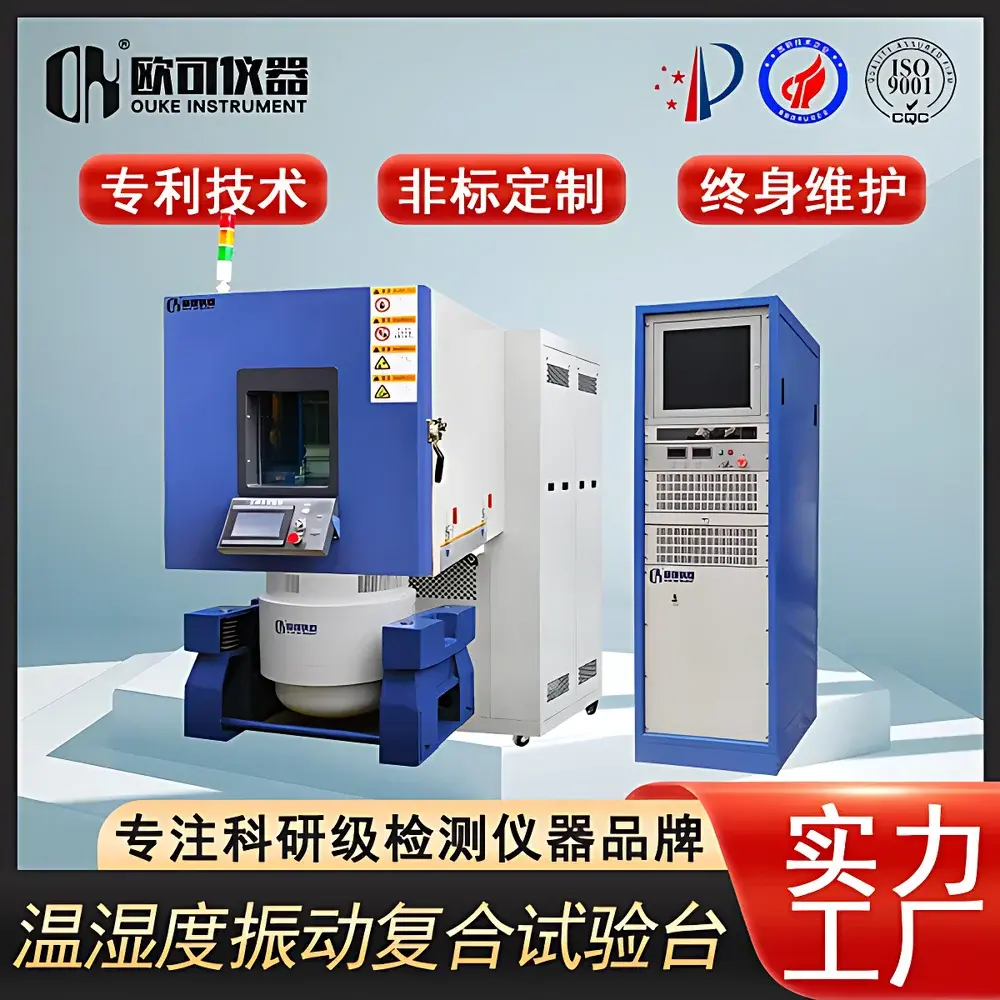
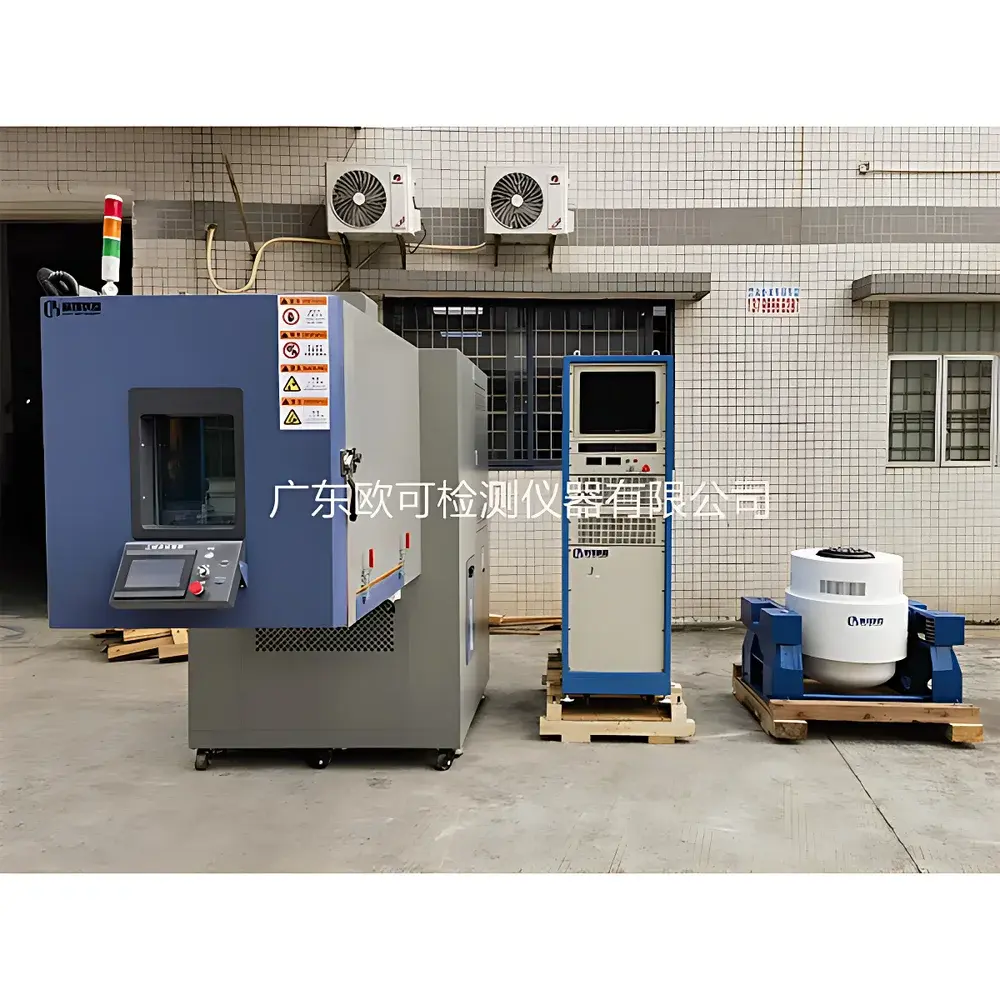
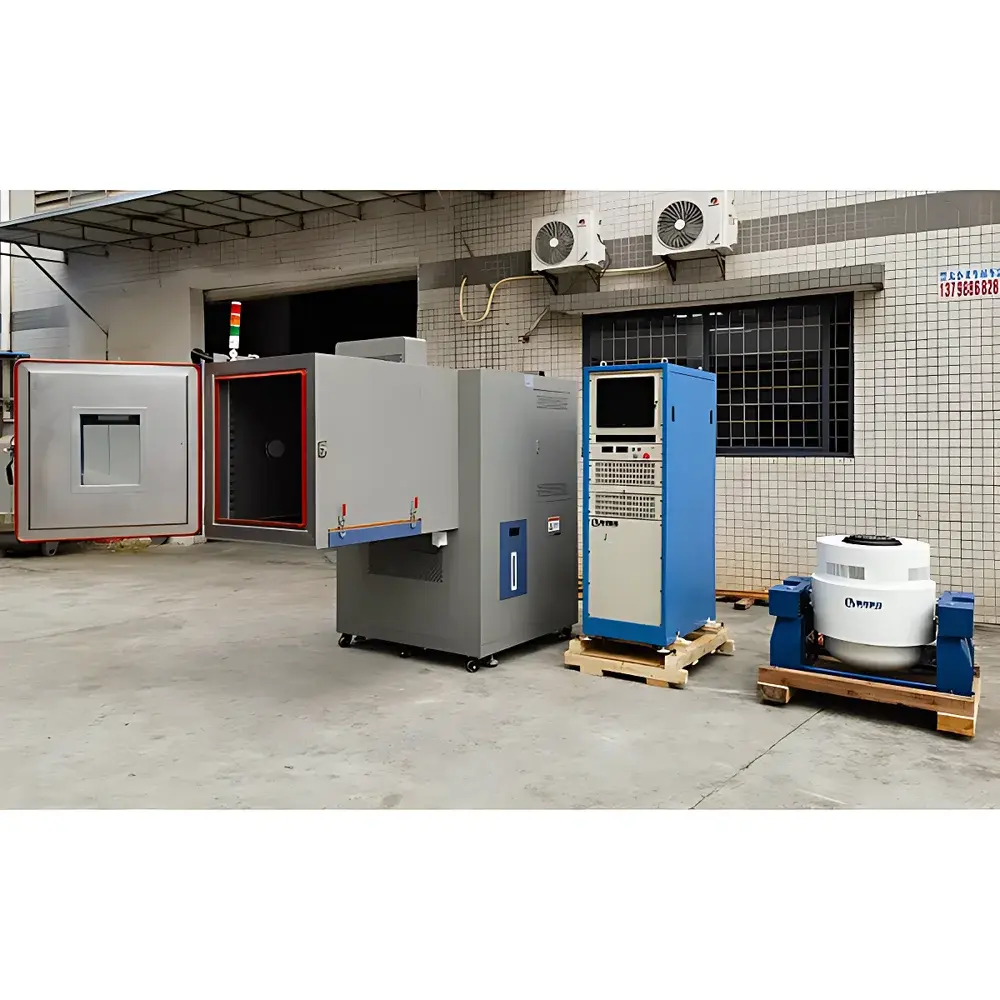
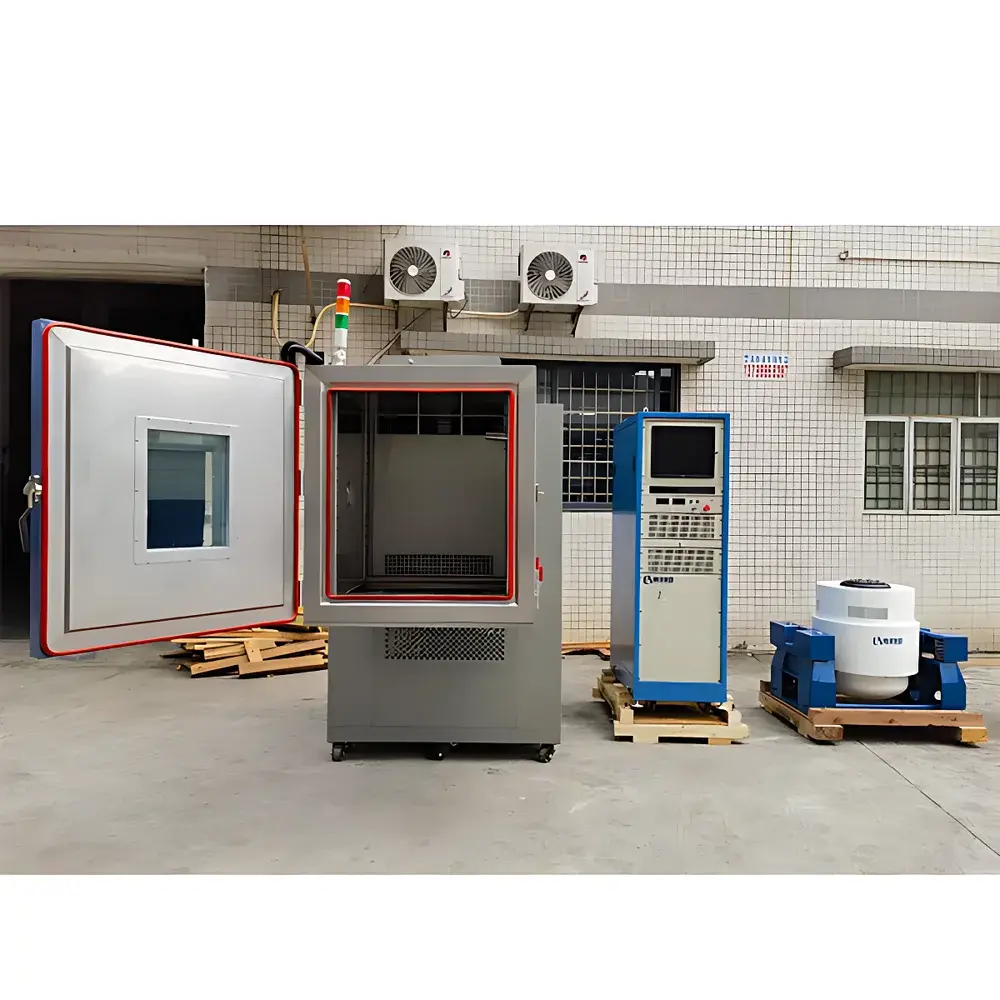
OK Instruments OK-ZTH-390.369 Combined Temperature-Humidity-Vibration Test System
| Brand | OK Instruments |
|---|---|
| Origin | Guangdong, China |
| Manufacturer Type | Direct Manufacturer |
| Product Category | Domestic |
| Model | OK-ZTH-390.369 |
| Temperature Range | −70 °C to +150 °C |
| Humidity Range | 20–98 %RH at 20–85 °C |
| Temperature Ramp Rate | 5 / 10 / 15 °C/min |
| Temperature Uniformity | ≤ ±0.5 °C |
| Standard Load Capacity | 15 kg aluminum mass, 350 W thermal dissipation |
Overview
The OK Instruments OK-ZTH-390.369 Combined Temperature-Humidity-Vibration Test System is an integrated environmental reliability testing platform engineered for simultaneous application of thermal stress (including rapid temperature transitions), humidity exposure, and mechanical vibration under controlled, reproducible conditions. It operates on the principle of coupled multi-stress acceleration—leveraging thermodynamic control via dual-stage refrigeration (R404A-based cascade system) and resistive heating (Ni-Cr tubular heaters), combined with electromagnetic shaker actuation synchronized through a unified programmable logic controller (PLC). Unlike conventional stacked test configurations, this system maintains physical and temporal coherence between environmental and dynamic inputs: temperature sensors sample at 2 Hz (every 0.5 s), feeding real-time feedback to both thermal and vibration subsystems. Magnetic circuitry incorporates embedded temperature-compensating coils to counteract flux decay above 80 °C, preserving force linearity across the full operational envelope. The architecture complies with fundamental requirements for accelerated life testing per IEC 60068-2 series, MIL-STD-810H Method 514.7 (vibration), and Method 502.7 (temperature), enabling correlation of laboratory results to field failure modes in mission-critical applications.
Key Features
- Monolithic integration of climate chamber and electromagnetic vibration shaker—eliminates inter-system coupling losses, spatial misalignment, and thermal leakage common in externally coupled setups.
- Triple-parameter synchronization: independent yet coordinated control of temperature, relative humidity, and vibration (displacement, velocity, acceleration) within a single test profile.
- Adaptive vibration power modulation: PLC dynamically reduces shaker excitation amplitude when chamber temperature deviates beyond ±1 °C from setpoint, resuming full output only after thermal stabilization—ensuring parameter fidelity and measurement integrity.
- Thermally robust construction: voice coil leads use low-temperature silicone insulation; permanent magnet assemblies feature ceramic-based high-temperature coating; chamber interior employs non-outgassing stainless steel and anti-condensation drain management.
- Multi-tier safety architecture: includes over-temperature cutoff (mechanical and electronic), humidity sensor fault detection, vibration overload protection, and emergency stop interlock with hardware-level cut-off of both thermal and motion subsystems.
Sample Compatibility & Compliance
The OK-ZTH-390.369 accommodates DUTs up to 15 kg mass with maximum heat dissipation of 350 W, compatible with standard mounting interfaces (ISO 2240, DIN 45673-1). Its chamber geometry supports typical automotive ECUs, battery modules (up to 300 mm × 300 mm footprint), avionics enclosures, and outdoor telecom hardware. The system meets structural and operational requirements for GLP-compliant test environments and supports audit-ready documentation per ISO/IEC 17025:2017 clause 7.8. All firmware and controller logs retain timestamped, tamper-evident records compliant with FDA 21 CFR Part 11 principles (electronic signatures, audit trails, data integrity controls). Humidity control adheres to ISO 16750-4 Annex A for automotive component testing; thermal ramp rates satisfy IEC 60068-2-14 Change of Temperature test criteria.
Software & Data Management
Control and profiling are executed via OK-TestSuite v4.2—a Windows-based deterministic real-time platform supporting hierarchical test sequencing, breakpoint pausing, and conditional branching (e.g., “hold vibration if RH exceeds 95%”). Raw sensor streams (thermocouples, PT100s, accelerometer IEPE outputs, capacitive RH sensors) are acquired at ≥1 kHz and stored in IEEE 754-compliant binary format (.okd) with embedded metadata (calibration IDs, operator credentials, environmental timestamps). Export options include CSV, MATLAB .mat, and ASAM MDF 4.1. The software enables post-test cross-correlation analysis: e.g., spectral energy density (PSD) overlay against thermal transients, or RMS acceleration vs. dew point tracking. Audit trail functionality logs all user actions, parameter modifications, and system state changes with cryptographic hashing for forensic traceability.
Applications
- Automotive electronics: Validation of ADAS control units, traction inverters, and 48V battery management systems under combined thermal cycling (−40 °C ↔ +85 °C) and road-simulated vibration spectra (e.g., ISO 16750-3 Class C).
- Aerospace components: Qualification of satellite-mounted star trackers and radar RF front-ends per ECSS-Q-ST-70-08C, including thermal vacuum-compatible vibration sweeps from 5–2000 Hz at 10 gRMS.
- Renewable energy systems: Reliability assessment of photovoltaic inverters subjected to desert-cycle profiles (85 °C/85%RH hold → −20 °C soak → random vibration at 0.04 g²/Hz).
- Medical device packaging: Accelerated aging of sterile barrier systems under cyclic humidity-vibration stress to evaluate seal integrity per ASTM F1980.
- Military-grade hardware: MIL-STD-810H-compliant testing of handheld radios and targeting pods across extreme temperature gradients (−55 °C to +71 °C) with simultaneous 10–2000 Hz swept-sine excitation.
FAQ
What standards does the OK-ZTH-390.369 support for validation reports?
It supports test execution and reporting aligned with IEC 60068-2, MIL-STD-810H, ISO 16750, and ASTM D4728—full compliance documentation available upon request.
Can the system perform HALT or HASS protocols?
Yes—the controller supports step-stress and progressive profile escalation with automatic limit violation detection and logging required for HALT/HASS methodology.
Is remote monitoring and control supported?
Standard Ethernet/IP interface enables secure OPC UA connectivity; optional TLS 1.2-encrypted web dashboard allows real-time parameter viewing and alarm notification via SNMP traps.
How is calibration traceability maintained?
All critical sensors (temperature, humidity, acceleration) are factory-calibrated against NIST-traceable references; calibration certificates include uncertainty budgets per ISO/IEC 17025.
What maintenance intervals are recommended?
Refrigerant pressure verification every 12 months; shaker armature alignment check every 2000 operating hours; humidity sensor replacement every 24 months under continuous operation.



